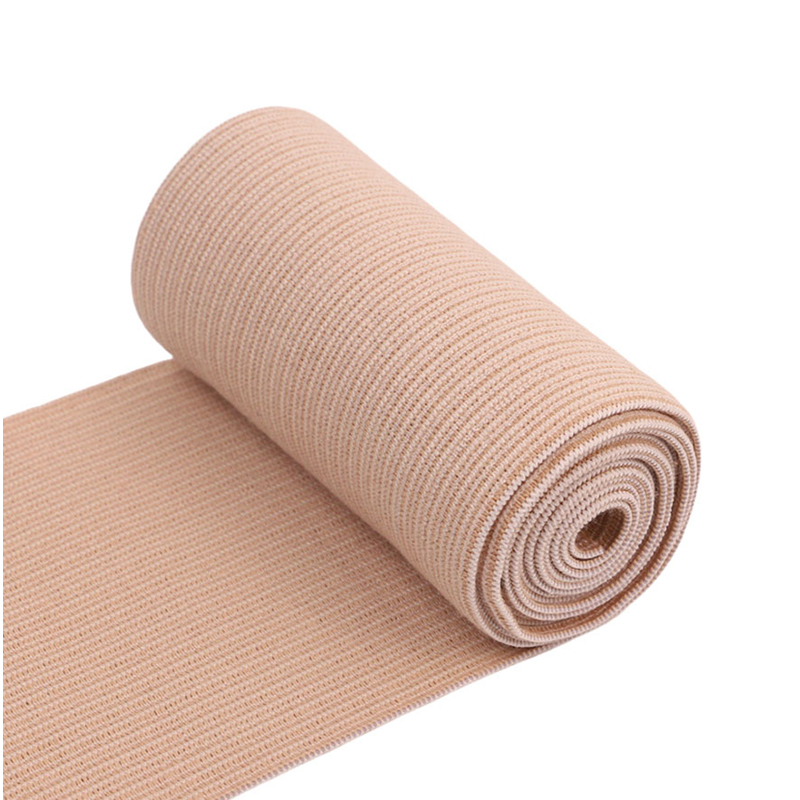

 en
en
 English
 русский
 Français
 Español
 Português
 Tiếng Việt
Content
- 1 Introduction
- 2 Product Overview
- 3 Why Elastic Hook-and-Loop Panels Are Different
- 4 Key Product Advantages
- 5 Applications in Medical and Orthopedic Products
- 6 Applications in Sportswear and Fitness Equipment
- 7 Applications in Maternity Wear
- 8 Applications in Garments and DIY Projects
- 9 Manufacturing Strengths and Quality Focus
- 10 Customization for Different Product Requirements
- 11 Comparison with Alternative Fastening Materials
- 12 Design and Sewing Considerations
- 13 Performance Testing Recommendations
- 14 Care, Handling, and Storage
- 15 Environmental and Quality Considerations
- 16 Why Choose an Experienced Webbing Manufacturer
- 17 Ordering and Product Development Process
- 18 Frequently Asked Questions
- 18.1 What is a 7cm Black Velcro Elastic Panel?
- 18.2 What makes this product different from ordinary hook-and-loop tape?
- 18.3 Is the panel suitable for medical supports?
- 18.4 Can it be used in sportswear?
- 18.5 Why is a 7cm width useful?
- 18.6 Is black the only available color?
- 18.7 Can the panel be customized?
- 18.8 How should the panel be sewn into a product?
- 18.9 Can the hook-and-loop panel be washed?
- 18.10 How can customers evaluate the product before ordering in volume?
- 18.11 Does the manufacturer accept OEM and ODM orders?
- 18.12 What industries can use this product?
- 19 Conclusion
- 20 References
- 21 Product: 7cm Black Velcro Elastic Panels
Introduction
Reliable fastening is essential in products that must remain secure while allowing comfortable movement. Medical supports, sports protection equipment, maternity garments, fitness accessories, and adjustable clothing all depend on fastening materials that can provide controlled compression, repeated adjustability, and dependable performance. The 7cm Black Velcro Elastic Panels are designed to meet these needs by combining elastic flexibility with hook-and-loop fastening in a practical, wide-panel format.
Unlike a standard rigid strap or a simple strip of hook-and-loop tape, this product integrates stretch and adjustability into one functional component. The elastic foundation helps the panel follow body movement, while the hook-and-loop closure enables users to change the fit quickly. This combination is especially useful when a product must adapt to different body shapes, changing compression requirements, or repeated daily use.
With a width of 7 centimeters, the panel offers a broader contact area than narrow elastic bands. This allows pressure and tension to be distributed over a larger surface instead of being concentrated along a thin line. For manufacturers, the wide format can improve the appearance of finished products, support stable positioning, and simplify the construction of garments and braces that require a substantial adjustable closure.
The panel is supplied in classic black, a versatile color that coordinates easily with sportswear, medical supports, workwear, protective products, and fashion garments. Its appearance is discreet and practical, while its construction is focused on durability, comfort, and ease of use.
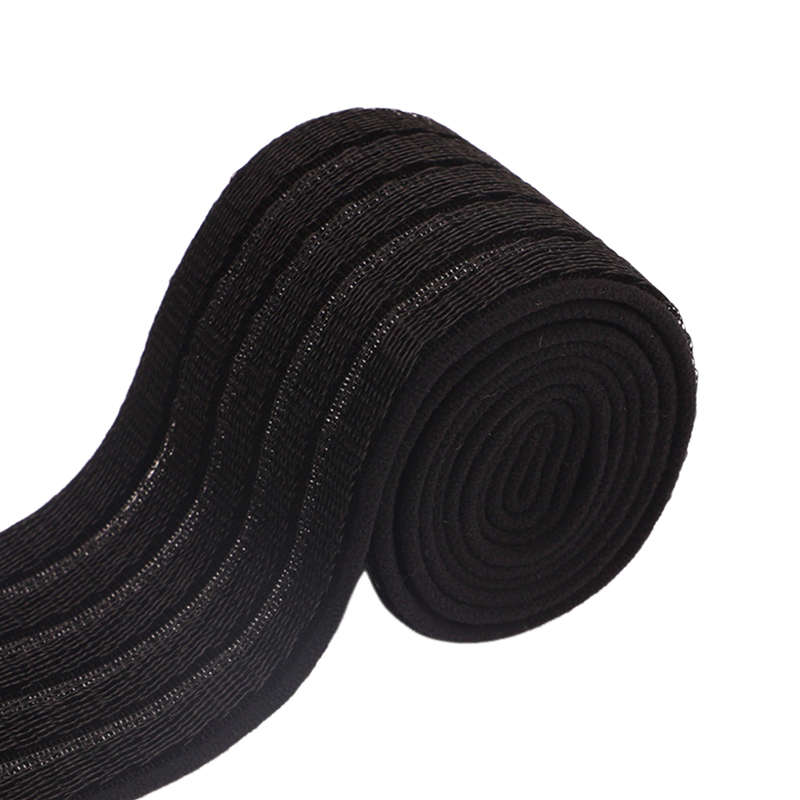
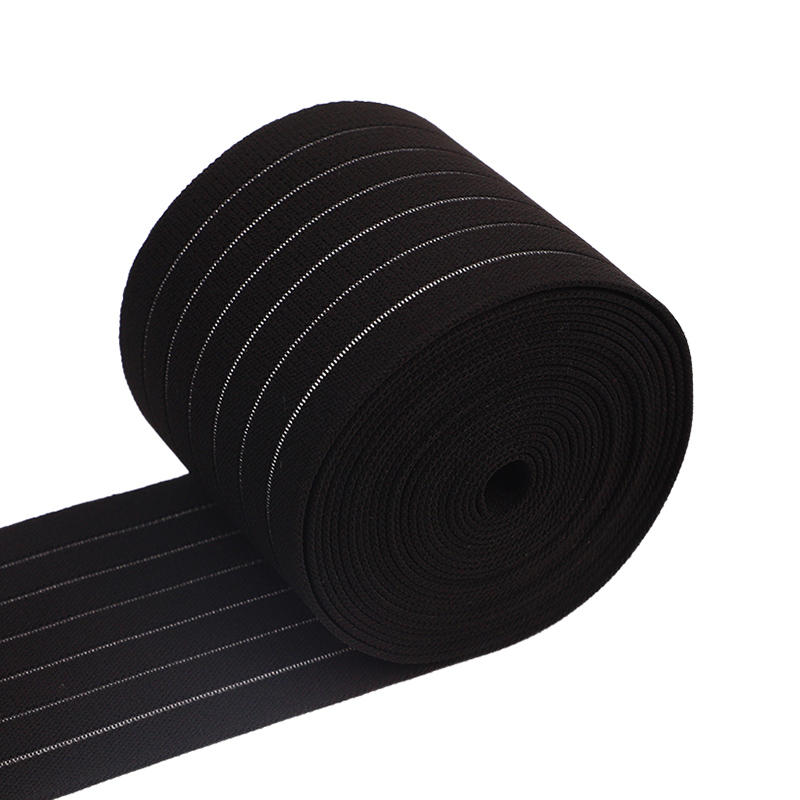
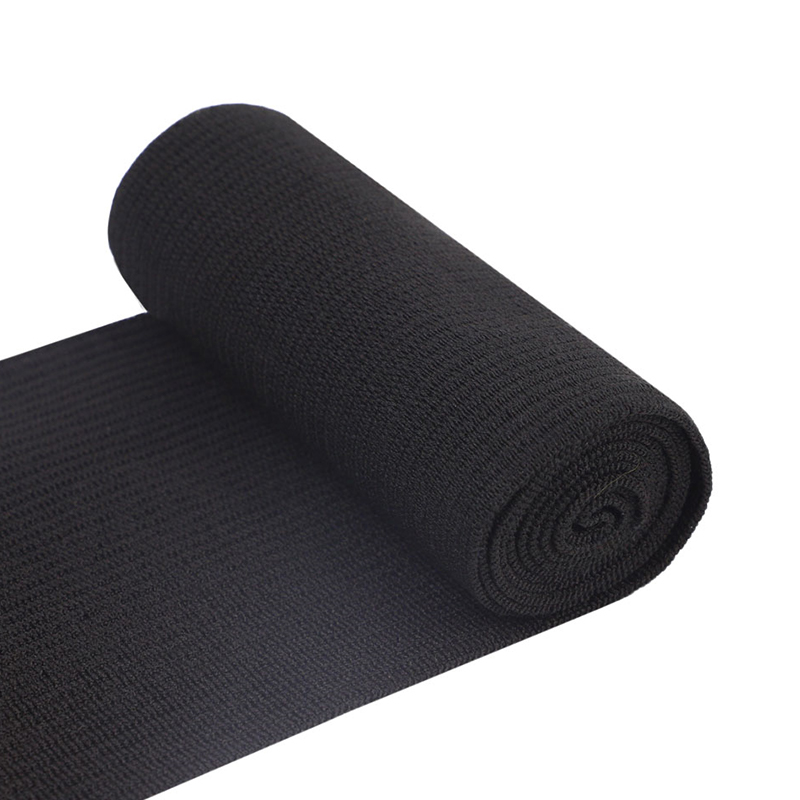
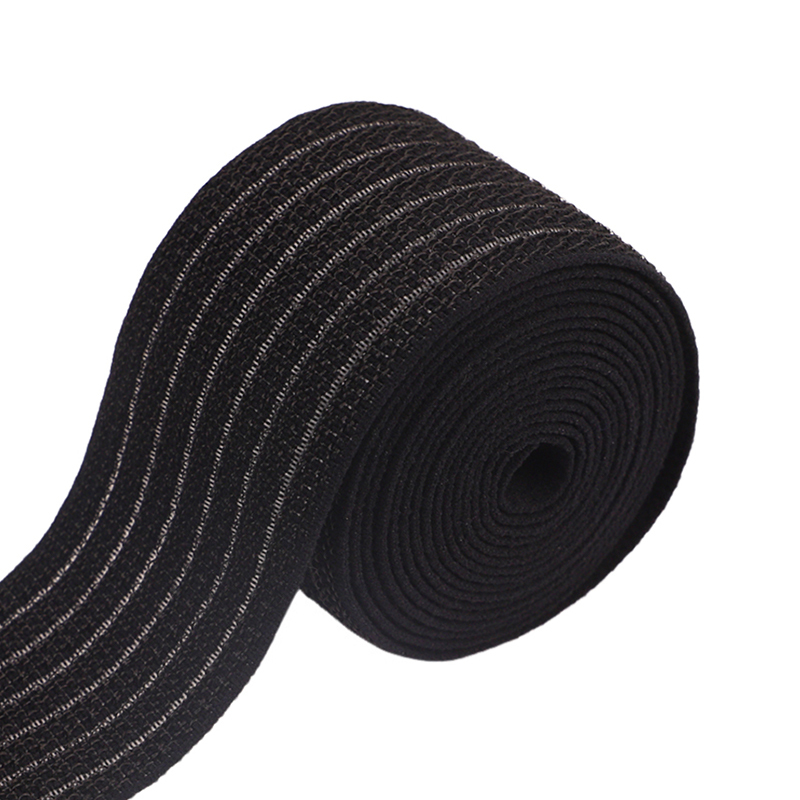
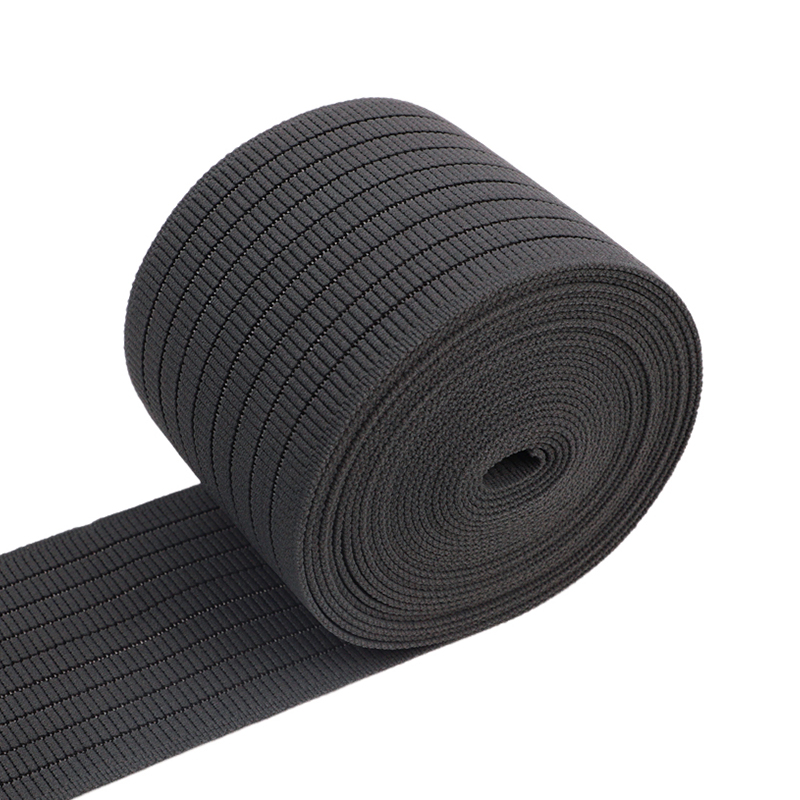
7cm Black Velcro Elastic Panels
Product Overview
The 7cm Black Velcro Elastic Panels belong to the elastic hook and loop strap category. They are made for applications where a soft, adjustable, and secure fastening system is required. The panel can be incorporated into a finished product during sewing, assembly, or custom manufacturing, depending on the design of the application.
The product combines several important functions:
First, the elastic base provides flexibility. It can extend and recover as the user moves, helping the finished product remain close to the body or target surface. This is valuable in supports and garments that must accommodate bending, stretching, walking, exercise, or changes in body position.
Second, the hook-and-loop fastening system provides adjustability. The user can open, reposition, and close the panel without using buttons, buckles, tools, or complicated hardware. This makes it suitable for products that need frequent adjustment or quick installation.
Third, the 7cm width offers broad coverage. A wider panel can help maintain a stable closure and create a more balanced distribution of tension. It is also suitable for designs in which a narrow tape would look insufficient or provide inadequate support.
Fourth, the black color provides design flexibility. It can blend into dark garments, contrast with lighter materials, or create a professional appearance in medical and protective equipment. Black is also commonly selected for sports products because it is visually neutral and easy to coordinate with other components.
| Product Feature | Practical Benefit | Typical Application Value |
|---|---|---|
| 7cm wide format | Broad contact area and stable closure | Supports, belts, panels, and garment assemblies |
| Elastic construction | Flexibility and movement accommodation | Sportswear, maternity wear, and body-contact products |
| Hook-and-loop fastening | Fast opening, closing, and adjustment | Products requiring repeated fitting changes |
| Black color | Versatile and professional appearance | Medical, fitness, fashion, and protective products |
| Soft and flexible structure | Improved comfort during extended wear | Body-worn supports and adjustable accessories |
| Wear-resistant materials | Maintained performance through repeated use | Reusable and frequently adjusted products |
Why Elastic Hook-and-Loop Panels Are Different
Traditional hook-and-loop tape is useful for fastening, but it may not provide the flexibility required by body-worn products. A rigid or non-stretch closure can remain secure while creating unwanted pressure when the user moves. It may also feel restrictive if it is positioned across a joint, abdomen, waist, limb, or other area that changes shape during activity.
A standard elastic band can provide flexibility, but it does not normally offer the same degree of adjustability. Once it is sewn into a product, the user may have limited control over tension. A separate buckle can solve the adjustment problem, but buckles may add bulk, create pressure points, increase assembly time, or complicate the appearance of the finished item.
The elastic hook-and-loop panel addresses these limitations by combining the advantages of both materials. The elastic base supports movement, while the hook-and-loop section allows the user to set the desired fit. This integrated construction can help manufacturers reduce the number of separate components required in a finished design.
Compared with narrow elastic bands, a 7cm panel can provide more visible coverage and greater design presence. Compared with ordinary rigid hook-and-loop straps, it can offer a more forgiving fit. Compared with buckle closures, it can provide a lower-profile appearance and faster operation. These characteristics make it a strong option for products that need a balance of security, comfort, and convenience.
Key Product Advantages
Adjustable and Secure Fastening
The main advantage of the panel is its adjustable fastening system. Hook-and-loop technology allows the user to attach and detach the closure quickly. It can be tightened for a firmer fit or loosened for greater comfort, depending on the purpose of the product and the user’s needs.
This adjustability is particularly important in medical supports and sports protection products. A support may need to feel secure during movement but less restrictive during rest. A fitness band may require different settings during warm-up, exercise, and recovery. A maternity garment may need to accommodate gradual changes in body size. An adjustable panel makes these changes easier to manage.
For manufacturers, adjustability can also reduce sizing limitations. Instead of producing a separate product for every small size variation, designers may use a fastening panel to create a more adaptable product range. This does not eliminate the need for correct sizing, pattern design, or testing, but it can improve the usable adjustment range of the finished product.
Elastic Comfort During Movement
The elastic foundation is designed to flex with the user instead of acting as a fixed rigid band. This is useful in products worn around the abdomen, waist, knee, elbow, wrist, shoulder, back, or other areas that move continuously.
Comfort depends on many factors, including width, tension, edge treatment, garment construction, and contact materials. The soft and flexible character of this panel can support a more comfortable finished design when correctly integrated. It can help reduce the sensation of stiffness and allow the product to follow natural movement more effectively than an entirely non-elastic closure.
Elasticity can also help maintain contact when the body changes position. A rigid strap may become loose in one position and overly tight in another. A properly selected elastic component can provide a degree of controlled flexibility, helping the finished product remain better aligned with the body.
Wide 7cm Construction
The 7cm width is one of the product’s defining features. A wide panel is suitable for applications where a narrow strip would not provide enough coverage or would create a visually unbalanced design. The broader format can support a more stable closure and may help spread tension across a larger area.
Wide elastic panels are often selected for abdominal binders, support belts, maternity products, rehabilitation garments, sports braces, and compression-related accessories. They can also be used as functional panels in clothing where the fastening area is intended to be visible or integrated into the structure of the garment.
Width should always be selected according to the product design, required tension, body location, and intended use. The 7cm format is a practical middle-width option for many applications, but designers should evaluate the completed product through prototypes and wear testing before mass production.
Durability for Repeated Use
Fastening materials are often opened and closed many times during the life of a product. If the material loses elasticity quickly, frays easily, or fails to maintain a reliable hook-and-loop connection, the performance of the finished item may be reduced.
The product is designed with high-quality elastic and hook-and-loop materials that resist ordinary wear and help maintain performance over time. Durable construction is important for sportswear, medical supports, and reusable accessories because these products may experience repeated stretching, handling, laundering, and contact with perspiration or everyday contaminants.
Actual service life depends on application conditions. Excessive tension, incorrect washing, contamination of the hook-and-loop surface, harsh chemicals, and poor sewing practices may reduce performance. For this reason, product designers should establish appropriate care instructions and conduct application-specific testing.
Simple Operation
A practical fastening component should be easy to understand and use. Hook-and-loop panels can generally be opened by pulling the closure apart and secured by pressing the mating surfaces together. This makes them suitable for users who need to adjust a product independently or who may have limited dexterity.
Simple operation is valuable in medical and rehabilitation products. A wearer, caregiver, therapist, or medical professional can make adjustments without special tools. In sports environments, the product can be fitted before activity and readjusted during breaks. In garment production, the closure can also reduce the complexity of the final assembly compared with designs that use several small hardware components.
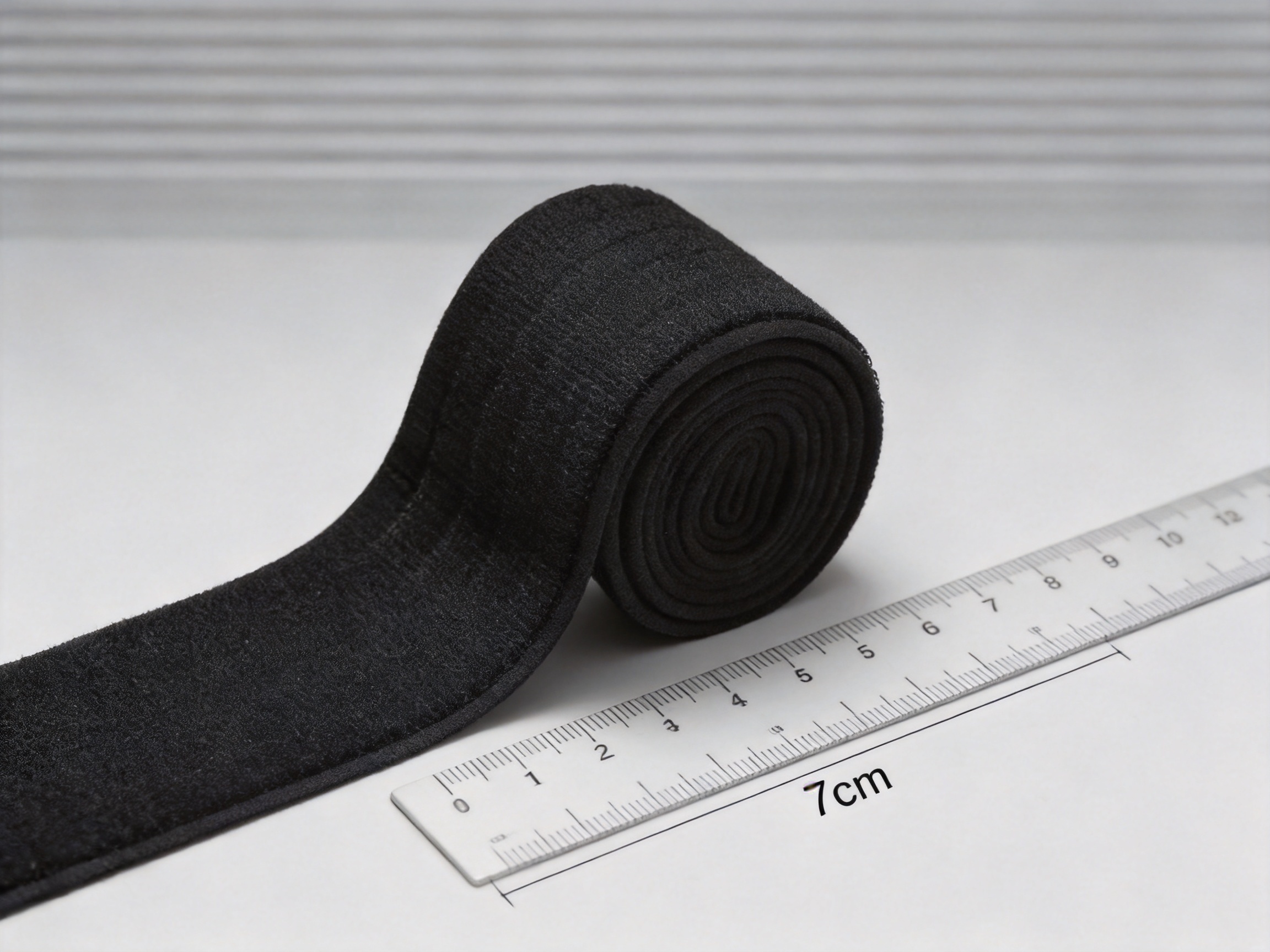
Applications in Medical and Orthopedic Products
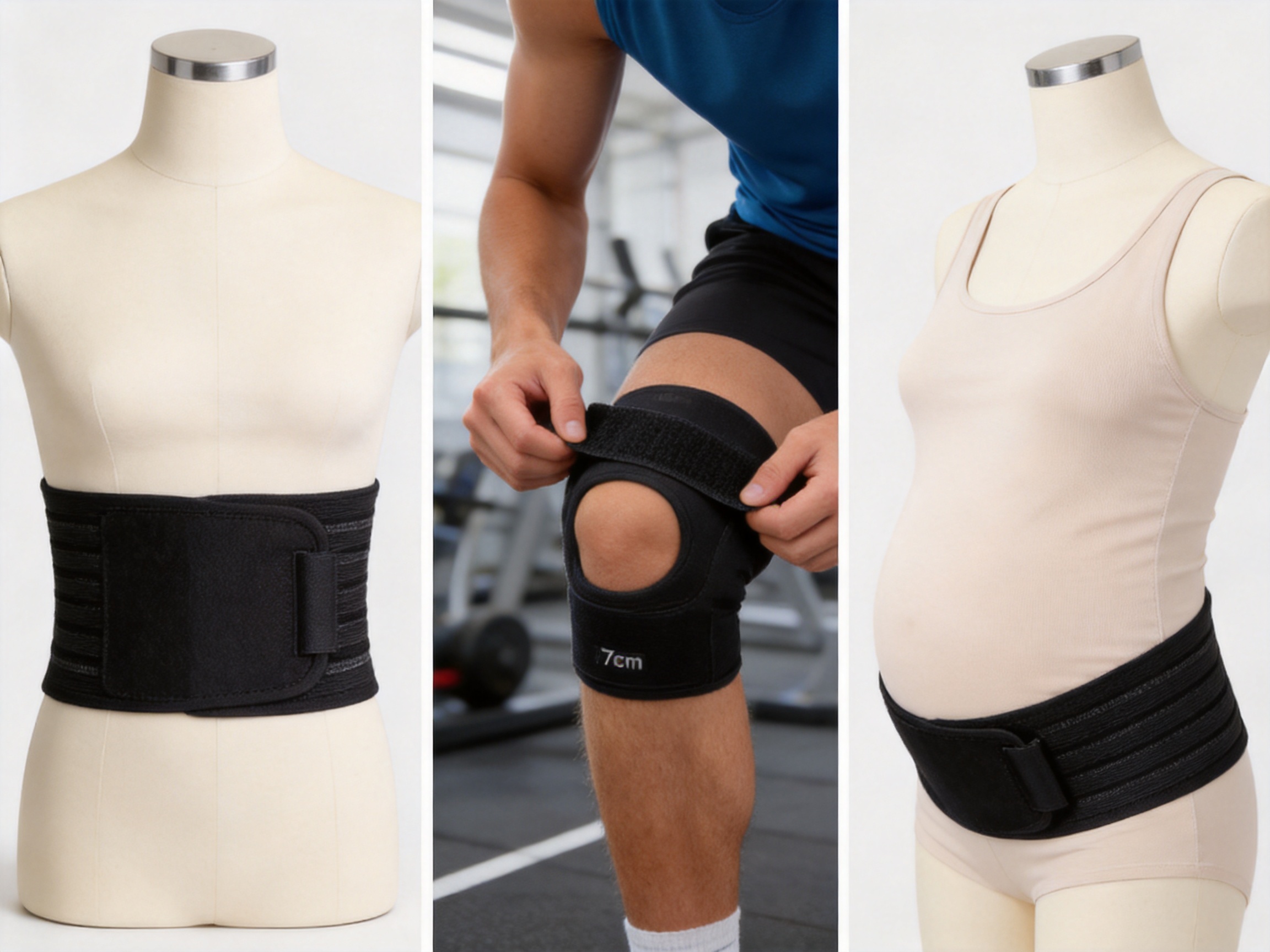
The 7cm Black Velcro Elastic Panels are suitable for a range of medical and orthopedic product designs. Potential applications include abdominal binders, orthopedic braces, rehabilitation supports, postoperative garments, back support belts, limb supports, and adjustable compression products.
In abdominal binders, a wide elastic panel can help create a broad adjustable closure. The panel may be positioned horizontally around the abdomen or integrated with multiple sections to allow controlled fitting. Its elastic flexibility can support comfort during normal movement, while the hook-and-loop fastening allows healthcare personnel or users to adjust the product as needed.
In orthopedic braces, the panel may be used as a secondary securing strap or as part of a larger support structure. It can help hold padding, reinforcing components, or brace sections in the intended position. The final design should consider the mechanical load, skin contact, edge comfort, and required range of motion.
For rehabilitation products, adjustability is often essential. A support may be used by people with different body shapes or by the same person at different stages of recovery. A fastening panel can help accommodate these variations without requiring complex tools or permanent alterations.
Medical products require careful design validation. The panel itself is a component and should not be regarded as a complete medical device. Manufacturers must evaluate the finished product for intended use, safety, hygiene, skin contact, pressure distribution, cleaning requirements, and applicable regulatory expectations.
Applications in Sportswear and Fitness Equipment
Sportswear and fitness products require materials that can withstand movement, stretching, repeated fitting, and active use. The elastic hook-and-loop panel is suitable for sports supports, protective equipment, adjustable fitness bands, training accessories, and performance garments.
Sports supports often need a secure fit without completely restricting natural movement. An elastic panel can help the support move with the body, while the hook-and-loop closure allows athletes to control the tightness. This can be useful in knee supports, wrist wraps, elbow sleeves, ankle supports, waist belts, and other adjustable products.
Fitness equipment may also benefit from the panel’s quick adjustment. A user can attach or remove a band between exercises, alter the fit for different clothing layers, or share equipment with another user. A wide panel can also provide a more stable connection when the product is subjected to repeated movement.
Sportswear manufacturers often pay close attention to appearance. Black is a popular choice because it works with a wide variety of fabrics and can create a clean, technical appearance. It can be used as a discreet internal component or as a visible design detail, depending on the garment pattern and branding strategy.
When used in sports products, designers should evaluate stretch recovery, seam strength, hook-and-loop engagement, moisture exposure, perspiration resistance, and wash durability. Testing should simulate the intended activity rather than relying only on static inspection.
Applications in Maternity Wear
Maternity wear must accommodate changing body dimensions and changing comfort preferences. An adjustable elastic panel can help garments adapt during different stages of pregnancy and after childbirth, depending on the design and intended use.
In maternity support belts and adjustable abdominal garments, the panel may help provide a flexible closure that can be repositioned as the wearer’s body changes. The wide construction can provide broad coverage, while the elastic base can help avoid the rigid feeling associated with fixed straps.
Comfort is particularly important in maternity products. Designers should consider the softness of all adjacent materials, the placement of seams, the pressure created by the fastening system, and the possibility of prolonged wear. The hook-and-loop area should be positioned so that the hook surface does not contact the skin directly unless the product construction provides suitable protection.
Because maternity products are often adjusted frequently, the durability of the fastening system is important. The closure should remain functional after repeated opening and closing, and the elastic should maintain suitable recovery throughout the intended use period.
Applications in Garments and DIY Projects
Beyond medical and sports products, the panel can be used in garment construction, workwear, protective clothing, bags, accessories, costumes, and do-it-yourself projects. Its wide profile can become a functional design element or remain hidden within a layered construction.
In garments, the panel may be used for adjustable waist sections, removable components, adaptive clothing, outerwear closures, and custom-fit accessories. The hook-and-loop design can be helpful where a conventional zipper, button, or buckle would be difficult to operate or would not provide enough fitting flexibility.
Adaptive clothing is another area in which easy adjustment can be valuable. Garments designed for users with limited mobility may benefit from closures that can be operated while seated or with reduced hand strength. The panel can support more accessible garment construction when combined with an appropriate pattern and user-centered design.
In bags and accessories, the elastic feature can help the closure accommodate changing contents or different carrying conditions. In costumes and stage garments, the black panel can be concealed or used as a practical quick-change component. In DIY projects, it can be cut, sewn, or integrated into custom assemblies according to the project requirements.
Before cutting the material, makers should confirm the required length, orientation, stretch direction, and attachment method. A sample test can help determine whether the hook-and-loop surfaces align correctly and whether the elastic tension is suitable for the intended use.
Manufacturing Strengths and Quality Focus
Jinhu Hengxiang Webbing Co., Ltd. was established in 2005 in Jinhu County, Huai’an City, Jiangsu Province, China. The company specializes in the research, development, production, sale, and service of elastic and non-elastic webbing. Its experience includes webbing used in sports supports, orthopedic braces, medical protective equipment, and related applications.
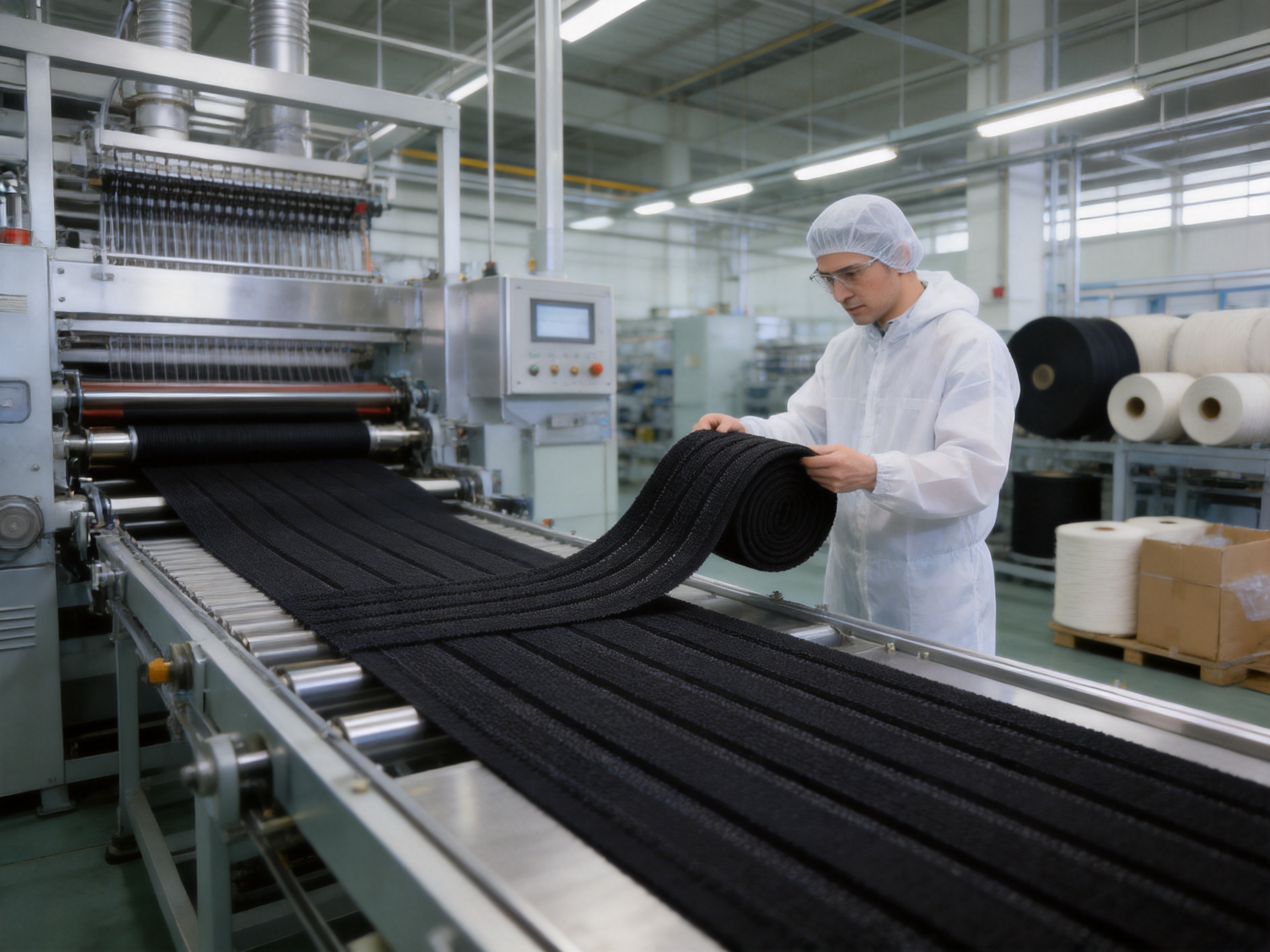
The company’s production capabilities cover multiple stages of webbing manufacturing. These include material sourcing, warping, knitting, weaving, finishing, testing, inspection, and packaging. The use of specialized equipment at each stage supports a more organized production process and provides greater control over product consistency.
Material Sourcing and Preparation
Material quality has a direct influence on elasticity, hand feel, appearance, and durability. A controlled manufacturing process begins with the selection and inspection of suitable yarns, elastic elements, hook-and-loop components, and supporting materials.
Material preparation may include checking color, width, tensile behavior, surface condition, and compatibility with the planned production method. Careful preparation can help reduce variation during weaving, knitting, and assembly. It also supports more consistent performance between production batches.
Warping and Yarn Arrangement
Warping is an important preparation step in woven webbing production. It involves arranging yarns in the required order and tension before they enter the weaving process. Proper yarn arrangement helps create a stable foundation for the final webbing structure.
Consistent warping can influence width, appearance, edge quality, and dimensional stability. For elastic products, suitable tension control is particularly important because excessive or uneven tension may affect the final stretch and recovery characteristics.
Knitting and Weaving Equipment
The company has introduced and updated advanced knitting and weaving machines. These machines allow production to be adapted to different webbing structures, widths, textures, and elasticity requirements. Equipment capability is important because different applications may require different combinations of softness, strength, stretch, and surface construction.
Knitted structures can provide flexibility and comfort, while woven structures may provide a more stable and supportive foundation. By maintaining capabilities in both areas, the manufacturer can select or develop a suitable construction for a customer’s application rather than relying on a single production method.
For elastic hook-and-loop panels, the production process must coordinate the elastic webbing portion with the fastening components. Correct alignment, attachment, width control, and surface positioning all contribute to the performance of the finished panel. Advanced machinery can support repeatable production when combined with appropriate process controls.
Finishing and Inspection
Finishing processes can influence the hand feel, appearance, dimensional stability, and usability of webbing. Depending on the product design, finishing may involve trimming, edge control, surface treatment, bonding, sewing preparation, or packaging preparation.
Inspection should address both appearance and function. Important checks may include finished width, color consistency, edge condition, elasticity, recovery, fastening engagement, surface cleanliness, and packaging accuracy. For products intended for medical or sports applications, manufacturers may also establish additional tests based on customer specifications and finished-product requirements.
Quality control is most effective when it is applied throughout the process rather than only at the final stage. Monitoring incoming materials, machine settings, production conditions, and finished products can help identify problems earlier and reduce unnecessary waste.
Production Capacity and Delivery Support
Hengxiang operates warping, knitting, weaving, and packaging equipment and produces millions of meters of elastic and non-elastic webbing every month. This production capacity can support both standard product requirements and larger-volume customer programs.
Capacity alone does not guarantee delivery performance, but organized production planning, equipment availability, inspection procedures, and packaging systems can help manufacturers manage orders more effectively. Customers may benefit from discussing forecast volumes, sampling requirements, lead times, packaging formats, and quality standards at the beginning of a project.
Customization for Different Product Requirements
Different customers may need different levels of elasticity, softness, thickness, texture, width, color, and fastening performance. A standard black 7cm panel can serve as a practical starting point, while customized production may be considered for specific garment or support designs.
Customization can involve the elastic behavior of the webbing, the surface texture, the color, the length, the attachment configuration, and the packaging method. Some applications may require a softer hand feel for direct or near-skin contact. Others may require firmer recovery or stronger fastening for active use.
OEM and ODM orders are welcome. In an OEM project, the customer may provide specifications, drawings, samples, or finished-product requirements. In an ODM project, the manufacturer may contribute technical suggestions and develop a suitable webbing solution based on the intended application.
Successful customization requires clear communication. Customers should provide the target use, required width, expected stretch, preferred color, fastening direction, attachment method, estimated order quantity, testing expectations, and packaging requirements. If the material will be used in a regulated medical product, the customer should also identify applicable compliance and documentation requirements.
Comparison with Alternative Fastening Materials
Choosing the correct fastening material depends on the product’s function. The elastic hook-and-loop panel is not intended to replace every closure type, but it offers a useful combination of characteristics for applications requiring flexibility and adjustability.
| Fastening Type | Adjustability | Elastic Flexibility | Ease of Operation | Typical Limitation |
|---|---|---|---|---|
| 7cm elastic hook-and-loop panel | High | High | High | Requires correct hook-and-loop alignment and care |
| Rigid hook-and-loop tape | High | Low | High | May feel restrictive in body-moving applications |
| Plain elastic band | Low to moderate | High | Moderate | Limited user-controlled adjustment |
| Buckle strap | Moderate to high | Low to moderate | Moderate | May add bulk and require more handling |
| Button closure | Low | Low | Moderate | Fixed positions and slower adjustment |
| Zipper | Low to moderate | Low | Moderate | Less suitable for gradual tension adjustment |
The panel’s principal competitive advantage is its balanced performance. It does not offer only stretch, and it does not offer only fastening. It combines both functions in a format that can be integrated into many finished products.
Design and Sewing Considerations
Correct integration is essential for achieving the best performance. The panel should be attached to a compatible base material using a stitch pattern and thread suitable for the expected tension. Sewing lines should be positioned to distribute load without damaging the elastic structure or interfering with the hook-and-loop surfaces.
Designers should determine which side of the panel will face outward and which side will contact the mating closure. The hook and loop surfaces need sufficient overlap for a secure connection. Too little overlap may reduce holding strength, while excessive overlap may increase bulk or create unnecessary stiffness.
Edge treatment should also be considered. If the panel is positioned near the skin, adjacent fabric, binding, lining, or protective construction may be needed to improve comfort. The hook surface should not rub directly against sensitive skin unless the product has been specifically designed and tested for that purpose.
The direction of stretch is another important factor. Depending on the intended application, the panel may be installed so that it stretches around the body, across a joint, or along a garment section. The correct orientation should be confirmed during prototyping.
Manufacturers should avoid excessive stretching during sewing. If the elastic is held under too much tension while being attached, the finished product may become tighter than intended or may not recover correctly. Sewing trials can help establish suitable handling methods and stitch settings.
Performance Testing Recommendations
Testing should reflect the final application rather than evaluating the component in isolation only. A panel used in a medical abdominal binder will experience different conditions from one used in a sports wrist support or a fashion accessory.
Useful evaluation areas may include:
Elastic extension: Measure how far the panel stretches under defined loads or extension percentages.
Recovery: Check how well the panel returns toward its original dimension after stretching.
Fastening engagement: Evaluate whether the hook-and-loop surfaces connect consistently and remain attached under the expected load.
Repeated cycling: Open and close the fastening system repeatedly to simulate daily use.
Seam strength: Test the connection between the panel and the finished product, not only the panel itself.
Dimensional stability: Check width, length, and shape after use, washing, and drying procedures.
Color and appearance: Inspect whether the black color remains acceptable after the expected cleaning and wearing conditions.
Comfort: Conduct user or wear evaluations to identify pressure points, rough edges, heat retention, or unwanted movement.
For medical and protective products, additional testing may be required by the customer’s quality system or applicable regulations. The manufacturer and finished-product producer should define responsibilities for component qualification and final product validation.
Care, Handling, and Storage
Proper care can help maintain the performance of elastic hook-and-loop panels. The finished product should be cleaned according to the instructions established by the manufacturer. If washing is permitted, the hook-and-loop surfaces should be closed before laundering to reduce the risk of catching on other fabrics or collecting lint.
Excessive heat may affect elastic materials and should be avoided unless the product has been tested for high-temperature processing. Strong bleaching agents, aggressive solvents, and unsuitable detergents may also reduce elasticity, discolor the surface, or affect fastening performance.
When the panel is not in use, keeping the hook-and-loop surfaces engaged can help prevent contamination and accidental damage. Dust, fibers, hair, and lint may reduce the effectiveness of the hook side over time. Routine cleaning of the fastening area may be appropriate for reusable products.
During storage, webbing should be kept in a clean, dry environment away from direct sunlight, excessive heat, moisture, and chemicals. Rolls or cut pieces should not be compressed, folded, or stored in a way that permanently distorts the elastic structure.
Environmental and Quality Considerations
Responsible manufacturing involves more than producing a functional material. It also includes attention to material efficiency, process stability, waste reduction, packaging, and product service life. A durable panel that remains functional through repeated use may help reduce the need for frequent replacement.
Hengxiang has obtained Oeko-Tex Standard 100 and ISO 13485 certificates. These certifications reflect attention to textile safety and quality management for products associated with medical applications. Certification scope and validity should always be confirmed for the specific order, production site, and intended product configuration.
Process control can contribute to sustainability by reducing defects, rework, and material waste. Stable machine settings, accurate cutting, effective inspection, and appropriate packaging all support more efficient use of resources.
Customers seeking a more sustainable solution should discuss recycled materials, packaging reduction, production waste management, color selection, and expected product life with the manufacturer. The most suitable solution depends on technical requirements and the performance that the finished product must deliver.
Why Choose an Experienced Webbing Manufacturer
Webbing may appear simple, but its performance depends on many interconnected details. Yarn selection, machine settings, elastic tension, weaving or knitting structure, finishing, edge quality, fastening alignment, and packaging can all influence the final result.
An experienced manufacturer can help customers identify potential problems before mass production. For example, a product may require more recovery than a standard elastic, a softer surface than a conventional strap, or a different hook-and-loop arrangement to prevent accidental release. Early technical discussion can reduce costly changes later in the development process.
Hengxiang has more than 20 years of professional production experience since its establishment. Its product range includes elastic and non-elastic webbing for sports protection, orthopedic braces, medical protective equipment, garments, and other applications. This application experience can support customers who need more than a basic commodity tape.
The company serves customers in China and exports to North America, Eastern Europe, the Middle East, South Asia, and other regions. International experience may help with communication regarding specifications, sampling, packaging, production schedules, and export arrangements.
The company’s focus on quality, innovation, sustainability, competitive pricing, timely delivery, and customer service supports long-term cooperation. OEM and ODM capabilities also allow customers to develop products according to their own designs and market requirements.
Ordering and Product Development Process
A successful order usually begins with a clear description of the application. Customers should explain whether the panel will be used in a medical support, sports product, garment, fitness accessory, or DIY item. The intended use determines the appropriate balance of stretch, strength, softness, and fastening performance.
The next step is specification confirmation. Important details may include the 7cm width, black color, required length, hook-and-loop arrangement, elastic behavior, thickness, surface texture, sewing method, packaging, and estimated order quantity.
Samples should be evaluated in the actual product or in a representative prototype. A loose material sample may feel suitable, but the completed product can behave differently because of pattern shape, seam placement, lining, tension, and body movement.
After sample approval, production specifications should be documented. This may include approved samples, tolerance ranges, inspection criteria, color standards, packaging instructions, and labeling requirements. Clear documentation helps maintain consistency during repeat orders.
For long-term projects, customers may also provide forecasts. Production planning is easier when expected quantities and delivery schedules are communicated in advance. This is particularly helpful for products with seasonal demand or large-scale medical and sportswear programs.
Frequently Asked Questions
What is a 7cm Black Velcro Elastic Panel?
It is a wide elastic hook-and-loop fastening panel with a 7cm width and black appearance. It combines elastic flexibility with adjustable hook-and-loop closure for use in supports, garments, sportswear, fitness products, maternity wear, and custom projects.
What makes this product different from ordinary hook-and-loop tape?
Ordinary hook-and-loop tape may be non-elastic. This product includes an elastic structure, allowing the finished assembly to flex and accommodate movement. It therefore provides both fastening and controlled flexibility.
Is the panel suitable for medical supports?
It can be used as a component in medical supports, orthopedic braces, abdominal binders, and rehabilitation products. However, the finished medical product must be properly designed, tested, validated, and manufactured according to applicable requirements.
Can it be used in sportswear?
Yes. The panel is suitable for sports supports, protective garments, fitness bands, training accessories, and other products requiring an adjustable and flexible closure. Application-specific testing is recommended for heavy movement, perspiration, and repeated washing.
Why is a 7cm width useful?
A 7cm width provides broader coverage than a narrow elastic band. It can support a stable closure, distribute tension over a wider area, and create a substantial fastening section in a garment or support product.
Is black the only available color?
The described product is black. Customized colors may be discussed depending on the order requirements, material availability, production process, and minimum quantity.
Can the panel be customized?
Customization may be available for elasticity, texture, color, length, packaging, and related specifications. Customers should provide drawings, samples, technical requirements, or details about the intended use for evaluation.
How should the panel be sewn into a product?
The sewing method depends on the base fabric, expected load, stretch direction, and final design. Manufacturers should carry out sewing trials to determine the correct stitch type, thread, seam allowance, and attachment position.
Can the hook-and-loop panel be washed?
Care depends on the construction of the finished product. If washing is permitted, the hook-and-loop surfaces should normally be closed before cleaning, and excessive heat and harsh chemicals should be avoided unless they have been specifically tested.
How can customers evaluate the product before ordering in volume?
Customers should request samples and test them in a representative prototype. Evaluation should include fit, comfort, elasticity, fastening security, seam strength, appearance, cleaning behavior, and repeated-use performance.
Does the manufacturer accept OEM and ODM orders?
Yes. OEM and ODM orders are welcome. The manufacturer can work with customer specifications or participate in the development of customized elastic and non-elastic webbing solutions.
What industries can use this product?
Potential industries include medical equipment, orthopedic support, sportswear, fitness accessories, maternity garments, protective clothing, apparel, bags, industrial sewing, and DIY product development.
Conclusion
The 7cm Black Velcro Elastic Panels provide a practical balance of adjustability, flexibility, comfort, and durability. Their wide format supports stable coverage, while the elastic construction helps accommodate movement. The hook-and-loop fastening system makes the product quick to attach, detach, and adjust, offering advantages over closures that are rigid, permanently fixed, or more complicated to operate.
The product is suitable for a wide range of applications, including abdominal binders, orthopedic braces, rehabilitation products, sports supports, fitness bands, maternity wear, adaptive clothing, protective garments, and custom sewing projects. Its black color is versatile and easy to integrate into different fabric styles and product designs.
Manufacturing quality is supported by Jinhu Hengxiang Webbing Co., Ltd.’s experience in elastic and non-elastic webbing production, specialized warping, knitting, weaving, and packaging equipment, structured quality control, and experience serving sports and medical applications. The company’s Oeko-Tex Standard 100 and ISO 13485 certifications further reflect its commitment to textile safety and quality management.
For buyers and product developers, the best results will come from defining the application clearly, testing samples in the finished design, and confirming requirements for elasticity, fastening, sewing, cleaning, packaging, and compliance. With appropriate integration, this elastic hook-and-loop panel can become a dependable component in products that need secure fitting and comfortable movement.
References
1. Textile Exchange. Materials, Durability, and Responsible Textile Product Development.
2. International Organization for Standardization. ISO 13485: Medical Devices — Quality Management Systems — Requirements for Regulatory Purposes.
3. OEKO-TEX Association. Standard 100: Testing and Certification of Textiles for Harmful Substances.
4. ASTM International. Standard Practices for Testing Textile Webbing, Elastic Materials, and Related Components.
5. International Organization for Standardization. Textile Testing Principles for Dimensional Stability, Tensile Performance, and Color Evaluation.
6. Technical product information supplied for 7cm Black Velcro Elastic Panels.
7. Manufacturer information supplied by Jinhu Hengxiang Webbing Co., Ltd.