
 en
en
 English
 русский
 Français
 Español
 Português
 Tiếng Việt
Content
- 1 Understanding the Role of a Wide Woven Elastic Panel
- 2 Product Characteristics at a Glance
- 3 Advantages of the 10-Inch Width
- 4 Comparison with Narrow Elastic and Other Elastic Structures
- 5 Precision Weaving and Manufacturing Quality
- 6 Quality Systems and Certification Strengths
- 7 Applications in Abdominal Binders
- 8 Applications in Rehabilitation Supports and Orthopedic Braces
- 9 Applications in Sports Protective Equipment
- 10 Applications in Functional Clothing and Accessories
- 11 Applications in Industrial Fastening and Support Solutions
- 12 Customization for OEM and ODM Projects
- 13 Product Development and Integration Considerations
- 14 Supply Capacity and Global Customer Support
- 15 Why Choose This Panel for Competitive Product Development?
- 16 Q&A
- 16.1 What is the main purpose of the 10-inch grey woven elastic panel?
- 16.2 Why choose a 10-inch width instead of a narrow elastic band?
- 16.3 Is the panel suitable for direct skin contact?
- 16.4 Can the panel be used in medical products?
- 16.5 Can the grey color be customized?
- 16.6 Can the elasticity be customized?
- 16.7 How does woven construction differ from knitted elastic?
- 16.8 Can the panel be attached to hook and loop closures?
- 16.9 Is the panel suitable for sports products?
- 16.10 What certifications does the manufacturer have?
- 16.11 What information should be provided when requesting a quotation?
- 16.12 Can the panel be used in industrial products?
- 16.13 What makes the manufacturer suitable for OEM and ODM projects?
- 17 Conclusion
- 18 References
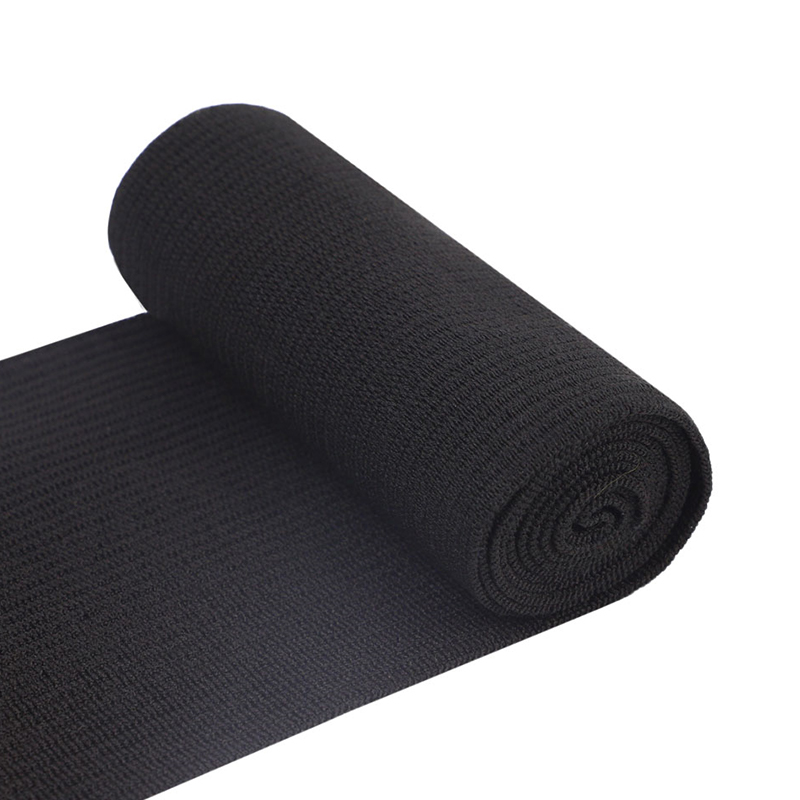
- 19 Product: 10 Inch Grey Woven Elastic Panels
Elastic panels are important structural components in many medical, rehabilitation, sports, and functional support products. They must stretch when the user moves, return toward their original dimensions after loading, remain comfortable against the body, and maintain reliable performance through repeated cycles of tension. For applications that require broad coverage rather than narrow-point fastening, a wide woven elastic panel can provide a practical balance of support, flexibility, durability, and visual consistency.
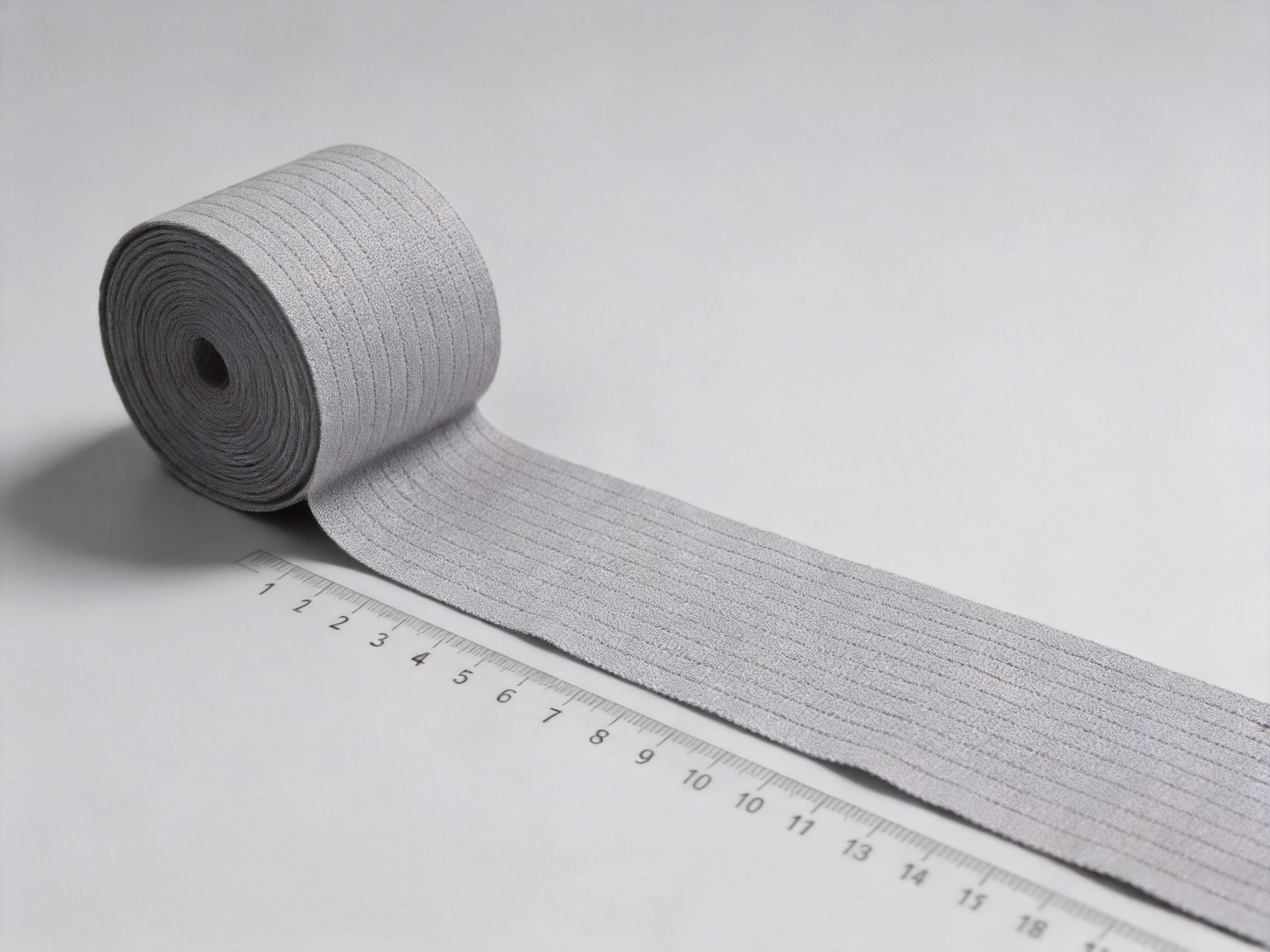
The 10-inch grey woven elastic panel is designed for applications requiring substantial coverage and dependable structural stability. Its wide format allows pressure and tension to be distributed across a larger surface area, helping designers develop support products that are secure without relying on excessively concentrated force. The panel is produced through a precision weaving process that combines elastic performance with dimensional control, fatigue resistance, and compatibility with other textile or fastening components.
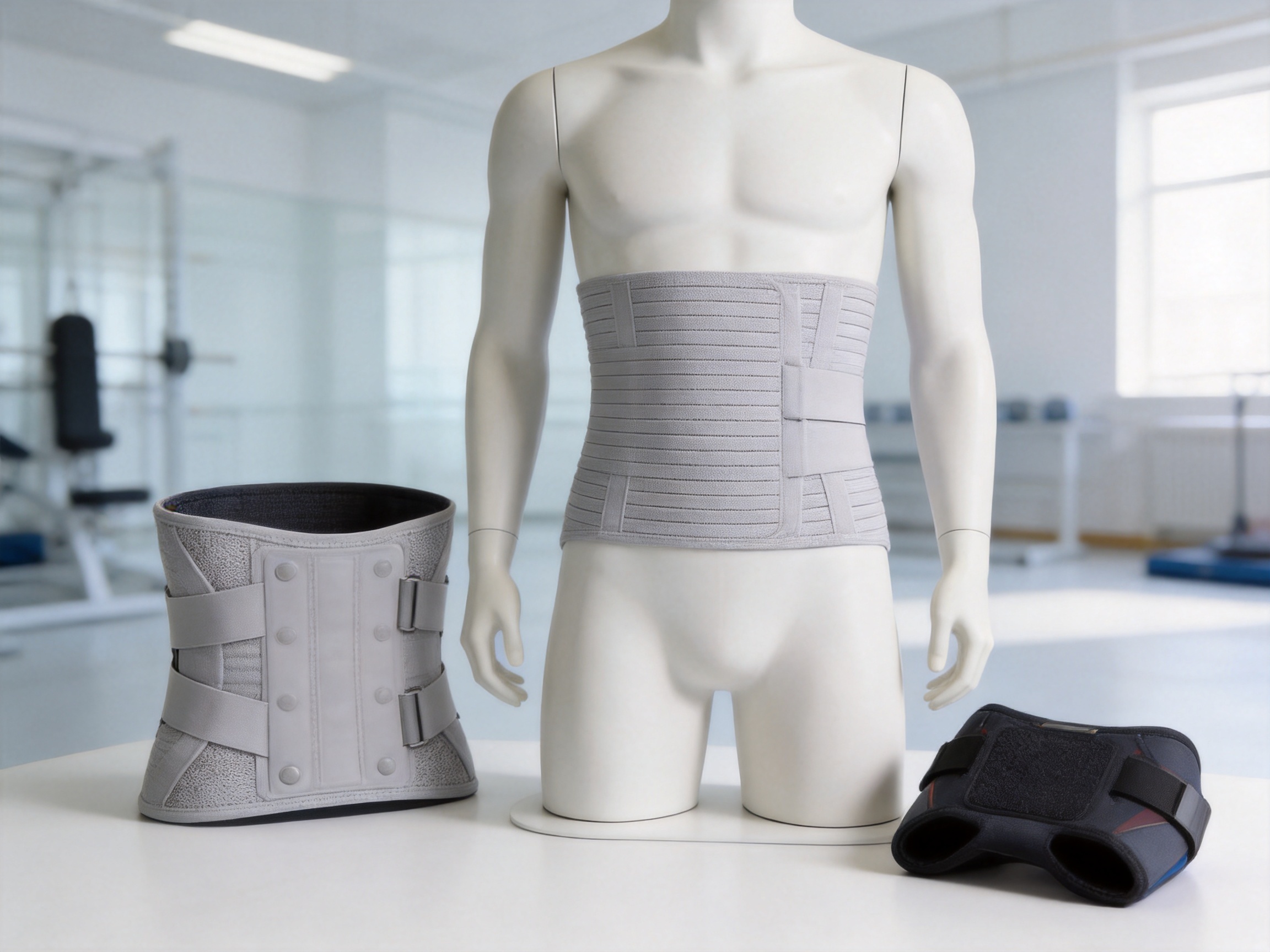
This product is particularly suitable for abdominal binders, rehabilitation support systems, medical braces, sports protective equipment, functional clothing, and industrial fastening or support solutions. The neutral grey appearance gives the panel a professional and understated character, while its woven construction supports repeated use in products where appearance, comfort, and mechanical reliability must work together.
Understanding the Role of a Wide Woven Elastic Panel
A woven elastic panel is more than a simple stretch fabric. It is an engineered textile component that contributes to the fit, tension distribution, closure performance, and overall stability of a finished product. In a medical support device, for example, the panel may help maintain consistent contact with the body while allowing breathing, bending, sitting, walking, and other normal movements. In a sports support product, it can assist with secure positioning and reduce unwanted shifting during activity.
The width of a panel is a major factor in how it performs. Narrow elastic bands are useful when a product needs localized tension, edge binding, or a compact fastening feature. A 10-inch panel serves a different purpose. It covers a broader area and can distribute tension over the abdomen, lower back, torso, or another large body zone. This makes it suitable for products that need general support, compression management, or structural reinforcement over a wider region.
The woven construction also affects the way the material responds to load. A carefully controlled weave helps organize the yarns and elastic elements so that the panel can stretch in a predictable manner. The material can provide flexibility without becoming excessively unstable. This is valuable when a finished product must adapt to body movement while retaining its intended position and support profile.
For manufacturers, the panel can function as a central support section, an adjustable body panel, a reinforcement layer, or part of a closure system. It can be combined with hook and loop components, laminated textiles, knitted elastic, rigid stays, foam, mesh, fabric covers, and other materials. Its broad surface area provides multiple options for sewing, joining, and product customization.
Product Characteristics at a Glance
| Characteristic | Product Value | Typical Design Benefit |
|---|---|---|
| Product type | Wide woven elastic panel | Provides a broad, flexible support area |
| Nominal width | 10 inches | Distributes pressure and tension across a larger surface |
| Color | Grey | Offers a neutral, professional appearance |
| Construction | Precision woven elastic structure | Supports dimensional stability and repeatable performance |
| Stretch behavior | Elastic and adaptable | Allows movement and adjustable fitting |
| Resistance characteristics | Designed for repeated stretching and continuous stress | Suitable for demanding support applications |
| Primary use areas | Medical, rehabilitation, sports, functional, and industrial products | Enables broad application flexibility |
| Customization potential | Tailored elasticity, texture, and color options available through the manufacturer | Supports product-specific development |
The information in this table describes the product’s principal design role. Exact performance values, dimensions, composition, testing requirements, and application limitations should be confirmed during technical development and sampling.
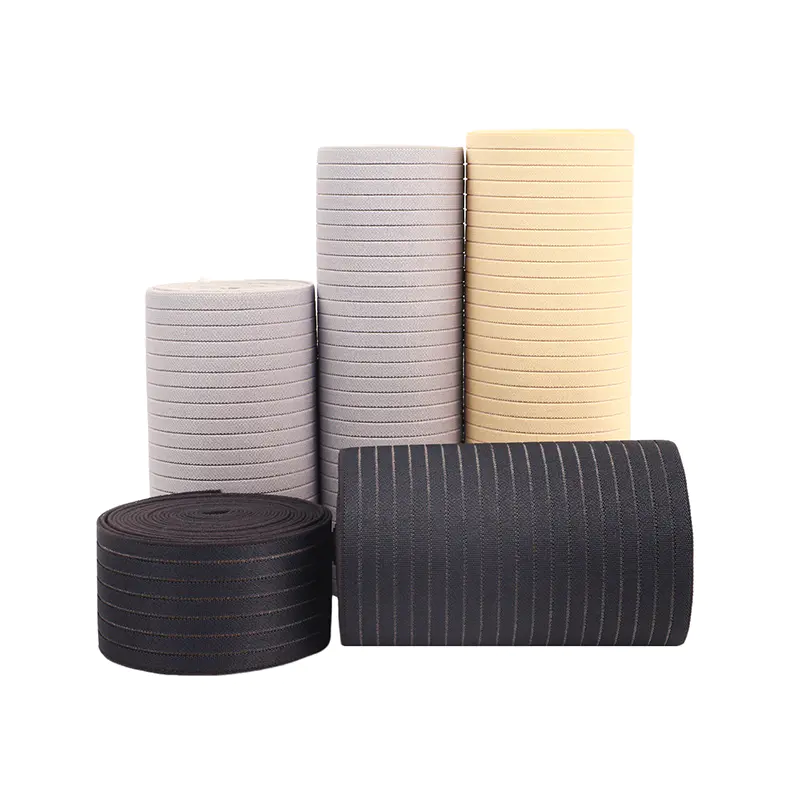
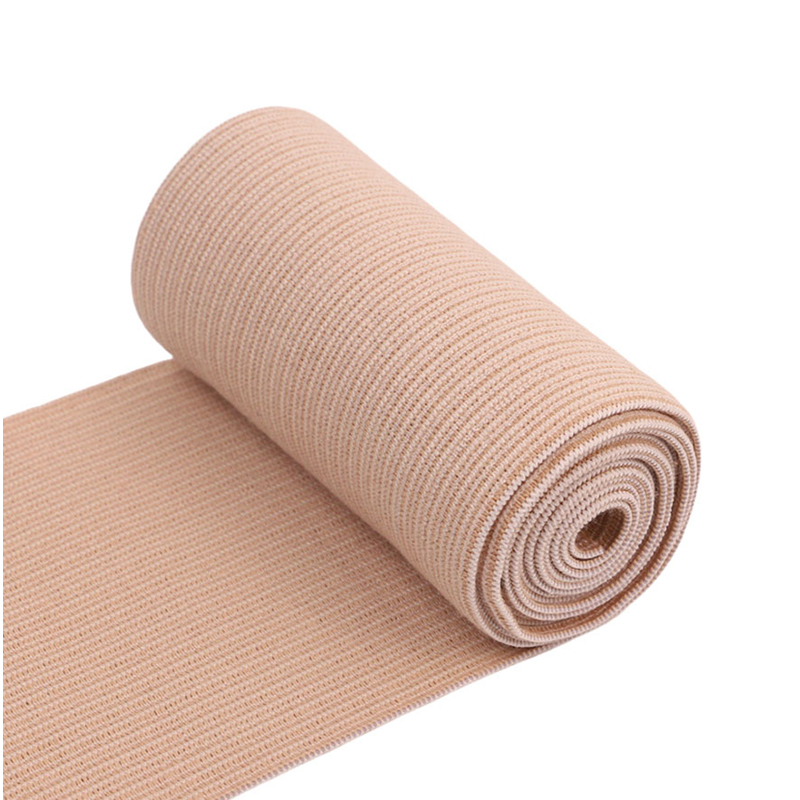
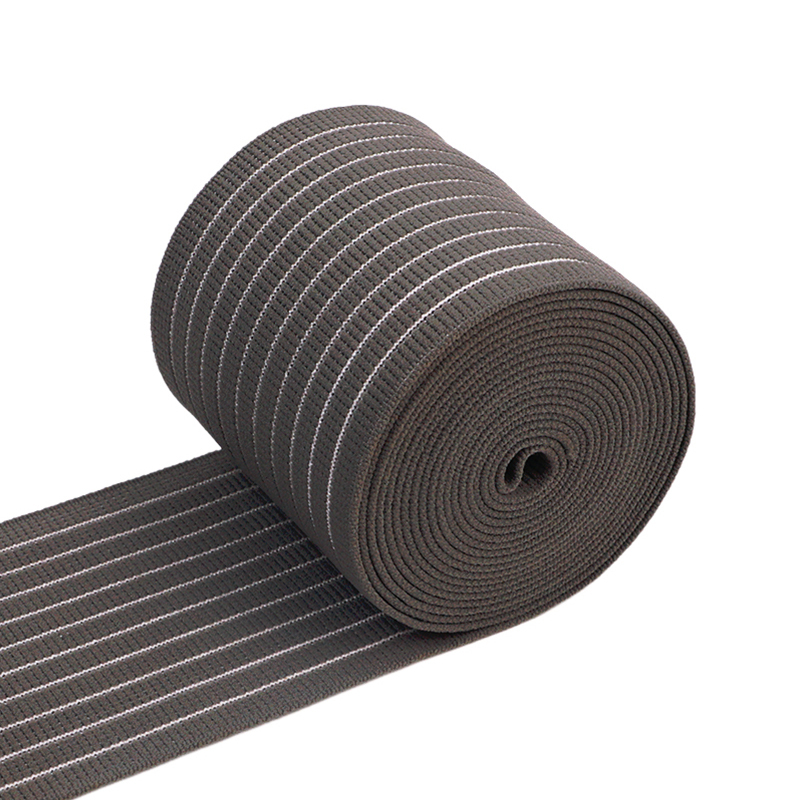
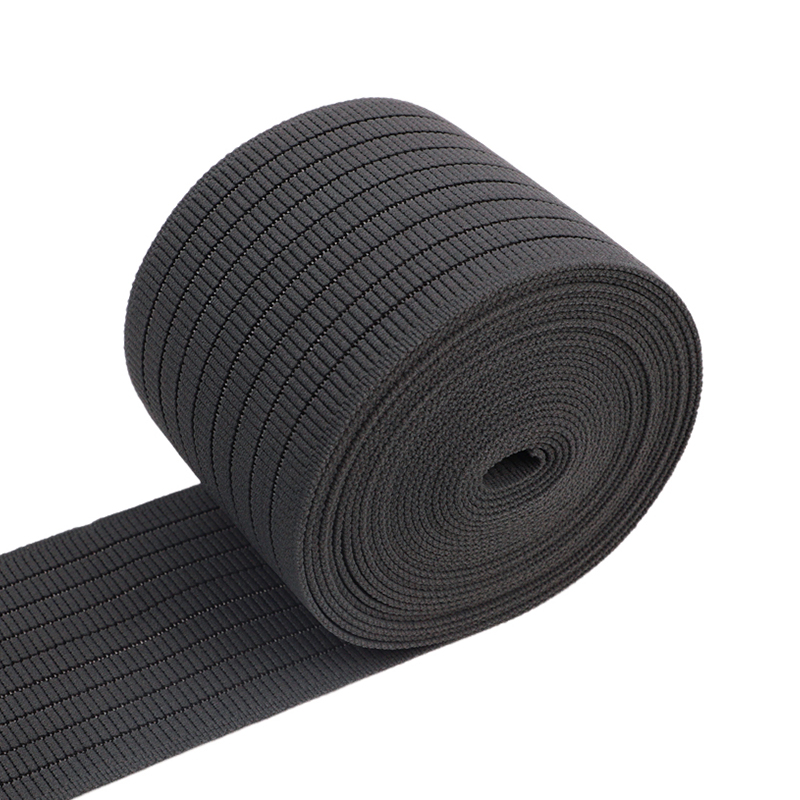
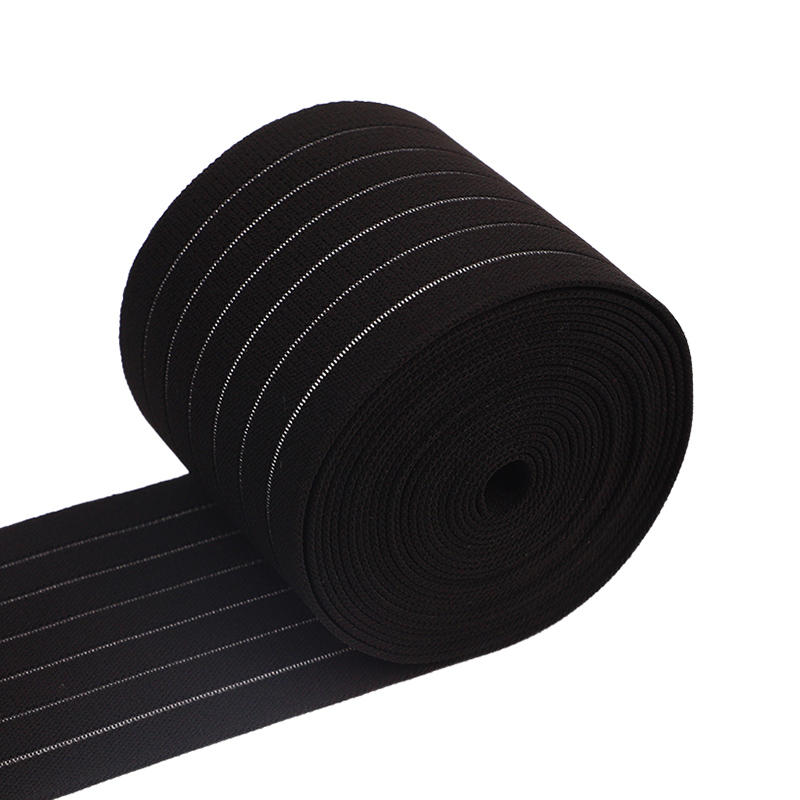
10 Inch Grey Woven Elastic Panels
Advantages of the 10-Inch Width
Broader Pressure Distribution
One of the most important advantages of a 10-inch panel is its ability to distribute pressure over a comparatively large area. When support force is concentrated in a narrow band, the wearer may experience localized pressure, edge discomfort, or uneven contact. A wider panel can spread the load more evenly, helping designers create a support product that feels more balanced during use.
In abdominal binders and torso support products, broad coverage can be especially useful. The panel can cover a larger portion of the abdomen or lower back than a narrow elastic strip. This allows the finished product to provide a more continuous support zone. The result is not automatically a clinical outcome, since performance depends on the complete product design and fitting method, but the panel’s width gives designers a strong foundation for creating stable and comfortable support systems.
Improved Structural Stability
Wide elastic panels can contribute to the structural stability of a finished product. Rather than acting only as a small stretch section, the panel can form a substantial part of the product body. It may help keep a brace, binder, or protective garment aligned during movement. The woven construction supports this function by helping the material resist unwanted distortion while still allowing controlled extension.
Dimensional stability is particularly important for products that need to maintain their shape after repeated wear. If an elastic component stretches permanently or changes width significantly, the fit and support characteristics of the finished article may change. A panel developed with attention to weaving precision, yarn arrangement, and process consistency can help reduce these risks when used within an appropriate product design.
Comfort During Movement
Support products must balance firmness and flexibility. A material that is too rigid may interfere with movement, while a material that is too soft may not provide sufficient support. The 10-inch woven elastic panel is intended to stretch in response to body movement and fitting requirements while retaining a stable support function.
This adaptability can be useful during walking, bending, sitting, light exercise, rehabilitation activities, and other daily motions. The panel can accommodate changes in body position more effectively than a fully non-stretch material. At the same time, its wide surface helps prevent the entire support function from depending on a narrow line of tension.
Fatigue Resistance for Repeated Use
Many medical, sports, and functional products are used repeatedly. Their elastic components may be extended, released, washed, folded, compressed, and exposed to continuous tension over their service life. Fatigue resistance is therefore a major consideration in material selection.
The panel is designed for environments involving repeated stretching and continuous stress. Its woven structure and controlled manufacturing process are intended to support stable performance over repeated loading cycles. Actual service life will depend on many factors, including extension percentage, cycle frequency, temperature, moisture, laundering method, seam design, chemical exposure, and the construction of the finished product. Nevertheless, a panel engineered for dimensional stability and fatigue resistance can offer an important advantage over less consistently produced elastic materials.
Professional Grey Appearance
Color plays a practical role in product development. Grey is a neutral shade that can support a clean, professional appearance in medical and functional products. It can be integrated with black, white, blue, beige, and other commonly used materials. The understated appearance is suitable for products where the textile component should look dependable without drawing unnecessary attention.
A neutral panel may also simplify coordination among multiple components. Manufacturers can use it in prototypes, standard product lines, or customized designs where a restrained visual identity is preferred. The color can be especially appropriate for rehabilitation equipment, orthopedic supports, industrial accessories, and sports products that require a technical appearance.
Comparison with Narrow Elastic and Other Elastic Structures
Different elastic constructions serve different purposes. A narrow elastic band may be efficient for edging, small straps, garment openings, and localized fastening. However, it may not be suitable when broad pressure distribution or torso coverage is needed. A 10-inch panel provides a larger working surface and can reduce the need to join multiple narrow strips side by side.
Compared with some knitted elastic structures, woven elastic may offer a different balance of stability, texture, and resistance to deformation. Knitted elastic is often valued for softness, flexibility, and conformability. Woven elastic panels are often selected when designers need a more structured textile with controlled dimensions and strong support characteristics. The best choice depends on the application, but the woven construction of this panel is advantageous where structural integrity and repeated-load performance are priorities.
Compared with non-elastic webbing, the panel offers greater adaptability. Non-elastic webbing can provide fixed reinforcement and strong load restraint, but it does not accommodate body movement or changing circumference in the same way. A woven elastic panel can work independently or in combination with non-elastic webbing, rigid supports, hook and loop closures, or other stabilizing materials.
Compared with assembling several small elastic strips, a single wide panel may simplify the support architecture. Fewer parallel components can mean fewer seams, fewer alignment issues, and a more continuous pressure distribution area. It may also help improve visual consistency. The economic benefit depends on the cutting, sewing, and assembly process, but broad panel construction can offer efficiency in products that already require a wide support section.
| Material Option | Primary Strength | Potential Limitation | When the 10-Inch Woven Panel May Be Preferred |
|---|---|---|---|
| Narrow elastic band | Compact localized stretch | Limited coverage and concentrated pressure | When broad support and distributed tension are required |
| Knitted elastic | Softness and conformability | May provide less structural stability in some designs | When a balance of stretch and dimensional control is needed |
| Non-elastic webbing | Fixed reinforcement and restraint | Limited adaptability to body movement | When controlled elasticity is needed for comfort and fit |
| Multiple narrow strips | Modular placement options | More seams, alignment demands, and potential pressure lines | When a continuous wide support surface can simplify construction |
| 10-inch woven elastic panel | Broad coverage, elastic response, and structural stability | Requires suitable cutting, joining, and product engineering | For abdominal, torso, rehabilitation, sports, and industrial support applications |
This comparison is a general design guide rather than a substitute for application-specific testing. Engineers should evaluate the complete assembly, including the fabric layers, closure system, seams, stitching pattern, and intended load conditions.
Precision Weaving and Manufacturing Quality
The manufacturing process has a direct influence on the performance of elastic webbing and panels. A wide elastic product must maintain consistent width, balanced tension, and stable yarn organization across its length. Variations in weaving conditions can affect stretch, recovery, surface appearance, edge behavior, and the way the material joins with other components.
Precision weaving helps create a controlled structure in which elastic and supporting yarns work together. The process must be managed carefully to achieve the desired combination of extensibility and stability. Production parameters may include yarn selection, warp preparation, weaving tension, machine speed, width control, finishing conditions, inspection procedures, and packaging practices.
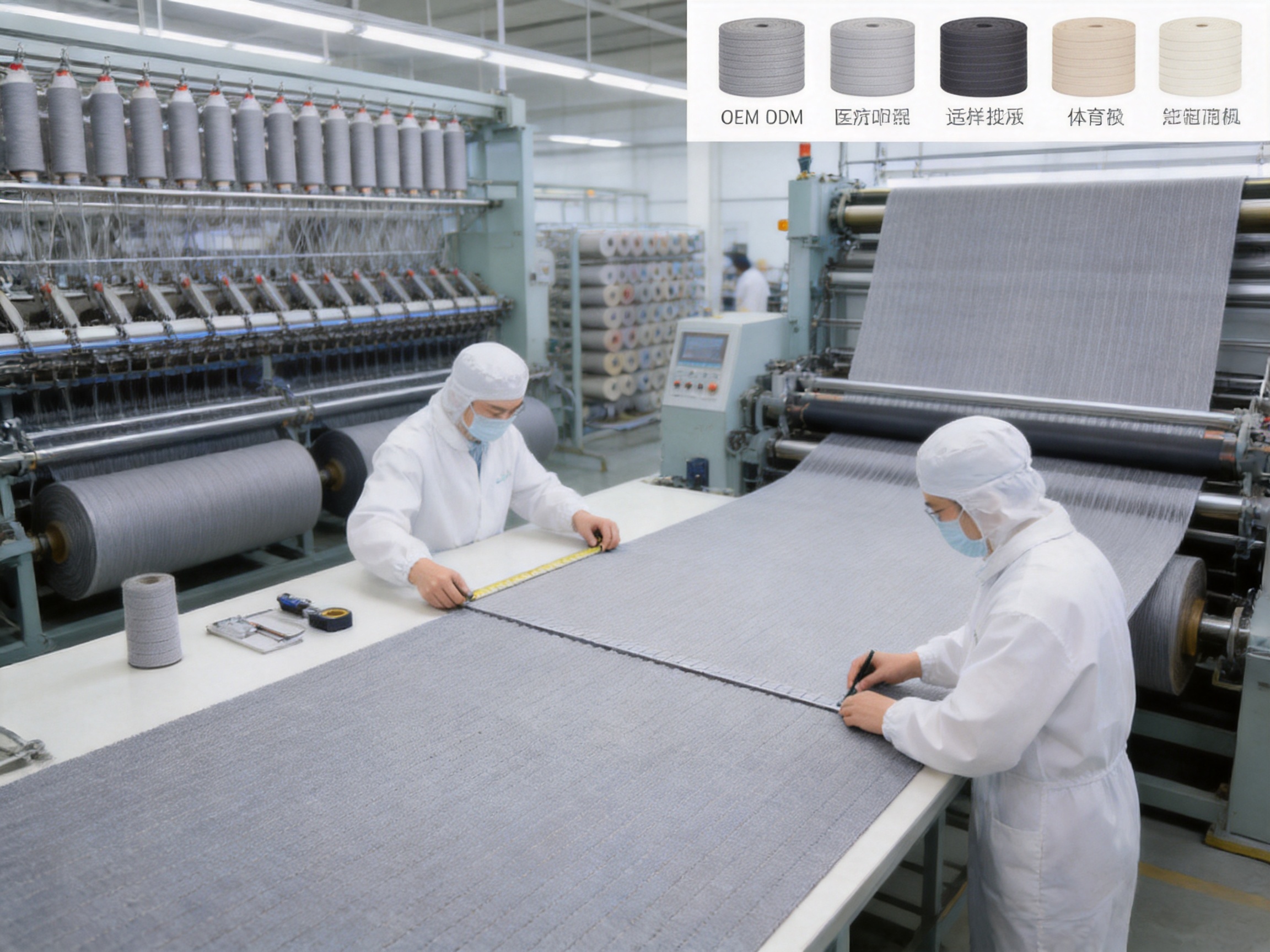
Jinhu Hengxiang Webbing Co., Ltd. has developed production capabilities for elastic webbing and non-elastic webbing since its establishment in 2005. The company operates in Jinhu County, Huai’an City, Jiangsu Province, China, and focuses especially on webbing used in sports supports, orthopedic braces, medical protective equipment, and related products.
The company has introduced and updated equipment including warping machines, knitting machines, woven machines, and packaging machines. This equipment base supports multiple stages of production and enables the manufacturer to produce millions of meters of elastic and non-elastic webbing each month. Such production capacity can be important for customers that require repeat orders, coordinated product programs, or dependable supply planning.
Production scale alone does not guarantee quality. The value of manufacturing capacity depends on how consistently it is managed. For this reason, quality control should extend from material sourcing through processing, inspection, testing, and packing. A structured production system can help identify variation earlier, maintain batch consistency, and support more reliable delivery to customers.
Material Sourcing and Yarn Control
Elastic performance begins with the materials used in the product. The yarn combination, elastic element, supporting fiber, colorant, and finishing treatment can all influence the final behavior of the panel. Material selection should be aligned with the intended use, expected stretch range, environmental exposure, and joining method.
Careful sourcing helps reduce variation between production batches. It also supports traceability and makes it easier to investigate performance differences if they occur. For medical and sports support products, manufacturers may additionally need to consider skin contact, odor, colorfastness, cleanliness, and compatibility with other product layers.
Warping, Weaving, and Process Integration
Warping prepares yarns for the weaving process and influences their arrangement and tension. Consistent preparation is essential for producing a panel with stable width and predictable stretch. The woven stage then integrates the yarns into the intended structure. Machine settings must be managed to support a balanced construction rather than excessive looseness, tightness, or distortion.
The use of dedicated woven machines allows the manufacturer to develop products with different widths, textures, colors, and performance characteristics. This is particularly relevant for customers who need customized webbing rather than a single standard specification. The ability to adjust the product structure can help support different applications, from soft rehabilitation supports to more robust industrial fastening systems.
Inspection, Testing, and Packing
Inspection is important at several points in the production cycle. Visual checks may identify uneven edges, surface defects, color variation, weaving irregularities, or contamination. Dimensional checks can confirm width and roll consistency. Performance tests may evaluate stretch, recovery, tensile behavior, fatigue response, and compatibility with the customer’s assembly process.
Packaging also matters because elastic panels can be affected by compression, folding, moisture, dust, and improper storage. Appropriate packing helps protect the material during handling and transportation. Clear identification of product specifications, batch information, and customer requirements can support more efficient inventory control and production planning.
Quality Systems and Certification Strengths
Jinhu Hengxiang Webbing Co., Ltd. has obtained Oeko-Tex Standard 100 and ISO 13485 certificates. These certifications are relevant to customers evaluating textile safety, quality management, and medical-product supply capability. Certification does not replace application-specific testing, but it can provide evidence that the manufacturer has established formal systems and procedures.
Oeko-Tex Standard 100 is associated with testing textile products for certain harmful substances according to applicable product requirements. For components that may be used in garments, braces, binders, and other products that come into contact with the skin, material safety is an important consideration. Customers should confirm the current scope, certificate details, product class, and validity for the specific material being purchased.
ISO 13485 is a quality management standard associated with organizations involved in medical devices and related products. A supplier operating within this framework may be better prepared to manage documented processes, traceability, corrective actions, risk-related procedures, and customer requirements. The exact implications depend on the certified scope and the customer’s own quality system.
For buyers, these certifications can make supplier evaluation more structured. They may support internal approval processes, technical documentation, regulatory review, and quality agreements. Customers should still conduct their own due diligence, including reviewing test reports, production samples, change-control procedures, and any requirements specific to the destination market.
Applications in Abdominal Binders
Abdominal binders require materials that can provide broad coverage, adjustable tension, and comfortable contact with the body. A 10-inch woven elastic panel is well suited to this general design concept because its width can cover a significant abdominal or torso area. The panel may serve as the main elastic body section or as a structural layer combined with other textiles.
The woven panel can help an abdominal binder maintain contact as the wearer changes position. It may also provide a stable base for attaching hook and loop closures or reinforcement zones. Designers can determine how much of the panel should stretch, where the closure should be placed, and whether additional soft lining or breathable fabric is needed.
Comfort must be evaluated in the finished product. The panel’s width, edge treatment, surface texture, tension level, and interaction with the lining all influence the user experience. A well-designed binder should avoid unnecessary rolling, bunching, sharp edges, and excessive pressure. Prototype testing on representative users or fitting forms is recommended before production approval.
The panel should not be presented as a medical treatment by itself. Its role is to serve as a textile component within a complete support product. Clinical claims, product indications, and user instructions must be developed by the finished-product manufacturer in accordance with applicable regulations and professional requirements.
Applications in Rehabilitation Supports and Orthopedic Braces
Rehabilitation supports often need to accommodate gradual movement, changing body positions, and extended periods of use. A broad woven elastic panel can provide a stable support area while preserving a degree of flexibility. It may be integrated into lumbar supports, torso braces, posture-related products, recovery garments, or other systems where controlled elasticity is useful.
Orthopedic braces frequently combine several materials. A wide elastic panel may work with rigid stays, foam padding, breathable mesh, non-elastic reinforcement, buckles, or hook and loop straps. The panel can help distribute the pull generated by the closure system and reduce the need for small, high-tension elastic areas.
Different rehabilitation products require different levels of support. The manufacturer and product designer should determine the appropriate stretch range, recovery behavior, width tolerance, and surface construction through sampling and performance testing. A panel that is suitable for a light-support garment may not be suitable for a high-load brace without modification.
Applications in Sports Protective Equipment
Sports protective products must often remain secure during repeated, rapid movement. The component materials may experience tension, sweat, friction, bending, and frequent laundering. A wide woven elastic panel can help create a stable support section for protective belts, compression supports, training braces, and sports accessories.
The panel’s broad coverage may reduce movement between the product and the wearer when compared with a narrow component that provides only localized contact. Its elastic response can allow athletes to move more naturally than they might with a completely rigid support. At the same time, the woven structure can provide a more controlled feel than an unstructured stretch fabric.
Sports product designers should consider breathability, moisture management, edge comfort, skin contact, cleaning instructions, and the effect of repeated high-intensity use. The grey color can support a technical athletic appearance and can be combined with branded outer fabrics, printed panels, or contrasting trims in the final product.
Applications in Functional Clothing and Accessories
Functional clothing often requires textile components that combine appearance with performance. A 10-inch panel can be used in specialized garments, adaptive clothing, protective apparel, support belts, workwear accessories, and adjustable body-worn products. The wide format creates opportunities for integrated support rather than relying only on narrow straps.
In clothing design, the panel may be covered by an outer fabric or used as a visible functional element. It can contribute to fit adjustment, body contouring, support, or reinforcement. Designers should evaluate seam bulk, laundering, color coordination, fabric compatibility, and the effect of repeated stretching on the garment pattern.
For adaptive clothing, broad elastic sections may help users manage fit more easily. The panel can be combined with hook and loop closures to create adjustable openings or support zones. The final design should prioritize simple operation, comfortable contact, secure fastening, and clear care instructions.
Applications in Industrial Fastening and Support Solutions
Although the product is well suited to medical and sports applications, its capabilities also support industrial uses. Industrial products may need elastic tension, repeated adjustment, broad stabilization, or flexible fastening around equipment, packaging, protective covers, or wearable work accessories.
Compared with a narrow strap, a wide panel can distribute force over a larger area and reduce the risk of cutting into soft covers or flexible surfaces. It may be useful where the supported object needs a compliant, adjustable connection rather than a fully rigid restraint. The suitability of the panel depends on the load, safety factor, environment, and required service life.
Industrial buyers should assess exposure to oil, chemicals, ultraviolet light, temperature variation, abrasion, dust, moisture, and mechanical cycling. If the product will be used in a safety-critical system, engineering validation and specialized testing are essential. The textile should be treated as one component in a complete system rather than as an independent load-bearing guarantee.
Customization for OEM and ODM Projects
Different customers may need different combinations of elasticity, texture, color, width, and surface feel. A standard 10-inch grey panel can provide a starting point, while customization can help align the material with a particular product architecture. Jinhu Hengxiang Webbing Co., Ltd. welcomes OEM and ODM orders and provides customized webbing solutions.
Elasticity can be adjusted to support different fitting and tension requirements. Some products need gentle extension and soft recovery, while others require firmer resistance and greater structural support. Texture may also be adapted according to whether the panel will touch the skin, be covered by another textile, or connect directly to a fastening component.
Color customization can support a customer’s product identity or help coordinate the panel with other materials. Although grey is a versatile standard appearance, custom colors may be appropriate for healthcare brands, sports collections, industrial product lines, or private-label programs.
Successful customization depends on clear technical communication. Customers should provide drawings, target dimensions, intended stretch range, load conditions, color references, test requirements, packaging expectations, and estimated order quantities. Samples should be assessed not only as loose material but also in the completed assembly, since sewing and joining can change the panel’s behavior.
Recommended Information for a Technical Inquiry
When requesting a quotation or sample, buyers should identify the product application and expected use frequency. They should describe whether the panel will be used in an abdominal binder, brace, sports support, garment, or industrial fastening product. They should also indicate whether the panel will contact the skin and whether it will be exposed to washing, perspiration, moisture, chemicals, or high temperatures.
Useful technical information includes required width, acceptable tolerance, color, roll length, preferred packaging, joining method, closure type, estimated annual volume, and destination-market requirements. If a customer has a target competitor sample or existing material, providing a reference sample can help the manufacturer understand the desired hand feel, stretch behavior, and appearance.
For regulated medical products, customers should also clarify documentation needs, traceability expectations, labeling requirements, change-notification procedures, and quality agreements. Early communication can reduce delays during product approval and minimize the risk of a material being technically suitable but administratively incomplete.
Product Development and Integration Considerations
Cutting and Edge Management
Wide elastic panels must be cut accurately to maintain consistent dimensions in the finished product. Cutting equipment, blade condition, feeding tension, and material handling can influence the result. Designers should consider whether the edges will be enclosed, bound, stitched, welded, or left as part of a layered construction.
Edge finishing can affect comfort and durability. In body-worn products, exposed edges may require binding or a soft covering to reduce irritation. In industrial products, the edge may need reinforcement to prevent fraying or distortion. The appropriate method depends on the panel construction and the requirements of the final assembly.
Sewing and Joining
Stitch selection and seam placement can significantly affect elastic performance. A seam that is too rigid may restrict extension, while inadequate stitching may allow the panel to pull away from the surrounding material. Manufacturers should evaluate thread type, stitch density, seam allowance, needle selection, and the direction of stretch.
Hook and loop components can be sewn directly to the panel or attached through an intermediate fabric layer, depending on the design. The fastening system should distribute its force over a sufficient area. If the closure is concentrated at a small point, the panel may experience localized stress that does not reflect its intended wide-support function.
Layering and Lining
The panel can be combined with breathable mesh, soft fabric, foam, laminated material, or a protective outer textile. Layering may improve comfort, moisture management, appearance, or support. However, each added layer can affect the total stretch, recovery, thickness, and heat retention of the product.
Prototype development should therefore test the complete layered structure. A panel that performs well alone may feel too firm after lamination or may lose some of its stretch when stitched to a non-elastic outer layer. Conversely, a lining may improve comfort and help maintain the intended position of the panel against the body.
Testing and Validation
Testing should reflect the intended product environment. Basic evaluations may include width measurement, stretch percentage, recovery after extension, tensile strength, seam strength, colorfastness, dimensional change, and repeated-cycle performance. Additional testing may be necessary for laundering, perspiration, abrasion, temperature, humidity, or chemical exposure.
For medical and sports applications, wear trials can help identify rolling, slippage, pressure concentration, heat buildup, and skin-contact concerns. For industrial applications, system-level testing should include the expected load, safety factor, cycle frequency, and environmental conditions. Results should be documented and compared with the customer’s acceptance criteria.
Supply Capacity and Global Customer Support
Jinhu Hengxiang Webbing Co., Ltd. has more than 20 years of professional production experience based on its history since 2005. Its product range includes elastic webbing and non-elastic webbing for sports protection, medical protective equipment, orthopedic braces, and related applications. The company’s production capability reaches millions of meters of webbing per month, supporting both standard supply and larger-scale customer programs.
The company serves customers in China and exports to North America, Eastern Europe, the Middle East, South Asia, and other regions. International experience can help a supplier understand the importance of consistent documentation, communication, packing, lead-time planning, and export coordination. These factors are especially important when a panel is part of a multi-stage product supply chain.
Competitive pricing is another stated strength of the manufacturer. However, purchasing decisions should evaluate total value rather than unit price alone. Material consistency, delivery reliability, reduced production interruptions, lower rejection rates, technical assistance, and customization capability can all influence the real cost of a component.
Timely delivery is particularly valuable for customers launching new products or managing seasonal demand. A supplier with integrated warping, weaving, knitting, and packaging capabilities may be able to coordinate production more efficiently than a fragmented supply chain. Customers should still confirm current lead times, minimum order quantities, capacity reservations, and contingency arrangements for their specific program.
Why Choose This Panel for Competitive Product Development?
The 10-inch grey woven elastic panel offers several qualities that can help a finished product compete in demanding markets. Its broad width supports pressure distribution and structural coverage. Its woven construction is suited to applications requiring a balance of stretch and stability. Its grey appearance is professional and easy to coordinate. Its design supports repeated use and continuous stress, while the manufacturer provides options for customization.
Another advantage is the breadth of possible applications. A customer may use a similar panel concept across an abdominal binder, a rehabilitation brace, a sports support, or a functional garment. This can simplify product-family development and help maintain a consistent component strategy across multiple designs.
The manufacturer’s equipment investment, quality certifications, production experience, and international customer base also provide useful supplier strengths. Customers seeking a long-term partner may benefit from a supplier that can support development, sampling, volume production, customization, inspection, and packaging within an established manufacturing operation.
The strongest competitive advantage is achieved when the panel is correctly matched to the finished product. Material selection should be based on tested performance rather than appearance alone. The panel should be evaluated with the intended seams, closures, linings, load conditions, and care process. When these factors are aligned, the material can contribute to a reliable, comfortable, and commercially attractive product.
Q&A
What is the main purpose of the 10-inch grey woven elastic panel?
The main purpose is to provide a broad elastic support area with controlled stretch, dimensional stability, and resistance to repeated loading. It is intended for products such as abdominal binders, rehabilitation supports, medical braces, sports protective equipment, functional clothing, and industrial support solutions.
Why choose a 10-inch width instead of a narrow elastic band?
A 10-inch width can distribute pressure and tension over a larger area. This may help improve coverage, reduce localized pressure, and increase structural stability in products that support the abdomen, torso, back, or another broad body region. Narrow elastic remains useful for localized fastening and edging, but it may not provide the same coverage.
Is the panel suitable for direct skin contact?
Suitability for direct skin contact depends on the complete specification, finishing, product design, and applicable safety requirements. Customers should confirm the relevant material documentation and conduct their own skin-contact, cleanliness, and comfort evaluations. A lining or covering layer may be preferred for some applications.
Can the panel be used in medical products?
It can be used as a component in medical support products such as abdominal binders and braces, subject to appropriate product engineering, testing, documentation, and regulatory compliance. The panel itself should not be considered a complete medical device or a substitute for clinical evaluation.
Can the grey color be customized?
Grey is the standard appearance described for this product, but the manufacturer provides customized webbing with tailored color options. Customers should provide a color reference and confirm the required tolerance, colorfastness, and approval process.
Can the elasticity be customized?
The manufacturer offers customization of elasticity and texture. The desired stretch range, recovery behavior, tension level, and intended use should be communicated during technical development. Samples should be evaluated in the finished product because seams and additional layers influence the final performance.
How does woven construction differ from knitted elastic?
Woven elastic is generally selected when designers need a controlled structure, broad support, and dimensional stability. Knitted elastic may offer a softer, more conformable behavior in certain designs. Neither construction is universally better; the appropriate choice depends on the required balance of softness, stretch, stability, durability, and application conditions.
Can the panel be attached to hook and loop closures?
Yes, it can be integrated with hook and loop systems or other fastening components. The attachment method should be designed to distribute force across the panel and prevent localized tearing or distortion. Seam construction, stitch density, overlap, and closure size should be validated through testing.
Is the panel suitable for sports products?
It is suitable for consideration in sports protective equipment, training supports, athletic braces, and related products. Designers should evaluate sweat, movement, laundering, abrasion, comfort, and repeated-cycle performance for the intended sport and use conditions.
What certifications does the manufacturer have?
The provided company information states that Jinhu Hengxiang Webbing Co., Ltd. has obtained Oeko-Tex Standard 100 and ISO 13485 certificates. Customers should request current certificate details and verify that the certified scope applies to the specific product and intended application.
What information should be provided when requesting a quotation?
Customers should provide the intended application, width, color, target elasticity, texture preference, material-contact requirements, order quantity, packaging needs, delivery destination, testing requirements, and any drawings or reference samples. Medical-product customers should also identify documentation, traceability, and quality-system expectations.
Can the panel be used in industrial products?
It may be suitable for industrial fastening and support solutions where broad, flexible, and adjustable tension is required. Buyers must assess load, safety factor, abrasion, chemical exposure, temperature, moisture, ultraviolet exposure, and service life before approving it for an industrial system.
What makes the manufacturer suitable for OEM and ODM projects?
The company offers customized elastic and non-elastic webbing, operates warping, knitting, weaving, and packaging equipment, produces large monthly volumes, and has experience serving medical, orthopedic, sports, and international customers. These capabilities can support development from sampling through repeat production.
Conclusion
The 10-inch grey woven elastic panel is a versatile textile component designed for applications that require broad coverage, elastic adaptability, and structural stability. Its wide format helps distribute pressure and tension, while its precision woven construction supports predictable stretch, dimensional control, and resistance to repeated stress. These features make it a strong candidate for abdominal binders, rehabilitation supports, orthopedic braces, sports protective equipment, functional clothing, and selected industrial products.
Its neutral grey appearance provides a professional visual option, and the panel can be integrated with hook and loop closures, non-elastic webbing, knitted elastic, mesh, foam, lining fabrics, and other construction materials. Customers can also request customized elasticity, texture, and color to match their product requirements.
Jinhu Hengxiang Webbing Co., Ltd. adds value through established production experience, updated warping, knitting, weaving, and packaging equipment, large-scale output, quality-control procedures, OEM and ODM capability, international supply experience, and stated Oeko-Tex Standard 100 and ISO 13485 certifications. These strengths can help customers develop and source consistent elastic webbing for demanding product programs.
For the best results, the panel should be tested as part of the finished product rather than evaluated only as a loose textile. Careful attention to stretch range, seam design, edge treatment, closure placement, layering, cleaning, environmental exposure, and user comfort will help ensure that the final product achieves its intended performance. When properly engineered and matched to the application, this 10-inch woven elastic panel can provide a dependable foundation for comfortable, stable, and durable support products.
References
1. Product specification and application information for the 10-inch grey woven elastic panel, supplied in the project materials.
2. Company information for Jinhu Hengxiang Webbing Co., Ltd., including manufacturing capabilities, product categories, export markets, and customization services.
3. Oeko-Tex Standard 100, general principles for testing textile products for harmful substances.
4. ISO 13485, quality management systems for organizations associated with medical devices and related services.
5. General textile engineering principles concerning woven elastic structures, dimensional stability, stretch recovery, fatigue resistance, and component integration.
6. General product-development practices for medical supports, sports protective equipment, functional garments, and industrial textile fastening systems.