
 en
en
 English
 русский
 Français
 Español
 Português
 Tiếng Việt
Content
- 1 Product Overview
- 2 Why a Wide Woven Elastic Panel Is Important
- 3 Construction and Functional Performance
- 4 Advantages Compared with Narrow Elastic Bands
- 5 Advantages Compared with Less Structured Elastic Materials
- 6 Applications in Abdominal Binders
- 7 Applications in Rehabilitation Support Systems
- 8 Applications in Medical Braces
- 9 Applications in Sports Protective Equipment
- 10 Applications in Functional Clothing and Accessories
- 11 Industrial Fastening and Support Solutions
- 12 Manufacturing Experience and Production Capability
- 13 Quality Control from Material Sourcing to Packing
- 14 Certification and Professional Reliability
- 15 Customization for Different Product Requirements
- 16 Comparison of Material Options
- 17 Design and Integration Considerations
- 18 Supply and Customer Support Strengths
- 19 Why Manufacturers Choose This Panel
- 20 Product Evaluation and Quality Assurance
- 21 Sustainability and Responsible Manufacturing
- 22 Ordering and Custom Development Process
- 23 Frequently Asked Questions
- 23.1 What is the primary purpose of the 10-inch grey woven elastic panel?
- 23.2 How is this panel different from a narrow elastic band?
- 23.3 Is the panel suitable for direct skin contact?
- 23.4 Can the panel be used in abdominal binders?
- 23.5 Can the color or elasticity be customized?
- 23.6 Is the panel appropriate for orthopedic braces?
- 23.7 Can it be combined with hook and loop fasteners?
- 23.8 What manufacturing equipment supports production?
- 23.9 What certifications does the manufacturer hold?
- 23.10 Does certification guarantee that a finished medical product is approved?
- 23.11 How should customers test the panel before ordering in volume?
- 23.12 Is grey the only available color?
- 23.13 Can the panel be used in high-risk lifting or safety equipment?
- 23.14 Where is the manufacturer located?
- 23.15 How can an international buyer discuss a project?
- 24 Conclusion
- 25 References
- 26 Product: 10 Inch Grey Woven Elastic Panels
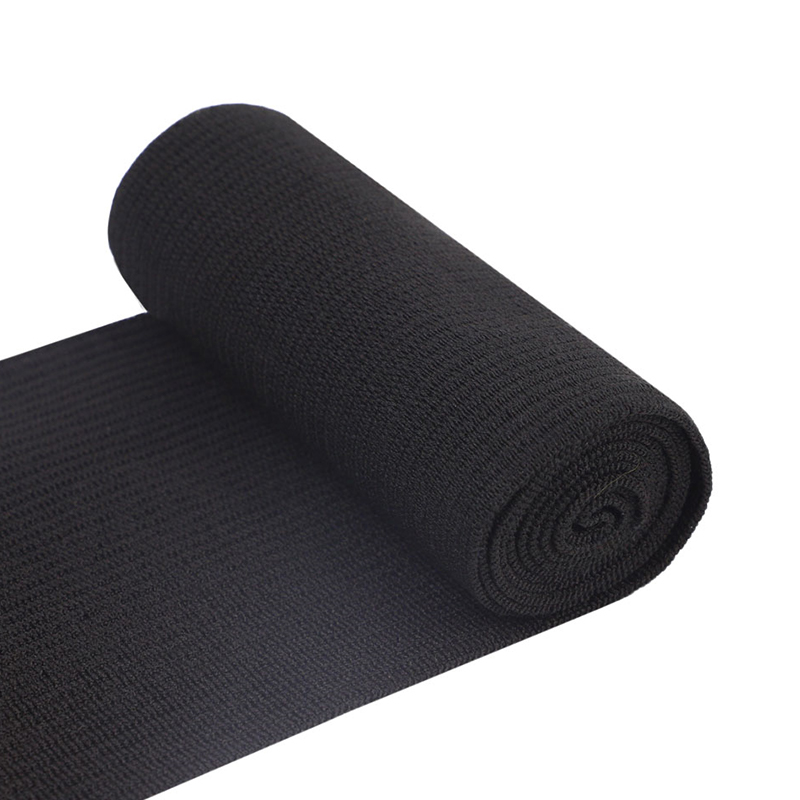
Wide elastic materials play an important role in medical supports, rehabilitation products, sports protection equipment, and functional garments. When a product requires broad coverage, controlled stretch, and dependable recovery, a narrow elastic band may not provide sufficient support or pressure distribution. The 10-inch grey woven elastic panel is designed for applications in which structural stability, comfort, and repeated-use performance are essential. Its wide format creates a larger support surface, while its woven construction helps the panel maintain its shape during regular stretching and relaxation.
This type of elastic panel is particularly suitable for abdominal binders, rehabilitation support systems, medical braces, sports protective products, functional clothing, and industrial fastening solutions. It offers a practical balance between flexibility and reinforcement. Rather than acting as a simple narrow strap, the panel can cover a broader area and distribute tension across the body or another supported structure. This makes it useful for products that must provide reliable holding power without concentrating pressure in one small region.
Manufactured by Jinhu Hengxiang Webbing Co., Ltd., the panel reflects more than two decades of experience in elastic and non-elastic webbing production. The company combines precision weaving, organized quality control, modern production equipment, and customized manufacturing capabilities. Its experience in supplying webbing for sports supports and orthopedic braces allows it to understand the functional requirements of materials used in medical and protective products.
Product Overview
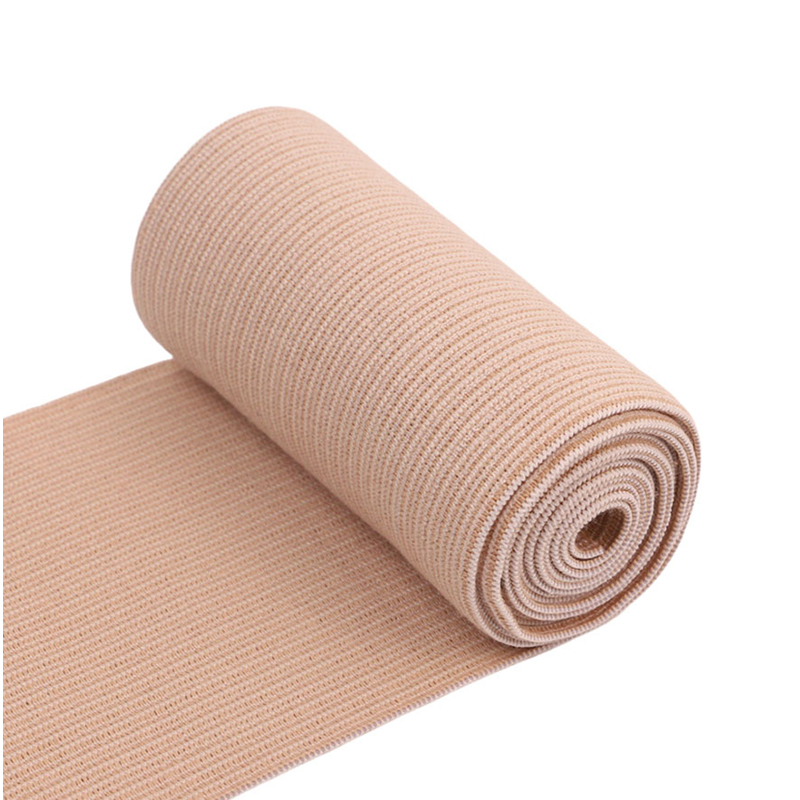
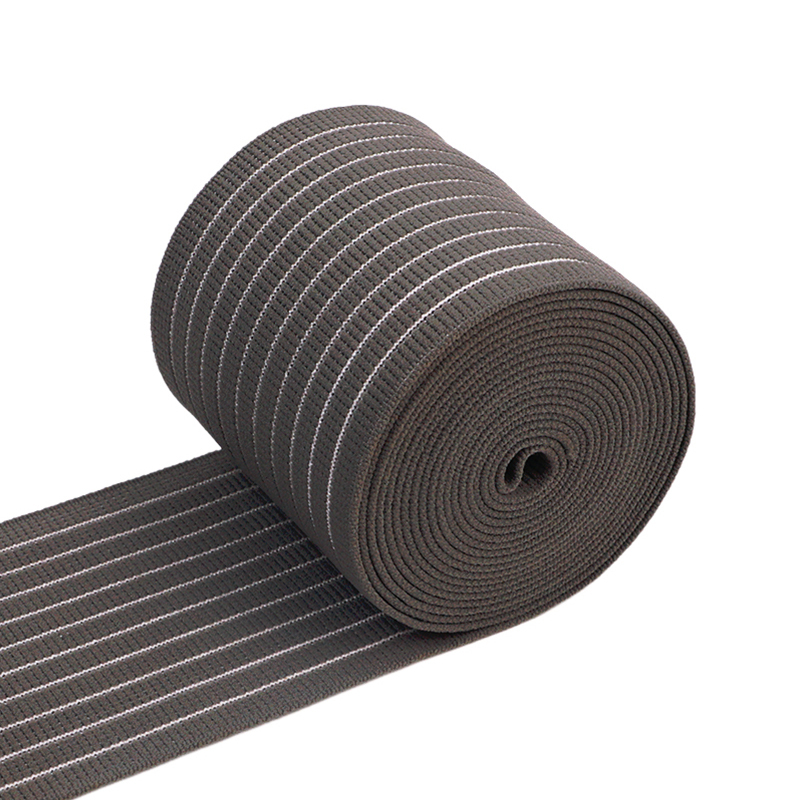
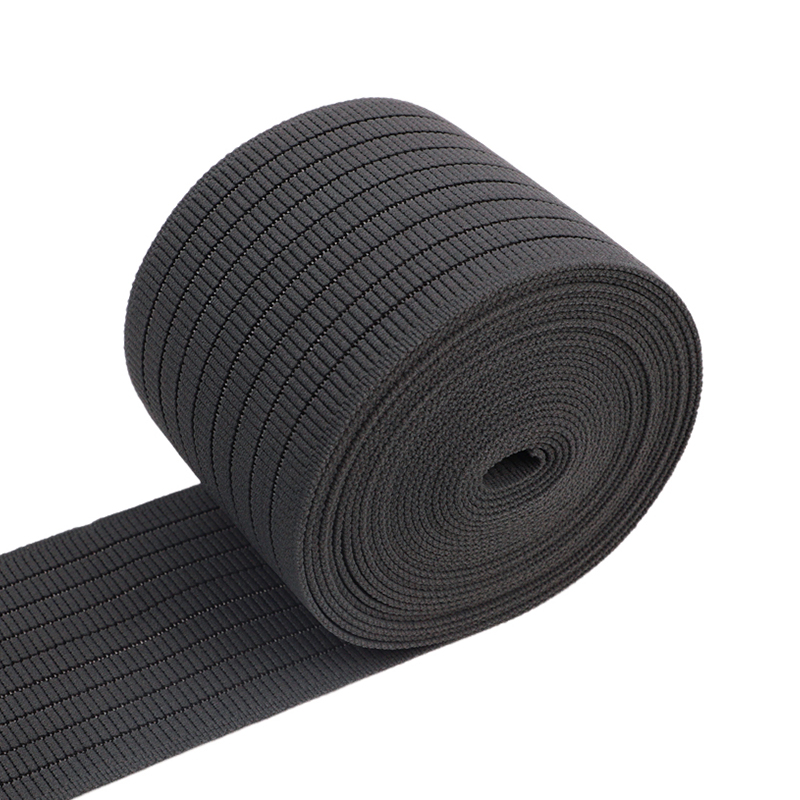
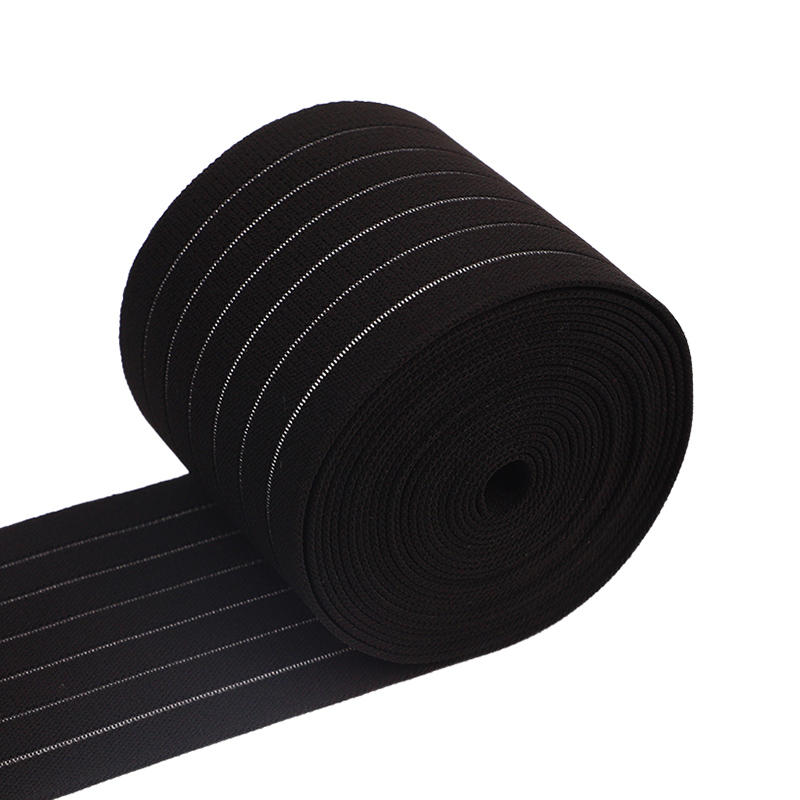
The 10-inch grey woven elastic panel belongs to the woven wide elastic category. Its main distinguishing features are its broad 10-inch width, woven construction, elastic performance, neutral grey color, and suitability for repeated-use support applications. The panel is intended for integration into finished products rather than use as an independent medical device. Its final performance depends on the design of the completed product, the sewing or attachment method, the selected components, and the intended application.
A woven elastic panel is formed by interlacing yarns in a controlled structure. This construction creates a stable web that can stretch when force is applied and recover when the force is reduced. Compared with a simple narrow elastic band, a wide woven panel can provide greater surface contact. Compared with a soft, loosely structured elastic material, a precision-woven panel can offer more consistent dimensional behavior and better resistance to deformation under repeated stress.
The grey appearance provides a restrained and professional visual effect. Neutral grey can be incorporated into medical supports, rehabilitation products, industrial accessories, and functional garments without creating a strong visual contrast. It can also coordinate with black, white, blue, beige, and other common product colors. For manufacturers developing products for clinics, rehabilitation centers, sporting environments, and professional users, the understated color can support a clean and practical product image.
The panel is designed for applications that require greater coverage and structural stability. Its width can help spread pressure over a larger surface, potentially improving the wearing experience when the finished product is properly designed and fitted. Broad coverage also allows manufacturers to create support zones that are less dependent on a single narrow strap. This may simplify the construction of abdominal supports, back supports, protective panels, and other products requiring a substantial elastic section.
Why a Wide Woven Elastic Panel Is Important
Elastic materials must perform more than one function. They must stretch enough to permit movement or adjustment, recover sufficiently to maintain support, and remain stable enough to avoid unwanted twisting or distortion. The material must also work with other components, including fabric, hook and loop fasteners, buckles, seams, padding, and reinforcement layers.
A narrow elastic band concentrates its force along a limited line. That may be appropriate for shoulder straps, garment edges, small closures, or other targeted applications. However, when the design requires broad support around the abdomen, waist, back, limb, or torso, a wider structure can offer practical advantages. A 10-inch panel creates a much larger contact area than a narrow band, allowing the product designer to distribute tension over a broader region.
Broader coverage may contribute to improved comfort when pressure is correctly controlled. Instead of relying on one narrow strip to provide the entire holding force, the finished product can use the panel as a stable support zone. This can reduce the risk of localized pressure caused by an undersized elastic element. The actual comfort result will depend on the product pattern, edge finishing, pressure level, fabric selection, and the individual user, but the wide format gives designers more freedom to distribute support.
Wide elastic is also helpful when a finished product must remain visually and mechanically balanced. A broad panel can reduce the tendency of an elastic section to roll, fold, or shift when integrated correctly. Its woven structure supports more controlled handling during sewing and assembly. This is valuable for manufacturers seeking consistent production results across large quantities.
Construction and Functional Performance
Precision Woven Structure
The panel uses a precision weaving process to combine stretchability with dimensional stability. In a woven structure, the arrangement and tension of the yarns influence how the material responds to pulling, compression, bending, and repeated movement. A carefully controlled process helps produce a webbing material with a more uniform appearance and behavior across its width.
Uniformity is important because wide panels are often visible and functionally significant parts of the finished product. Variations in width, edge formation, surface texture, or elasticity can affect sewing alignment, user comfort, and final product appearance. Precision production helps manufacturers reduce avoidable variation and improve the reliability of downstream assembly.
Stretchability and Recovery
The panel is designed to stretch under tension and return toward its original dimensions after the load is reduced. This characteristic is essential for abdominal binders, rehabilitation supports, braces, and sports protection products. A support must often accommodate body movement, changes in posture, and repeated adjustment while continuing to contribute to the intended holding function.
Elastic recovery is also important for product longevity. If a material remains permanently elongated after repeated use, the completed product may gradually lose its fit and support. The panel’s woven structure and controlled production are intended to support resistance to fatigue and repeated stretching. Actual service life will vary according to the applied force, stretching frequency, environmental conditions, laundering, attachment method, and overall product design.
Dimensional Stability
Dimensional stability refers to the ability of the panel to preserve its width, shape, and general structure during use. This is a significant advantage for broad support products because a distorted panel can create uneven pressure or interfere with the fit of the finished item. Maintaining a stable shape helps the panel perform consistently within a designed support system.
Compared with less structured elastic materials, a woven wide elastic panel can provide a stronger foundation for products that need both flexibility and reinforcement. It is not rigid, but it can contribute to a more controlled structure. This balance is especially useful when a product must move with the user while still offering a dependable level of support.
Fatigue Resistance
Many medical and sports support products are exposed to repeated cycles of stretching and relaxation. An abdominal binder may be adjusted several times, a rehabilitation brace may be worn during daily movement, and sports protection equipment may experience repeated flexing during training. A material that performs well for only a short period may increase replacement frequency and reduce user confidence.
The 10-inch grey woven elastic panel is designed with fatigue resistance in mind. Its use of a woven construction and controlled manufacturing process supports its suitability for continuous stress and repeated stretching. This makes it a practical choice for manufacturers who want to develop products intended for regular use rather than occasional, low-stress applications.
Advantages Compared with Narrow Elastic Bands
The most direct alternative to a wide woven panel is often a narrow elastic band. Narrow elastic has many useful applications, but it may be less suitable when the design requires a large support area. The 10-inch panel provides several functional advantages in those situations.
First, the panel offers greater coverage. A wider material can support a larger area of the body or product structure without requiring multiple narrow strips. This may simplify pattern development and reduce the number of separate elastic components in a finished product.
Second, the panel can distribute pressure more broadly. When a narrow band is tightened to provide a required level of retention, its force is concentrated along a smaller contact area. A wide panel can help distribute that force across a broader zone, which may improve comfort and reduce the likelihood of an uncomfortable pressure line when the complete product is correctly designed.
Third, a wide panel can improve visual balance. Multiple narrow bands may create a segmented appearance or require additional overlapping construction. A single broad grey panel can create a cleaner and more integrated appearance, especially in abdominal supports, back supports, and functional garments.
Fourth, the panel can provide greater structural stability. Its width and woven formation make it suitable for applications where the elastic section must help maintain the overall shape of a product. This is valuable in support products that must remain aligned during movement.
Finally, the wide format can offer design flexibility. Manufacturers may cut, fold, sew, or combine the panel with other components according to the requirements of a particular product. The panel can function as a primary elastic support section, a reinforcement zone, or part of a fastening system.
Advantages Compared with Less Structured Elastic Materials
Some elastic materials are soft and highly flexible but may not provide enough dimensional control for broad support applications. A material that stretches easily is not automatically suitable for a medical or protective product. The designer must also consider width retention, edge stability, recovery, fatigue behavior, and compatibility with sewing and assembly.
The woven construction of this panel provides a structured alternative. It is designed to retain its general form while still allowing useful stretch. This combination can make it more appropriate for products that must provide support over a broad area. The panel is not intended to replace every type of knitted elastic, narrow elastic, or hook and loop strap. Instead, it fills a specific role where wide coverage and stable elasticity are priorities.
Its neutral grey finish can also offer an advantage over brightly colored or visually inconsistent materials. For professional medical and rehabilitation products, understated colors are often easier to integrate into a serious, clean, and functional design. Manufacturers can use the panel with other neutral components or create contrast with darker or lighter fabrics.
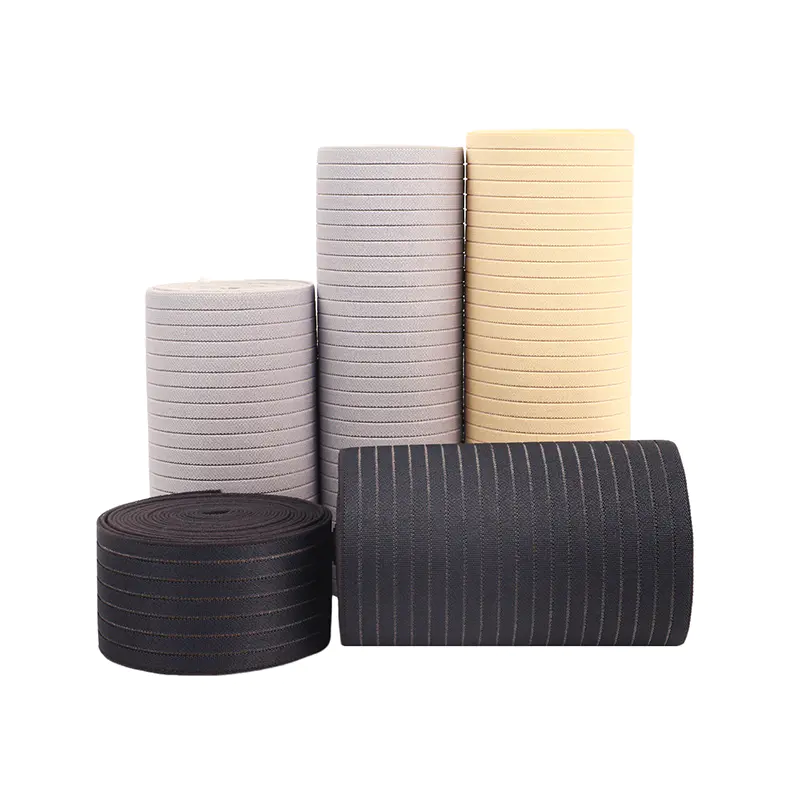
10 Inch Grey Woven Elastic Panels
Applications in Abdominal Binders
Abdominal binders require materials that can cover a substantial area while providing controlled support. The 10-inch width is well suited to designs that wrap around the abdomen or waist and require a broad elastic section. The panel can help the binder conform to the body while maintaining a stable support zone during standing, walking, sitting, or other ordinary movements.
In a finished abdominal binder, the elastic panel may be combined with fabric layers, hook and loop closures, edge binding, reinforcement panels, and comfort padding. The woven elastic can serve as the main flexible support section or as part of a multi-layer construction. Product developers must determine the appropriate tension, overlap, seam construction, and closure position through testing and fitting.
A wide panel can also reduce the need to assemble several narrow strips side by side. This may improve production efficiency and create a more consistent support surface. Fewer separate elastic pieces can mean fewer alignment points and fewer opportunities for uneven tension during assembly. The final result depends on the sewing equipment, operator skill, pattern design, and quality-control procedures used by the product manufacturer.
Applications in Rehabilitation Support Systems
Rehabilitation products often need to balance support and mobility. A material that is too rigid may restrict movement, while a material that is too soft may fail to provide adequate stabilization. The 10-inch grey woven elastic panel offers a flexible structural element for systems designed to provide broad-area support.
It may be incorporated into rehabilitation belts, recovery garments, posture-support products, and other functional systems. The broad surface can help designers create a support area that follows the body rather than relying on a thin strap. Its stretchability allows the product to accommodate moderate movement, while its dimensional stability helps the support remain organized during use.
Rehabilitation products are often adjusted repeatedly as a user progresses through different stages of recovery. A reliable elastic panel can support repeated fastening and release cycles when it is integrated with suitable closures. The panel may be combined with hook and loop components, buckles, or other adjustable systems. Testing should be performed on the complete product to confirm that the fastening method does not damage the elastic or create excessive localized force.
Applications in Medical Braces
Medical braces may require elastic sections to secure a brace around the abdomen, back, limb, shoulder, or other body region. A broad woven panel can help create a stable foundation for the brace and may be used with rigid inserts, foam padding, breathable textiles, or molded components.
In orthopedic and support-product manufacturing, material selection must consider both function and user experience. The elastic must be sufficiently flexible for movement, but it should also resist unnecessary distortion. The grey woven panel provides a practical option for manufacturers seeking a wide elastic component with an understated appearance and a structured surface.
Because the product is a material component rather than a complete brace, the brace manufacturer remains responsible for determining whether the selected construction is appropriate for its intended use. Fit, pressure, skin contact, seam placement, cleaning instructions, and regulatory requirements must be evaluated as part of the finished medical product.
Applications in Sports Protective Equipment
Sports protective equipment frequently experiences repeated movement, tension, impact-related vibration, and frequent adjustment. The 10-inch panel can be used in protective belts, support garments, compression structures, training accessories, and other products designed to help stabilize a body region during sporting activity.
Its broad coverage may be useful for products that must stay in position during running, bending, lifting, jumping, or rotational movement. The woven structure can contribute to a stable support area without making the entire product rigid. This is important for sports equipment that must allow athletes to move naturally.
For sports applications, designers should consider sweat, laundering, friction, ultraviolet exposure, and the frequency of use. The material should be tested in the same conditions expected during service. Seams, edges, closures, and contact surfaces may influence performance as much as the elastic panel itself.
Applications in Functional Clothing and Accessories
Functional clothing often combines comfort, fit, and specialized support. A wide elastic panel can be integrated into workwear, protective garments, adaptive clothing, support garments, and performance accessories. It may be used around the waist, torso, back, or other areas where a garment needs controlled stretch and reinforcement.
The grey color is suitable for products with a practical or professional design. It can be hidden inside a garment construction or used as a visible functional element. Designers may pair it with technical fabrics, mesh, spacer materials, hook and loop closures, woven labels, or other webbing components.
For garment applications, manufacturers should assess how the panel behaves after washing, drying, folding, and repeated wear. The selected sewing thread, needle, stitch pattern, seam allowance, and edge treatment should be matched to the panel’s width and thickness. Pre-production sampling is recommended before mass production.
Industrial Fastening and Support Solutions
The panel can also serve in industrial-grade fastening and support solutions. Wide elastic components may be used to hold, stabilize, bundle, or position equipment and materials where a degree of flexibility is required. The broad format can distribute retention forces and reduce dependence on a narrow contact line.
Industrial applications may include protective covers, adjustable support assemblies, equipment straps, and specialized fastening systems. The appropriate use depends on the load, environment, safety requirements, and attachment method. Engineers should not assume that a textile elastic panel is suitable for lifting, fall protection, or other high-risk applications unless the complete system has been specifically tested and certified for that purpose.
Manufacturing Experience and Production Capability
Jinhu Hengxiang Webbing Co., Ltd. was established in 2005 and is located in Jinhu County, Huai’an City, Jiangsu Province, China. The company specializes in the research, development, production, sale, and service of elastic webbing and non-elastic webbing. Its product experience is especially connected with sports supports and orthopedic braces, two fields in which webbing performance, consistency, and application knowledge are important.
More than 20 years of production experience provides a foundation for understanding the relationship between yarn selection, machine settings, weaving or knitting conditions, finishing, packing, and final application. This experience is valuable when customers require more than a standard material. Different products may need different levels of elasticity, surface texture, width, color, or handling characteristics.
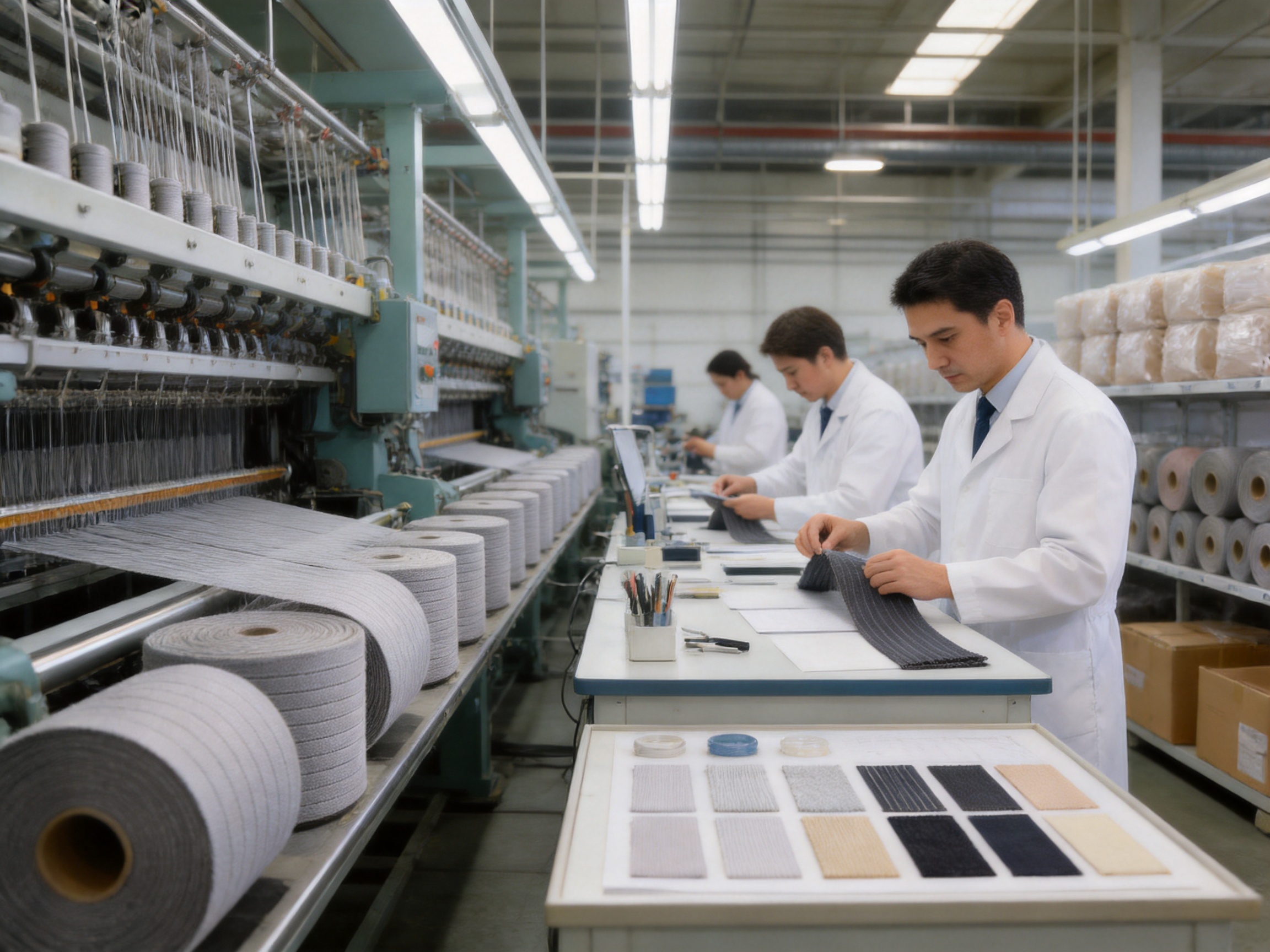
The company has introduced and updated advanced production equipment, including warping machines, knitting machines, woven machines, and packaging machines. Each type of equipment contributes to a different stage of manufacturing. Warping equipment helps prepare yarns in an organized and controlled arrangement. Woven machines form stable webbing structures. Knitting machines support the production of suitable knitted elastic products within the wider product portfolio. Packaging equipment helps standardize handling and presentation before shipment.
Investment in updated machinery can improve production consistency, increase efficiency, and support larger-volume orders. The company reports a monthly output of millions of meters of elastic and non-elastic webbing. This production capacity is relevant to buyers who need continuity of supply for medical products, sports supports, braces, garments, or industrial applications.
Quality Control from Material Sourcing to Packing
Quality control is not limited to the final inspection of a finished roll. For elastic webbing, material quality can be influenced by every stage of production. Yarn characteristics, preparation, machine operation, weaving conditions, finishing, cutting, inspection, and packing can all affect the final product.
The company applies quality control throughout material sourcing, processing, testing, and packing. A process-based approach helps identify variation earlier and supports more consistent results. For a wide elastic panel, quality checks may include visual inspection, width measurement, surface evaluation, elasticity assessment, recovery observation, and checks for defects that could affect sewing or performance.
Testing should be connected to the customer’s intended application. A panel for an abdominal binder may require different evaluation priorities from a panel intended for sports equipment or industrial fastening. Buyers should communicate the expected use, required dimensions, target stretch, color expectations, packaging needs, and any applicable standards before production.
Reliable packing is also important. Elastic products must be protected from contamination, crushing, moisture, and handling damage during storage and transport. Organized packaging supports inventory control and helps customers identify lots, sizes, colors, and order quantities after receipt.
Certification and Professional Reliability
Jinhu Hengxiang Webbing Co., Ltd. has obtained Oeko-Tex Standard 100 and ISO 13485 certificates. These certifications are important indicators of the company’s attention to product safety management and quality systems. Oeko-Tex Standard 100 relates to testing textile products for harmful substances under its applicable certification requirements. ISO 13485 is a quality management standard associated with medical devices and related organizations.
Certification does not mean that every finished product made with the panel automatically meets all requirements for a specific medical device or market. The final product manufacturer must still complete its own risk assessment, validation, testing, labeling, and regulatory procedures. Nevertheless, an established quality system can provide a stronger foundation for customers developing products for medical and protective applications.
For international buyers, certification can also simplify supplier evaluation. It provides documented evidence that the manufacturer has invested in defined procedures and quality management. Buyers should request current certification documents and confirm that the scope applies to the relevant production activities.
Customization for Different Product Requirements
Not all applications require identical elasticity or surface characteristics. A rehabilitation support may need a different response from a sports accessory. An abdominal binder may require broad, controlled stretch, while an industrial fastening component may prioritize retention and durability. The company provides customized webbing with tailored elasticity, texture, and color.
Customization may begin with a review of the intended application. Customers can provide information about width, desired stretch, recovery, hand feel, color, construction, attachment method, order quantity, and packaging. The manufacturer can then discuss whether a standard product is suitable or whether a sample development process would be more appropriate.
Tailored elasticity is valuable because excessive stretch can reduce support, while insufficient stretch can make a product uncomfortable or difficult to fit. Surface texture may affect skin comfort, grip, sewing, and visual appearance. Color customization can help match a customer’s product identity or create a coordinated appearance across several components.
OEM and ODM orders are welcome. This allows customers to purchase a specified material for their own product or work with the manufacturer on a more developed component solution. A clear technical drawing, sample, specification sheet, or application description can help reduce misunderstandings during development.
Comparison of Material Options
The following table summarizes how the 10-inch grey woven elastic panel compares with several other common material approaches. The comparison is general and should be confirmed through application-specific testing.
| Material approach | Coverage | Structural stability | Typical strength | Common use direction |
|---|---|---|---|---|
| 10-inch grey woven elastic panel | Broad | High for a flexible textile panel | Suitable for repeated support and stretching | Abdominal binders, rehabilitation supports, braces, sports protection |
| Narrow elastic band | Limited | Suitable for narrow retention zones | Useful for localized fastening | Garment edges, small straps, targeted closures |
| Soft knitted elastic | Broad or moderate, depending on design | Generally softer and more flexible | Suitable where comfort and conformability are priorities | Garments, light support, comfort-focused products |
| Non-elastic webbing | Varies by width | High, with little or no stretch | Suitable for fixed-length reinforcement and restraint | Belts, straps, handles, and rigid positioning systems |
| Hook and loop strap | Usually localized fastening coverage | Depends on the backing and closure design | Useful for adjustability and repeated opening | Adjustable braces, binders, and fastening assemblies |
The table demonstrates why material selection should be based on the role of the component. The wide woven panel is not a universal substitute for every webbing type. Its main advantage is the combination of broad coverage, elastic response, and structural control. It is most valuable when a product must provide flexible support over a relatively large area.
Design and Integration Considerations
Pattern Development
The pattern should account for the panel’s full width, stretch direction, edge position, and intended tension. A 10-inch width may be used as a complete panel or incorporated into a layered design. The pattern should prevent unwanted bunching and should place seams away from areas where they could create discomfort.
Designers should also consider how the panel changes under tension. A sample should be measured in its relaxed state and at the anticipated working extension. This helps determine the correct finished length and avoid a product that is either too loose or excessively tight.
Sewing and Attachment
Attachment methods influence the performance of elastic materials. Stitch type, thread strength, stitch density, seam allowance, and machine tension should be selected through trials. Overly aggressive stitching can damage yarns or restrict the panel’s movement. Insufficient reinforcement may lead to seam failure during repeated stretching.
When the panel is joined to fabric, the seam should be evaluated under the same extension that the finished product will experience. Bar tacks, box stitches, zigzag stitches, or other constructions may be considered depending on the design. The correct method must be validated by the product manufacturer because there is no single seam solution for all applications.
Edges and Comfort
Wide elastic panels may require careful edge treatment, particularly when they are placed close to the skin. Binding, folding, soft fabric overlays, or rounded pattern transitions may be used to improve comfort. The edge should be checked for fraying, sharp yarn ends, excessive pressure, and rolling during movement.
For medical and rehabilitation products, skin contact is a significant consideration. The complete product should be assessed for breathability, moisture management, friction, and cleaning requirements. The elastic panel is one part of the overall user experience, and its performance should be reviewed together with all adjacent materials.
Fastener Compatibility
The panel can be combined with hook and loop fastening systems and other adjustment components. Compatibility testing should confirm that the hook side does not unnecessarily damage exposed elastic surfaces or adjacent fabrics. The fastening area should be positioned so that the user can adjust the product without placing excessive force on one seam or corner.
For repeated-use products, the closure should be opened and closed through a simulated service cycle. This can reveal issues such as edge lifting, stitch loosening, panel distortion, or reduced holding power. Early testing helps the manufacturer improve the product before full-scale production.
Supply and Customer Support Strengths
A dependable webbing supplier should provide more than a material catalog. Customers need assistance with product selection, technical communication, sampling, production planning, quality control, packing, and delivery coordination. Jinhu Hengxiang Webbing Co., Ltd. emphasizes thoughtful customer service and full customer satisfaction as part of its business approach.
The company serves customers in China and exports to North America, Eastern Europe, the Middle East, South Asia, and other regions. Experience across different markets can help the company understand the importance of clear specifications, consistent production, export packing, and communication across time zones and business cultures.
Competitive pricing is identified as one of the company’s strengths. Cost competitiveness is especially important for support products that are manufactured in large quantities. However, purchasing decisions should evaluate total value rather than unit price alone. Consistent width, dependable elasticity, stable quality, suitable packing, reliable delivery, and technical support can all influence the actual cost of a material over the product’s life cycle.
Timely delivery is another important consideration. Medical and sports product manufacturers often work with scheduled production runs and customer commitments. A supplier with substantial production capacity and organized equipment can be better positioned to manage repeat orders and planned volumes. Customers should still confirm lead times, sample approval requirements, raw material availability, and order schedules for each project.
Why Manufacturers Choose This Panel
Manufacturers may choose the 10-inch grey woven elastic panel when their product requires a broad support surface rather than a narrow retention line. Its main value is the combination of width, elasticity, woven stability, neutral appearance, and application flexibility.
The panel can reduce the need for multiple narrow components, which may simplify assembly and create a more uniform support area. Its broad construction can support pressure distribution and contribute to a stable finished product. Its grey color is easy to integrate into professional designs. Its intended resistance to fatigue makes it suitable for products exposed to regular stretching and repeated adjustment.
The manufacturing background of the supplier adds another advantage. Experience with sports supports and orthopedic braces means the company is familiar with the functional demands of elastic materials used in protective and support products. Advanced warping, weaving, knitting, and packaging equipment supports a broad production capability. Process-based quality control and recognized certifications provide additional confidence for customers evaluating a long-term supplier.
The company’s OEM and ODM services also benefit manufacturers with specific requirements. Instead of selecting an unsuitable standard band, a customer can discuss tailored elasticity, texture, color, and construction. This can support better alignment between the webbing and the complete product design.
Product Evaluation and Quality Assurance
Before approving the panel for mass production, customers should conduct a structured evaluation. The first stage should confirm basic dimensions, including width, length, thickness if specified, edge condition, and roll or package format. Visual inspection should check for stains, broken yarns, weaving irregularities, uneven edges, and color variation.
The next stage should assess functional properties. Customers may test extension under a defined load, recovery after extension, repeated cycling, seam performance, and dimensional change after conditioning. The test methods should reflect the intended product and should be agreed upon before production whenever possible.
For medical or skin-contact applications, customers should also review applicable chemical, biological, labeling, and safety requirements. The supplier’s certification documents may support this process, but the final product manufacturer remains responsible for verifying compliance with the regulations of the target market.
Environmental conditions should be considered as well. Depending on the application, the panel may be exposed to moisture, sweat, detergents, body oils, heat, cold, sunlight, or disinfectants. Testing the complete product under representative conditions can help identify changes that may not be visible during a simple incoming inspection.
Sustainability and Responsible Manufacturing
Responsible manufacturing includes efficient use of materials, stable production processes, reduced waste, suitable packaging, and durable products. A webbing component that maintains performance over repeated use may help reduce premature replacement. Durability does not remove the need for recycling or responsible disposal, but it can contribute to better resource efficiency throughout the product life cycle.
The company states that it is committed to quality, innovation, and sustainability. These goals can be supported by maintaining modern equipment, improving process control, reducing avoidable production defects, and working with customers to select appropriate constructions. Sustainable decisions should be evaluated using measurable information, including material composition, production waste, packaging type, service life, and end-of-life options.
Customers seeking sustainability-related information should communicate their requirements during development. They may need details about materials, packaging, restricted substances, production practices, or documentation for a specific market. Early communication allows the supplier and customer to determine what information can be provided and what additional testing may be necessary.
Ordering and Custom Development Process
A clear ordering process begins with application information. Customers should explain whether the panel will be used in an abdominal binder, brace, rehabilitation product, sports accessory, garment, or industrial support system. They should also provide target width, color, estimated order quantity, expected stretch, working temperature, cleaning conditions, and attachment method.
Sample evaluation should follow the initial discussion. A sample allows the customer to examine hand feel, appearance, width, elasticity, recovery, sewing behavior, and compatibility with other components. It is helpful to test the panel in a prototype rather than assessing it only as a loose piece of material.
After the sample is approved, the buyer and supplier should confirm the production specification. The document may include product name, construction, width tolerance, color, packaging, inspection requirements, labeling, order quantity, and delivery terms. Written specifications reduce the risk of differences between sample approval and mass production.
For repeat orders, retained samples and production records can support consistency. Customers should establish how changes in raw materials, equipment, packaging, or process settings will be communicated. Regular quality reviews can help maintain stable performance over long-term cooperation.
Frequently Asked Questions
What is the primary purpose of the 10-inch grey woven elastic panel?
The primary purpose is to provide broad, flexible, and structurally stable support in products such as abdominal binders, rehabilitation systems, medical braces, sports protective equipment, functional clothing, and industrial support solutions.
How is this panel different from a narrow elastic band?
The panel provides substantially greater coverage and can distribute tension over a broader area. Its width may help reduce reliance on multiple narrow strips and can contribute to a more stable and balanced finished product.
Is the panel suitable for direct skin contact?
It may be incorporated into products that contact the skin, but suitability must be evaluated in the complete product. Designers should consider surface comfort, edge finishing, breathability, moisture, cleaning, chemical requirements, and applicable regulations.
Can the panel be used in abdominal binders?
Yes. Its wide format and elastic structure make it suitable for abdominal support products and binders. The final binder must be designed and tested to confirm proper fit, pressure, closure performance, comfort, and durability.
Can the color or elasticity be customized?
The company provides customized webbing with tailored elasticity, texture, and color. Customers should provide technical requirements and approve samples before mass production.
Is the panel appropriate for orthopedic braces?
It can be used as an elastic component in orthopedic braces and related support products. The brace manufacturer must validate the complete design, including pressure, attachment, seams, padding, durability, and regulatory compliance.
Can it be combined with hook and loop fasteners?
Yes. The panel can be integrated with hook and loop straps or other closure systems. Compatibility testing is recommended to confirm that the fastener does not damage the elastic or reduce the service life of the finished product.
What manufacturing equipment supports production?
The company has production equipment including warping machines, knitting machines, woven machines, and packaging machines. These resources support the preparation, formation, finishing, and packing of elastic and non-elastic webbing.
What certifications does the manufacturer hold?
The company has obtained Oeko-Tex Standard 100 and ISO 13485 certificates. Customers should request current documentation and verify the relevant certification scope for their project.
Does certification guarantee that a finished medical product is approved?
No. Certification supports supplier and quality-system evaluation, but the manufacturer of the finished medical product remains responsible for product testing, risk management, labeling, regulatory submission, and market-specific compliance.
How should customers test the panel before ordering in volume?
Customers should check dimensions, appearance, stretch, recovery, repeated-cycle performance, sewing behavior, color, and compatibility with the complete product. Testing should reflect the actual use conditions, including washing, moisture, friction, and adjustment cycles when relevant.
Is grey the only available color?
The supplied product is a grey panel, while the company also offers customized color solutions. Availability, minimum order quantities, and development requirements should be confirmed for each project.
Can the panel be used in high-risk lifting or safety equipment?
It should not be assumed suitable for high-risk lifting, fall protection, or life-safety applications without specific engineering review, system testing, and certification. The panel is intended for support, fastening, medical, sports, garment, and related applications described by the supplier.
Where is the manufacturer located?
Jinhu Hengxiang Webbing Co., Ltd. is located in Gongnong Village, Licheng Town, Jinhu County, Huai’an City, Jiangsu Province, China.
How can an international buyer discuss a project?
Buyers can contact the company to discuss product specifications, samples, customization, OEM or ODM development, quality requirements, packaging, production capacity, and delivery planning.
Conclusion
The 10-inch grey woven elastic panel is a practical solution for products requiring broad coverage, controlled stretch, and dependable structural support. Its precision-woven construction is designed to maintain stretchability, dimensional stability, and resistance to fatigue during repeated use. The 10-inch width offers advantages over narrow elastic bands when pressure distribution, coverage, and product balance are important.
Its application range includes abdominal binders, rehabilitation support systems, medical braces, sports protective equipment, functional clothing, accessories, and industrial-grade support solutions. The neutral grey appearance supports professional product designs, while the woven format gives manufacturers a stable material for sewing and integration with other components.
Jinhu Hengxiang Webbing Co., Ltd. strengthens the product offering through long-term manufacturing experience, updated warping, weaving, knitting, and packaging equipment, large-scale production capacity, process-based quality control, Oeko-Tex Standard 100 and ISO 13485 certifications, and OEM and ODM customization. Its ability to tailor elasticity, texture, and color allows customers to develop webbing more closely matched to their products.
For the best result, customers should evaluate the panel within a complete prototype and confirm dimensions, elasticity, recovery, seam performance, comfort, cleaning resistance, and market-specific requirements. When properly selected and integrated, the 10-inch grey woven elastic panel can provide a reliable foundation for medical, sports, functional, and industrial support products.
References
Jinhu Hengxiang Webbing Co., Ltd. Company Profile and Product Information. Internal manufacturer-provided materials.
Jinhu Hengxiang Webbing Co., Ltd. Product Specification: 10-Inch Grey Woven Elastic Panels. Manufacturer-provided product description.
International Organization for Standardization. ISO 13485: Medical Devices — Quality Management Systems — Requirements for Regulatory Purposes.
Oeko-Tex Association. Standard 100 by Oeko-Tex: Textile Testing for Harmful Substances.
Textile Institute. General Principles of Textile Webbing Construction, Elasticity, and Dimensional Stability.
Medical support product development guidance concerning fit, pressure distribution, material compatibility, and finished-product validation.