
 en
en
 English
 русский
 Français
 Español
 Português
 Tiếng Việt
Content
- 1 Product Overview
- 2 Why Woven Construction Matters
- 3 Core Product Advantages
- 4 Comparison with Narrow and Lower-Quality Elastic Materials
- 5 Applications in Apparel and Fashion Products
- 6 Applications in Medical and Sports Supports
- 7 Manufacturing Strengths and Process Control
- 8 Customization Capabilities
- 9 How to Evaluate a Sample
- 10 Production and Sewing Recommendations
- 11 Value for Manufacturers and Buyers
- 12 Environmental and Responsible Production Considerations
- 13 Frequently Asked Questions
- 13.1 What is a 7cm woven elastic panel?
- 13.2 How is it different from narrow elastic?
- 13.3 Is dark grey suitable for visible garments?
- 13.4 Can the panel be used in medical support products?
- 13.5 Can the elasticity be customized?
- 13.6 Can the color be customized?
- 13.7 Does a wider panel always provide stronger support?
- 13.8 How should buyers test the material?
- 13.9 What industries can use this product?
- 13.10 Does the manufacturer support OEM and ODM orders?
- 14 Conclusion
- 15 References
- 16 Product: 7cm Dark Grey Woven Elastic Panels
In modern garment production, medical support manufacturing, sportswear design, and industrial sewing, elastic materials must do much more than stretch. They must provide controlled tension, recover their shape after repeated use, remain comfortable against the body, and withstand the demands of cutting, stitching, washing, and daily wear. The 7cm dark grey woven elastic panel is designed to meet these requirements through a strong woven construction, balanced width, dependable elasticity, and a neutral appearance suitable for a wide variety of products.
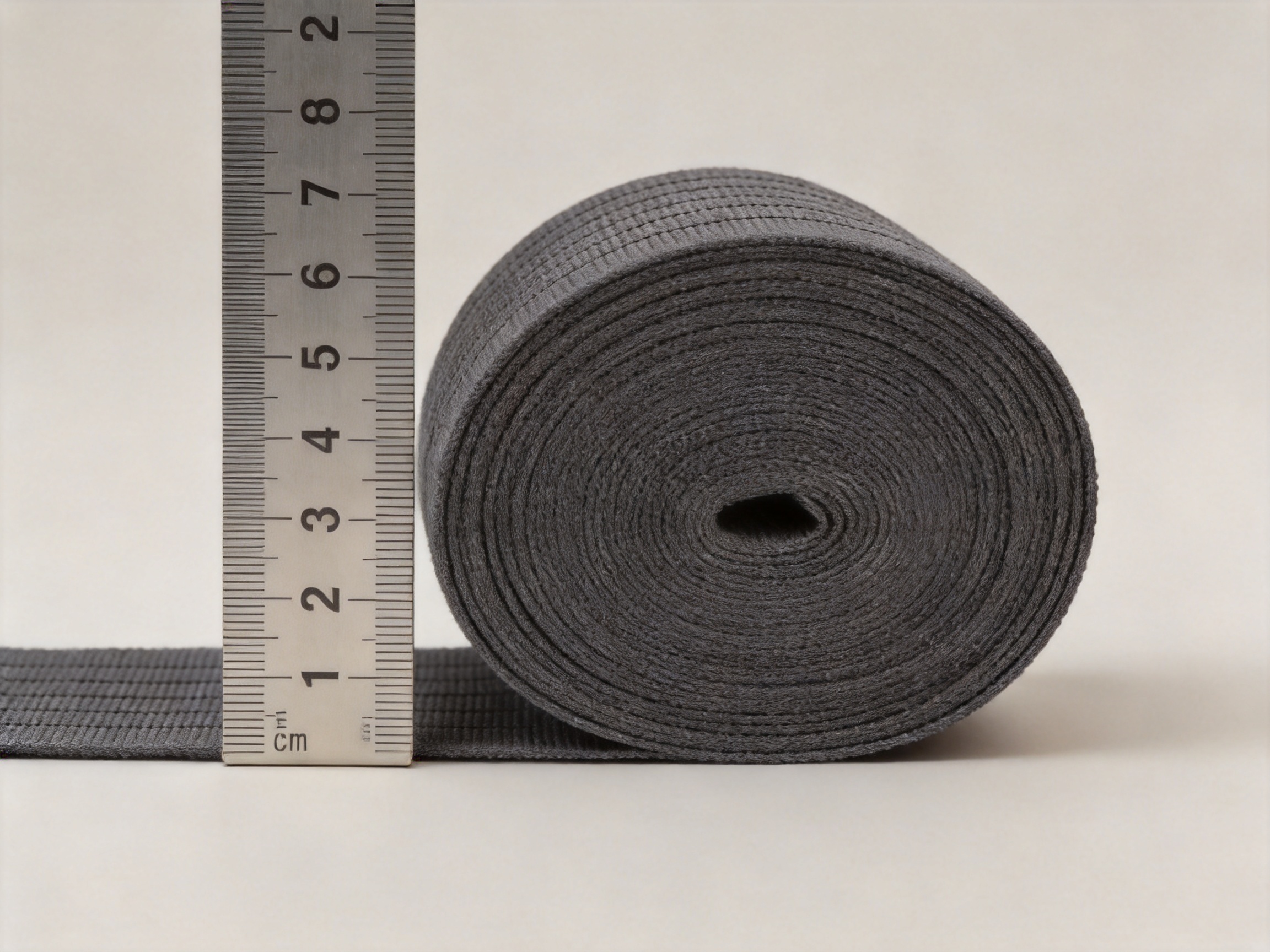
With a width of 7cm, this woven elastic panel occupies a practical middle ground between narrow elastic bands and extra-wide support materials. It offers broader body contact than a narrow strip while remaining flexible enough for sewing into waistbands, activewear, shapewear, braces, garment panels, and custom projects. Its dark grey color provides a discreet and versatile finish, matching black, grey, navy, charcoal, and many other shades used in apparel and protective products.
Unlike low-quality elastic materials that may curl, fray, lose tension, or deform after repeated use, a properly manufactured woven elastic panel is engineered for dimensional stability and long-term performance. The woven structure helps the panel maintain its width and shape under tension, while the elastic component delivers controlled stretch without creating an excessively loose or unstable fit.
This article examines the construction, performance, manufacturing advantages, applications, quality considerations, and purchasing value of the 7cm dark grey woven elastic panel. It also explains how an experienced webbing manufacturer can support customization, consistent production, and reliable supply for both standard and specialized applications.
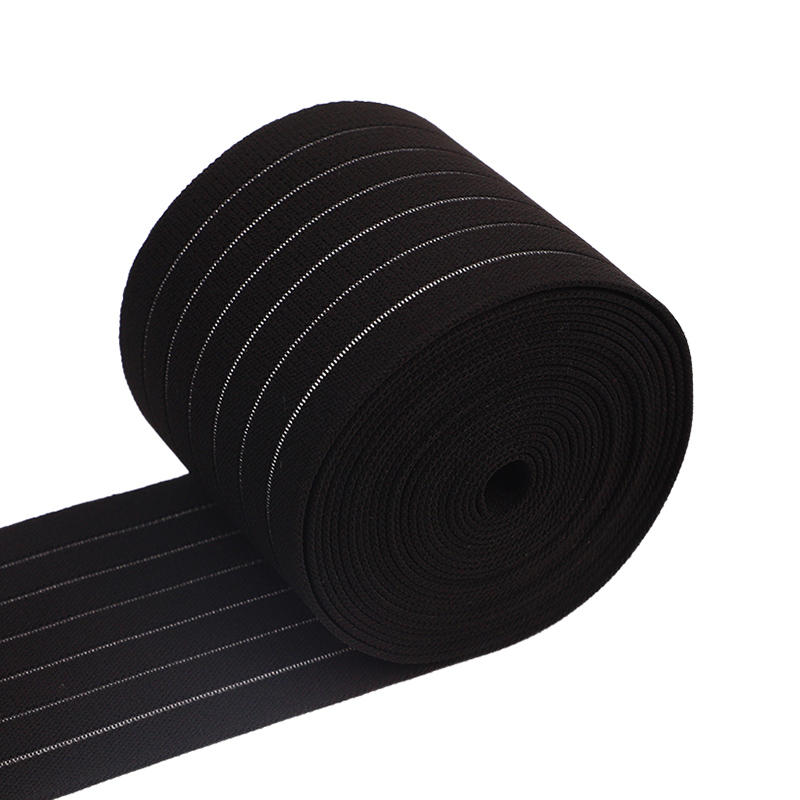
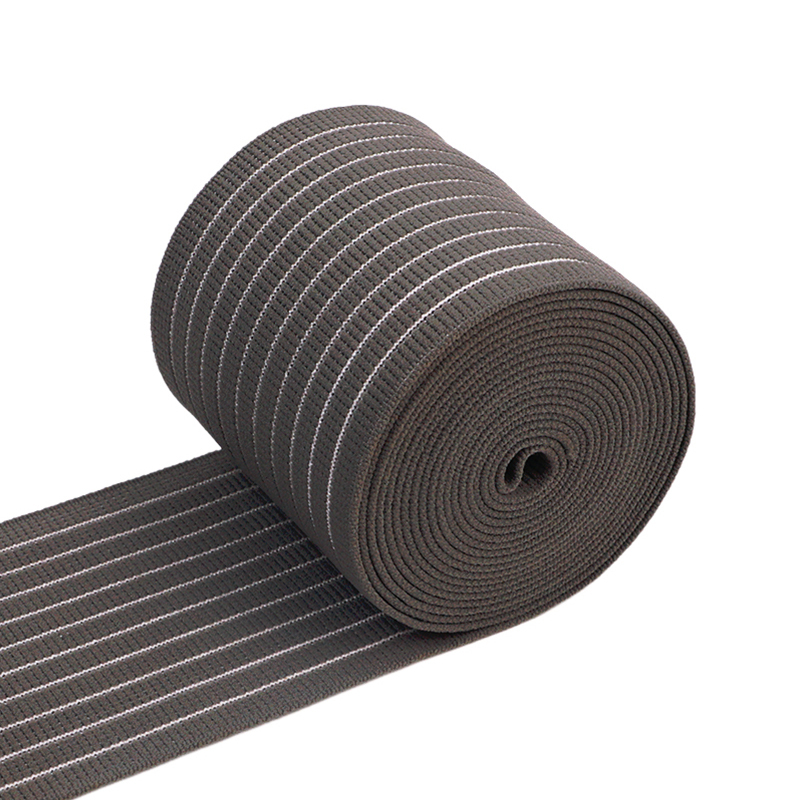
7cm Dark Grey Woven Elastic Panels
Product Overview
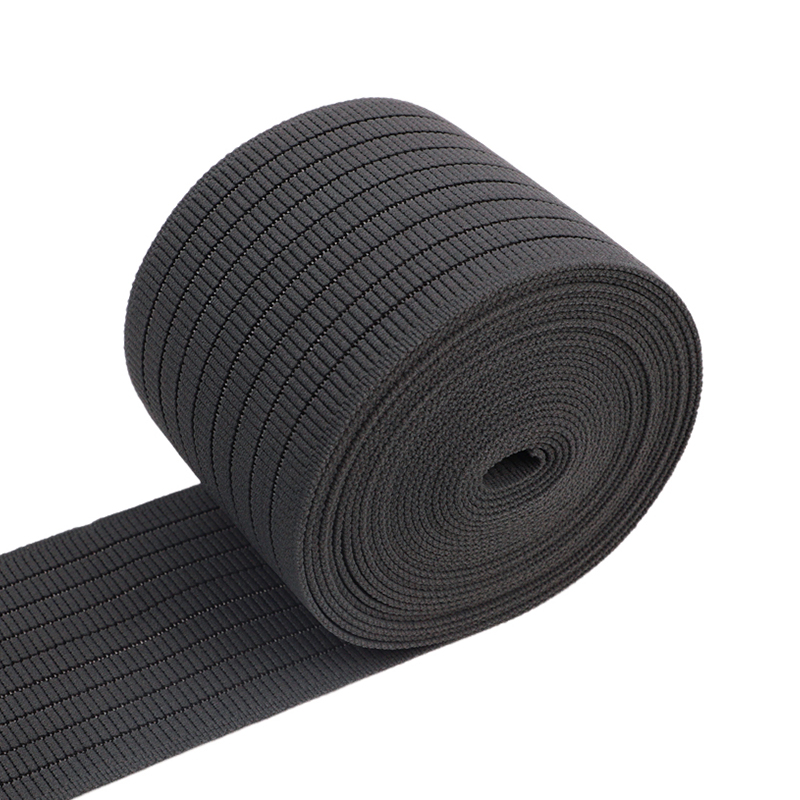
The 7cm dark grey woven elastic panel is a broad elastic textile manufactured through a woven process. It is intended for applications where a wider support surface, stable tension, and a clean sewn finish are important. The material can be integrated into finished garments and equipment or used as a component in custom products.
The woven structure consists of longitudinal and transverse yarn arrangements that create a stable textile base. Elastic yarns or elastic components are incorporated into the structure to provide stretch and recovery. Compared with a simple narrow elastic band, a woven panel distributes tension across a broader area. This can improve comfort and reduce the concentrated pressure that sometimes occurs when narrow elastic is used for support or containment.
The 7cm width is suitable for many applications requiring moderate coverage. It can be sewn into waistbands, support garments, compression-related products, protective equipment, and fabric assemblies. Depending on the final design, the panel may be used as a primary structural component, a reinforcing section, or an adjustable stretch element.
Dark grey is a practical color for both visible and concealed applications. It can create a modern technical appearance in sportswear and protective products, while also blending discreetly into inner garment structures. The color is less visually severe than pure black and can help manufacturers develop coordinated product ranges using charcoal, grey, silver, black, or other neutral shades.
| Product characteristic | Practical benefit |
| 7cm width | Provides broader contact and support than narrow elastic |
| Woven construction | Improves stability, durability, and resistance to deformation |
| Elastic performance | Allows controlled stretch and recovery during use |
| Dark grey color | Coordinates with many garment and equipment designs |
| Flexible application range | Suitable for apparel, medical supports, sports products, and DIY sewing |
Why Woven Construction Matters
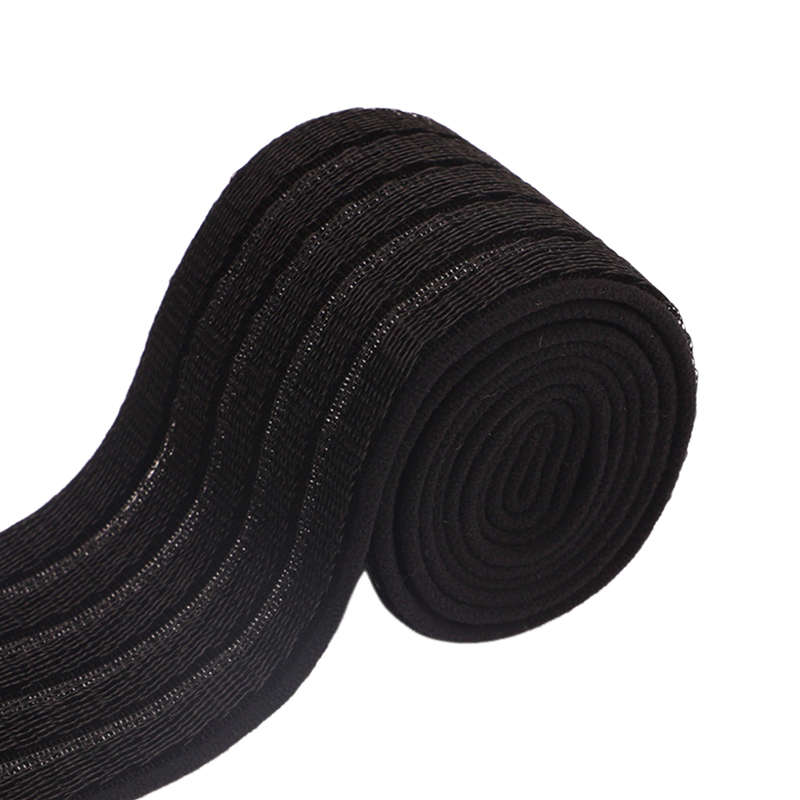
The manufacturing structure of an elastic panel has a direct influence on its performance. Woven elastic is formed by interlacing yarns in a controlled pattern. This process creates a textile material with defined width, organized surface structure, and good resistance to distortion. The woven base supports the elastic elements and helps keep the panel stable when it is stretched, sewn, folded, or exposed to repeated movement.
One important advantage of woven construction is resistance to rolling. When a narrow or poorly stabilized elastic strip is stretched, its edges may curl toward the center. Edge rolling can make a product uncomfortable and can also complicate sewing and assembly. A well-made 7cm woven panel is better equipped to retain its broad profile, especially when correctly integrated into the final product.
Woven construction can also reduce the risk of uneven tension. In a poorly manufactured material, different sections may stretch at different rates, producing weak spots or an inconsistent fit. Controlled yarn placement and stable production conditions help create a more uniform panel. This is particularly important in medical supports, sports protection products, and fitted garments, where predictable tension contributes to product performance.
Another advantage is resistance to fraying. Any textile can be affected by cutting and abrasion, but a firm woven structure can help limit yarn movement and edge breakdown. Manufacturers may also select appropriate edge construction, cutting methods, or finishing processes according to the intended application. This enables the panel to be processed more efficiently during garment production.
Woven elastic panels are also suitable for sewing because they can be handled as a structured textile rather than as a loose or unstable strip. Their width provides enough surface area for stitching, reinforcement, overlapping, and attachment to other fabric components. The exact needle, thread, stitch type, and seam allowance should be selected according to the finished product and the required stretch direction.
Core Product Advantages
Durable and Long-Lasting Performance
Durability is one of the most important reasons to choose a woven elastic panel. Products made for daily use may be stretched, released, folded, washed, and exposed to friction many times. A weak elastic material can lose its recovery, become permanently elongated, or develop surface damage under these conditions.
The 7cm dark grey woven elastic panel is designed with a strong woven construction that supports long-term use. The interlaced structure helps resist deformation and provides a stable foundation for the elastic components. When the material is matched to an appropriate application and processed correctly, it can contribute to a longer service life for the finished product.
Durability also has commercial value. Manufacturers can reduce replacement complaints and improve customer satisfaction when elastic components maintain their function over time. For wholesalers and product developers, a dependable panel can simplify material selection and reduce the need to change components after production trials.
Stable Elasticity and Recovery
Elasticity is useful only when it is controlled. Excessive stretch without recovery can result in a loose garment or ineffective support. Insufficient stretch can make a product difficult to put on and uncomfortable during movement. The purpose of a quality elastic panel is to balance extension, resistance, and recovery for the intended design.
The woven panel provides stable elastic behavior for applications that require repeated movement. It is intended to stretch when tension is applied and return toward its original dimensions when tension is released. This recovery helps the finished garment or support maintain a consistent fit through normal use.
Performance depends on several factors, including yarn selection, construction density, finishing, width, applied force, temperature, moisture, and frequency of use. For this reason, buyers should communicate their application requirements to the manufacturer. A panel for a waistband may require a different elasticity profile from a panel used in an orthopedic brace or sports support.
Comfortable Support Without Excessive Pinching
A 7cm panel spreads contact over a wider area than a narrow elastic band. This wider distribution may help reduce concentrated pressure on the skin and can create a more comfortable fit when the panel is used around the waist, abdomen, back, or limb. A broad panel can also provide a smoother transition between the elastic material and adjacent fabric.
Comfort is influenced by more than width. Surface feel, edge construction, tension level, garment pattern, seam placement, and product size all contribute to the final user experience. Nevertheless, a stable woven panel gives designers a strong starting point for creating a supportive product that does not unnecessarily pinch, roll, or shift.
Reliable Shape Retention
Shape retention is essential in products that must remain visually neat and functionally stable. A panel that becomes distorted may create uneven pressure or an unattractive appearance. It may also make assembly more difficult because the cut piece no longer matches the pattern dimensions.
The woven structure helps the material retain its width and general profile during handling. This is valuable in high-volume production, where consistent components improve cutting efficiency and reduce variation between finished units. It is also helpful for smaller sewing projects, because a stable material is easier to position and stitch.
Versatile Dark Grey Appearance
Color selection affects both product appearance and inventory management. Dark grey is a neutral shade that can be used in functional garments, technical apparel, medical products, protective supports, and accessories. It can be paired with dark fabrics for a low-visibility finish or used with lighter materials as part of a deliberate contrast design.
The color is also suitable for products that require a professional and technical appearance. It does not attract attention in the same way as bright colors, yet it can look more distinctive than standard black. For manufacturers producing several product lines, dark grey may serve as a flexible component color across multiple designs.
Broad Application Range
The panel can be used in apparel, sports protection, medical support products, shapewear, industrial sewing projects, and custom fabric assemblies. This range allows buyers to use one material category for different product concepts while adjusting the final design through pattern dimensions, stitching, lining, closures, and other components.
Potential applications include waistbands, abdominal support garments, athletic belts, posture-related products, compression-style apparel, protective braces, adjustable fabric assemblies, costume construction, and DIY sewing. The appropriate use depends on the required level of stretch, support, skin contact, fastening method, and regulatory obligations of the finished product.
Comparison with Narrow and Lower-Quality Elastic Materials
Choosing an elastic component based only on price or nominal width can create problems later in production. Narrow elastic bands may be effective for small openings, sleeve edges, underwear components, or lightweight gathers, but they may not provide enough coverage for waist, abdominal, or support applications. A wider panel can distribute tension more effectively and provide a more stable attachment area.
Low-quality elastic materials may also show inconsistent width, uneven surface texture, weak recovery, or poor edge stability. These issues can increase waste during cutting and make the material harder to sew. If the finished product is designed for repeated use, early loss of elasticity can result in customer dissatisfaction and additional warranty or replacement costs.
The woven panel offers several advantages over basic alternatives:
| Evaluation area | 7cm woven elastic panel | Narrow or unstable elastic alternative |
| Contact area | Broad and better distributed | More concentrated along a narrow strip |
| Width stability | Structured woven profile supports consistency | May curl, narrow, or distort under tension |
| Support potential | Suitable for moderate broad-area support | More limited for larger body zones |
| Appearance | Clean dark grey technical finish | May have limited color or surface options |
| Sewing and assembly | Broad surface supports secure attachment | May require additional reinforcement |
| Application flexibility | Useful in apparel, medical, sports, and DIY products | Often restricted to lighter or narrower uses |
This comparison does not mean that every wide panel is automatically suitable for every application. Product developers should still test extension force, recovery, wash durability, colorfastness, seam behavior, and skin comfort. The advantage of the 7cm woven panel is that its construction provides a strong and versatile foundation for those tests.
Applications in Apparel and Fashion Products
Waistbands and Garment Closures
Elastic waistbands require a material that can expand comfortably and return to shape without creating an untidy appearance. A 7cm panel can be integrated into skirts, trousers, casual garments, uniforms, loungewear, and other clothing products. Its width can create a smoother waistband profile than a narrow strip, particularly when the design requires moderate shaping or a broad supportive feel.
The panel may be sewn into a casing, attached directly to fabric, or combined with a facing or lining. The choice depends on whether the elastic is intended to be visible, partially visible, or fully concealed. Designers should account for the panel’s relaxed width and stretched width when preparing patterns.
Activewear and Performance Garments
Activewear must accommodate repeated movement, body flexion, perspiration, and frequent laundering. Elastic panels in active garments may be used in waist sections, body-contouring zones, support belts, and adjustable areas. The dark grey color works well with technical fabrics and can be combined with printed or reflective details.
For sportswear, the elastic force must be selected carefully. A panel that is too firm may restrict movement, while one that is too soft may shift during exercise. Testing should include dynamic movement rather than only static fitting. Running, bending, stretching, and repeated garment entry can all affect the practical performance of the panel.
Shapewear and Body-Contouring Products
Shapewear often requires broad elastic sections that remain stable against the body. A 7cm woven panel can be used as part of a waist, abdomen, or transition area, depending on the pattern and support target. Its broad format can help create a smooth line between panels and reduce the likelihood of a narrow strip cutting into the body.
Designers should avoid assuming that width alone creates compression. The final pressure depends on the product pattern, elastic modulus, garment size, stretch percentage, body measurements, and construction method. Proper fitting trials are essential, especially when the product is intended for extended wear.
Applications in Medical and Sports Supports
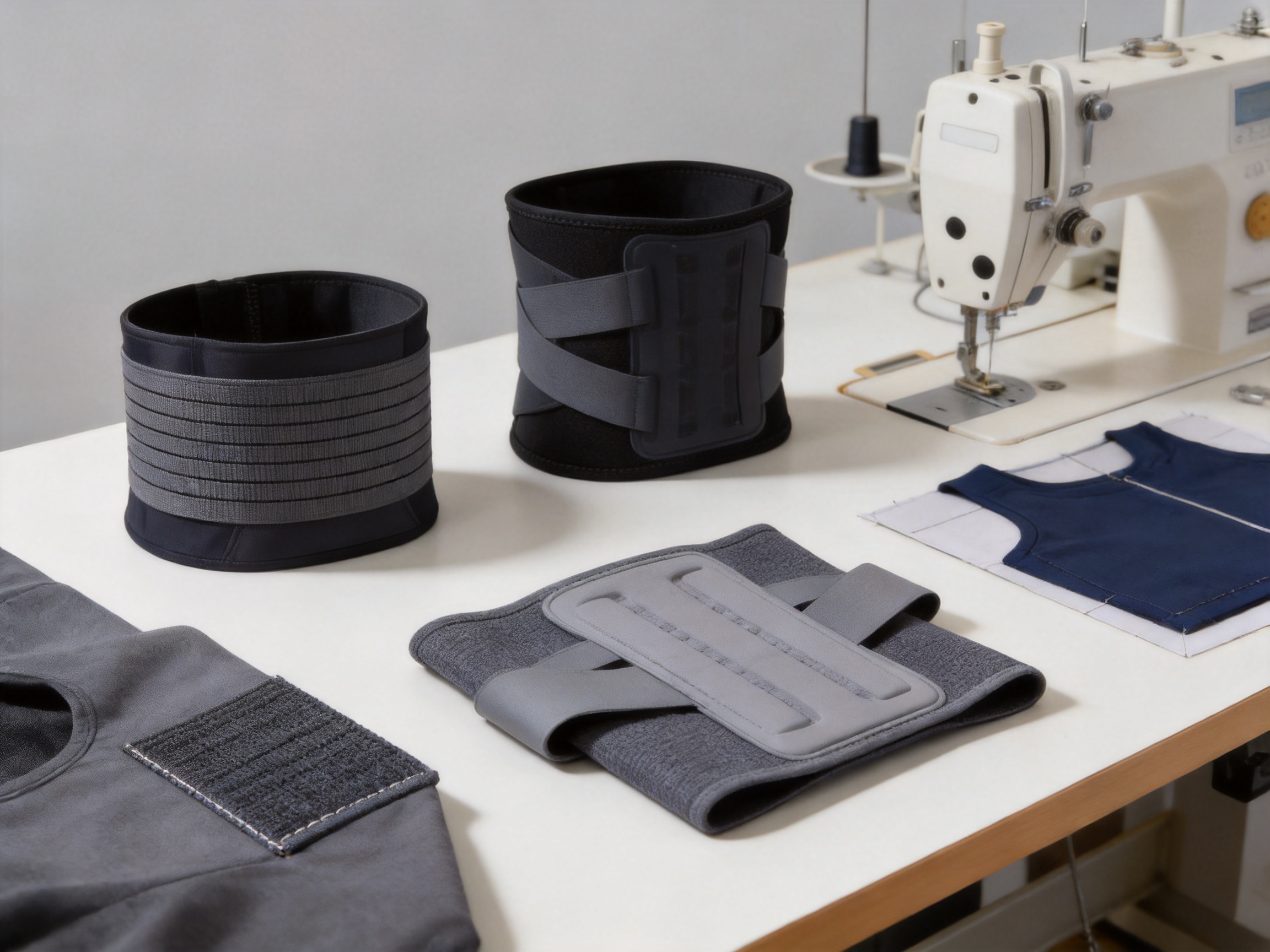
Elastic webbing and panels are commonly used as components in medical protective equipment and sports supports. They may help secure a brace, hold a support pad in place, provide adjustable tension, or add flexible reinforcement to a garment. The 7cm format is useful when a broad securing surface is preferred over a thin strap.
For abdominal support products, the panel can help create a more evenly distributed contact area. It may be used alongside hook and loop closures, rigid stays, foam padding, breathable mesh, or other support materials. The elastic panel itself should not be considered a complete medical device; rather, it is a component whose suitability depends on the finished product design and intended claim.
Sports supports may use the panel around the waist, thigh, knee, shoulder, or other body areas. The correct design must permit the necessary movement while maintaining the position of the support. Seam strength and attachment quality are particularly important because sports products may experience sudden tension during activity.
When the finished product is classified as medical or protective equipment, the manufacturer and product owner must evaluate all applicable technical, safety, labeling, and regulatory requirements. Material certificates, traceability, testing records, and production controls may be needed depending on the destination market and product category.
Manufacturing Strengths and Process Control
A reliable woven elastic panel begins with controlled manufacturing rather than appearance alone. The supplier’s equipment, technical experience, inspection methods, and ability to manage production from raw material to packing all influence the consistency of the finished product.
Professional Industry Experience
Jinhu Hengxiang Webbing Co., Ltd. was established in 2005 and specializes in elastic webbing and non-elastic webbing. Its experience includes materials used in sports supports, orthopedic braces, medical protective equipment, garments, and other sewn products. More than two decades of industry activity provides practical knowledge of yarn selection, textile construction, elasticity control, finishing, inspection, and customer-specific production.
Experience is particularly valuable when the buyer requires more than a standard catalog specification. A technically capable manufacturer can discuss the intended application, recommended width, required stretch, texture, color, packaging format, and production quantity before confirming the material plan.
Integrated Production Equipment
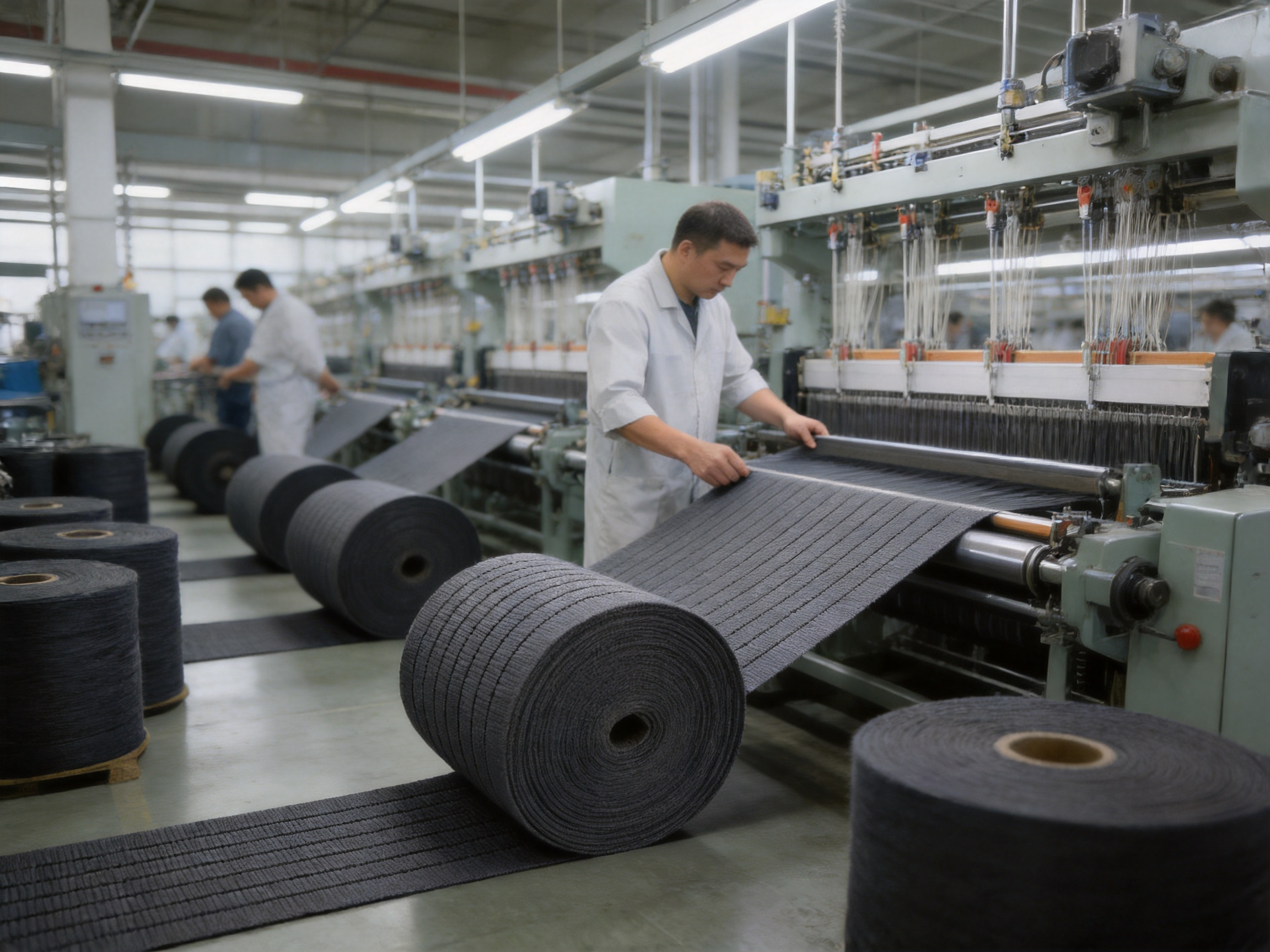
The company has introduced and updated production equipment including warping machines, knitting machines, woven machines, and packaging machines. These equipment categories support multiple stages of webbing production and help create a more coordinated manufacturing workflow.
Warping equipment prepares yarns in an organized arrangement for subsequent textile production. Woven machines create the structured interlacing required for woven elastic panels. Knitting equipment supports other elastic and non-elastic webbing constructions when a different texture or stretch behavior is required. Packaging equipment helps standardize rolls, bundles, labels, and shipment preparation.
Having access to specialized equipment allows the manufacturer to compare and produce different webbing structures rather than relying on one construction for every application. This is useful when customers need a woven panel with stable width, a knitted elastic with a softer hand, a narrow elastic band, a hook and loop strap, or a non-elastic webbing component.
High Production Capacity
The company produces millions of meters of elastic and non-elastic webbing each month. Production capacity is important for customers who need continuity between sampling, trial orders, and mass production. A supplier with adequate capacity is better positioned to manage repeat orders, seasonal demand, and large-scale programs.
Capacity alone does not guarantee quality. It must be combined with production planning, equipment maintenance, process records, inspection, and effective communication. When these elements work together, high output can support competitive lead times while maintaining consistent product specifications.
Quality Control from Materials to Packing
Quality control is applied throughout material sourcing, processing, testing, and packing. This approach is stronger than inspecting only the final roll because potential problems can be identified earlier in the process. Yarn condition, construction density, width, elasticity, surface appearance, color, and packing condition may all influence the usability of the product.
For a 7cm woven elastic panel, important inspection points may include relaxed width, stretched width, extension force, recovery, edge stability, surface uniformity, color consistency, roll length, and visible defects. The exact test methods and acceptance limits should be agreed with the customer according to the final application.
Careful packing also protects the material during storage and transportation. Rolls should be protected from excessive moisture, contamination, crushing, and unnecessary tension. Clear identification of product code, color, width, batch, quantity, and customer order can improve warehouse control and traceability.
Certifications and Management Confidence
Jinhu Hengxiang Webbing Co., Ltd. has obtained Oeko-Tex Standard 100 and ISO 13485 certificates. Oeko-Tex Standard 100 is associated with testing textile products for specified harmful substances. ISO 13485 is a quality management standard relevant to organizations involved in medical devices and related products. Certification does not replace application-specific testing, but it can provide additional confidence in the supplier’s quality systems and product management.
Buyers should confirm the scope, validity, and applicability of certificates for their particular order. They should also request relevant technical documents when materials are intended for regulated medical or protective products.
Customization Capabilities
Different products require different elastic behavior. A waistband, abdominal binder, sports brace, and industrial strap may all use a broad elastic panel, yet their requirements for force, recovery, softness, color, and durability may be very different. Customization allows the material to be matched more closely to the finished product.
The manufacturer provides customized webbing with tailored elasticity, texture, and color. Buyers may discuss:
Width and tolerance: The nominal 7cm width may be confirmed with an agreed tolerance suitable for cutting and sewing.
Elasticity: The required stretch range and recovery behavior can be evaluated according to the intended garment or support.
Texture and hand feel: The surface may need to be smooth, firm, soft, technical, or compatible with skin-contact requirements.
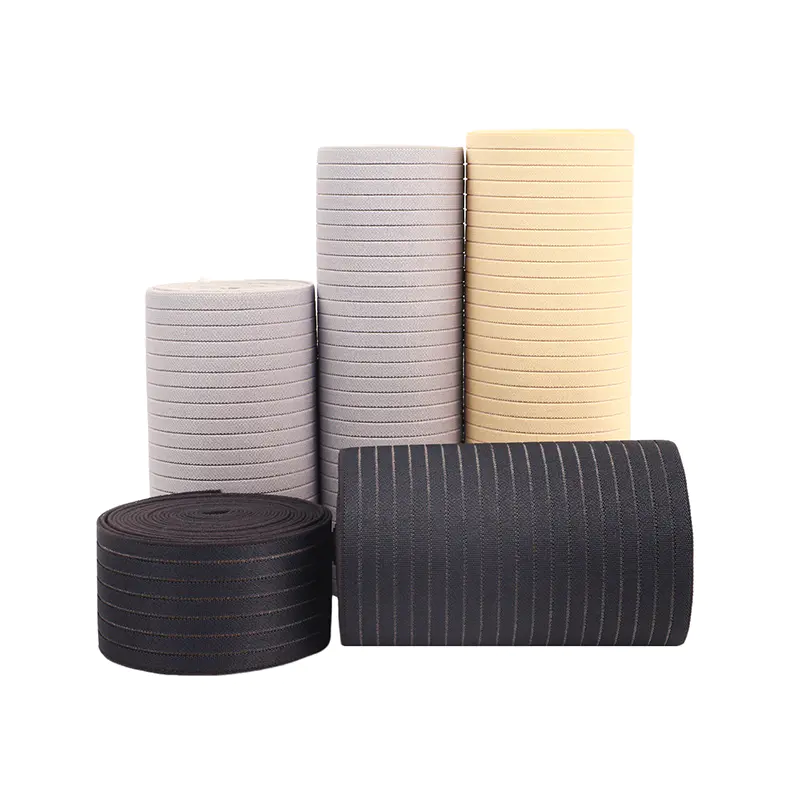
Color: Dark grey can be maintained as a standard appearance, or the customer may discuss a related shade for brand coordination and product matching.
Edge construction: Edge stability and finishing can be reviewed when the panel will remain exposed or will be sewn directly against skin-contact fabric.
Packaging: Rolls, cut lengths, labels, cartons, and batch identification can be arranged according to the buyer’s logistics system.
Customization is most effective when the buyer supplies detailed information. Useful data includes application, target users, finished product dimensions, expected stretch percentage, operating environment, washing conditions, contact with skin, required certifications, order quantity, and destination market.
How to Evaluate a Sample
Before placing a large order, buyers should evaluate a sample under conditions that represent actual production. A simple visual inspection is not enough to determine whether the panel will meet performance expectations.
Dimensional Inspection
Measure the relaxed width at several points along the sample. Check whether the panel remains close to the specified 7cm width and whether the edges are straight. Variation may indicate production instability or tension differences during winding.
Stretch and Recovery Testing
Measure the panel at a defined relaxed length, apply a specified extension, and record the force or stretched length. After release, measure recovery after a fixed period. Repeating the test can help identify whether the material changes after multiple extension cycles.
Surface and Edge Inspection
Inspect the surface for broken yarns, holes, uneven weaving, stains, excessive fuzz, color variation, and other visible defects. Examine the edges for fraying, rolling, waviness, or inconsistent finishing. Edge behavior should also be checked after the panel is stretched and released.
Sewing Trial
Use the same or similar fabric, needle, thread, stitch, and machine settings planned for production. Check whether the panel feeds smoothly, whether stitches remain secure under stretch, and whether the seam puckers or breaks. Test both straight and curved seams if the product design includes body-contouring sections.
Wear and Wash Evaluation
If the final product will be washed, expose the sample to the expected washing and drying process. Assess dimensional change, recovery, surface condition, color, and seam performance. For sports or medical products, conduct movement and repeated-use tests that simulate the expected service environment.
Production and Sewing Recommendations
The panel should be stored in a clean, dry environment away from direct sunlight, extreme heat, and chemicals that may affect textile or elastic components. Rolls should not be compressed for long periods under heavy loads. Allowing material to rest before cutting may help reduce tension introduced during winding and transport.
Cutting should be performed with equipment that produces clean, consistent edges. If the design requires many repeated pieces, verify the cutting dimensions regularly. Uneven cutting can create differences in finished tension even when the original panel is consistent.
During sewing, the machine tension and stitch selection should be adjusted to accommodate stretch. Excessive thread tension may restrict elasticity or cause seam breakage. Insufficient stitching may allow the panel to pull away from the fabric. Reinforced stitching may be appropriate in high-load areas, particularly for sports supports and adjustable closures.
Designers should avoid placing seams directly over sensitive body areas when the product will be worn for extended periods. A lining, soft binding, or transition fabric may improve comfort. If the panel is intended to contact skin, the complete assembled product should be evaluated rather than judging the panel alone.
Value for Manufacturers and Buyers
A dependable elastic panel can provide value in several ways. First, stable material dimensions can reduce production waste. When width and elasticity are consistent, cutting and sewing teams can work with fewer adjustments. Second, improved recovery can help finished products maintain their fit and appearance during use. Third, a versatile dark grey panel can be used across several designs, simplifying material planning and inventory.
Working with a manufacturer that offers both elastic and non-elastic webbing can also reduce supplier complexity. Buyers may source complementary components for sports supports, orthopedic braces, medical protective equipment, garment accessories, and industrial sewing projects from one experienced production partner.
Jinhu Hengxiang Webbing Co., Ltd. supports OEM and ODM orders. This means customers can discuss existing designs, custom specifications, private-label requirements, and new product development. Competitive pricing, timely delivery, and reliable quality are important purchasing considerations, especially for businesses that must coordinate fabric, closures, packaging, and finished-goods assembly.
Long-term cooperation is more likely when both sides establish clear specifications, sample approval procedures, quality standards, communication channels, and delivery expectations. The supplier’s commitment to quality, innovation, sustainability, and continuous improvement supports this type of partnership.
Environmental and Responsible Production Considerations
Textile buyers are increasingly considering the environmental and social effects of materials, production, packaging, and transportation. A durable elastic panel can contribute to more responsible product development by helping finished goods last longer and reducing premature replacement. Longer service life does not eliminate environmental impact, but it can improve the resource efficiency of the product over its useful period.
Responsible sourcing also includes careful control of chemicals, wastewater, energy use, packaging materials, production waste, and worker safety. Buyers should request information relevant to their own sustainability programs and destination-market requirements. Oeko-Tex Standard 100 certification may be useful when product safety and harmful-substance control are important purchasing factors.
Manufacturers can further support responsible production by improving process efficiency, reducing defective output, optimizing roll lengths, and using packaging appropriate to the product. Customers can assist by providing accurate forecasts and specifications, which reduces unnecessary sampling, rework, and excess inventory.
Frequently Asked Questions
What is a 7cm woven elastic panel?
It is a broad elastic textile with a nominal width of 7cm and a woven construction. The panel combines a structured textile base with elastic performance for applications requiring stretch, recovery, and broader body contact.
How is it different from narrow elastic?
The 7cm panel provides a wider contact surface and can distribute tension across a larger area. It is generally more suitable for waistbands, abdominal sections, support garments, and other applications where a narrow strip may provide insufficient coverage or may concentrate pressure.
Is dark grey suitable for visible garments?
Yes. Dark grey is a neutral and versatile color that can be used as a visible design element or concealed within a garment. It coordinates with black, charcoal, navy, grey, and many technical or athletic fabric colors.
Can the panel be used in medical support products?
It can be used as a component in medical support products, orthopedic braces, and protective equipment when the complete product is properly designed and tested. The finished product owner must assess applicable regulatory, safety, performance, labeling, and certification requirements.
Can the elasticity be customized?
Customization may be available according to the intended application. Buyers should provide details about required stretch, recovery, support level, dimensions, usage frequency, washing conditions, and final product construction so the manufacturer can recommend an appropriate specification.
Can the color be customized?
Yes, customized color can be discussed. Dark grey is the standard product appearance described here, while other colors may be developed or matched according to order quantity, material availability, and production requirements.
Does a wider panel always provide stronger support?
No. Width affects contact area and tension distribution, but support also depends on elastic force, stretch percentage, garment pattern, size, seam construction, and additional components. A product should be tested as a complete assembly.
How should buyers test the material?
Buyers should inspect width, surface quality, edge stability, stretch, recovery, sewing behavior, color, washing performance, and repeated-use durability. Testing should reflect the actual conditions expected in the finished product.
What industries can use this product?
Potential industries include apparel, activewear, shapewear, sports protection, orthopedic supports, medical protective equipment, industrial sewing, accessories, and custom DIY production.
Does the manufacturer support OEM and ODM orders?
Yes. OEM and ODM orders are welcomed. Customers can discuss customized elasticity, texture, color, dimensions, packaging, and other requirements for standard or newly developed products.
Conclusion
The 7cm dark grey woven elastic panel is a practical solution for products that require broad elastic coverage, stable tension, comfortable support, and a professional neutral appearance. Its woven construction helps resist fraying, rolling, and deformation while providing a reliable base for repeated stretching and recovery. The 7cm width offers versatility for waistbands, activewear, shapewear, support garments, sports protection, medical components, and industrial or DIY sewing projects.
Its value is strengthened when it is produced through controlled manufacturing. Jinhu Hengxiang Webbing Co., Ltd. combines professional experience since 2005 with warping, weaving, knitting, and packaging equipment, high monthly production capacity, quality control throughout the manufacturing process, and certifications including Oeko-Tex Standard 100 and ISO 13485. These capabilities support consistent supply and provide a foundation for customized webbing solutions.
For the best result, buyers should evaluate samples under real sewing, wearing, washing, and repeated-use conditions. Clear communication about width, elasticity, texture, color, application, certification, and packaging will help ensure that the selected panel matches the finished product. With appropriate specification and testing, this woven elastic panel can contribute to durable, comfortable, and commercially reliable products.
References
1. Textile elastic webbing construction and performance principles, technical textile manufacturing references.
2. Oeko-Tex Standard 100, textile product harmful-substance testing and certification principles.
3. ISO 13485, quality management systems for organizations associated with medical devices.
4. General textile testing practices for width, tensile behavior, elasticity, recovery, colorfastness, and dimensional stability.
5. Garment and support-product design principles relating to elastic components, seam construction, body contact, and wear comfort.
6. Manufacturer-provided product information for 7cm dark grey woven elastic panels and customized elastic and non-elastic webbing production.