
 en
en
 English
 русский
 Français
 Español
 Português
 Tiếng Việt
Content
- 1 Understanding 5cm Navy Jacquard Elastic
- 2 Why Jacquard Construction Matters
- 3 Advantages Over Basic Elastic Alternatives
- 4 Applications in Fashion Garments
- 5 Applications in Sportswear and Activewear
- 6 Applications in DIY and Sewing Projects
- 7 Advanced Manufacturing Capabilities
- 8 Quality Certifications and Professional Experience
- 9 Customization and OEM/ODM Support
- 10 Comparison with Common Elastic Webbing Options
- 11 Advantages for Manufacturers and Product Buyers
- 12 How to Evaluate the Product for a Specific Project
- 13 Design Guidance for Professional Use
- 14 Quality, Sustainability, and Responsible Production
- 15 Ordering and Communication Considerations
- 16 Q&A
- 16.1 What is 5cm navy jacquard elastic?
- 16.2 What makes jacquard elastic different from plain elastic?
- 16.3 Is the product suitable for waistbands?
- 16.4 Can it be used in sportswear and activewear?
- 16.5 Is it appropriate for medical or orthopedic products?
- 16.6 Does the navy color match all fabrics?
- 16.7 Can the elastic be customized?
- 16.8 What company manufactures this elastic?
- 16.9 What manufacturing equipment does the company use?
- 16.10 What certifications are associated with the company?
- 16.11 How should buyers test the product?
- 16.12 Can home sewers use this elastic?
- 17 Conclusion
- 18 References
- 19 Product: 5cm Navy Jacquard Elastic
Elastic materials play an important role in modern garment construction, sportswear, medical supports, orthopedic products, and home sewing. The right elastic must do more than stretch. It should recover its original shape, remain comfortable against the skin, integrate neatly with surrounding fabrics, and provide dependable performance after repeated use. For designers and manufacturers seeking a practical combination of strength, appearance, and flexibility, 5cm navy jacquard elastic offers a balanced solution.
This wide narrow-band product features a woven jacquard construction and a rich navy color. Its textured surface gives it a more refined appearance than plain elastic, while its resilient structure supports repeated stretching and recovery. At 5cm wide, it provides useful coverage and stability without becoming excessively bulky. These characteristics make it suitable for waistbands, activewear, fashion garments, custom sewing, and a variety of products that require attractive and dependable elastic support.
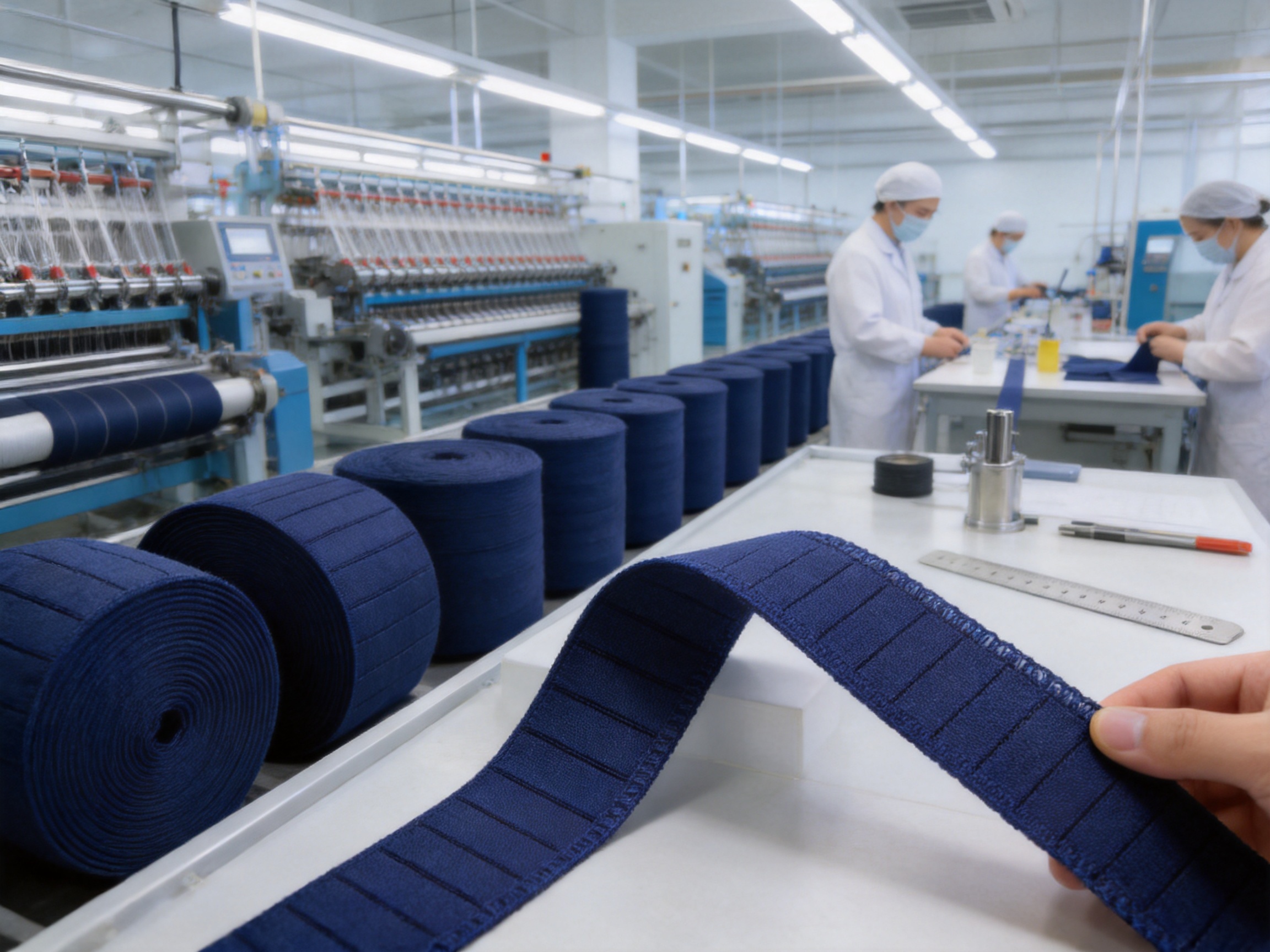
Manufactured by Jinhu Hengxiang Webbing Co., Ltd., the elastic is produced by a specialized webbing manufacturer with experience in both elastic and non-elastic webbing. The company combines modern warping, knitting, weaving, testing, and packaging equipment with strict quality control. Its experience in sports supports and orthopedic braces also gives the product a practical foundation in applications where consistent elasticity, comfort, and structural reliability are important.
5cm Navy Jacquard Elastic
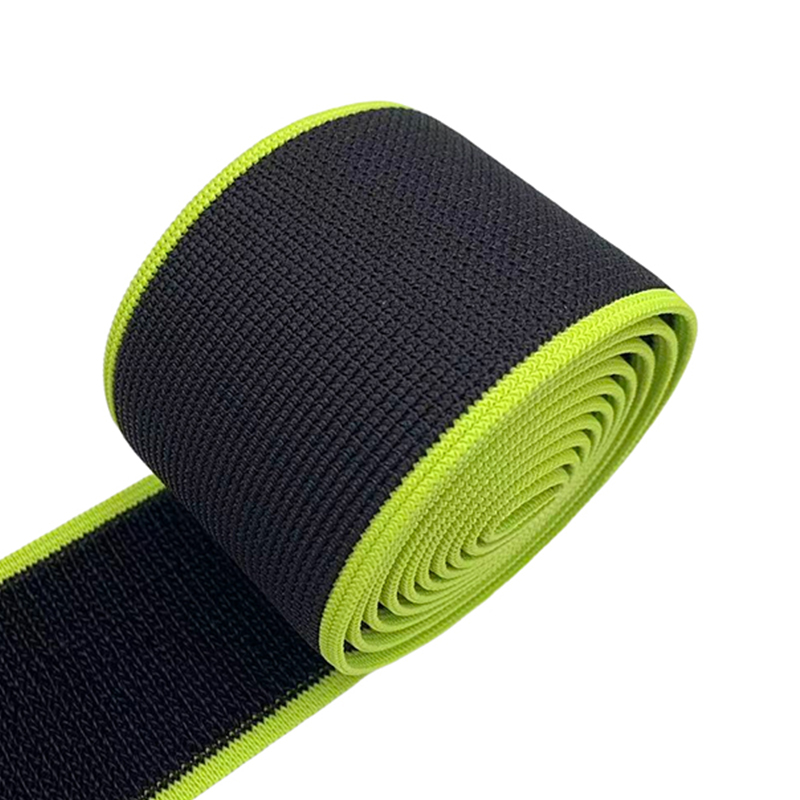
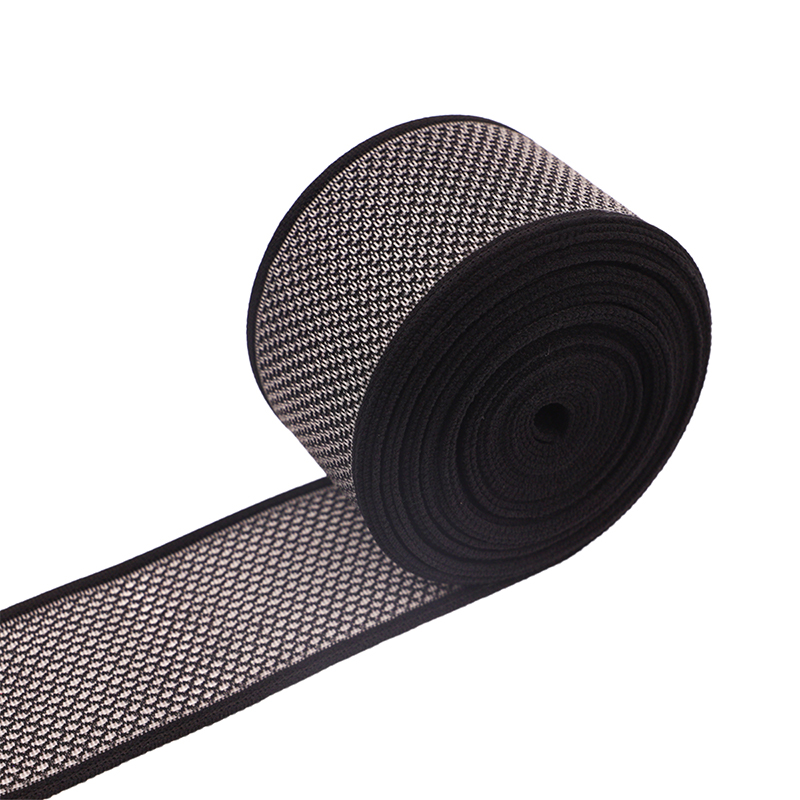
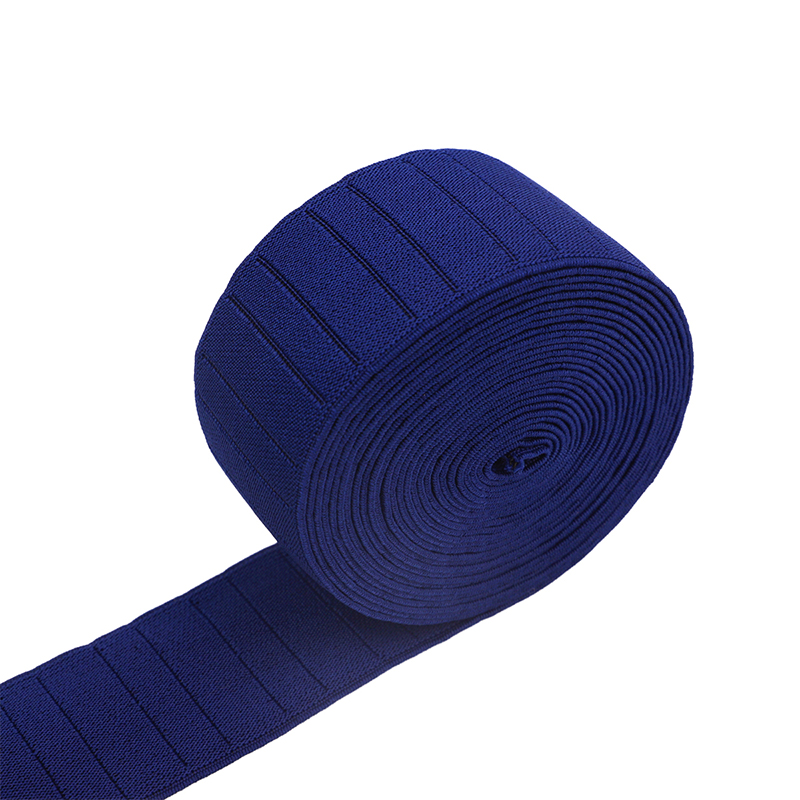
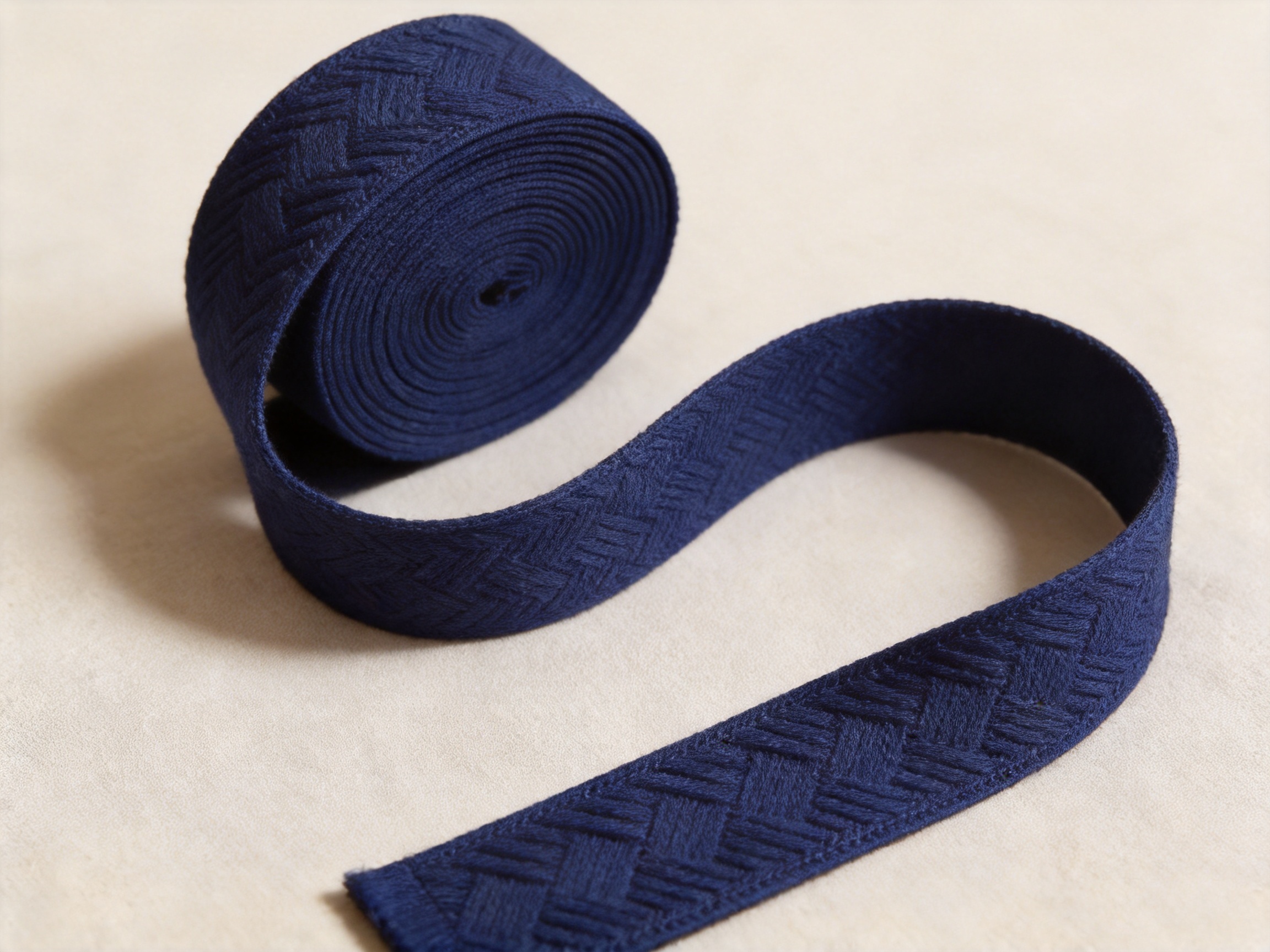
5cm navy jacquard elastic is a woven elastic band characterized by its moderate width, dark navy shade, and patterned surface. The jacquard construction creates a subtle textured effect within the webbing rather than relying only on surface printing. This approach can give the material a more integrated appearance and help it function as both a structural component and a visible design feature.
The 5cm width is especially useful for garments and products that need more support than a narrow elastic band can provide. A wider band can distribute tension over a larger area, helping reduce concentrated pressure and improving the visual balance of waistbands, panels, and support sections. At the same time, it remains narrow enough for sewing into common garment constructions and custom projects.
The navy color is versatile across a wide range of applications. It can blend with black, gray, white, denim, and other deep colors, while also creating an attractive contrast against lighter fabrics. Navy is frequently associated with durability, professionalism, sport, and understated elegance. As a result, this elastic can be used in practical products without appearing purely utilitarian.
Unlike a simple plain elastic band, jacquard elastic adds a decorative dimension. Its textured surface can enhance the appearance of a waistband or exposed trim, allowing designers to reduce the need for additional decorative elements. The result is a component that contributes to both function and style.
Core Product Characteristics
| Feature | Product Value | Typical Benefit |
|---|---|---|
| Width | 5cm | Provides useful coverage, stability, and visual balance |
| Construction | Woven jacquard elastic | Combines stretch performance with a textured decorative surface |
| Color | Navy | Coordinates with many fabrics and supports a refined appearance |
| Elastic behavior | Strong stretch and recovery | Helps garments and products maintain a secure fit |
| Surface feel | Soft yet resilient | Supports comfort and repeated-use performance |
| Processing | Suitable for cutting and sewing | Useful for factory production and custom projects |
| Application range | Fashion, sportswear, activewear, and DIY sewing | Allows one material to serve multiple product categories |
Why Jacquard Construction Matters
Jacquard construction is valued because it permits patterns and textures to be developed through the arrangement of woven elements. Instead of adding a separate decorative layer, the pattern becomes part of the textile structure. This can produce a more integrated and durable visual effect, particularly when the elastic is exposed on the finished product.
For garment designers, this construction creates more freedom. A waistband made with textured navy elastic can become a deliberate design detail rather than something that must be hidden inside the garment. The material may be used on skirts, trousers, dresses, dancewear, uniforms, athletic garments, or fashion accessories. Its appearance can help elevate a basic construction while preserving the practical advantages of elastic webbing.
The woven structure also supports dimensional stability. Elastic must extend when force is applied, but it should not remain permanently distorted after the force is removed. A well-engineered woven elastic band balances extensibility with recovery. This balance is essential for comfort and fit, especially in garments that are put on and removed repeatedly or exposed to continuous movement.
Compared with some plain elastic products, jacquard elastic can provide a stronger visual identity. Printed patterns may fade, crack, or lose clarity depending on use and care conditions. With jacquard construction, the texture is integrated into the woven design. While final performance still depends on laundering, tension, stitching, and application, the woven pattern is generally better suited to products where long-term appearance matters.
Advantages Over Basic Elastic Alternatives
Improved Appearance
One of the most obvious advantages of 5cm navy jacquard elastic is its appearance. Plain white or black elastic may be functional, but it can look generic when exposed. The navy jacquard surface provides a more considered finish and can support premium positioning in apparel and accessories.
The subtle texture avoids an overly dramatic appearance. It is decorative enough to be noticed but restrained enough to coordinate with different garment styles. This makes it suitable for minimalist products, professional sportswear, contemporary fashion, and practical sewing projects.
Useful Width for Support and Coverage
Width affects how elastic behaves in a finished product. Very narrow bands can concentrate pressure and may twist more easily in some constructions. Very wide bands may be difficult to insert, fold, or sew into compact areas. A 5cm band offers a practical middle ground for many garments and support applications.
The width can help distribute tension across a broader section of the body or garment. In waistbands, this may contribute to a more stable fit. In activewear, it can help the garment remain positioned during movement. In design projects, it creates a visible band with enough surface area for the jacquard pattern to be appreciated.
Reliable Stretch and Recovery
Elasticity is valuable only when it remains consistent during use. Strong stretch allows the band to expand as the wearer moves, while recovery helps it return toward its original dimensions. The combination supports a secure yet flexible fit and reduces the risk of a garment becoming loose quickly.
The product description emphasizes strong stretch, excellent recovery, and long-lasting elasticity. These properties make the band appropriate for applications involving repeated extension, including waistbands, activewear, and custom sewing projects. As with any elastic material, actual service life depends on the design, stitching method, applied tension, washing conditions, and exposure to heat or chemicals.
Softness Combined with Resilience
Comfort is a major consideration when elastic contacts the body. A band that is too harsh, rough, or rigid may create discomfort even if it provides adequate tension. The described soft yet resilient hand of this product helps support a more comfortable user experience while maintaining the structural strength expected from woven webbing.
Softness is particularly valuable in waistbands and activewear, where the product may remain in contact with the skin for extended periods. Resilience is equally important because the band must resist flattening, distortion, and loss of function during ordinary wear. Combining these characteristics can help manufacturers balance comfort and performance more effectively than using a purely rigid or overly lightweight material.
Design Versatility
Many narrow elastic products are limited to hidden internal applications. The navy jacquard elastic can be used in both visible and concealed constructions. It may function as an internal waistband, an exposed trim, a support panel, a decorative strap, or part of a custom garment detail.
This versatility can simplify material selection. A single product may support multiple designs, reducing the need to source separate materials for basic function and decorative finishing. For small workshops and product developers, this can make prototyping more efficient. For larger manufacturers, it can support coordinated collections using one recognizable elastic style across several products.
Applications in Fashion Garments
Waistbands for Skirts and Trousers
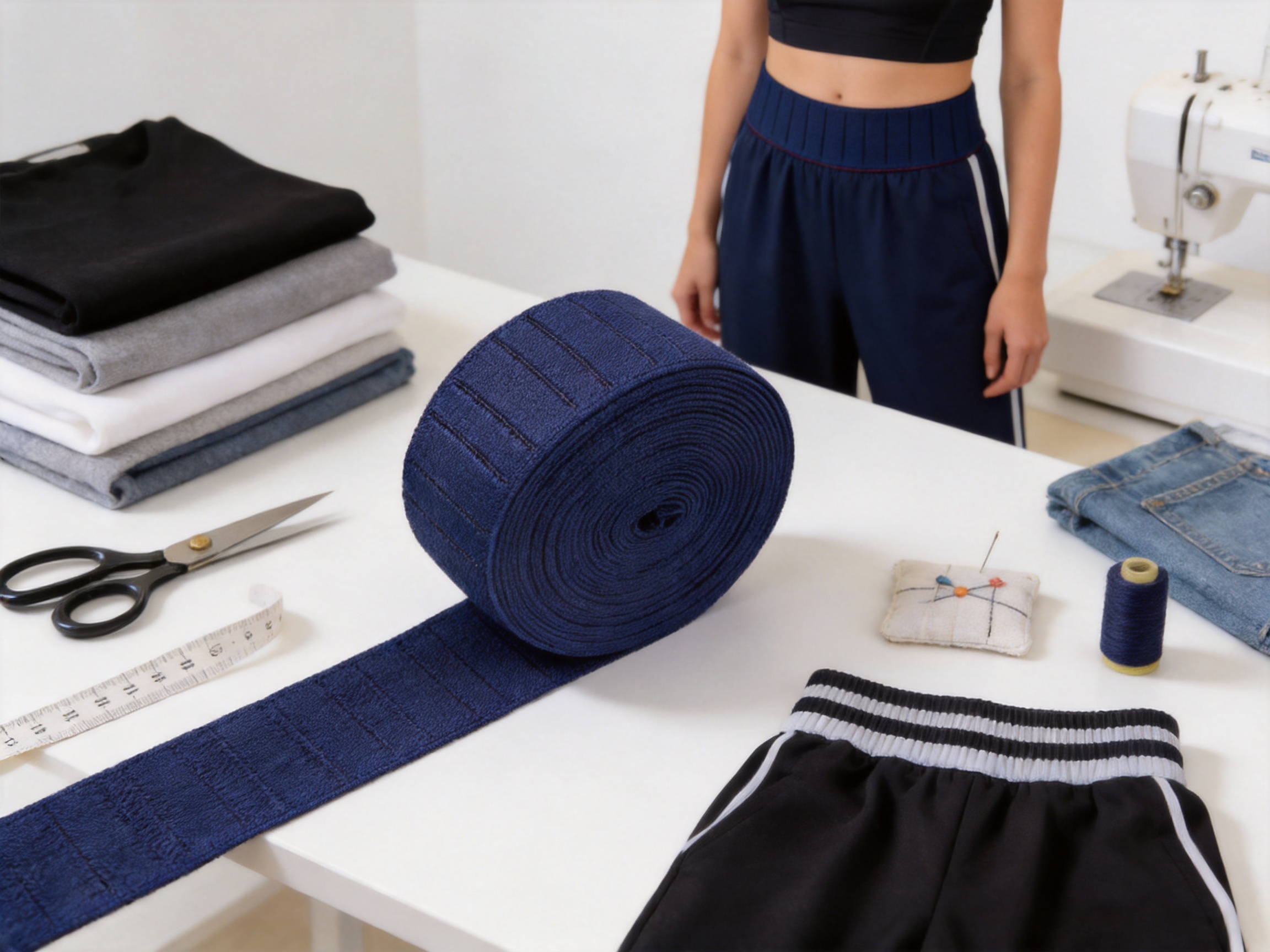
Waistbands are one of the most natural applications for 5cm elastic. The band can provide a flexible fit while reducing the need for complicated closures. In skirts, it may be inserted into a casing or applied as a visible waistband. In trousers, it can support casual, lounge, travel, and sports-inspired designs.
The navy jacquard texture is particularly useful when the waistband is exposed. It can create a finished edge with a deliberate pattern, helping the garment appear more distinctive. The band may be paired with navy fabric for a coordinated monochromatic design or contrasted with lighter fabrics for a stronger visual effect.
When used in a casing, the designer should ensure that the casing width accommodates the 5cm band without excessive compression. The casing should be smooth and properly secured so the elastic can expand and recover without unnecessary friction. When applied directly, stitching should be selected according to the garment fabric and expected tension.
Dresses and Skirts with Defined Silhouettes
Elastic can shape a garment while preserving ease of movement. In dresses, a 5cm waistband can define the waistline and provide flexibility for different body shapes. In gathered skirts, it can distribute tension over a broad area and help maintain the intended silhouette.
The textured jacquard surface may also work as a decorative waist detail in casual dresses, resort garments, dance-inspired designs, or contemporary uniforms. Navy provides a sophisticated alternative to brighter colors and can be coordinated with piping, binding, stitching, or printed fabric details.
Fashion Accessories
The product may be adapted for headbands, belts, wrist accessories, garment straps, and other fabric-based accessories. Its stretch allows comfortable fitting, while its woven texture helps the finished item look more substantial than a basic rubber band or thin elastic tape.
Accessory designers should consider the amount of tension required and whether the elastic will remain exposed. If the band is visible, clean edge finishing and accurate cutting become especially important. If it is joined into a loop, the seam should be strong enough to withstand repeated stretching without creating a bulky or uncomfortable area.
Applications in Sportswear and Activewear
Sportswear requires materials that can accommodate frequent body movement. Running, training, stretching, cycling, gym exercises, and recreational sports all place repeated demands on waistbands and support sections. Elastic must move with the wearer while helping the garment remain securely positioned.
The 5cm width can be advantageous in sports-inspired waistbands because it provides a stable contact area. Rather than relying on a narrow strip that may roll or shift, a wider band can contribute to a more controlled fit when correctly incorporated into the garment. The jacquard pattern also offers a way to add visual detail without compromising the streamlined appearance associated with activewear.
In activewear design, comfort and moisture management are also important. The elastic should be selected as part of a complete material system that includes the main fabric, lining, thread, seam construction, and care instructions. Product developers may conduct wear trials to evaluate stretching, recovery, skin comfort, twisting, and appearance after laundering.
The navy color suits many athletic collections. It can coordinate with black, gray, royal blue, white, and other performance colors. It also tends to maintain a professional appearance across training garments, school sportswear, club uniforms, and recreational apparel.
Sports Support and Orthopedic-Related Products
Jinhu Hengxiang Webbing Co., Ltd. has particular experience producing webbing for sports supports and orthopedic braces. This background is relevant because such products require careful attention to elasticity, comfort, stitching, dimensional stability, and repeatable quality.
The 5cm navy jacquard elastic should not automatically be treated as a finished medical device or as a substitute for a specified clinical component. Its suitability for a particular support or orthopedic product must be assessed by the product designer and manufacturer according to the intended use, required compression, skin-contact conditions, regulatory requirements, and validation procedures.
Within an appropriately designed product, elastic webbing may serve as an adjustable section, retention strap, comfort band, or structural textile component. The correct tension and attachment method are essential. A support product must be engineered as a complete system, and material selection should be supported by testing rather than appearance alone.
Applications in DIY and Sewing Projects
For home sewers, costume makers, sample developers, and small businesses, ease of cutting and sewing is an important advantage. The product description identifies the band as suitable for custom designs. Its width offers enough surface area for practical handling, while the woven structure provides a stable base for stitching.
DIY users can apply the elastic to skirts, trousers, dresses, dancewear, costumes, bags, fabric accessories, and repair projects. The navy color is easy to combine with common fabrics, and the jacquard surface can help simple handmade projects achieve a more finished appearance.
Before producing a final item, it is advisable to test a small section. The user can examine how the material behaves under the intended amount of tension, whether the selected needle and thread produce a clean seam, and whether the elastic remains comfortable after stitching. Testing is particularly important when the band is gathered, folded, overlapped, or sewn directly to a stretch fabric.
Cutting and Sewing Considerations
Sharp fabric scissors or an appropriate cutting tool should be used to create a clean edge. The band should be measured under consistent conditions, since stretching during measurement can lead to inaccurate finished dimensions. If multiple pieces are required, cutting should be performed carefully to ensure uniform length and alignment of the jacquard pattern.
Machine settings should be selected according to the garment fabric and construction. A lockstitch, zigzag stitch, multi-step zigzag, or other suitable method may be used depending on whether the elastic is inserted into a casing or sewn directly to the fabric. The seam must secure the elastic without restricting its ability to stretch.
When joining the two ends, an overlap may provide a reliable connection, but the amount of overlap should be appropriate for the garment design. Excessive overlap can create a hard or bulky section. Insufficient overlap may reduce seam strength. A test sample helps determine the best balance.
Advanced Manufacturing Capabilities
The performance of elastic webbing depends on more than the raw materials. Manufacturing precision, equipment condition, process control, inspection, and packaging all influence the final product. Jinhu Hengxiang Webbing Co., Ltd. has developed production capabilities covering warping, knitting, weaving, testing, and packaging.
Warping Preparation
Warping is an important preparatory stage in textile production. Yarns must be arranged and controlled before they enter subsequent weaving or knitting processes. Accurate warping helps support consistent yarn distribution, stable production, and uniform fabric formation.
For elastic webbing, preparation is especially important because the finished product must combine textile yarns and elastic behavior. Inconsistent yarn arrangement can influence width, edge quality, surface appearance, and tension response. Modern warping equipment helps manufacturers improve repeatability and manage production requirements more efficiently.
Weaving and Jacquard Formation
Woven webbing production requires controlled interaction between warp and weft elements. The construction must create a stable band while allowing the elastic component to extend and recover. For jacquard elastic, the weaving process also contributes to the development of the textured surface and visual pattern.
Advanced woven machines can support more accurate pattern formation and consistent width. Process control helps reduce variation between production runs. This is valuable for customers who need to reproduce the same appearance across multiple orders, garment sizes, or seasonal collections.
The woven structure must be balanced carefully. If it is too loose, the band may lack stability or show undesirable distortion. If it is too tight, the elastic may feel overly rigid or fail to provide the required extension. Manufacturing expertise is therefore important in achieving a practical combination of stretch, recovery, texture, and durability.
Knitting and Related Webbing Production
In addition to woven products, the company operates knitting equipment and produces a range of elastic and non-elastic webbing. Different webbing constructions offer different combinations of softness, flexibility, surface appearance, and dimensional behavior.
This broader manufacturing capability benefits customers because the company can evaluate product requirements across multiple construction types. A customer may need woven jacquard elastic for a visible waistband, knitted elastic for a softer internal application, or non-elastic webbing for a rigid support section. Access to several production methods can make technical consultation and sourcing more efficient.
Testing and Quality Control
Quality control is described as extending throughout material sourcing, processing, testing, and packing. This approach is important because defects can originate at any stage. Incoming materials must meet requirements, production settings must remain stable, finished webbing must be inspected, and packaging must protect the product during storage and transport.
Relevant evaluation may include width consistency, surface appearance, color uniformity, stretch behavior, recovery, edge integrity, seam performance, and general visual quality. The exact testing program should be matched to the customer’s technical specification and intended application.
For sports and medical-related products, repeatability is particularly important. A small change in width or elastic response can affect the fit of a finished product. Consistent production helps manufacturers maintain their own quality standards and supports more predictable downstream assembly.
Packaging Equipment and Order Preparation
Packaging is sometimes overlooked, but it contributes to product protection and order accuracy. Proper packaging helps prevent contamination, tangling, crushing, moisture exposure, and confusion between colors or specifications. Modern packaging equipment can also improve production efficiency for large-volume orders.
Well-prepared packaging supports warehouse handling and international shipment. Customers benefit when rolls, lengths, labels, and order quantities are clearly controlled. Reliable packaging is particularly helpful for manufacturers managing multiple product styles or importing materials for scheduled production.
Quality Certifications and Professional Experience
Jinhu Hengxiang Webbing Co., Ltd. was established in 2005 and has more than 20 years of professional production experience. The company has obtained Oeko-Tex Standard 100 and ISO 13485 certificates, according to the supplied company information.
Oeko-Tex Standard 100 is associated with testing textile products for harmful substances according to defined criteria. For buyers, certification can provide additional information when evaluating materials intended for clothing, accessories, and products that may come into contact with skin. Customers should confirm the current certificate scope and product coverage for their specific order.
ISO 13485 is a quality management standard associated with medical devices. The presence of this certification reflects a management framework relevant to organizations serving medical and orthopedic product markets. It does not mean that every product made by a certified organization is automatically a medical device or suitable for every clinical application. Product qualification, intended-use review, and customer validation remain necessary.
The company’s experience across research, development, production, sales, and service supports a more complete approach to customer requirements. This is useful when a buyer needs more than an off-the-shelf band. Elasticity, texture, color, width, and construction may need to be adjusted for a particular garment, support, or accessory.
Customization and OEM/ODM Support
Customization is a significant advantage for product developers. Standard elastic may not provide the exact color, texture, tension, or width required for a new design. Jinhu Hengxiang Webbing Co., Ltd. offers OEM and ODM services and can customize webbing according to customer requirements.
For a project based on 5cm navy jacquard elastic, customization may involve refining the shade of navy, modifying the jacquard texture, adjusting elasticity, selecting different yarn combinations, or coordinating the band with a larger product collection. Any change should be evaluated through samples and testing before mass production.
OEM support is useful when a customer already has a defined product specification and requires a manufacturing partner. ODM support may be more suitable when the customer needs assistance developing a webbing solution from a general concept. The supplier’s production experience can help identify practical construction options and anticipate manufacturing challenges.
Clear communication is essential during development. Customers should provide intended use, target width, approximate stretch requirements, color references, contact conditions, washing expectations, order quantity, packaging needs, and applicable compliance requirements. The manufacturer can then prepare samples and production recommendations that are more closely aligned with the final application.
Comparison with Common Elastic Webbing Options
| Comparison Factor | 5cm Navy Jacquard Elastic | Basic Plain Elastic | Very Narrow Elastic | Printed Decorative Elastic |
|---|---|---|---|---|
| Visual character | Textured woven jacquard appearance | Simple and functional | Limited visible surface area | Pattern depends on surface printing |
| Coverage | Moderate 5cm coverage | Varies by width and construction | Lower coverage | Varies by width and construction |
| Design flexibility | Suitable for visible and concealed use | Usually selected for basic function | Often used for small or hidden sections | Useful for decorative applications |
| Pattern integration | Pattern is developed through woven structure | Usually no integrated pattern | Usually limited pattern potential | Pattern is added to the surface |
| Typical positioning | Fashion, activewear, waistbands, custom projects | General garment and utility applications | Lightweight garment and lingerie applications | Fashion and trim applications |
| Key consideration | Balance of appearance, coverage, stretch, and recovery | Cost and basic function | Compactness and low bulk | Pattern durability and print quality |
This comparison is general rather than a substitute for technical testing. Different suppliers use different yarns, constructions, and production standards. Nevertheless, it illustrates why a 5cm navy jacquard band may be preferred when a buyer wants more visual value and coverage than a basic elastic product provides.
Advantages for Manufacturers and Product Buyers
One Material for Function and Decoration
Using one elastic band for both structural support and visible design can simplify construction. The manufacturer may not need to add another trim layer, reducing the number of components in the bill of materials. Fewer components can also simplify purchasing, inventory, and sewing operations.
Suitable for Multiple Market Segments
The product can support fashion, sportswear, activewear, DIY sewing, and selected support-related applications. This broad usability allows buyers to explore different product categories without changing to a completely different material platform.
Support from an Experienced Webbing Manufacturer
Jinhu Hengxiang Webbing Co., Ltd. has been operating since 2005 and produces millions of meters of elastic and non-elastic webbing each month, according to the supplied information. Production scale, specialized equipment, and experience with international customers can be valuable for buyers seeking continuity and dependable supply.
International Market Experience
The company’s products are sold across China and exported to North America, Eastern Europe, the Middle East, South Asia, and other regions. Experience with different markets can help a manufacturer understand varied expectations related to product consistency, packaging, communication, documentation, and delivery.
Competitive Pricing and Timely Delivery
The company emphasizes competitive pricing and timely delivery. These factors are important in commercial production, where material cost and schedule reliability directly influence product margins and launch dates. Buyers should request a quotation based on exact specifications, order volume, packaging, and shipping requirements rather than relying on general pricing assumptions.
How to Evaluate the Product for a Specific Project
Before placing a large order, buyers should establish clear technical and commercial requirements. The first consideration is the intended application. A visible fashion waistband may prioritize appearance and hand feel, while a sports support may prioritize stable recovery, secure attachment, and repeated-cycle performance.
The second consideration is tension. Elastic should not be evaluated only by how far it can stretch. The force required to extend it, the force it applies during use, and its recovery after repeated cycles are all relevant. A band that feels appropriate in a hand test may behave differently after it is sewn into a garment.
The third consideration is compatibility with other materials. The elastic should be tested with the intended fabric, thread, lining, and finishing method. Differences in stretch can cause gathering, distortion, or seam stress. A test sample can reveal these issues before production begins.
The fourth consideration is care. Buyers should evaluate washing, drying, ironing, storage, and chemical exposure requirements. The finished product should include care instructions appropriate to the complete garment or product. If the elastic is used in a high-demand environment, accelerated testing may help estimate performance over time.
Recommended Sample Review Points
| Review Area | Questions to Consider |
|---|---|
| Width | Does the band remain close to 5cm throughout the sample? |
| Pattern | Is the jacquard texture clear, consistent, and appropriate for the design? |
| Color | Does the navy shade match the approved reference and coordinate with the fabric? |
| Stretch | Does the band provide sufficient extension for the intended product? |
| Recovery | Does it return effectively after repeated extension? |
| Comfort | Is the surface suitable for expected skin contact? |
| Stitching | Can the band be sewn securely without restricting its elasticity? |
| Durability | Does it retain appearance and function after planned care tests? |
| Packaging | Are rolls, lengths, labels, and quantities easy to identify and handle? |
Design Guidance for Professional Use
Professional designers should treat elastic webbing as an active part of the product architecture. Its width, tension, placement, and attachment method can affect fit, appearance, and user comfort. A waistband should be proportioned to the garment’s silhouette, while an activewear application should be evaluated during movement rather than only on a flat pattern.
The jacquard pattern should be aligned with the product’s visual language. It can be used as a subtle accent in a minimalist collection or as a coordinated detail across multiple garments. Designers may choose to expose the band completely, reveal only part of it, or combine it with fabric coverings depending on the desired finish.
Color matching is also important. Navy can appear different under natural daylight, indoor lighting, and digital screens. Physical color samples should be approved before production. If the elastic is used with dyed fabric, the buyer should evaluate both colors under the lighting conditions relevant to the target market.
For products that require exact fit, several samples may be necessary. A sample should be tested on the intended body size or product dimensions. The design team can then assess whether the elastic rolls, twists, digs into the body, loses recovery, or causes uneven gathering. Adjustments may involve changing the pattern, seam allowance, elastic length, or attachment technique.
Quality, Sustainability, and Responsible Production
Responsible textile production involves more than selecting a durable material. Longer-lasting elastic can help reduce the frequency with which garments or products need to be replaced. A band that maintains useful stretch and appearance over time may contribute to improved product life, provided the complete garment is also designed for durability.
The company’s stated commitment to quality, innovation, and sustainability reflects an effort to support responsible manufacturing. Modern machinery can improve production efficiency and reduce avoidable waste when properly maintained and operated. Accurate cutting, consistent weaving, and effective packaging also help reduce material loss and rejected products.
Buyers should discuss sustainability requirements directly with the manufacturer. Relevant topics may include material composition, recycled content, restricted substances, packaging materials, production waste, energy management, and documentation. Sustainability claims should be supported by appropriate records and certification where required.
Oeko-Tex Standard 100 certification can be relevant to customers concerned about harmful substances in textile products. However, certification details should always be checked for the current product, production facility, and applicable certificate scope. Responsible purchasing combines supplier documentation with the buyer’s own risk assessment and product testing.
Ordering and Communication Considerations
When requesting 5cm navy jacquard elastic, buyers should identify the required width, color, pattern, expected elasticity, order quantity, roll length, packaging format, and delivery destination. If the product will be used in sports, medical-support, or other demanding applications, the buyer should explain the performance requirements in detail.
It is also helpful to provide a reference sample or technical drawing. A physical sample can communicate surface texture, color, softness, and elastic behavior more accurately than words alone. Drawings can show how the band will be attached and whether it will be exposed, enclosed, folded, or joined into a loop.
Sample approval should be documented. The approved sample can serve as a reference for production inspection and future repeat orders. Buyers may also request information about inspection procedures, certificate availability, packaging, lead time, and shipping arrangements.
Clear communication reduces misunderstandings and supports better cooperation. Since elastic performance is influenced by the entire product design, the supplier and buyer should discuss practical use rather than focusing only on a single specification such as width or color.
Q&A
It is a 5cm-wide woven elastic band with a navy color and a subtle jacquard texture. It is designed to provide stretch, recovery, and a refined appearance for garments, activewear, sports-related products, and sewing projects.
What makes jacquard elastic different from plain elastic?
Jacquard elastic uses a woven structure to create its pattern or texture. This gives it a more decorative appearance than basic plain elastic and makes it suitable for applications where the band may be visible.
Is the product suitable for waistbands?
Yes. The 5cm width can provide useful coverage and stability for skirts, trousers, dresses, casual garments, and other waistband applications. Designers should test the required tension and attachment method for the specific garment.
Can it be used in sportswear and activewear?
Yes. Its stretch and recovery make it suitable for many sportswear and activewear constructions. The finished product should be tested during movement and after expected care cycles to confirm comfort, fit, and durability.
Is it appropriate for medical or orthopedic products?
It may be considered for selected components of sports supports or orthopedic-related products, but suitability must be confirmed through application-specific testing. The elastic itself should not be assumed to be a complete medical device or automatically suitable for clinical use.
Navy is versatile and coordinates with many dark, neutral, and light fabrics. However, color perception can vary by lighting and material surface, so buyers should approve a physical color sample before mass production.
Can the elastic be customized?
Jinhu Hengxiang Webbing Co., Ltd. offers customized elastic and non-elastic webbing, including adjustments related to elasticity, texture, and color. Specific customization options should be confirmed through technical discussion and sample development.
What company manufactures this elastic?
The product is manufactured by Jinhu Hengxiang Webbing Co., Ltd., a webbing manufacturer located in Jinhu County, Huai’an City, Jiangsu Province, China. The company has operated since 2005 and serves domestic and international customers.
What manufacturing equipment does the company use?
The company has introduced and updated warping machines, knitting machines, woven machines, and packaging machines. These capabilities support the production of different elastic and non-elastic webbing constructions.
What certifications are associated with the company?
The supplied company information states that the company has obtained Oeko-Tex Standard 100 and ISO 13485 certificates. Buyers should request current certificate details and confirm their relevance to the specific product and order.
How should buyers test the product?
Buyers should evaluate width, color, pattern consistency, stretch, recovery, softness, stitching performance, dimensional stability, and care resistance. Testing should be performed with the intended fabric and finished construction whenever possible.
Can home sewers use this elastic?
Yes. The material is suitable for DIY and sewing projects, including custom waistbands, activewear, dresses, skirts, accessories, and repairs. A small test piece should be sewn before beginning the final project.
Conclusion
5cm navy jacquard elastic combines practical performance with a refined woven appearance. Its moderate width provides useful coverage and stability, while its strong stretch and recovery support repeated use. The soft yet resilient surface can improve comfort, and the navy jacquard texture gives designers an attractive alternative to plain elastic.
The product is suitable for fashionable waistbands, skirts, trousers, dresses, sportswear, activewear, accessories, DIY sewing, and selected support-related constructions. Its ability to function as both a structural component and a visible design detail can help simplify product development and create a more polished finished appearance.
Its manufacturing foundation is also significant. Jinhu Hengxiang Webbing Co., Ltd. offers experience dating back to 2005, specialized warping, knitting, weaving, testing, and packaging capabilities, international market experience, OEM and ODM support, and quality systems associated with Oeko-Tex Standard 100 and ISO 13485 certification. These strengths can help customers develop reliable webbing solutions for different industries.
As with any textile component, final suitability depends on the complete product design. Buyers should confirm technical requirements, review samples, test the elastic with the intended materials, and verify current certification and quality documentation. When properly selected and applied, 5cm navy jacquard elastic offers a balanced combination of durability, comfort, visual appeal, customization potential, and manufacturing reliability.
References
1. Jinhu Hengxiang Webbing Co., Ltd. Product information for 5cm navy jacquard elastic.
2. Jinhu Hengxiang Webbing Co., Ltd. Company profile and manufacturing capability information.
3. International Organization for Standardization. ISO 13485: Medical Devices — Quality Management Systems — Requirements for Regulatory Purposes.
4. Oeko-Tex Association. Standard 100 principles for testing textile products for harmful substances.
5. Textile Institute. General principles of textile structure, woven webbing, and elastic material performance.
6. Apparel and textile engineering references on waistband construction, elastic recovery, garment fit, and sewing methods.