
 en
en
 English
 русский
 Français
 Español
 Português
 Tiếng Việt
Content
- 1 Understanding the 7.5 cm Black Woven Elastic Panel
- 2 Advantages of a Woven Elastic Panel Over Narrow Elastic Products
- 3 Applications in Apparel and Textile Products
- 4 Manufacturing Process and Production Expertise
- 5 Quality and Compliance Strengths
- 6 Why Choose an Experienced Webbing Manufacturer?
- 7 Customization Options for Different Product Requirements
- 8 How to Incorporate the Panel into a Garment
- 9 Performance Considerations for Buyers
- 10 Competitive Advantages in Commercial Production
- 11 Company Manufacturing Strengths
- 12 Environmental and Long-Term Production Considerations
- 13 Purchasing Guidance for Distributors and Manufacturers
- 14 Frequently Asked Questions
- 14.1 What is the width of this elastic panel?
- 14.2 What color is available?
- 14.3 What is the main advantage of a wide woven elastic panel?
- 14.4 Can it be used for medical or orthopedic products?
- 14.5 Is the panel suitable for sportswear?
- 14.6 Can it be used for maternity garments?
- 14.7 Can the product be customized?
- 14.8 What equipment does the company use?
- 14.9 Does the company provide quality certifications?
- 14.10 What should be tested before bulk production?
- 14.11 Can the panel be used in DIY sewing projects?
- 14.12 How should the panel be stored?
- 15 Conclusion
- 16 References
- 17 Product: 7.5cm Black Woven Elastic Panels
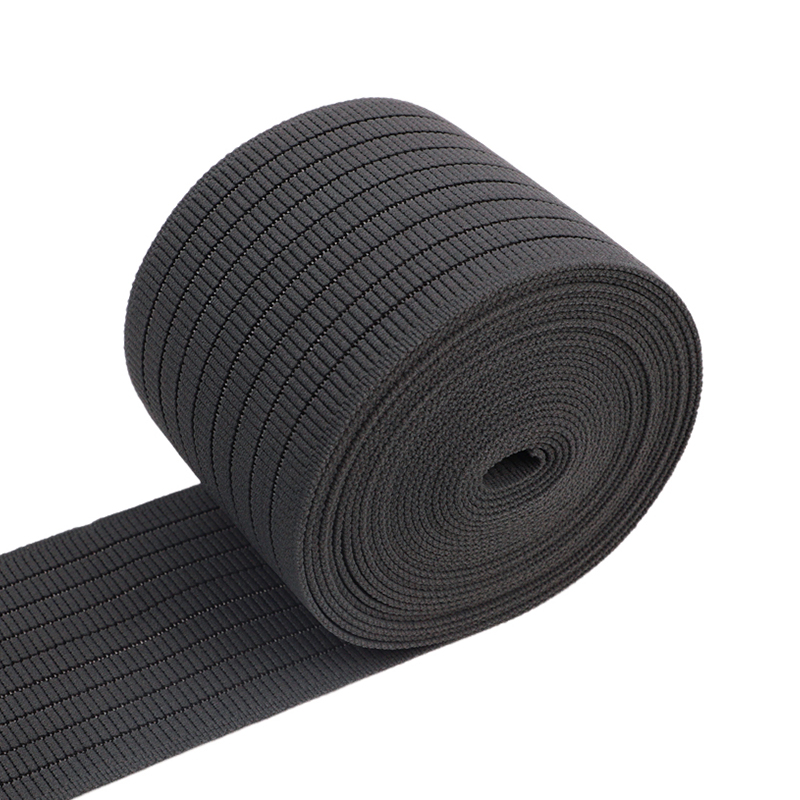
Elastic materials play an essential role in the performance, comfort, fit, and appearance of modern garments. From sportswear and underwear to shapewear, maternity clothing, protective supports, and industrial textile products, the right elastic component can determine whether a finished product feels secure and comfortable or loose, restrictive, and short-lived. The 7.5 cm black woven elastic panel is designed to provide dependable width, firm support, and consistent elasticity for a broad range of sewing, garment, and textile applications.
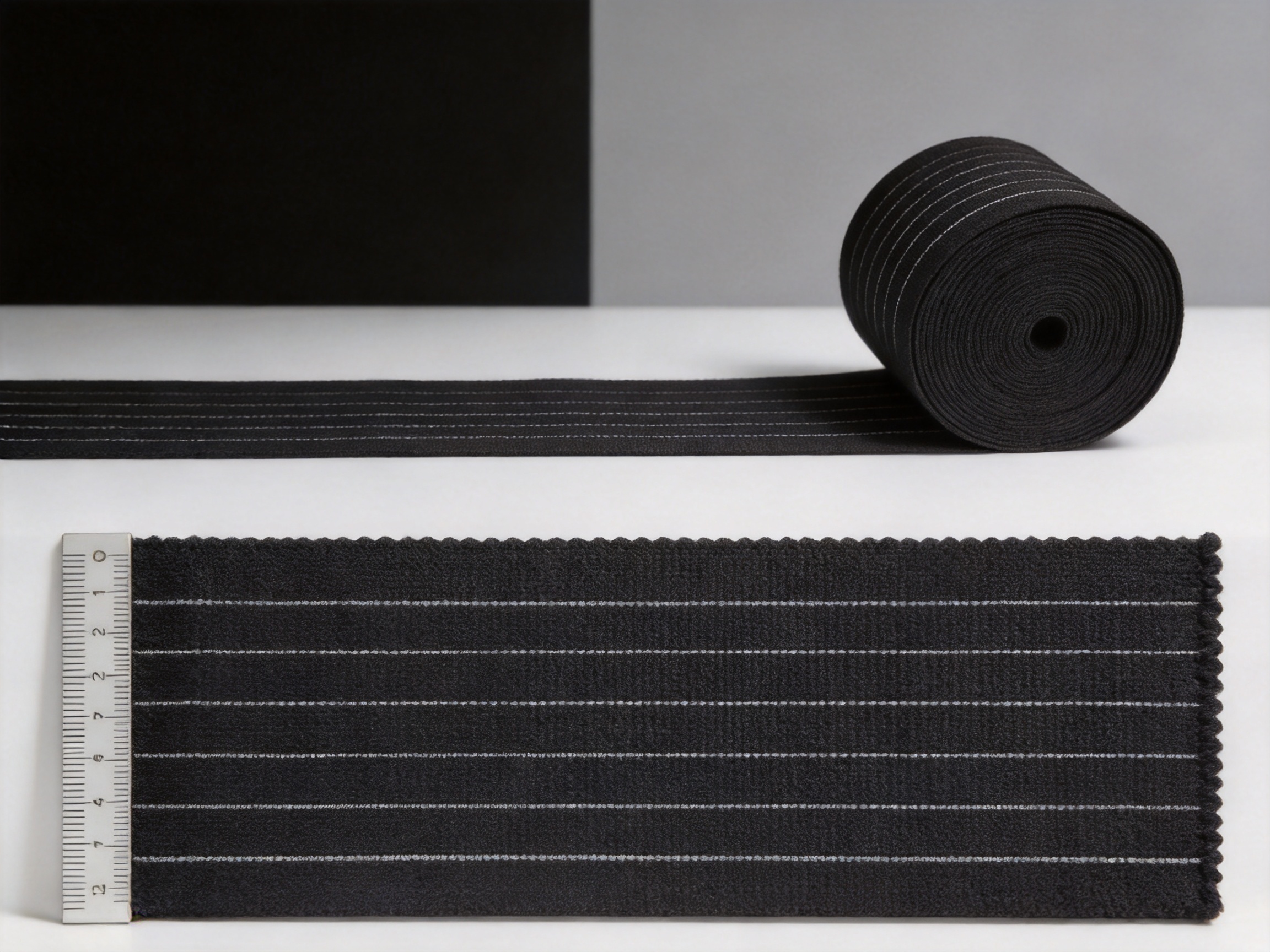
Unlike narrow elastic bands that are mainly used for localized tension, a wide woven elastic panel distributes pressure across a larger area. This makes it especially valuable in products that require stability over the waist, abdomen, back, hips, cuffs, or other broad sections of fabric. Its 7.5 cm width provides a practical balance between coverage, flexibility, and ease of integration into commercial garment designs.
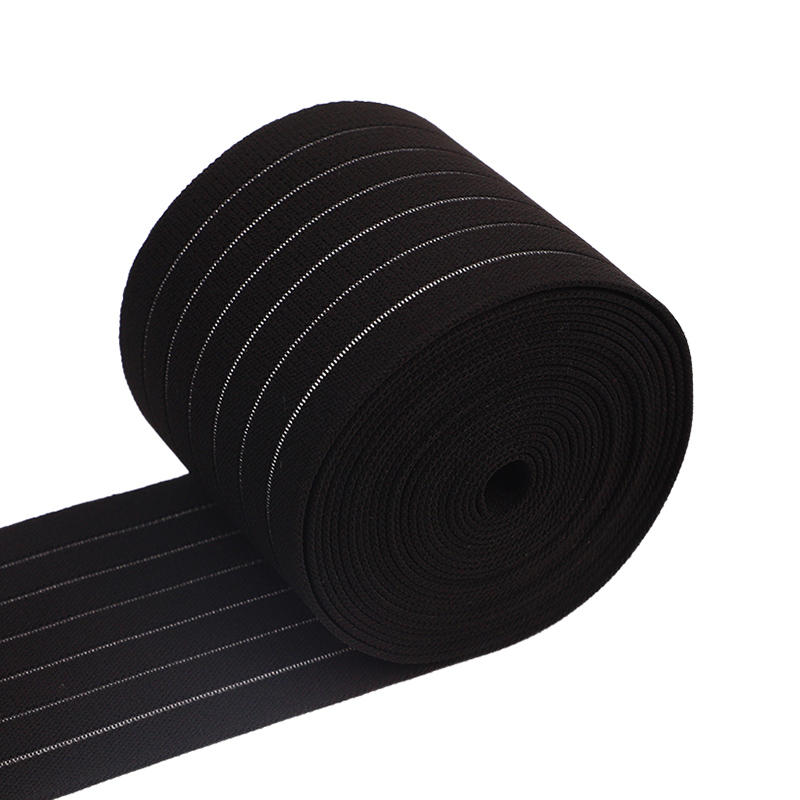
Produced by Jinhu Hengxiang Webbing Co., Ltd., the 7.5 cm black woven elastic panel is manufactured for customers seeking durable elastic support and dependable production consistency. The company combines professional webbing expertise, modern production equipment, quality management, and customization capability to serve garment manufacturers, medical textile suppliers, sports-support producers, wholesalers, and sewing-related businesses.
With its black color, woven construction, firm recovery, and adaptable width, this elastic panel can be used in both visible and concealed applications. It is suitable for high-volume industrial production as well as smaller custom sewing projects. The product is also supported by a manufacturing system that includes material sourcing, warping, weaving, finishing, testing, inspection, and packaging controls.
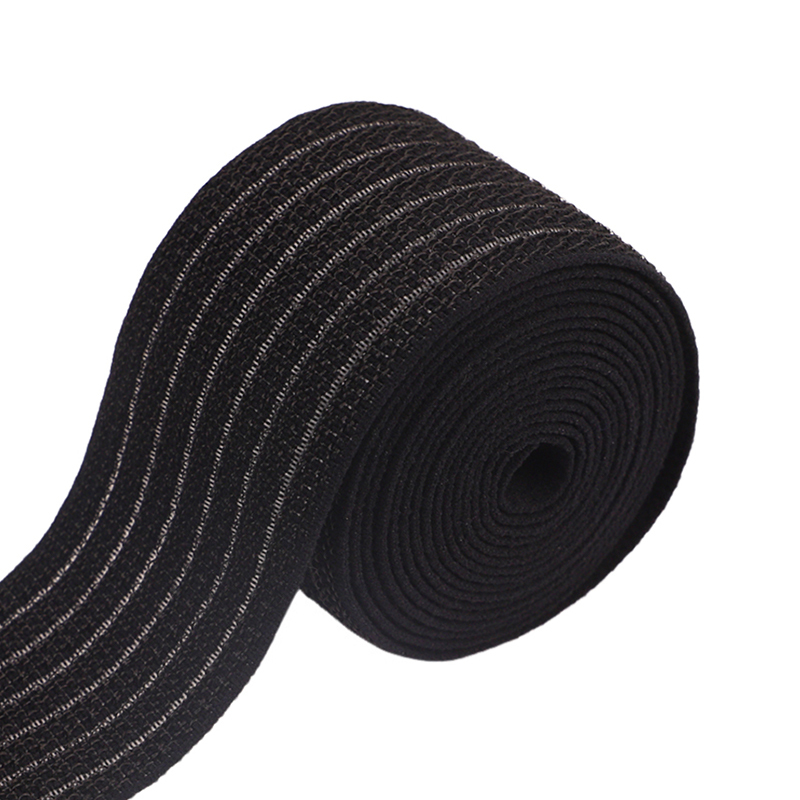
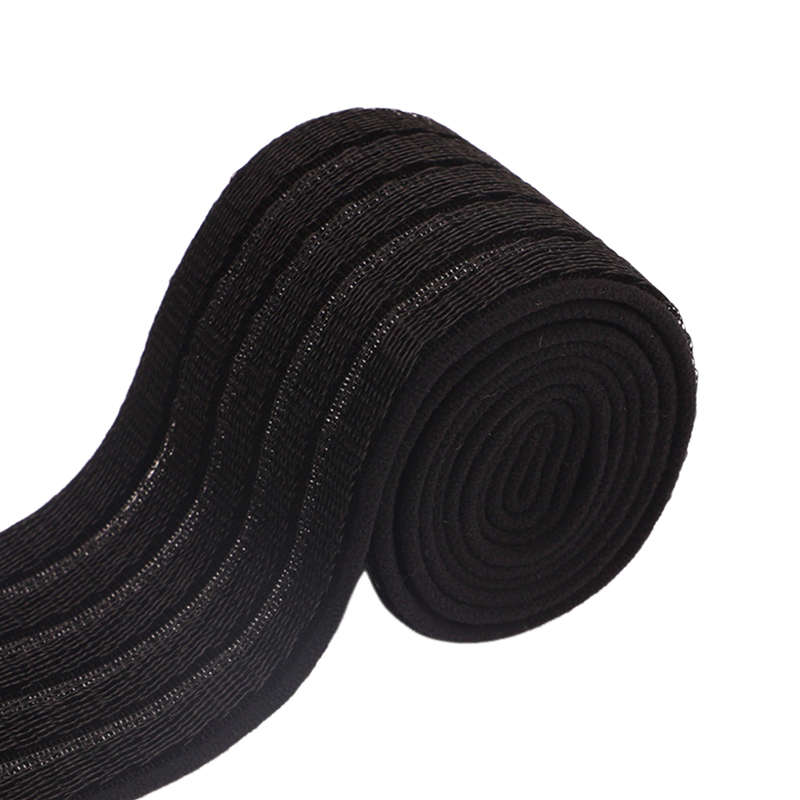
7.5cm Black Woven Elastic Panels
Understanding the 7.5 cm Black Woven Elastic Panel
The 7.5 cm black woven elastic panel is a broad elastic webbing product made by interlacing yarns in a structured woven construction. The weaving process creates a stable textile body that can stretch and recover while maintaining its overall shape. This differs from simple elastic tapes that may rely primarily on exposed rubber or spandex threads and may not offer the same level of surface stability.
The product is designed for applications where fabric needs firm but controlled tension. It can be sewn directly onto garments, inserted into channels, attached beneath fabric layers, or combined with hook and loop systems, fasteners, panels, or other textile components. Its broad surface makes it possible to create support zones without using multiple narrow strips.
Black is one of the most widely requested colors in the apparel and textile industries. It coordinates easily with black, dark, and neutral fabrics and is often selected for sportswear, underwear, shapewear, medical supports, workwear, and industrial products. The dark appearance can also help conceal dirt, marks, and wear in products intended for frequent use.
The 7.5 cm width is suitable for waistbands, abdominal support sections, back-support garments, compression-related products, wide cuffs, garment reinforcement areas, and other designs requiring more coverage than a standard narrow elastic band. Depending on the product structure and sewing method, it may be used as an external design feature or hidden inside a garment assembly.
Core Product Characteristics
The panel offers firm and consistent elasticity for applications that demand reliable hold. Its woven structure helps the material maintain its shape during repeated stretching and release. This is important in clothing that must fit different body shapes, accommodate movement, or return to its original dimensions after use.
The broad panel format distributes tension across a larger area. Compared with a narrow elastic, it can reduce concentrated pressure at a single line and create a more stable support zone. This feature is valuable in waistbands, abdominal binders, maternity garments, and sports-support products where comfort and stability must work together.
The product also provides a smooth foundation for sewing and assembly. Manufacturers can incorporate it into a garment pattern with fewer separate strips, reducing the number of components and simplifying production planning. The panel can be cut, stitched, layered, and combined with other materials according to the requirements of the finished product.
Its sturdy construction makes it suitable for products exposed to regular movement and repeated use. Activewear, underwear, sportswear, shapewear, and loungewear all require materials that can follow body movement while maintaining a dependable fit. Industrial garment production also benefits from webbing that can withstand repeated handling during cutting, sewing, inspection, and packaging.
Advantages of a Woven Elastic Panel Over Narrow Elastic Products
Many textile applications can be served by narrow elastic bands, but a wide woven panel offers several practical advantages when the design requires broader support. The choice between narrow and wide elastic depends on the garment pattern, expected load, desired appearance, and required comfort. For products covering a larger body area, the 7.5 cm panel can offer a more efficient and stable solution.
Broader Support Distribution
A narrow elastic concentrates tension along a limited line. In contrast, a 7.5 cm panel spreads the same general supporting function over a broader surface. This can help designers create a more balanced fit around the waist or abdomen and can reduce the need to use several narrow strips side by side.
Broader pressure distribution is particularly useful in abdominal support garments, maternity wear, shapewear, and orthopedic-style textile products. These products often need gentle containment and stability rather than tension at only one narrow point. The wide panel helps create a continuous support zone that follows the structure of the garment.
Improved Garment Stability
Wide elastic panels can help reduce rolling, shifting, or uneven tension when correctly incorporated into a suitable garment construction. A stable woven foundation gives the sewing team more material to anchor, which can be useful when joining the elastic to broad fabric sections.
For waistbands and support garments, stability is essential. A waistband that moves excessively can affect comfort and appearance. A wide panel offers manufacturers an opportunity to create a more secure connection between the garment and the wearer while maintaining the flexibility expected from elastic materials.
Efficient Component Integration
Using one wide panel may simplify a design that would otherwise require multiple narrow tapes. Fewer parallel components can reduce sewing operations, alignment problems, and material handling. This may support more efficient production, especially when a garment is produced in large quantities.
The panel may also make pattern development more straightforward. Designers can allocate one defined support area in the pattern rather than calculating the position and spacing of several narrow elastics. This does not eliminate the need for testing, but it can make the development process more organized.
Professional Appearance
A wide woven panel can create a clean and intentional appearance. It may be concealed beneath an outer fabric layer or used as a visible structural feature. The black color is especially versatile because it complements many modern garment designs and can contribute to a professional, performance-oriented appearance.
In sportswear and shapewear, a black elastic section can be used as part of a streamlined visual design. In underwear and loungewear, it can provide support while remaining visually understated. In industrial and medical textile products, the dark color may also contribute to a practical and durable appearance.
Suitable for Diverse Applications
A product that can be used across several categories offers advantages to manufacturers and distributors. The 7.5 cm panel can be applied to activewear, underwear, sportswear, shapewear, maternity clothing, loungewear, industrial garments, and DIY sewing projects.
This broad application range allows buyers to evaluate one elastic panel for multiple product lines. It can support inventory efficiency, simplify supplier management, and provide a consistent material option across different garment collections.
Applications in Apparel and Textile Products
Activewear and Sportswear
Activewear must accommodate bending, stretching, running, jumping, and other repetitive movements. Waistbands and support zones must remain secure without creating unnecessary restriction. The woven elastic panel can be incorporated into leggings, training garments, shorts, tops, sports bras, and performance apparel.
Its firm elasticity helps garments stay positioned during movement. The broad width can be used in high-rise waistbands or body-support areas where a narrow tape would provide insufficient coverage. Designers may combine it with breathable knitted fabrics, technical mesh, brushed fabrics, or laminated textile layers.
Sportswear manufacturers also value repeatability. When thousands of garments are produced, each waistband or support section should behave consistently. A professionally manufactured woven elastic panel helps reduce variation between production batches when appropriate specifications and quality controls are maintained.
Underwear and Lingerie
Underwear requires a careful balance of support, softness, flexibility, and appearance. Wide elastic can be used in high-waisted underwear, briefs, shaping garments, camisoles, and other products requiring a stable body fit.
The 7.5 cm width may be suitable for designs that need more coverage around the abdomen or waist. It can also be integrated with soft lining fabrics or covered with decorative textile layers. Sewing parameters should be selected according to the construction, fabric thickness, and desired comfort level.
Shapewear
Shapewear relies on controlled tension and a close fit. A wide elastic panel can provide a supporting foundation in abdominal, waist, or side sections. When combined with suitable stretch fabrics, it may help the garment maintain its intended position while allowing the wearer to move.
Product developers should evaluate the panel together with the complete garment system. The final comfort and performance depend on panel tension, fabric recovery, seam placement, garment size, body shape, and the pressure created by the entire construction. The woven elastic panel is an important component, but it should be tested as part of the finished product.
Maternity Wear
Maternity garments require adaptable materials because the wearer’s body changes over time. A wide elastic panel may be integrated into maternity waistbands, abdominal support sections, adjustable garments, and flexible loungewear.
The broad construction can provide stable coverage while allowing the garment to accommodate changing dimensions. Designers may use it in combination with adjustable fasteners, soft fabric layers, or elastic inserts. Comfort testing is especially important for maternity products, and manufacturers should select the appropriate tension for the intended stage of use.
Loungewear and Casual Garments
Loungewear is expected to provide comfort without losing shape. A wide woven elastic panel can be used in relaxed trousers, homewear, leisure shorts, and casual garments. It can help maintain a secure waistband while preserving the flexible character associated with comfortable clothing.
Because the panel is available in black, it can be matched with dark garments or concealed within a casing. It may also be selected for contrast designs where the elastic is intentionally visible.
Industrial Garments
Industrial garments often require durable components that can tolerate repeated handling, frequent movement, and demanding working conditions. The panel can be considered for workwear, protective clothing, utility garments, equipment covers, and textile assemblies requiring broad elastic support.
Industrial buyers typically evaluate consistency, supply stability, sewing compatibility, and packaging efficiency in addition to appearance. A manufacturer with integrated production equipment and established quality procedures can provide advantages in these areas.
DIY Sewing and Small-Batch Production
Home sewers, costume makers, independent designers, and small garment workshops can use the panel for custom waistbands, support garments, dancewear, sports costumes, and repair projects. Its wide format provides a practical option when a project requires more support than ordinary narrow elastic can provide.
Before cutting, users should measure the intended area, determine the required finished tension, and allow sufficient seam or overlap allowance. Testing a small sample is recommended, particularly when working with lightweight fabrics or when the elastic will be worn directly against the body.
Manufacturing Process and Production Expertise
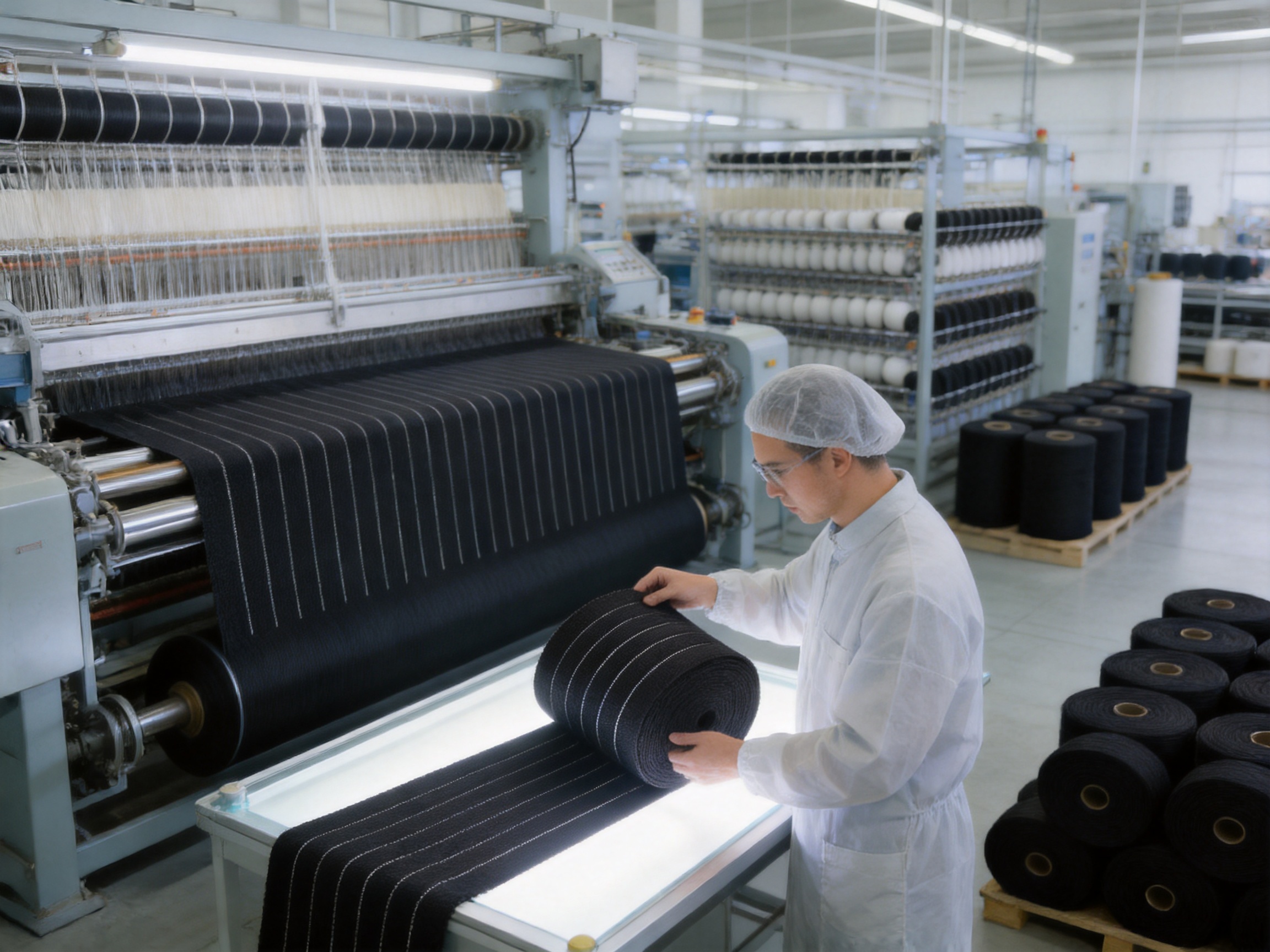
The performance of woven elastic depends not only on the basic material selection but also on the precision of the manufacturing process. Jinhu Hengxiang Webbing Co., Ltd. manages multiple stages of production, including yarn and raw-material sourcing, warping, weaving, finishing, inspection, and packing.
Material Selection
Material selection establishes the foundation for elasticity, strength, surface feel, and durability. The production team evaluates suitable yarns and elastic components according to the intended use of the webbing. Different applications may require different combinations of firmness, softness, recovery, thickness, and surface texture.
For a wide woven panel, the relationship between the elastic component and the structural yarns must be carefully managed. The material needs to stretch sufficiently while retaining a stable woven body. Inconsistent raw materials can lead to differences in width, tension, color, or recovery, so controlled sourcing is an important part of reliable production.
Warping
Warping prepares yarns for the weaving process by arranging them in the required order and tension. This stage influences the uniformity of the final webbing. Proper yarn alignment helps maintain consistent width and reduces irregularities during weaving.
Advanced warping machines allow manufacturers to organize production more accurately and efficiently. Stable preparation of the warp structure is particularly important for wide elastic panels because small variations may become more visible across the larger surface.
Weaving
During weaving, longitudinal and transverse yarn systems are interlaced to create the panel structure. The relationship between yarn density, machine settings, elastic components, and tension determines the final balance of stretch and stability.
For the 7.5 cm black woven elastic panel, the weaving process is designed to produce a sturdy material suitable for support-related applications. Consistent machine operation helps maintain the product’s intended width, appearance, edge structure, and elasticity throughout the roll.
Modern woven machines provide greater control over production parameters than basic equipment. They can help improve repeatability, reduce manual variation, and support the manufacture of customized products. Machine settings may be adjusted according to the required width, texture, thickness, elasticity, and construction.
Finishing and Surface Control
After weaving, the webbing may undergo finishing processes designed to improve handling, appearance, stability, or compatibility with garment production. Finishing requirements depend on the product specification and customer application.
Finishing can influence how the elastic panel feels, how it behaves during sewing, and how it appears in a finished garment. A controlled finishing process helps ensure that the panel is ready for cutting, stitching, lamination, or integration with other textile parts.
Inspection and Testing
Quality inspection is performed throughout production rather than only at the final packing stage. The company emphasizes quality control during material sourcing, processing, testing, and packing. This approach allows potential problems to be identified earlier and supports more consistent finished products.
Typical evaluation areas for woven elastic may include width, color, stretch, recovery, surface appearance, edge condition, construction uniformity, and defects. Depending on the buyer’s requirements, additional tests may be discussed for strength, repeated extension, dimensional stability, or application-specific performance.
Testing should always be linked to the end use. A garment waistband, medical support product, sports brace, and industrial textile component may require different performance targets. A professional supplier can work with the buyer to establish suitable specifications and inspection criteria before mass production.
Packaging
Packaging protects the elastic panels during storage and transportation. Proper roll or bundle organization can help prevent tangling, contamination, crushing, and unnecessary deformation. Clear labeling also supports warehouse management and production traceability.
For international shipments, packaging must be suitable for handling across multiple logistics stages. Production capacity, organized packaging equipment, and careful shipment preparation help suppliers serve customers in different regions more reliably.
Quality and Compliance Strengths
Jinhu Hengxiang Webbing Co., Ltd. has obtained Oeko-Tex Standard 100 and ISO 13485 certificates. These certifications contribute to the company’s credibility in textile and medical-related manufacturing environments, although buyers should confirm the scope of certification and the specific requirements applicable to their own products.
Oeko-Tex Standard 100 is associated with testing textile products for selected harmful substances. For garments and products that may come into contact with skin, material safety is an important purchasing consideration. Certification can provide additional confidence when buyers are developing apparel, underwear, sports supports, or other wearable textile products.
ISO 13485 is a quality management standard associated with medical devices and related production systems. The certification reflects the company’s experience with quality processes relevant to medical and orthopedic support products. It does not mean that every finished garment using the elastic panel is automatically a medical device; the finished product must be evaluated according to its intended use and applicable regulations.
The company’s quality approach covers more than certificates. It includes process control, equipment management, production inspection, customer communication, and continuous improvement. These elements are important when purchasing elastic products for repeat production because performance must remain stable from one order to the next.
| Evaluation Area | Importance for Buyers | Relevance to the 7.5 cm Panel |
|---|---|---|
| Width consistency | Supports accurate cutting and sewing | Helps maintain a uniform support zone across the garment |
| Elastic recovery | Influences fit after repeated use | Helps the panel return toward its original dimensions |
| Woven stability | Supports reliable handling and assembly | Provides a firm foundation for broad garment sections |
| Color consistency | Maintains a consistent finished appearance | Important for black visible or concealed applications |
| Edge condition | Influences comfort and sewing performance | Helps reduce problems during panel integration |
| Material safety | Important for skin-contact products | Relevant to apparel and support garments |
| Packaging quality | Protects the product during storage and transport | Supports efficient warehouse and factory handling |
Why Choose an Experienced Webbing Manufacturer?
Elastic webbing is a specialized textile product. A supplier may offer attractive pricing, but price alone does not determine the suitability of a wide elastic panel. Buyers should also consider production experience, equipment, testing capability, customization support, delivery reliability, and communication.
Jinhu Hengxiang Webbing Co., Ltd. was established in 2005 and has more than 20 years of professional production experience. This history gives the company extensive exposure to different customer requirements, application environments, product constructions, and quality expectations.
The company operates in Jinhu County, Huai’an City, Jiangsu Province, China, and has developed a production system that includes warping machines, knitting machines, woven machines, and packaging machines. This equipment base supports both standard products and customized webbing projects.
Producing millions of meters of elastic and non-elastic webbing every month indicates substantial manufacturing capacity. Capacity is valuable for buyers who need stable supply, repeat orders, or large-volume production. It can also help the company coordinate production schedules and respond to different order sizes.
Another advantage is product range. In addition to woven elastic panels, the company manufactures elastic webbing, non-elastic webbing, abdominal binder elastic, woven wide elastic, wide knitted elastic, narrow elastic bands, elastic hook and loop straps, and medical elastic bandages. This broader portfolio allows customers to source related textile components from one experienced supplier.
OEM and ODM orders are welcome. Customers may request adjustments to elasticity, texture, color, width, and other product characteristics. Customization is particularly useful when a standard panel does not precisely match a garment pattern or when a buyer needs a proprietary textile component for a specific product line.
Customization Options for Different Product Requirements
Garment and medical textile manufacturers rarely have identical requirements. A waistband for fashion apparel may need a different hand feel from an abdominal support product. A sports brace may require firm recovery, while a loungewear garment may prioritize softness and flexibility. Customization enables the elastic panel to be adapted to the intended use.
Elasticity
Elasticity can be adjusted according to the required level of support and comfort. Buyers should define how far the panel must stretch, how much force is acceptable, and how quickly it should recover. These values should be tested on the finished garment because the surrounding fabric and sewing structure affect the final result.
Texture and Hand Feel
The surface texture influences comfort, appearance, and sewing behavior. A garment designed for direct skin contact may require a softer hand, while an industrial support product may emphasize firmness and structural stability. The company can discuss texture requirements as part of a customized development program.
Color
Black is a highly versatile standard choice, but custom colors may be considered for different branding, fashion, or product requirements. Color matching should be evaluated against the buyer’s approved standard and production conditions. The finished appearance may vary depending on surrounding fabrics, lighting, and surface treatment.
Width and Construction
The 7.5 cm width is suitable for many broad-support applications, but some designs may require another dimension. Width, thickness, edge structure, and woven density can be discussed during product development. A clear technical specification helps ensure that the sample and mass-production product meet the same expectations.
Packaging and Order Requirements
Customers may also discuss roll length, packing format, labels, cartons, and shipment preparation. Clear packaging requirements are helpful for manufacturers operating multiple production lines or distributing materials to different factories.
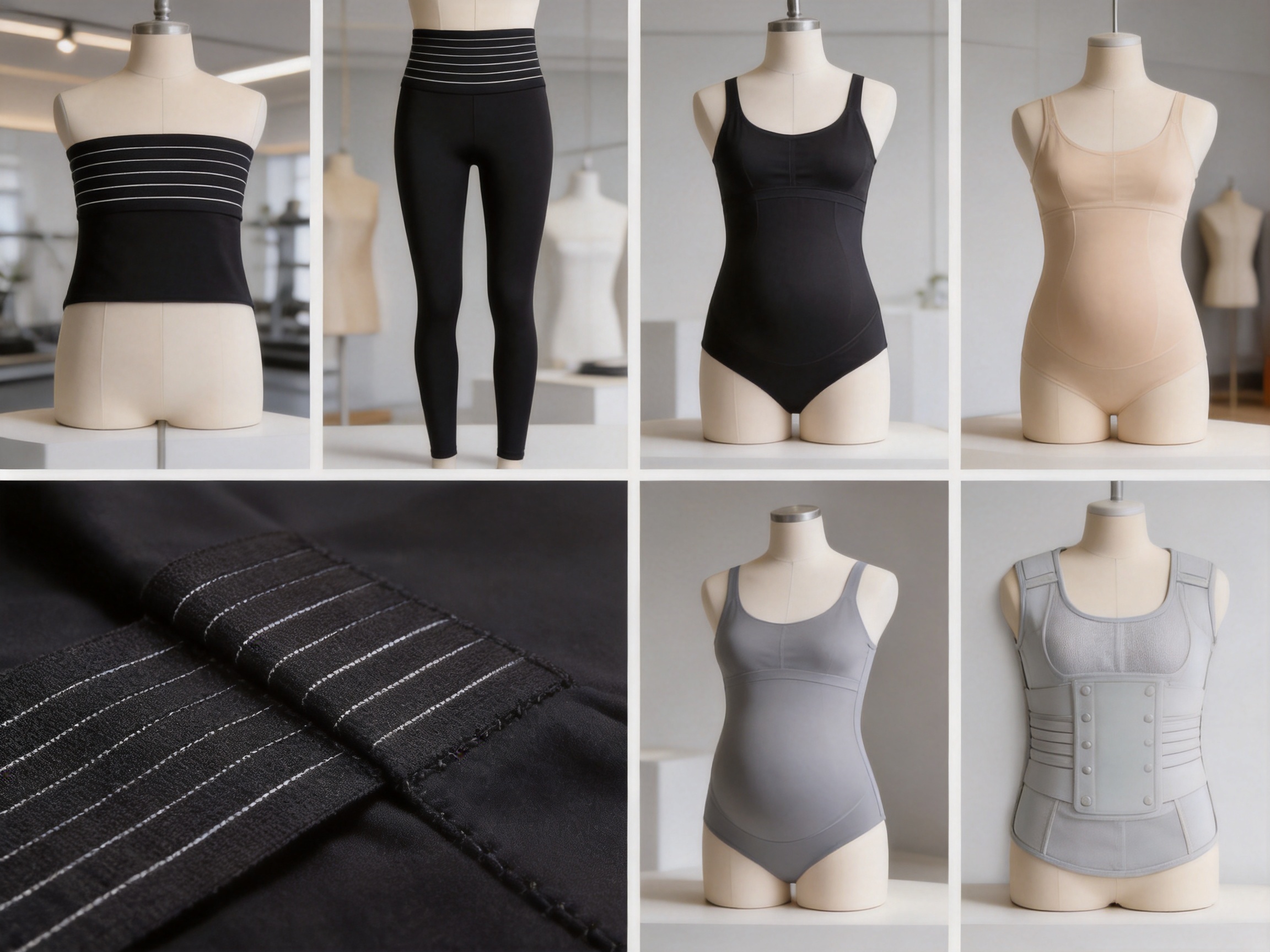
How to Incorporate the Panel into a Garment
Successful use of a wide woven elastic panel begins with accurate pattern planning. The designer should identify the support area, determine the desired finished length, and consider how the panel will connect to the main fabric. The panel can be sewn directly to fabric or enclosed within a casing, depending on the design.
Seam allowance should be planned carefully. The elastic must have enough attachment area to remain secure, but excessive stitching can reduce stretch or create a rigid section. Stitch type, thread selection, needle size, sewing speed, and presser-foot pressure may all influence the final performance.
When the panel is joined to a stretch fabric, the sewing team should test the relationship between the two materials. If the panel is significantly firmer than the surrounding fabric, the seam may experience additional stress. If the fabric is too light, the panel may overpower the garment structure. Sample testing helps identify these issues before bulk production.
For waistbands, designers should check whether the panel remains flat during movement. Fold-over, rolling, twisting, and seam discomfort can be affected by the waistband height, fabric layers, stitch density, and garment shape. The woven construction provides a stable foundation, but the complete sewing design remains important.
For abdominal or support garments, the panel should be positioned according to the intended support zone. The garment should be tested in standing, sitting, walking, bending, and other relevant positions. Comfort should be assessed over a realistic period rather than only during a brief fitting.
Manufacturers should also establish cutting and storage procedures. Elastic panels should be stored in a clean, dry location and protected from excessive heat, moisture, direct sunlight, and compression. Rolls should be handled carefully to prevent deformation or damage to the edges.
Performance Considerations for Buyers
Before placing a large order, buyers should prepare a product specification sheet. This document may include width, color, elasticity, stretch range, recovery expectations, thickness, roll length, packaging, acceptable tolerances, inspection methods, and application details.
Samples should be evaluated in both relaxed and stretched states. Buyers can measure the width before extension, at a defined extension, and after recovery. Repeated extension testing can provide useful information about how the panel behaves during simulated use.
Color should be inspected under appropriate lighting and compared with an approved reference. Surface appearance should be checked for weaving irregularities, broken yarns, stains, holes, uneven edges, or other visible defects. For skin-contact products, the buyer should also confirm applicable safety documentation.
It is important to distinguish between the performance of the raw elastic panel and the performance of the finished garment. A good elastic product may not perform correctly if it is cut to the wrong length, sewn with unsuitable tension, or combined with incompatible fabric. Supplier and garment manufacturer should work together during product development.
Competitive Advantages in Commercial Production
The 7.5 cm black woven elastic panel has several characteristics that can make it competitive against less specialized alternatives. Its broad width offers more coverage than narrow elastic. Its woven structure provides a combination of stretch and stability. Its black color supports many product designs. Its application range allows it to serve several garment categories.
The manufacturing company adds further advantages through production scale and technical experience. A factory equipped with warping, knitting, weaving, and packaging machines can coordinate multiple processes within one manufacturing organization. This may improve communication between departments and reduce dependence on unrelated subcontractors.
High monthly output can support continuity of supply for growing customers. Repeat buyers often need the same material over multiple seasons or production cycles. A supplier with established capacity is better positioned to plan raw materials, reserve production time, and manage repeat orders.
Customization is another important point of difference. Buyers may need a panel with a specific firmness, color, texture, or dimensional tolerance. Rather than selecting a generic product that requires design compromises, customers can work with the manufacturer to develop a more suitable specification.
Quality certifications, documented production processes, and export experience can also reduce purchasing risk. Hengxiang products are sold in China and exported to North America, Eastern Europe, the Middle East, South Asia, and other regions. Experience in international markets can help the company understand packaging, communication, documentation, and delivery expectations.
Company Manufacturing Strengths
Jinhu Hengxiang Webbing Co., Ltd. focuses on elastic and non-elastic webbing, with particular experience in sports supports and orthopedic braces. This specialization is relevant to buyers searching for materials that provide dependable support rather than decorative trim alone.
The company’s manufacturing philosophy includes strict quality control from material sourcing through final packing. Such control is important because elastic performance can be affected at every stage. Raw-material variation, machine tension, weaving density, finishing, cutting, and packaging all have the potential to influence the final product.
Advanced equipment has been introduced and updated in recent years. Warping machines support organized yarn preparation, weaving machines create stable woven structures, knitting machines support other elastic constructions, and packaging machines improve order preparation. The combination gives the company flexibility across different webbing categories.
The company emphasizes thoughtful customer service and full customer satisfaction. For technical textile purchases, communication is part of product quality. Buyers need to explain the intended application, and the supplier needs to clarify feasible specifications, sample requirements, tolerances, production time, and inspection expectations.
OEM and ODM support allows Hengxiang to work with customers at different stages of product development. Some buyers may provide a complete specification, while others may need assistance selecting elasticity, texture, width, or construction. A collaborative development process can help create a product that is practical for both the garment and the production line.
Environmental and Long-Term Production Considerations
Sustainability in textile manufacturing involves material selection, production efficiency, product durability, waste reduction, packaging, and responsible quality management. A durable elastic component can contribute to longer garment life by helping the product retain its fit and function over repeated use.
Efficient equipment may also support more consistent production and reduce avoidable waste caused by defects or irregular material. Careful inspection helps identify problems before large quantities are cut into garments, which can prevent wider production losses.
Buyers seeking a more responsible supply chain should discuss material composition, certification scope, packaging materials, production waste, and shipment consolidation with the supplier. Sustainability requirements vary by market, so detailed communication is necessary.
The company’s long-term development approach includes quality, innovation, and sustainability. Its stated objective is to become a trusted global partner in webbing manufacturing and build lasting partnerships through integrity, responsibility, and continuous improvement.
Purchasing Guidance for Distributors and Manufacturers
When purchasing the 7.5 cm black woven elastic panel, buyers should first define the product’s intended application. A panel used in sportswear may require different specifications from one used in a medical support or industrial garment. The supplier should receive information about the garment type, fabric, expected stretch, contact with skin, washing conditions, and production quantity.
Sample approval is recommended before mass production. The sample should be sewn into a representative section of the garment and evaluated for comfort, tension, recovery, appearance, and assembly efficiency. If the product will be washed repeatedly, laundering tests should be included in the approval process.
Buyers should also confirm the minimum order quantity, lead time, packing method, available customization, inspection procedure, and shipping terms. Clear documentation helps prevent misunderstanding and allows the factory to maintain a repeatable standard.
For long-term cooperation, buyers may establish an approved sample, technical drawing, color standard, and inspection checklist. These references can be used for future orders and can help both parties identify deviations quickly.
Frequently Asked Questions
What is the width of this elastic panel?
The product width is 7.5 cm. Buyers requiring a different width should discuss customization and production feasibility with the manufacturer.
What color is available?
This product is black. Black is suitable for visible and concealed applications and coordinates with many sportswear, underwear, shapewear, maternity, loungewear, and industrial garment designs.
What is the main advantage of a wide woven elastic panel?
The main advantage is broader support distribution. Instead of concentrating tension along a narrow line, the 7.5 cm panel can cover a wider area and provide a more stable garment structure.
Can it be used for medical or orthopedic products?
It can be considered for medical-support and orthopedic textile applications, subject to appropriate product development, testing, and regulatory evaluation. The finished medical product must meet the requirements applicable to its intended use and market.
Is the panel suitable for sportswear?
Yes. It can be used in sportswear, activewear, training garments, performance waistbands, and support sections where firm and consistent elasticity is required.
Can it be used for maternity garments?
Yes. The wide format may be useful in maternity waistbands and abdominal support areas. Designers should select the appropriate tension and test the finished garment for comfort during different stages of use.
Can the product be customized?
Jinhu Hengxiang Webbing Co., Ltd. welcomes OEM and ODM orders. Customization may include elasticity, texture, color, width, and other construction characteristics, depending on the project requirements.
What equipment does the company use?
The company has introduced and updated warping machines, knitting machines, woven machines, and packaging machines. This equipment supports the production of elastic and non-elastic webbing in different constructions.
Does the company provide quality certifications?
The company has obtained Oeko-Tex Standard 100 and ISO 13485 certificates. Buyers should confirm the certification scope and documentation needed for their particular product and market.
What should be tested before bulk production?
Buyers should evaluate width, color, stretch, recovery, surface appearance, edge condition, sewing performance, comfort, dimensional stability, and compatibility with the selected garment fabric. Washing and repeated-use tests may also be appropriate.
Can the panel be used in DIY sewing projects?
Yes. It can be used for custom waistbands, costumes, sports garments, support garments, repairs, and other sewing projects requiring broad elastic support. A small test piece should be sewn and evaluated before completing the full project.
How should the panel be stored?
It should be stored in a clean, dry environment away from excessive heat, direct sunlight, moisture, and heavy compression. Proper storage helps protect its appearance and dimensional condition.
Conclusion
The 7.5 cm black woven elastic panel is a versatile textile component for garments and products requiring broad, dependable elastic support. Its woven construction combines stability with stretch, while its 7.5 cm width provides more coverage than ordinary narrow elastic bands. These characteristics make it suitable for activewear, sportswear, underwear, shapewear, maternity wear, loungewear, industrial garments, medical-support products, and DIY sewing applications.
Its competitive value comes from the combination of functional width, firm elasticity, professional appearance, application flexibility, and customization potential. For commercial buyers, the product can also simplify garment construction by replacing multiple narrow elastic strips with one broad support panel where the design permits.
Jinhu Hengxiang Webbing Co., Ltd. strengthens this product offering through experienced manufacturing, modern warping and weaving equipment, quality control, international market experience, OEM and ODM capability, and certifications including Oeko-Tex Standard 100 and ISO 13485. The company’s broad webbing product range further supports buyers seeking a long-term supplier for elastic and non-elastic textile components.
For the best result, buyers should define the end-use requirements, request samples, test the panel as part of the finished garment, and confirm technical specifications before mass production. With appropriate selection and sewing design, the 7.5 cm black woven elastic panel can provide durable support, consistent fit, and reliable performance across a wide range of textile products.
References
1. Jinhu Hengxiang Webbing Co., Ltd. Product information for 7.5 cm Black Woven Elastic Panels.
2. Jinhu Hengxiang Webbing Co., Ltd. Company profile and manufacturing information.
3. Oeko-Tex Association. Standard 100 principles for testing textiles for harmful substances.
4. International Organization for Standardization. ISO 13485 quality management guidance for medical devices.
5. Textile Institute. General principles of woven textile construction and elastic material performance.
6. Apparel manufacturing practice guides covering elastic selection, garment construction, sewing, and quality inspection.