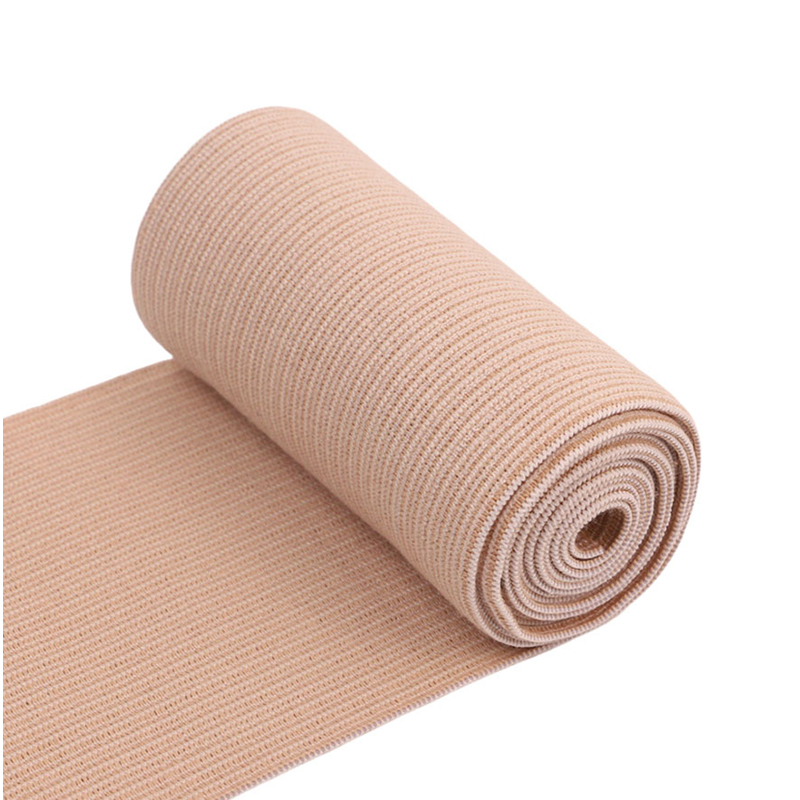

 en
en
 English
 русский
 Français
 Español
 Português
 Tiếng Việt
Content
- 1 What Is an 8cm White Velcro Elastic Panel?
- 2 Core Product Advantages
- 3 Comparison with Common Alternative Fastening Materials
- 4 Applications in Medical and Orthopedic Products
- 5 Applications in Sportswear and Protective Equipment
- 6 Applications in Maternity and Abdominal Support Garments
- 7 Applications in DIY and General Garment Production
- 8 Manufacturing Strengths Behind the Product
- 9 Customization Options for OEM and ODM Projects
- 10 How the Panel Supports Efficient Product Design
- 11 Sewing and Assembly Considerations
- 12 Quality Evaluation for Finished Products
- 13 Why Choose a Specialized Webbing Manufacturer?
- 14 Purchasing Guidance for the 8cm White Velcro Elastic Panel
- 15 Storage and Handling Recommendations
- 16 Sustainability and Responsible Production
- 17 Q&A About 8cm White Velcro Elastic Panels
- 17.1 What is the main purpose of this panel?
- 17.2 Why is the panel 8cm wide?
- 17.3 Is the panel suitable for medical products?
- 17.4 Can it be used in sports supports?
- 17.5 Is the white color suitable for light-colored garments?
- 17.6 Can the product be customized?
- 17.7 How does this product compare with ordinary hook-and-loop tape?
- 17.8 How does it compare with narrow elastic bands?
- 17.9 Can the panel be sewn by standard textile equipment?
- 17.10 Can it be washed?
- 17.11 What information should be provided when requesting a quotation?
- 17.12 Does the manufacturer support OEM and ODM orders?
- 18 Conclusion
- 19 References
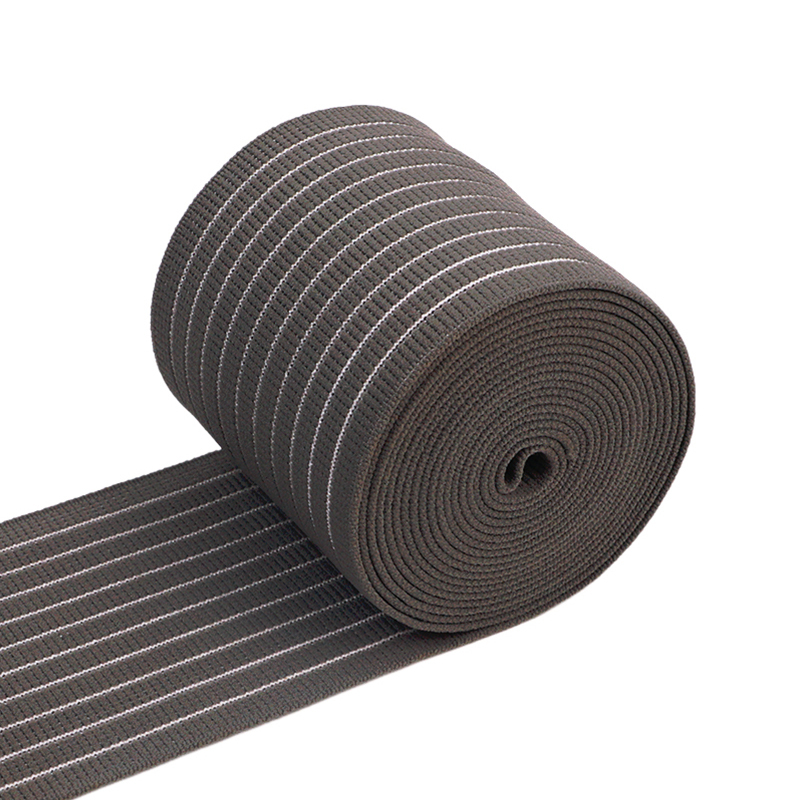
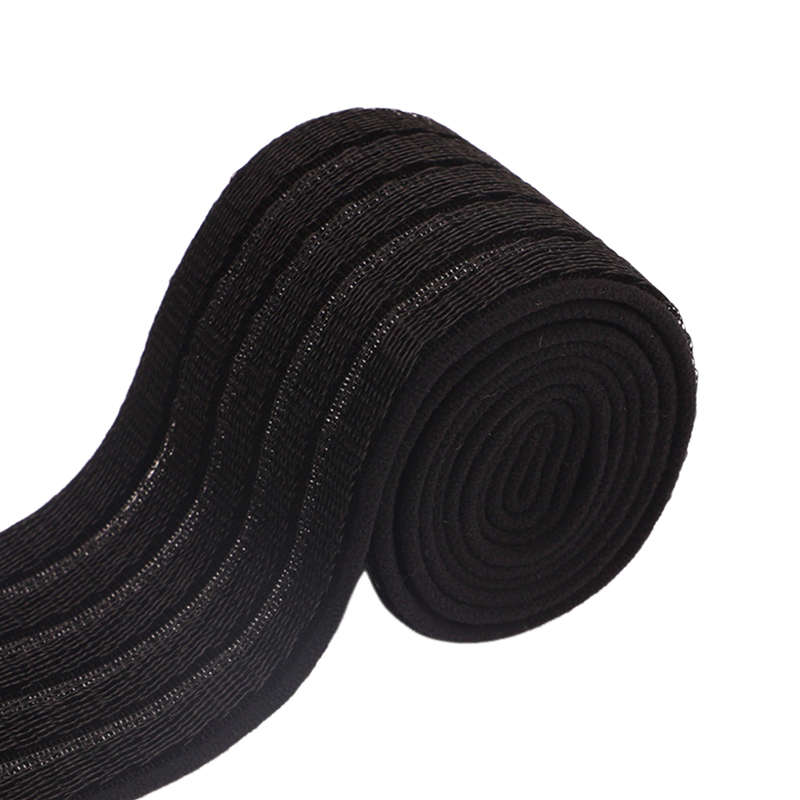
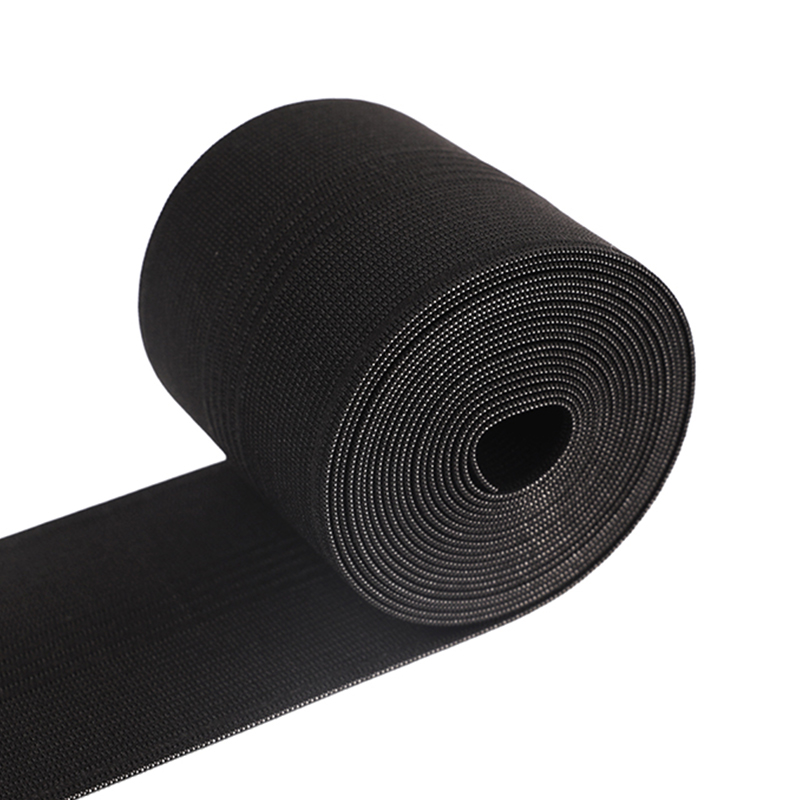
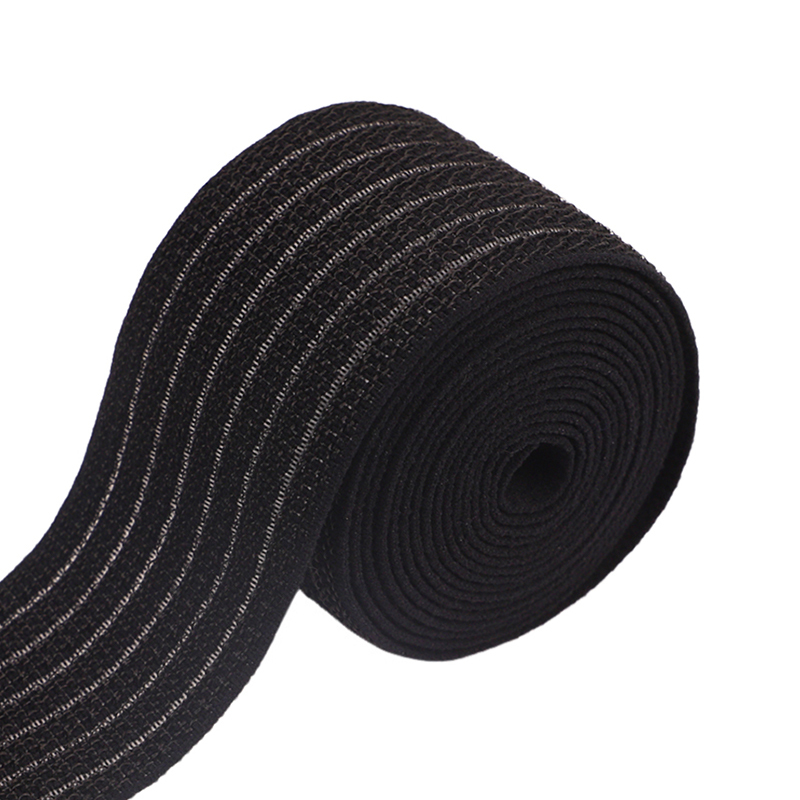
- 20 Product: 8cm White Velcro Elastic Panels
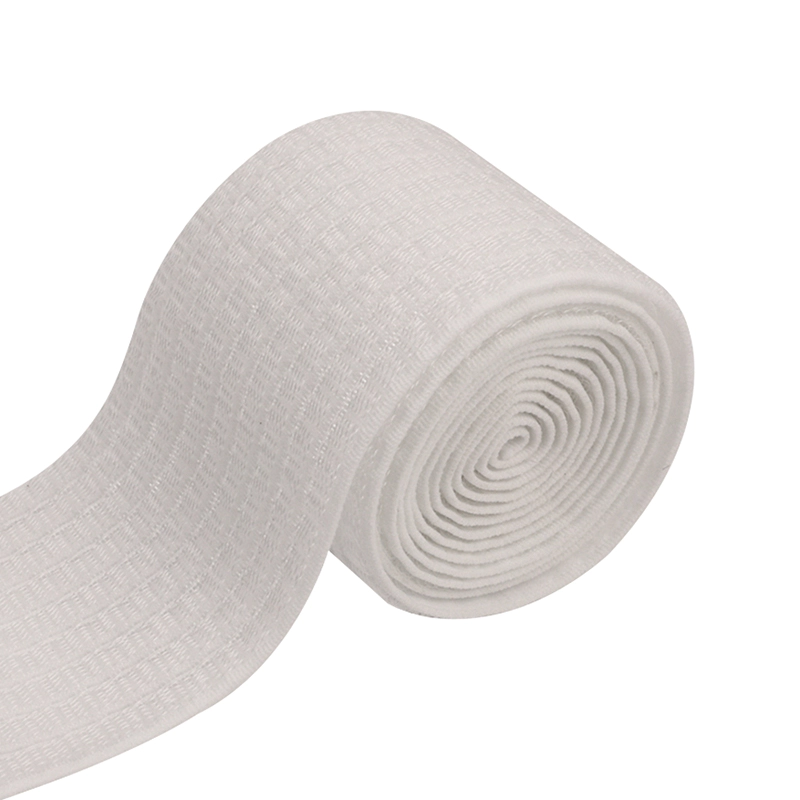
In modern garment production, medical support design, sports protection, and rehabilitation equipment, fastening materials must do more than simply connect two pieces of fabric. They must provide reliable holding power, controlled elasticity, comfort during movement, and convenient adjustment. The 8cm white Velcro elastic panel is designed to meet these requirements by combining a broad elastic structure with a practical hook-and-loop fastening system.
This product brings together two important functions. The elastic section allows the panel to stretch and conform to the body or garment, while the hook-and-loop surface enables users to adjust the fit quickly and repeatedly. Compared with ordinary elastic tape, rigid webbing, narrow hook-and-loop strips, or sewn-on closures, the wide 8cm construction provides a larger contact area and helps distribute tension more evenly.
The panel is suitable for sportswear, orthopedic supports, medical protective equipment, maternity products, abdominal support garments, rehabilitation accessories, and a wide range of do-it-yourself sewing projects. Its clean white color provides a neutral appearance that can be coordinated with light-colored fabrics, medical textiles, underwear, uniforms, and other finished products.
Manufactured by Jinhu Hengxiang Webbing Co., Ltd., the 8cm white Velcro elastic panel benefits from professional experience in elastic and non-elastic webbing production. The company supports customized requirements involving elasticity, texture, width, color, packaging, and application-specific performance. Its production capabilities, quality management systems, and experience serving sports and medical support markets make the product suitable for both standard purchasing and OEM or ODM development.
What Is an 8cm White Velcro Elastic Panel?
An 8cm white Velcro elastic panel is a wide fastening component made by combining elastic webbing with hook-and-loop material. The elastic webbing supplies controlled stretch, while the hook-and-loop fastening system allows one side of the panel to attach securely to the corresponding loop surface. Depending on the finished product design, the panel may be sewn, integrated into a garment, layered with other textile components, or used as an adjustable strap assembly.
The 8cm width is an important feature. A narrow elastic band concentrates pressure over a small area, which may be useful for lightweight straps but may not be ideal when a product needs stable support across a broader section. A wide panel can distribute pulling force over a larger surface, helping reduce localized pressure and improving the overall stability of the finished product.
The white color is clean, versatile, and easy to coordinate with many materials. It is especially appropriate for medical and healthcare-related products where a neat and hygienic appearance is often preferred. White also works well with cotton, polyester, nylon, mesh, laminated fabric, foam, and other common textile substrates.
Unlike a fixed closure, the hook-and-loop system allows the wearer, caregiver, technician, or product assembler to alter the tightness. This adjustability is useful when the product must accommodate different body shapes, clothing layers, movement conditions, or stages of use. It also simplifies donning and removal because the fastening can be opened and closed without tying knots or manipulating small buckles.
Core Product Advantages
Adjustable and Secure Fastening
The most visible advantage of the panel is its adjustable hook-and-loop closure. Users can position the fastening according to their preferred level of tightness and can reopen it when the product needs to be removed or repositioned. This is more convenient than permanent stitching, fixed snaps, or non-adjustable elastic structures.
A correctly designed hook-and-loop interface can provide a firm hold during normal use while still allowing intentional opening by hand. The user does not need specialized tools, and the closure can be operated quickly even when the product is used in a workplace, training environment, clinic, or home setting.
Adjustability also benefits manufacturers. A single panel design can often be incorporated into products intended for a range of users. Instead of producing multiple fixed sizes for every application, a product designer may use the adjustable panel to provide a wider fitting range. This can simplify inventory management and improve product versatility.
Broad Tension Distribution
The 8cm width gives the panel a broader support surface than narrow elastic straps. When tension is applied, the force can be distributed across a wider section of the garment or support. This may help the finished product feel more stable and reduce the tendency of the fastening to twist or cut into a narrow area.
Broad tension distribution is particularly valuable in abdominal binders, maternity support garments, orthopedic braces, rehabilitation products, and sports protection systems. These products often require stable positioning across a larger anatomical area rather than a single-point connection.
Designers can also combine the panel with foam padding, breathable mesh, laminated fabric, or additional elastic sections. The wide base provides a practical foundation for constructing a balanced support system with a more uniform appearance.
Elastic Flexibility
Elasticity allows the panel to accommodate movement and changes in body position. During walking, bending, stretching, exercising, or everyday activities, the body does not remain completely static. A rigid fastening may feel restrictive or may pull against the garment. An elastic panel can respond more naturally to these movements while continuing to provide a degree of support.
The elastic structure also helps the product remain close to the body or garment when tension changes. This is important for support products that must maintain their position during use. The proper elasticity level depends on the application, and manufacturers may request customized specifications to achieve a softer, firmer, lighter, or more supportive result.
Elasticity should not be confused with unlimited stretch. A professional elastic panel is engineered to provide controlled extension and recovery. Its performance depends on yarn selection, weave or knit construction, finishing, width, thickness, and production settings. For this reason, product selection should be matched to the intended load, garment design, and expected usage frequency.
Comfort During Extended Wear
Comfort is a major consideration in products that remain against the body for long periods. A fastening material that is too rigid, rough, narrow, or inflexible may affect the user experience. The combination of a soft elastic structure and a wide panel can help create a more comfortable fit when the product is correctly designed and assembled.
The panel can be positioned over or beneath other fabric layers depending on the application. Designers may add a soft backing, lining, edge binding, or protective cover where direct contact with the skin requires additional comfort. The panel itself provides a flexible foundation for these construction choices.
Comfort also comes from ease of adjustment. When a user can make small changes to the fastening, the product may be better adapted to different activities and body positions. This is especially useful when a support garment is worn over clothing, under clothing, or during periods when swelling and fit conditions may vary.
Durability for Repeated Use
Hook-and-loop products are often opened and closed repeatedly. The elastic component may also experience repeated stretching and recovery. Therefore, a suitable panel must be manufactured with attention to material quality, structural stability, edge condition, fastening consistency, and finishing.
The 8cm white Velcro elastic panel is intended to provide durable performance for applications requiring repeated adjustment. High-quality elastic and hook-and-loop materials can help the product retain useful fastening and stretch characteristics during normal service. Actual service life depends on the final product design, tension level, laundering conditions, exposure to chemicals, heat, friction, and frequency of use.
Compared with low-cost materials that may have inconsistent stretch, weak attachment, or poorly finished edges, professionally produced webbing can provide more predictable performance. Consistency is important for manufacturers because variation between production batches can affect sewing, assembly, packaging, and customer satisfaction.
Clean White Appearance
White is one of the most adaptable colors for textile components. It can be used in medical supports, light-colored sportswear, underwear, maternity garments, rehabilitation accessories, and many general sewing projects. The clean appearance also makes it easier to integrate the panel into products where visible contrast is not desired.
For manufacturers, a neutral color can reduce the need to maintain many color variants for basic product lines. At the same time, white provides a foundation for customization when a customer requires a different color. Jinhu Hengxiang Webbing Co., Ltd. provides customized webbing options and can discuss color requirements according to the product design and production quantity.
Comparison with Common Alternative Fastening Materials
Choosing a fastening component requires balancing adjustability, support, comfort, cost, appearance, and production efficiency. The 8cm white Velcro elastic panel has several practical advantages over narrower or less flexible alternatives.
| Material or Solution | Adjustability | Elastic Response | Support Area | Typical Limitation |
|---|---|---|---|---|
| 8cm elastic hook-and-loop panel | High | Controlled stretch | Wide | Requires suitable sewing or attachment design |
| Narrow elastic band | Low to moderate | Usually flexible | Limited | May concentrate tension in a narrow line |
| Rigid woven webbing | Usually low | Minimal stretch | Depends on width | May feel restrictive during movement |
| Standard non-elastic hook-and-loop tape | High | Little or no stretch | Often narrow | May not conform well to changing body positions |
| Snaps or fixed buttons | Limited | None | Point-based | Less adaptable and slower to fine-tune |
| Tie closures | Moderate | Depends on the textile | Variable | Can be inconvenient and inconsistent to adjust |
Narrow elastic bands can be economical and useful for light garment construction, but they do not always provide the broad stability required for support products. A narrow strip may also roll, twist, or create concentrated pressure when used under significant tension. The 8cm panel is better suited to designs where the closure needs to cover a larger area.
Rigid woven webbing offers excellent dimensional stability, but it may not provide the flexibility required for products that follow body movement. The elastic structure of the featured panel gives designers a way to combine support with controlled movement.
Standard non-elastic hook-and-loop tape provides adjustability but cannot respond to changes in circumference or motion in the same way as elastic material. By combining both functions in one panel, the product can reduce the need to assemble separate elastic and fastening components.
Snaps, buttons, and buckles can be reliable, but they generally create individual attachment points rather than a continuous fastening surface. They may also require more precise alignment. Hook-and-loop fastening is easier to reposition across its contact area, which can be useful when the user needs fine adjustment.
Tie closures can offer a traditional and flexible solution, but they may be slower to operate and more difficult to adjust consistently. The 8cm panel provides a modern alternative for products where quick opening, closing, and repeatable adjustment are important.
8cm White Velcro Elastic Panels
Applications in Medical and Orthopedic Products
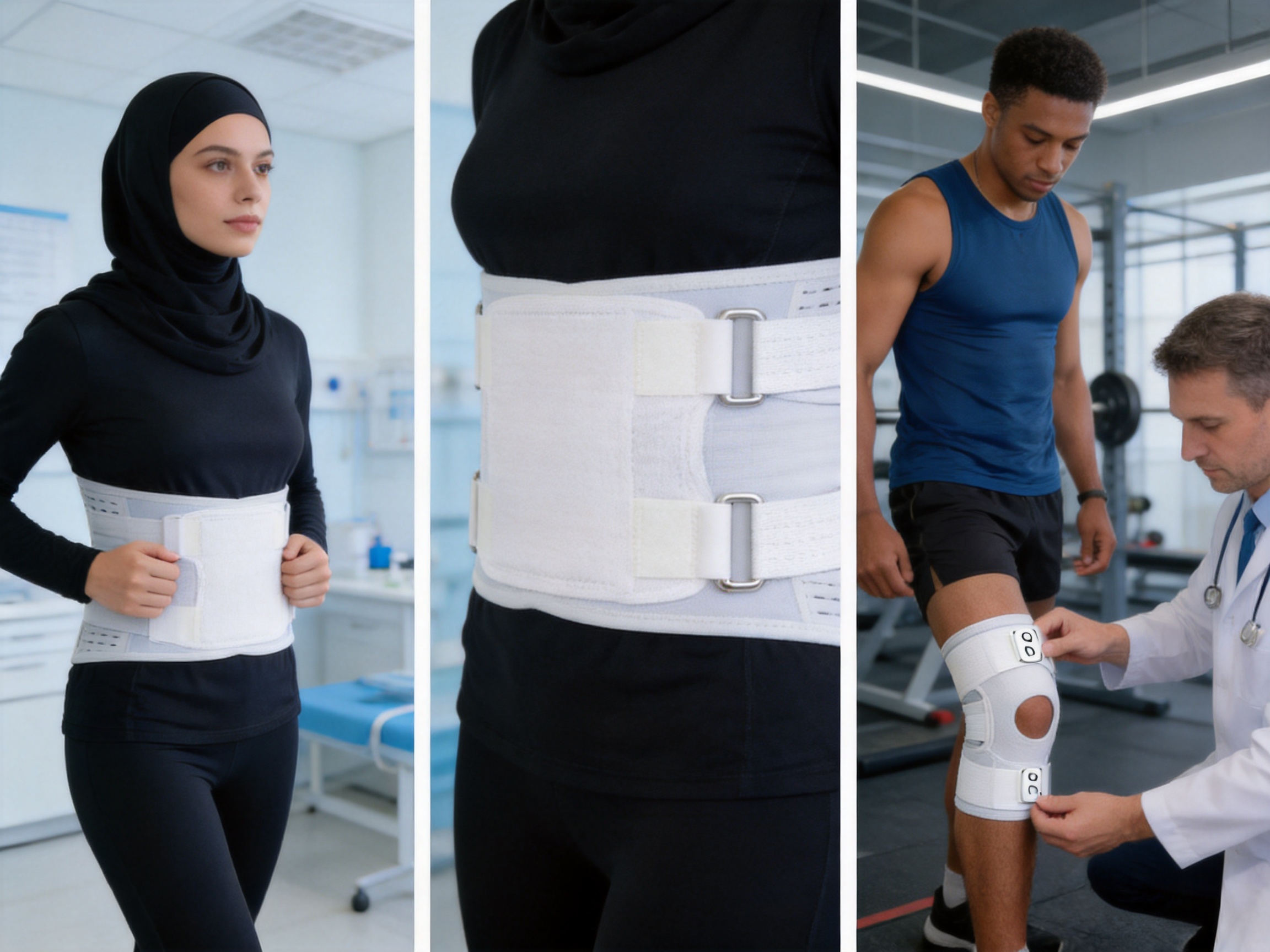
The panel is particularly appropriate for manufacturers of medical protective equipment and orthopedic support products. It can be incorporated into abdominal binders, lumbar supports, postoperative support garments, rehabilitation braces, compression-related accessories, and adjustable positioning straps.
In an abdominal binder, a wide elastic hook-and-loop panel may help secure the binder around the torso while allowing the user to adjust the fit. The broad construction can support a more stable wrap design than a narrow strap. Depending on the complete product specification, additional layers such as breathable mesh, foam, nonwoven fabric, or soft lining may be added.
In orthopedic braces, the panel can function as a primary or secondary adjustment component. It may help hold the brace in place while allowing the wearer or healthcare professional to make fitting changes. The final brace design must still be evaluated as a complete medical product, because support performance depends on the structure, materials, pattern, stitching, and intended use.
For rehabilitation products, ease of operation is important. Patients may need to put on or remove a support with limited strength or restricted movement. Hook-and-loop fastening can be simpler to handle than small buckles or complex lacing systems. The elastic structure can also assist with comfort when the product is worn during movement exercises.
Manufacturers should select the appropriate elasticity, fastening strength, width tolerance, and edge treatment according to the intended medical application. Products used in healthcare environments may also have specific requirements related to biocompatibility, cleanliness, laundering, labeling, traceability, and regulatory compliance. The panel is a component and should be validated within the complete finished product.
Applications in Sportswear and Protective Equipment
Sports supports require a balance between stability and freedom of movement. Athletes may use braces and protective accessories during training, competition, warm-up, or recovery. The 8cm elastic panel can be used in products such as knee supports, elbow supports, wrist wraps, shoulder accessories, waist supports, and protective belts, subject to the requirements of the finished design.
The hook-and-loop closure allows the athlete to adjust the support according to activity intensity and personal preference. A looser fit may be preferred during warm-up, while a more secure fit may be selected during certain activities. The elastic component helps the support move with the body instead of acting as a completely rigid restraint.
For sportswear manufacturers, the panel can simplify product construction. A broad panel may serve as an adjustable waist section, stabilizing strap, or closure reinforcement. It can be sewn to woven fabric, stretch fabric, mesh, neoprene-like material, or multilayer protective assemblies, provided that the sewing method and needle selection are appropriate.
Sporting goods frequently experience repeated stretching, friction, sweat, washing, and exposure to outdoor conditions. A reliable material selection process is therefore important. Manufacturers should perform application-specific testing for tensile behavior, hook-and-loop holding performance, seam strength, color stability, and laundering resistance before large-scale production.
Applications in Maternity and Abdominal Support Garments
Maternity and abdominal support garments often need to accommodate changing body dimensions and different wearing conditions. An adjustable elastic panel can provide a practical solution for products that require flexible sizing and easy operation.
The 8cm width can help distribute support around the abdomen or waist area. Instead of relying on a small closure point, a wide panel can contribute to a more balanced garment structure. The elastic component can allow the garment to adapt to movement, while the hook-and-loop section provides a convenient way to adjust the fit.
For maternity products, comfort and softness are especially important. Designers may use the panel with a soft inner lining or protective textile layer to reduce direct contact between the fastening surface and the skin. The product pattern should also prevent excessive pressure, folding, or edge irritation.
For postpartum or general abdominal support garments, adjustable fastening can make the product easier to use across different stages of recovery or changing fit requirements. The panel can be incorporated into wraps, belts, support bands, or modular garment systems. Any health-related claim must be based on appropriate product testing and professional evaluation, but the material itself provides useful mechanical features for adjustable support construction.
Applications in DIY and General Garment Production
The panel is not limited to medical or sports products. It can also be used by clothing manufacturers, costume designers, sewing workshops, equipment makers, and individual craft users. Its wide structure and adjustable fastening make it useful for bags, belts, protective covers, utility garments, adaptive clothing, pet accessories, and equipment straps.
In adaptive clothing, hook-and-loop fastening can make garments easier to open and close. The elastic feature can help accommodate different body positions and fitting requirements. Designers can place the panel at the waist, shoulder, chest, leg, or other areas where adjustable support is needed.
In bags and equipment covers, the panel can function as a flexible closure or reinforcement strap. The white color may be suitable for clean, light-colored designs, while customized colors can be considered for branded or decorative products. When used in load-bearing applications, the entire assembly should be tested, including the fabric, thread, seam, hook-and-loop engagement, and attachment points.
For DIY projects, the panel offers a convenient alternative to assembling separate elastic tape and closure tape. Users can cut and sew the material according to the project design, although cutting, seam allowance, edge finishing, and attachment direction should be considered carefully. A prototype is recommended before final production.
Manufacturing Strengths Behind the Product
The performance of an elastic hook-and-loop panel depends heavily on manufacturing control. It is not enough to combine elastic material and fastening material without considering compatibility. Width, stretch, recovery, surface texture, loop density, hook engagement, edge stability, color, and sewing behavior must work together.
Jinhu Hengxiang Webbing Co., Ltd. was established in 2005 and specializes in the research, development, production, sale, and service of elastic and non-elastic webbing. The company’s experience is particularly relevant to sports supports, orthopedic braces, and medical protective equipment, where material consistency and dependable construction are important.
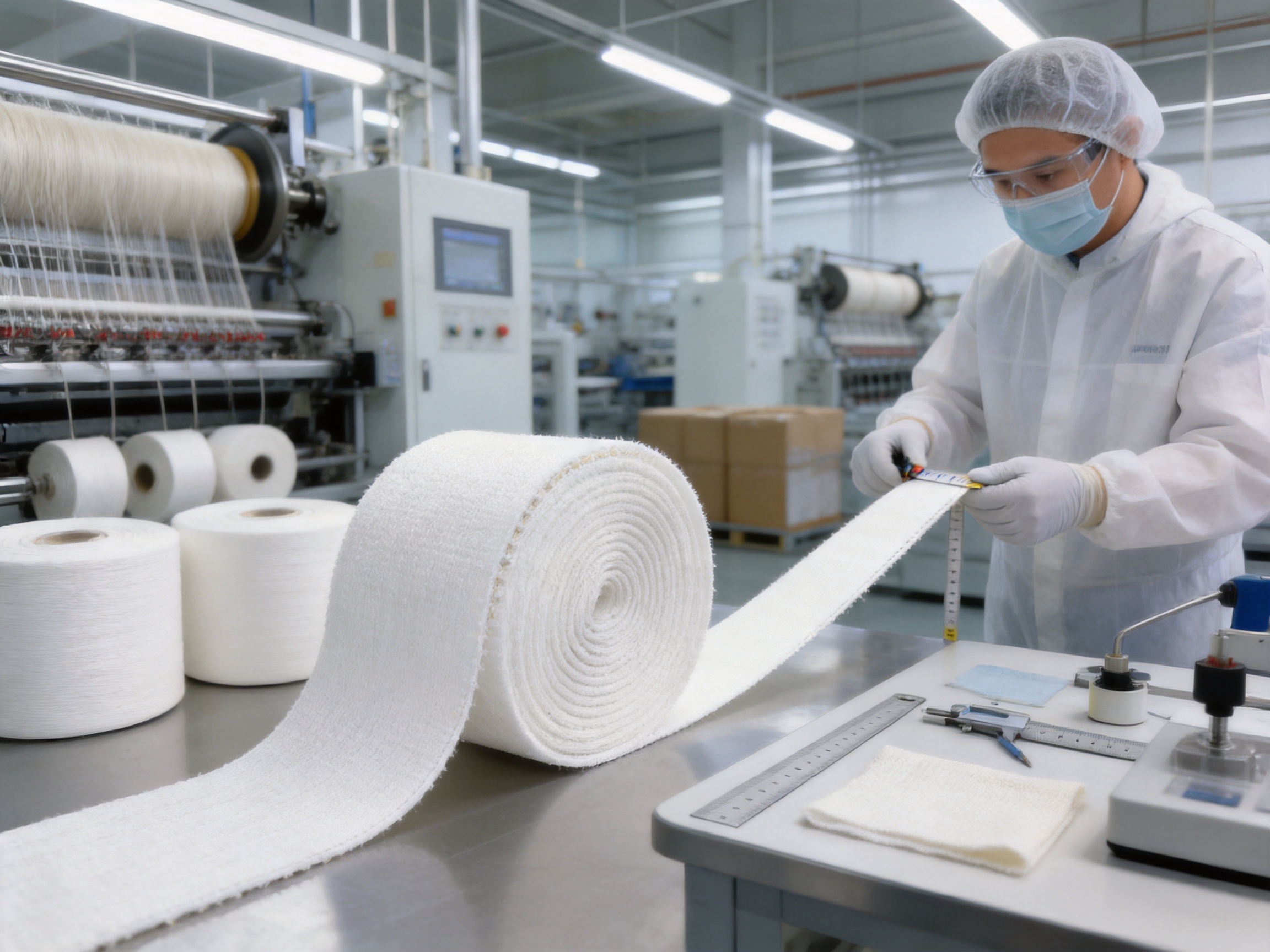
The company operates production equipment that includes warping machines, knitting machines, woven machines, and packaging machines. These capabilities support different webbing structures and allow the company to manage production from yarn preparation through textile formation and final packing.
Warping and Yarn Preparation
Warping is an important preliminary process for woven and certain composite textile structures. It involves arranging yarns in a controlled parallel formation before they enter the weaving process. Accurate yarn preparation helps maintain consistent tension, alignment, and production stability.
For elastic webbing, uniform yarn tension is especially important. Irregular tension can influence width, stretch, edge appearance, and recovery. Professional warping equipment helps create a more stable foundation for subsequent weaving or assembly processes.
Material selection at this stage also affects final product performance. Depending on the specification, manufacturers may use different yarn types, elastic components, densities, and construction parameters. The correct combination must be selected according to the required softness, stretch, strength, appearance, and application environment.
Knitting and Weaving Capability
Knitting and weaving equipment allows the manufacturer to produce webbing with different textures and performance characteristics. Knitted elastic structures may offer a soft hand feel and flexible stretch, while woven structures can provide a more stable surface and controlled dimensional behavior.
The 8cm panel is designed for a broad support function, and the construction must maintain a consistent width across the production roll. Stable width helps downstream manufacturers cut, position, and sew the material more efficiently. It also contributes to a cleaner appearance in the finished garment.
Production parameters can be adjusted to meet customer requirements. These may include elasticity, thickness, density, texture, edge structure, and color. Customization is valuable for OEM and ODM customers who need a component adapted to a particular pattern or application rather than a generic tape.
Integrated Quality Control
Jinhu Hengxiang Webbing Co., Ltd. maintains quality control throughout material sourcing, processing, testing, and packing. A process-based approach helps identify potential issues before products reach the customer. It also supports more consistent production between batches.
For elastic hook-and-loop panels, quality checks may involve width measurement, visual inspection, stretch testing, recovery assessment, fastening engagement, surface condition, color comparison, and packaging verification. Specific testing methods and acceptance criteria should be agreed upon according to the customer’s technical requirements.
Quality control is particularly important for products used in medical and sports applications. Inconsistent width or elasticity can affect the fit of a finished support. Weak or irregular fastening can affect adjustment performance. Poorly finished edges may create sewing difficulties or reduce comfort. A controlled manufacturing process helps reduce these risks.
Certifications and Production Experience
The company has obtained Oeko-Tex Standard 100 and ISO 13485 certificates. Oeko-Tex Standard 100 is associated with testing textile products for certain harmful substances according to the applicable certification requirements. ISO 13485 is a quality management standard related to medical devices and their associated production systems.
Certifications do not replace product-specific testing, but they demonstrate attention to structured quality management and material control. Customers should review the relevant certification scope and confirm that the selected product and intended use are covered by the appropriate documentation.
More than 20 years of production experience also provides practical knowledge of textile manufacturing, customer requirements, production scheduling, packaging, and export procedures. This experience can be useful when developing a new elastic panel specification or solving assembly problems in a finished product.
Customization Options for OEM and ODM Projects
Different products require different levels of stretch, support, softness, and fastening strength. A maternity belt may need a different elastic response from a sports brace. A medical support may require a different surface texture or width tolerance from a general garment strap. Customization allows the panel to be adapted to these needs.
Elasticity and Recovery
Customers can discuss the desired stretch range, recovery behavior, and firmness with the manufacturer. A softer elastic response may be suitable for comfort-focused garments, while a firmer response may be preferred for support products. The final selection should be verified through testing under realistic loading and usage conditions.
Width and Thickness
The standard product width is 8cm, but width and thickness requirements may vary by project. A broad panel may be required for abdominal supports, while a different dimension may be better for a compact brace or accessory. Dimensional tolerance should be considered because it affects cutting, stitching, fitting, and visual consistency.
Color and Surface Appearance
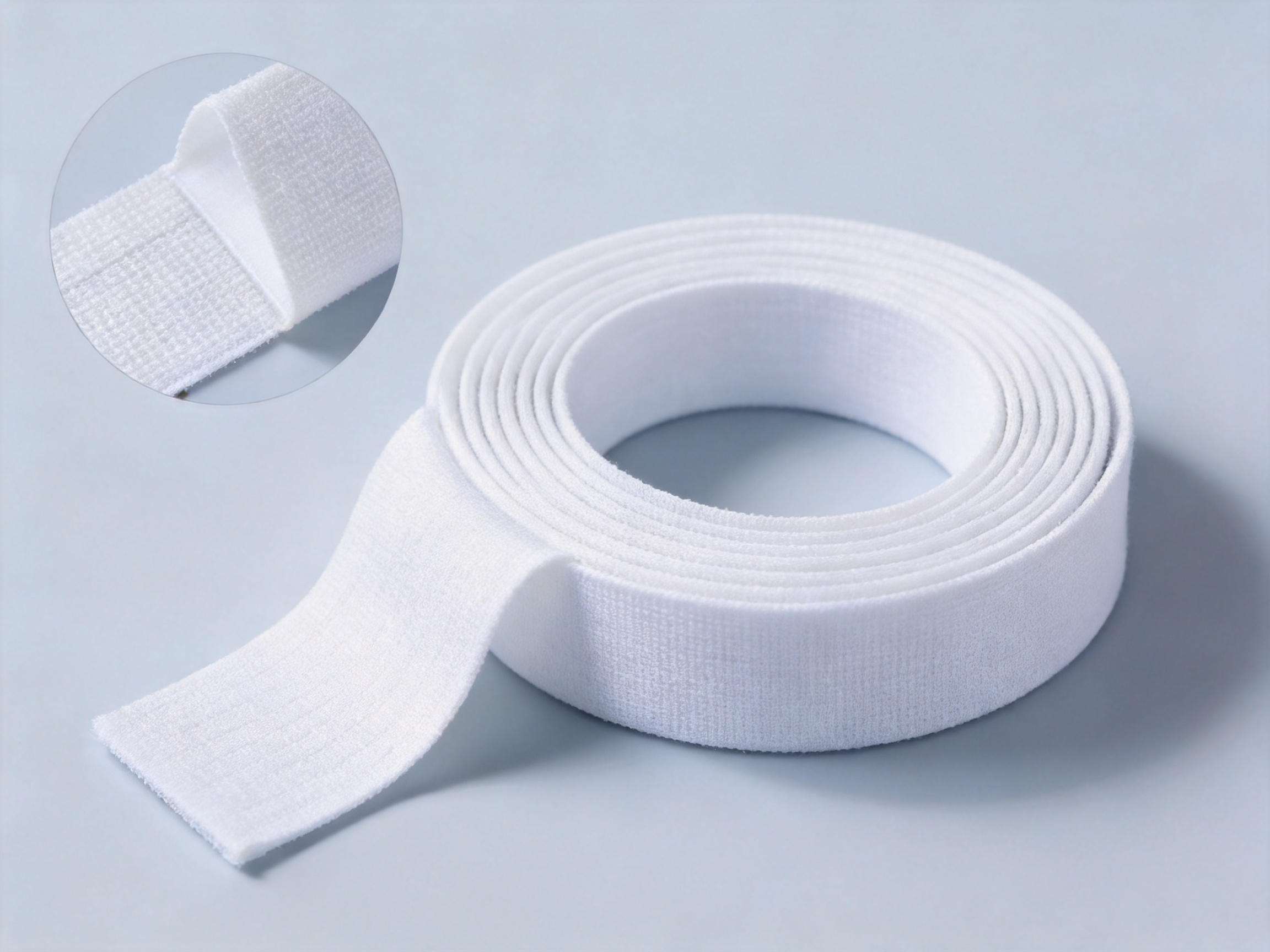
The featured product is white, offering a clean and versatile appearance. Customers may also request other colors for product coordination, branding, or visual differentiation. Color development should consider the base textile, lighting conditions, washing, and the appearance of the hook-and-loop components.
Texture and Hand Feel
Texture influences comfort, sewing behavior, and the appearance of the finished product. A softer surface may be appropriate for products worn close to the skin, while a more structured surface may be desirable for equipment straps. The manufacturer can work with customers to determine a suitable balance.
Packaging and Delivery
Packaging can be arranged according to the customer’s production and distribution requirements. Roll length, labeling, packing method, carton configuration, and product identification may be discussed during order confirmation. Clear packaging information helps customers manage incoming inspection and warehouse inventory.
How the Panel Supports Efficient Product Design
Using a combined elastic and hook-and-loop component can reduce the number of separate parts required in a product assembly. Instead of sourcing elastic tape and a separate closure system, a manufacturer may be able to integrate one panel into the design. This can simplify purchasing, cutting, sewing, and quality inspection.
The wide panel can also reduce the need for multiple narrow straps in certain designs. Fewer components may mean fewer attachment points and a simpler sewing pattern. However, the design must be evaluated carefully because a wide panel may require appropriate reinforcement and machine settings.
For product developers, the panel offers flexibility during prototyping. It can be repositioned, shortened, or adjusted while the support design is being evaluated. Designers can test different overlap lengths, sewing locations, lining materials, and tension levels before finalizing the product.
For mass production, repeatability is a major advantage. A consistent roll of material allows automated or semi-automated cutting and standardized sewing operations. Stable material behavior can reduce production adjustments and help improve the uniformity of finished products.
Sewing and Assembly Considerations
Although the panel is designed for practical integration, sewing performance depends on the construction of the finished product. Manufacturers should select thread, needle size, stitch density, seam allowance, and machine tension according to the panel’s thickness and elasticity.
When sewing elastic material, excessive stitching tension may restrict stretch or create puckering. Insufficient reinforcement may reduce seam durability. A balanced stitch construction is therefore important. Samples should be sewn and tested under the same conditions planned for production.
The direction of stretch should be considered during pattern development. The panel should be positioned so that its elastic response contributes to the intended adjustment direction. If the material is installed incorrectly, it may not provide the desired fit or may place unnecessary stress on the closure.
Hook-and-loop surfaces should be protected from contamination during cutting and assembly. Loose threads, fabric lint, and dust can reduce fastening engagement if they accumulate on the hook or loop area. Proper handling and packaging can help maintain the material’s condition before use.
Edges and corners should be evaluated for comfort and appearance. Depending on the product, edge binding, folded construction, cover fabric, or reinforced stitching may be appropriate. The final design should prevent unnecessary abrasion and should maintain the panel’s position during repeated adjustment.
Quality Evaluation for Finished Products
Testing should be performed on the complete assembled product, not only on the raw panel. The same panel may behave differently when sewn to mesh, foam, woven fabric, laminated fabric, or highly elastic textile. The seam and surrounding materials influence overall performance.
Important evaluation areas may include:
Stretch and recovery: Measure how far the panel extends under a defined force and how well it returns after release.
Fastening performance: Check whether the hook-and-loop connection remains secure under the intended load and whether it can be opened and closed repeatedly.
Width and dimensional stability: Confirm that the panel maintains the required width and does not excessively curl, twist, or deform during use.
Seam strength: Evaluate the connection between the panel and the main product, including reinforcement areas and repeated loading.
Comfort and contact behavior: Inspect the product for rough edges, pressure concentration, unwanted folding, or skin-contact concerns.
Color and appearance: Compare production batches and inspect for stains, uneven coloration, broken yarns, surface defects, and packaging damage.
Laundering and environmental resistance: Where relevant, test the product after washing, drying, perspiration exposure, heat, friction, and other expected conditions.
For medical or protective products, additional validation may be required according to the product category, market, and regulatory pathway. The panel supplier can provide material information and samples, while the finished-product manufacturer remains responsible for confirming final product suitability.
Why Choose a Specialized Webbing Manufacturer?
Specialized webbing manufacturers understand that textile components are functional engineering materials rather than simple decorative trims. Their performance depends on construction details that may not be visible to the end user. Working with a company focused on webbing can improve access to technical knowledge, customization, and production support.
Jinhu Hengxiang Webbing Co., Ltd. focuses on elastic and non-elastic webbing, with particular experience in sports protection and orthopedic brace applications. This specialization aligns well with the requirements of an adjustable elastic panel, where stretch, strength, comfort, and fastening integration must be considered together.
The company produces millions of meters of elastic and non-elastic webbing each month. Large production capacity can support regular supply programs, while the company’s OEM and ODM services provide flexibility for customers developing specialized products.
Its location in Jinhu County, Huai’an City, Jiangsu Province, China, provides access to established textile manufacturing resources and transportation networks. The company serves customers in China and exports to North America, Eastern Europe, the Middle East, South Asia, and other markets.
In addition to supplying standard products, the company can support technical discussions involving elasticity, texture, color, and application requirements. This is valuable for customers who need to move from an initial sample to stable production without changing suppliers unnecessarily.
Purchasing Guidance for the 8cm White Velcro Elastic Panel
Before placing an order, buyers should define the application clearly. Important information includes the finished product type, expected load, required stretch, fastening frequency, contact conditions, sewing method, color requirement, roll length, and target market.
Samples should be requested for evaluation before bulk production. A sample allows the buyer to test the panel with the actual fabric, thread, sewing equipment, lining, and pattern. It also helps confirm whether the white tone, hand feel, width, elasticity, and fastening behavior meet expectations.
Buyers should ask for technical information relevant to their application. This may include material composition, width tolerance, elasticity data, recommended sewing instructions, packaging details, testing reports, and certification information. Requirements can vary substantially between general apparel and medical support products.
It is also useful to establish a reference sample for future orders. A retained sample can help compare production batches and identify changes in color, stretch, texture, or fastening performance. Clear specifications reduce misunderstandings between the buyer and supplier.
Storage and Handling Recommendations
Elastic panels should be stored in a clean, dry, and well-ventilated environment. Direct sunlight, excessive heat, moisture, dust, and contact with chemicals may affect textile materials over time. Rolls should be protected from crushing, sharp edges, and unnecessary deformation.
During production, the material should be handled with clean equipment and stored in its original packaging until needed. Hook-and-loop surfaces should be kept closed or covered where possible to reduce the collection of lint and debris.
Before cutting, the panel should be allowed to stabilize in the production environment if the customer’s process requires controlled textile conditioning. Cutting measurements should account for the intended overlap and seam allowance. A small trial run can reveal whether the panel behaves differently from the initial sample under factory conditions.
Sustainability and Responsible Production
Responsible textile production involves material efficiency, durable product design, quality control, and waste reduction. A component that performs consistently can reduce rejected products and unnecessary replacement. Durable fastening can also help extend the service life of a garment or support when the product is properly maintained.
Efficient machinery and organized production processes can help reduce unnecessary material waste. Accurate warping, weaving, knitting, cutting, and packing contribute to better resource utilization. Customers may discuss roll lengths and packaging formats that match their manufacturing process and reduce leftover material.
Sustainability also includes long-term supplier relationships. Stable quality, timely delivery, technical communication, and responsive service help manufacturers plan production more efficiently. Jinhu Hengxiang Webbing Co., Ltd. describes quality, innovation, sustainability, integrity, and continuous improvement as important parts of its development approach.
Environmental performance should be evaluated across the complete product life cycle. The appropriate material depends on the application, expected service life, cleaning process, and disposal conditions. Buyers should request relevant documentation and assess the finished product according to their own environmental and regulatory objectives.
Q&A About 8cm White Velcro Elastic Panels
What is the main purpose of this panel?
The main purpose is to provide adjustable fastening together with controlled elastic support. It can connect or secure parts of a garment, brace, support, or accessory while allowing the user to adjust the fit.
Why is the panel 8cm wide?
The 8cm width provides a broad contact area that can distribute tension more evenly than a narrow strap. It is suitable for applications requiring wider support around the body or across a garment section.
Is the panel suitable for medical products?
It can be used as a component in medical protective equipment, orthopedic braces, abdominal binders, and rehabilitation products. The complete finished product must be designed, tested, and validated according to its intended medical application and applicable regulations.
Can it be used in sports supports?
Yes. The panel can be incorporated into sports braces, waist supports, protective straps, and other adjustable sportswear components. Its elastic structure supports movement, while the hook-and-loop closure allows fit adjustment.
Is the white color suitable for light-colored garments?
Yes. The clean white tone coordinates well with white, cream, light gray, pastel, and other light-colored fabrics. It can also be used as a neutral base for products where the fastening should not create strong visual contrast.
Can the product be customized?
Customization may be available for elasticity, texture, color, width, thickness, packaging, and other technical requirements. Buyers should provide application information and request samples before confirming mass production.
How does this product compare with ordinary hook-and-loop tape?
Ordinary hook-and-loop tape is typically non-elastic. The featured panel adds an elastic structure, allowing the fastening component to respond more naturally to movement and changes in fit. It also provides a wider support surface than many standard narrow tapes.
How does it compare with narrow elastic bands?
A narrow elastic band may be suitable for light garment applications, but it usually provides a smaller support area and may concentrate tension. The 8cm panel combines a broader structure with adjustable fastening, making it more suitable for support-oriented designs.
Can the panel be sewn by standard textile equipment?
It can generally be integrated through sewing, but the exact machine settings depend on the material thickness, elasticity, thread, needle, stitch pattern, and fabric combination. A production trial is recommended before full-scale manufacturing.
Can it be washed?
Washing suitability depends on the complete material specification and the finished product construction. Buyers should confirm the recommended care conditions and conduct laundering tests using the intended cleaning process.
What information should be provided when requesting a quotation?
Useful information includes required width, color, elasticity, quantity, roll length, application, sewing method, packaging, delivery destination, and any certification or testing requirements. Drawings, photos, or physical samples can also help clarify the project.
Does the manufacturer support OEM and ODM orders?
Yes. Jinhu Hengxiang Webbing Co., Ltd. welcomes OEM and ODM orders and can discuss customized webbing requirements involving elasticity, texture, color, and other product details.
Conclusion
The 8cm white Velcro elastic panel is a versatile textile component that combines the benefits of broad elastic support and adjustable hook-and-loop fastening. Its 8cm width helps distribute tension across a larger area, while its elastic structure allows flexibility during movement. The hook-and-loop system provides convenient, repeatable adjustment for users and product manufacturers.
Compared with narrow elastic bands, rigid webbing, standard non-elastic hook-and-loop tape, snaps, buttons, or tie closures, the panel offers a useful balance of support, adjustability, flexibility, and ease of integration. These characteristics make it appropriate for sportswear, medical supports, orthopedic braces, maternity products, abdominal binders, rehabilitation accessories, adaptive clothing, and general sewing applications.
The product is supported by Jinhu Hengxiang Webbing Co., Ltd.’s experience in elastic and non-elastic webbing manufacturing. The company’s warping, knitting, weaving, testing, and packaging capabilities support controlled production and customized development. Its Oeko-Tex Standard 100 and ISO 13485 certifications, together with its focus on quality management, provide an additional foundation for customers seeking dependable textile components.
For the best result, the panel should be evaluated as part of the complete finished product. Buyers should confirm elasticity, fastening strength, sewing behavior, comfort, laundering resistance, and regulatory requirements through samples and application-specific testing. With proper specification and integration, the 8cm white Velcro elastic panel can help manufacturers create more adjustable, comfortable, and reliable support products.
References
1. International Organization for Standardization. ISO 13485: Medical Devices — Quality Management Systems — Requirements for Regulatory Purposes.
2. OEKO-TEX Association. Standard 100 by OEKO-TEX: Requirements for Testing and Certification of Textile Products.
3. International Organization for Standardization. ISO 20932. Textiles — Determination of the Elasticity of Fabrics.
4. International Organization for Standardization. ISO 13934. Textiles — Tensile Properties of Fabrics.
5. International Organization for Standardization. ISO 6330. Textiles — Domestic Washing and Drying Procedures for Textile Testing.
6. Textile Institute. Textile Terms and Definitions.
7. Materials supplied for product development and manufacturing information concerning elastic webbing and hook-and-loop fastening panels.