
 en
en
 English
 русский
 Français
 Español
 Português
 Tiếng Việt
Content
- 1 Product Overview
- 2 Key Construction Features
- 3 Advantages Compared with Conventional Fastening Materials
- 4 Applications in Sportswear and Fitness Products
- 5 Applications in Medical and Orthopedic Supports
- 6 Applications in Maternity and Abdominal Supports
- 7 Applications in Adaptive Clothing and Industrial Garments
- 8 Manufacturing Strengths and Production Capabilities
- 9 Customization Options for OEM and ODM Projects
- 10 Production and Design Considerations
- 11 Why Work with a Specialized Webbing Manufacturer?
- 12 Quality, Certification, and Sustainability Considerations
- 13 How to Specify the Product for Commercial Purchase
- 14 Q&A
- 14.1 What is a 6cm black Velcro elastic panel?
- 14.2 What products can use this panel?
- 14.3 What is the advantage of a 6cm width?
- 14.4 Can the panel be customized?
- 14.5 Is the panel suitable for medical products?
- 14.6 Can it be used in maternity supports?
- 14.7 How should the panel be sewn?
- 14.8 Does the black color affect its applications?
- 14.9 What should buyers test before mass production?
- 14.10 What manufacturing experience does the supplier have?
- 14.11 What certifications are associated with the company?
- 14.12 Can the supplier handle OEM and ODM orders?
- 15 Conclusion
- 16 References
- 17 Product: 6cm Black Velcro Elastic Panels
Modern garments and support products increasingly require more than simple elasticity. They must stretch comfortably, return to their original shape, remain secure during movement, and allow users to adjust the fit without replacing the entire product. A 6cm black Velcro elastic panel addresses these needs by combining a broad elastic structure with hook-and-loop fastening. This construction provides flexible compression, convenient adjustability, and dependable closure in one practical component.
The panel is designed for applications in sportswear, medical braces, maternity supports, fitness bands, adaptive clothing, orthopedic products, and industrial garment production. Its 6cm width offers a useful balance between coverage and flexibility. Compared with narrow elastic tape, it distributes tension across a larger area. Compared with rigid fastening straps, it provides greater conformity to the body and improved comfort during repeated movement.
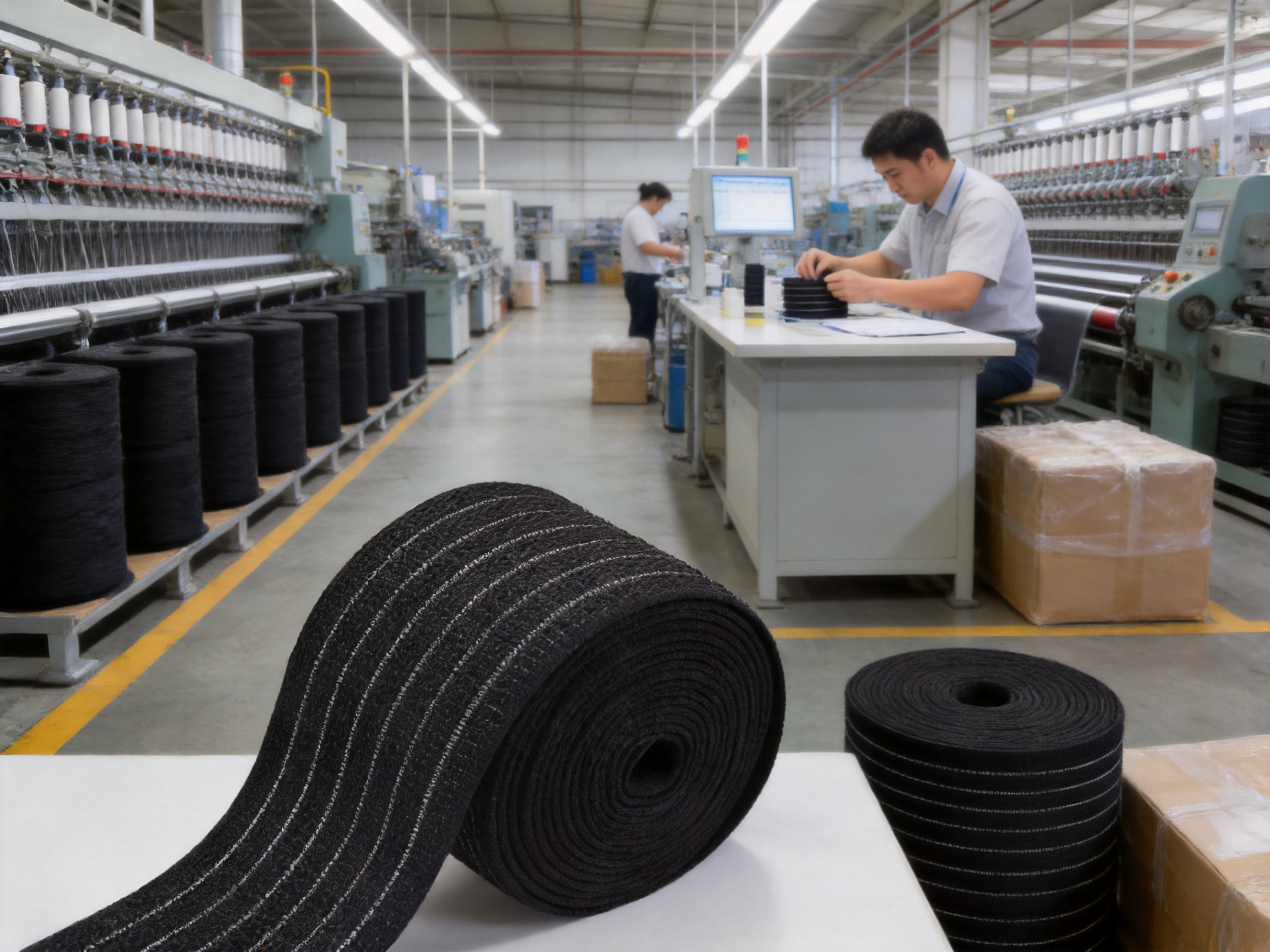
Manufactured by Jinhu Hengxiang Webbing Co., Ltd., the product reflects more than two decades of experience in elastic and non-elastic webbing production. The company develops and manufactures webbing for sports protection, medical protective equipment, orthopedic braces, and other specialized applications. Its production capabilities include warping, knitting, weaving, finishing, testing, and packaging, allowing the company to control key stages of product quality from raw material preparation through final shipment.
Product Overview
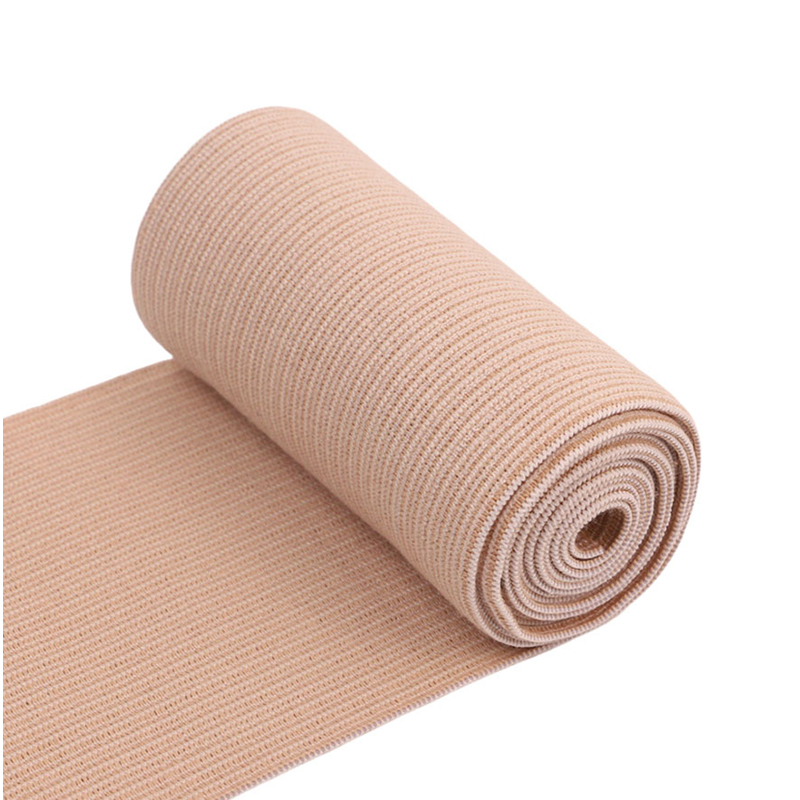
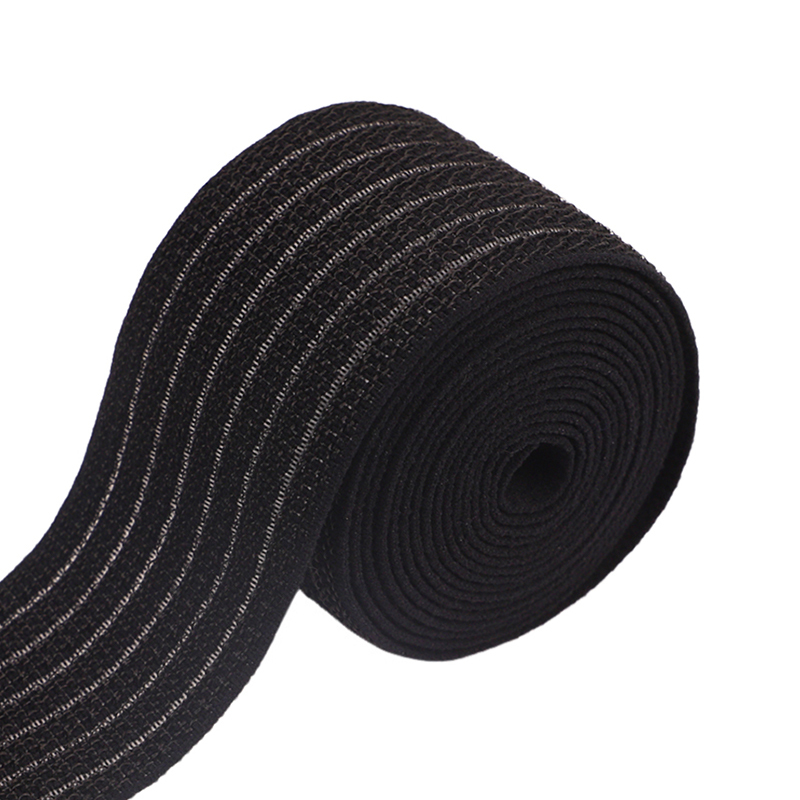
The 6cm black Velcro elastic panel combines a stretchable elastic base with a hook-and-loop fastening surface. The elastic portion allows the panel to extend and contract as the wearer moves, while the fastening system enables the user or manufacturer to adjust the tension and closing position. This makes the panel suitable for products that require a secure fit but must accommodate different body shapes, movement patterns, or wearing conditions.
The black color is practical for a broad range of finished products. It can be incorporated into black sports supports, medical braces, industrial garments, protective equipment, and fashion products without requiring additional coloring or visual concealment. Black also provides a professional appearance and can help reduce the visibility of normal handling marks in demanding production and use environments.
With a nominal width of 6cm, the panel offers greater surface coverage than narrow elastic bands. A wider panel can help distribute pressure more evenly, reducing the concentration of force at a single narrow line. This is particularly valuable in abdominal supports, maternity products, lumbar braces, fitness belts, and other designs that remain in contact with the body for extended periods.
The panel is also suitable for manufacturers that need a fastening component with a more integrated appearance. Instead of sewing separate elastic tape and a distinct closure strap into a finished product, designers can use a combined elastic fastening panel. This can simplify pattern development, reduce the number of components, and support a cleaner product structure.
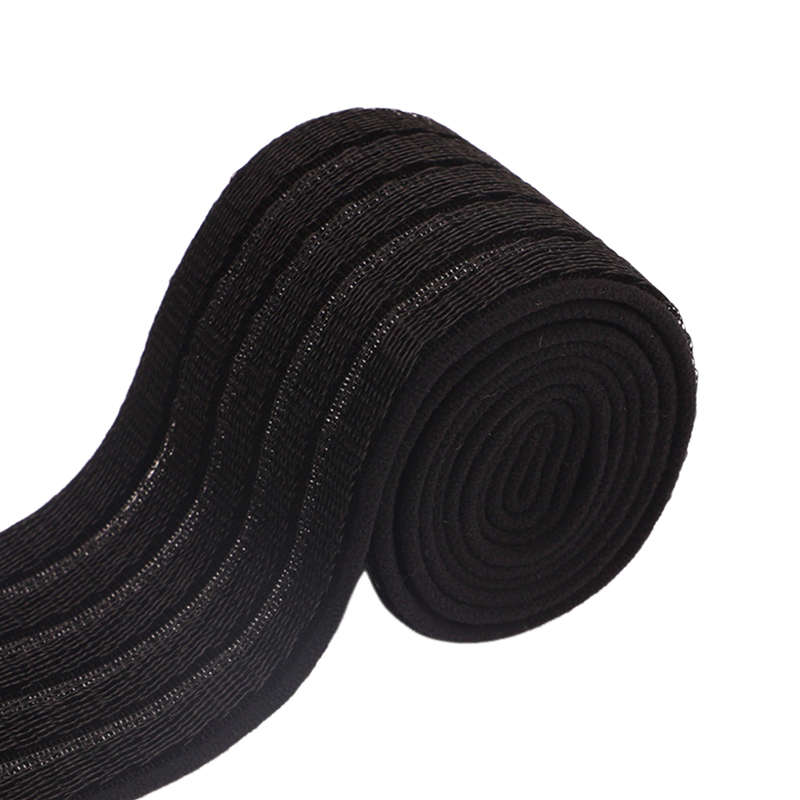
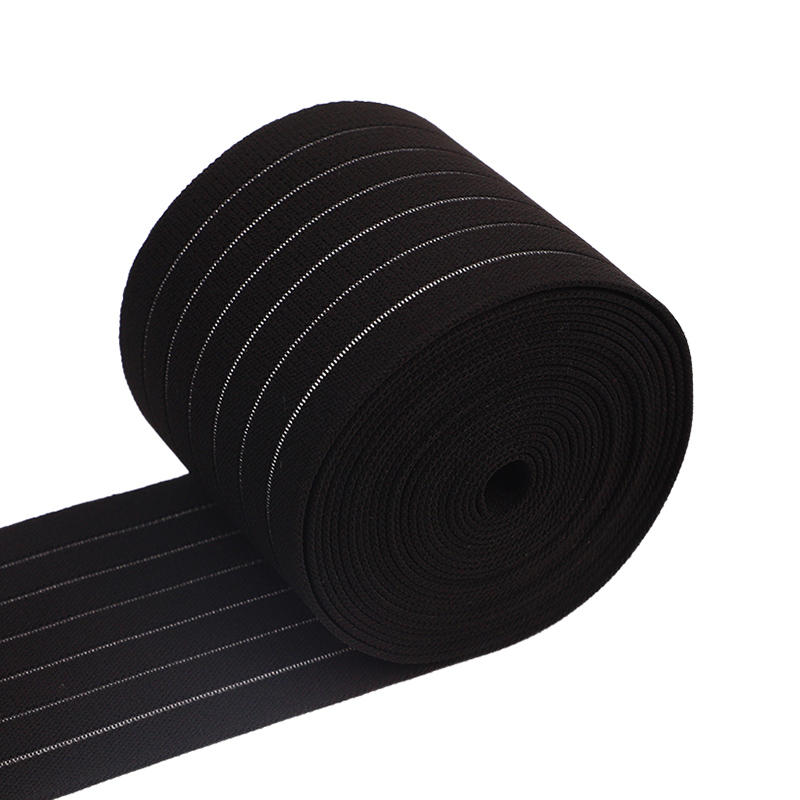
6cm Black Velcro Elastic Panels
Key Construction Features
Elastic Stretch and Recovery
The primary function of the panel is controlled elasticity. The elastic structure allows the component to stretch when tension is applied and recover when the load is released. This action helps the finished product follow the user's body during bending, walking, training, lifting, and other activities.
Elastic recovery is important because a support product must remain functional after repeated extension. If a material stretches but does not recover adequately, the finished item may gradually become loose, unstable, or less supportive. A properly manufactured elastic panel is designed to provide a practical balance between extension, recovery, comfort, and durability.
The appropriate elasticity depends on the final application. A light fitness accessory may require a different tension profile from a medical brace or maternity support. For this reason, manufacturers and buyers may discuss the required stretch, hand feel, thickness, construction, and fastening performance before placing a production order. Customized webbing development allows the material to be matched more closely to the finished design.
Hook-and-Loop Adjustment
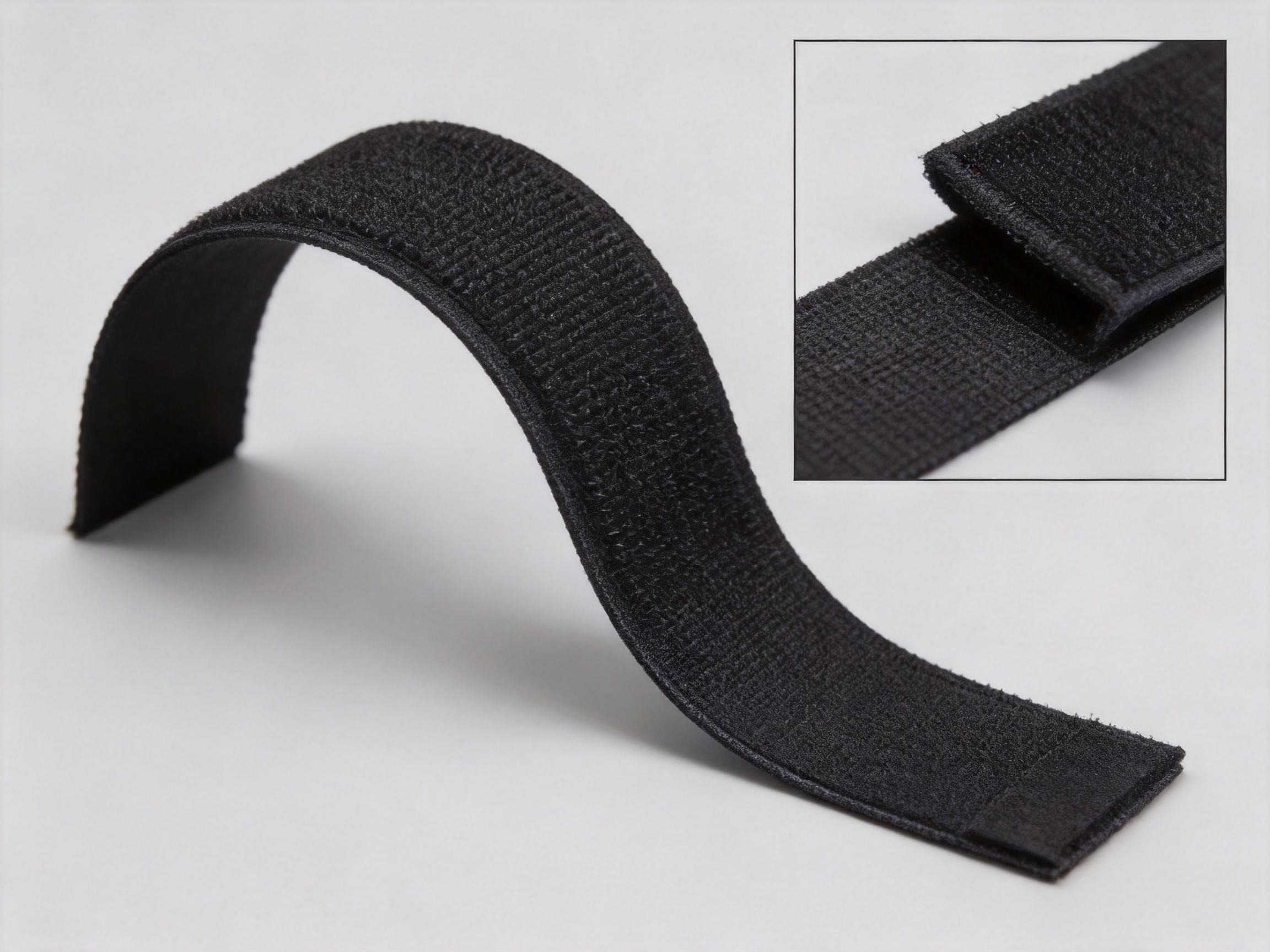
The hook-and-loop fastening system provides quick and repeated opening and closing. It allows the wearer to adjust the fit without tying knots, using buckles, or permanently fixing the panel in one position. This is especially useful when the product must accommodate changes in body circumference, clothing layers, activity level, or support preference.
Hook-and-loop fastening can also make products easier to put on and remove. In medical and adaptive clothing applications, users may have limited hand strength, reduced mobility, or a need for fast adjustments. A broad fastening surface can be easier to handle than small buttons or narrow laces, provided the final design includes suitable edges and a comfortable contact arrangement.
The fastening area should be positioned carefully during product development. The hook side and loop side need adequate overlap to produce a secure closure, while the panel should be arranged so that the hook surface does not contact sensitive skin or delicate fabrics unnecessarily. Designers can use lining, folding, protective flaps, or other construction methods to improve comfort and prevent unwanted contact.
Broad 6cm Coverage
The width of the panel is one of its major functional characteristics. Six centimeters provides a broad working area while remaining flexible enough for sewing into curved or adjustable products. The width can help spread tension over a greater area and reduce the need for multiple narrow strips.
In abdominal and lumbar products, broad coverage can support a more stable structure around the body. In sports supports, it can help maintain positioning during movement. In maternity products, it can allow gradual adjustment as the body changes. In industrial garment production, it can create a visually consistent closure line and reduce assembly complexity.
A broad elastic panel may also reduce the risk of twisting compared with very narrow tape, although the result depends on the finished construction, stitch pattern, fabric layers, and tension applied during sewing. Designers should evaluate the panel as part of the complete product rather than treating the component in isolation.
Advantages Compared with Conventional Fastening Materials
More Flexible than Rigid Straps
Rigid straps can provide closure, but they may restrict movement or create pressure points when used around curved body areas. The elastic base of this panel allows the fastening component to respond to movement. It can expand slightly during motion and return toward its original dimension when the load decreases.
This flexibility is useful in products that must remain secure without feeling excessively restrictive. Sports supports, exercise accessories, and body-worn garments all benefit from materials that accommodate natural movement. The panel can help designers create an adjustable product that supports the body while retaining a degree of comfort and mobility.
More Adjustable than Fixed Elastic
Traditional elastic tape may provide stretch, but it often requires a fixed sewn length or a separate buckle, button, or strap adjustment. Once sewn into the product, its effective circumference may be difficult to change. The hook-and-loop system adds a practical adjustment function, allowing the user to tighten or loosen the product within the available overlap range.
This adjustability can reduce the need for several product sizes in certain applications. It may also make the product more adaptable to different users or changing body conditions. However, sizing, pattern design, and safety requirements should still be considered carefully. Adjustable construction does not eliminate the need for proper fit testing.
Broader Contact than Narrow Elastic Band
Narrow elastic bands are useful for edging, light retention, and compact garment construction, but they may concentrate tension along a small line. A 6cm panel distributes the fastening force over a wider surface. This can improve stability and help the finished product maintain its position during movement.
The broader area may also provide a more substantial appearance for orthopedic braces, maternity supports, and protective products. It gives designers more room to create reinforcement zones, overlap sections, and secure sewing patterns. The final performance depends on the material specifications and the quality of the complete assembly.
More Convenient than Permanent Closures
Permanent closures can make a garment difficult to put on, remove, or adjust. Hook-and-loop fastening offers a reusable closure that can be opened and secured repeatedly. This is valuable in products that users need to reposition throughout the day or during a training session.
For production teams, a combined elastic and fastening panel can also offer manufacturing convenience. The component is designed around two functions, reducing the need to source separate materials with potentially different colors, textures, or quality standards.
Applications in Sportswear and Fitness Products
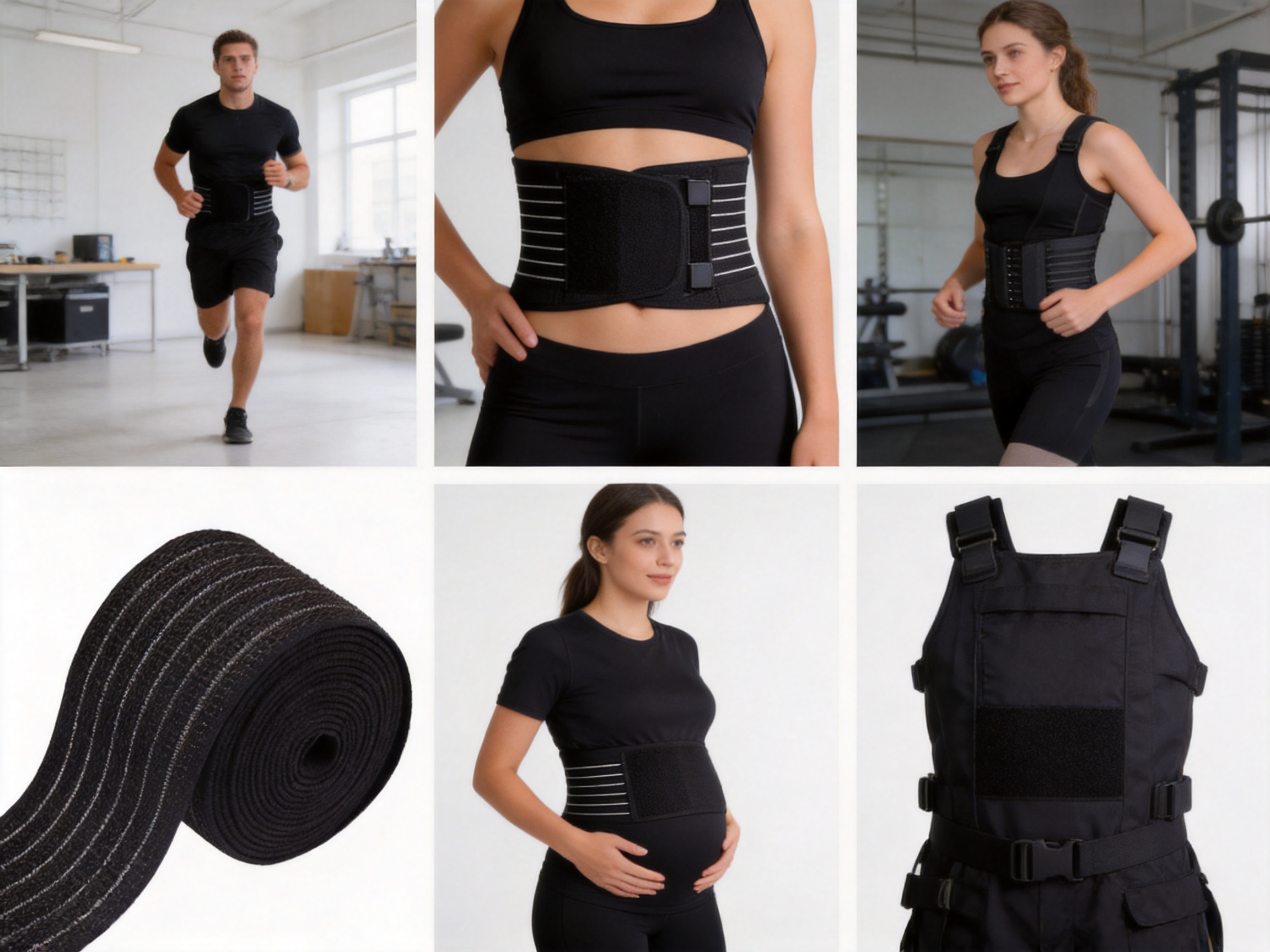
Sportswear requires materials that can tolerate repeated stretching, body movement, sweat exposure, and frequent laundering according to the finished product's care instructions. A 6cm black Velcro elastic panel can be used in fitness belts, lifting supports, knee or elbow support assemblies, training bands, posture products, and protective sports accessories.
In a fitness belt, the panel can provide adjustable compression around the waist or abdomen. The user can change the tension according to the activity, clothing layer, or personal preference. In a protective support, the panel can help hold padding or structural elements in the intended position while allowing the wearer to move.
The panel is also suitable for sports garments that require removable or adjustable sections. Designers can incorporate it into warm-up clothing, rehabilitation apparel, adaptive sportswear, and equipment bags with elastic closure sections. Its black appearance generally coordinates with common sportswear colors and technical fabrics.
When developing sports products, manufacturers should evaluate fatigue resistance, closure strength, stitch security, edge comfort, and dimensional stability. A strong fastening surface alone does not guarantee a successful product. The elastic tension, sewing thread, seam allowance, reinforcement method, and surrounding fabric must work together.
Applications in Medical and Orthopedic Supports
Medical supports and orthopedic braces often need adjustable compression and reliable positioning. A hook-and-loop elastic panel can be incorporated into abdominal binders, lumbar supports, postoperative supports, joint braces, rehabilitation products, and orthopedic garments.
For abdominal products, the panel can help the wearer adjust the support around the midsection. The broad width may provide a stable fastening area and help distribute pressure. For lumbar products, it can contribute to a secure closure that remains adjustable as the wearer changes posture.
In medical applications, comfort and safe use are especially important. The panel should be integrated with suitable skin-contact materials, smooth edges, appropriate padding, and a design that avoids excessive pressure. The finished product should be evaluated according to its intended use and any applicable regulatory, clinical, or quality requirements.
Jinhu Hengxiang Webbing Co., Ltd. focuses particularly on webbing for sports protection and orthopedic braces. The company has obtained ISO 13485 and Oeko-Tex Standard 100 certifications, which support its quality-management and textile-safety capabilities. Certifications do not replace application-specific testing, but they can provide buyers with useful evidence of a structured manufacturing and quality approach.
Importance of Controlled Manufacturing for Medical Products
Medical and orthopedic products require consistency. Variations in width, stretch, thickness, fastening performance, or surface finish can affect the behavior of the finished brace. A professional webbing manufacturer therefore needs documented production procedures, inspection standards, traceability, and reliable equipment.
Hengxiang's manufacturing operations include material sourcing, processing, testing, and packing under quality-control procedures. Its production equipment includes warping machines, knitting machines, woven machines, and packaging machines. Coordinating these processes helps the company produce large quantities while maintaining attention to technical specifications.
Buyers developing medical products should communicate the intended use, target tension, dimensions, color, fastening arrangement, packaging requirements, and testing expectations at the beginning of the project. Clear technical communication helps prevent unsuitable material selection and supports more efficient sample approval.
Applications in Maternity and Abdominal Supports
Maternity supports and abdominal binders must respond to changing body dimensions and different comfort requirements. The adjustable design of a 6cm elastic Velcro panel makes it suitable for products that need a flexible fit over a range of circumferences.
In maternity support belts, the panel may be used to create a closure that can be loosened or tightened as needed. The elastic base can follow body movement, while the hook-and-loop section provides convenient adjustment. In abdominal binders, the broad panel can support a stable wraparound construction and help the product remain positioned during everyday activity.
Designers should pay close attention to pressure distribution, breathability, skin contact, and ease of operation. A fastening component should not be placed where it creates uncomfortable edges or excessive compression. Product testing with representative users can help identify issues that may not be visible during pattern development.
Applications in Adaptive Clothing and Industrial Garments
Adaptive clothing is designed to make dressing easier for people with limited mobility, reduced dexterity, or specific care requirements. Hook-and-loop closures are commonly considered for these products because they can be operated more easily than small buttons or conventional zippers in some situations.
The elastic panel can be used in adjustable waist sections, removable garment panels, therapeutic clothing, rehabilitation apparel, and clothing designed for assisted dressing. Its broad format may make the closure easier to locate and handle. The elastic base can also help the garment accommodate seated and standing positions.
In industrial garment production, the panel can be incorporated into work supports, protective garments, equipment covers, utility belts, and adjustable uniforms. Its combination of elastic movement and mechanical fastening can support garments that must fit different users or be worn over different layers.
Industrial designers should consider exposure to oils, dust, heat, moisture, abrasion, and repeated opening and closing. The correct material specification depends on the working environment. Samples should be evaluated under realistic conditions before full-scale production.
Manufacturing Strengths and Production Capabilities
More Than Twenty Years of Industry Experience
Jinhu Hengxiang Webbing Co., Ltd. was established in 2005 in Jinhu County, Huai'an City, Jiangsu Province, China. With more than 20 years of professional production experience, the company has developed expertise in elastic and non-elastic webbing for specialized applications.
Long-term experience is valuable because webbing production involves many interdependent variables. Yarn selection, machine settings, tension control, weaving or knitting structure, finishing, cutting, inspection, and packaging can all influence final performance. An experienced manufacturer is better positioned to identify production risks and recommend practical specifications.
Integrated Equipment and Processing
The company has introduced and updated advanced production equipment, including warping machines, knitting machines, woven machines, and packaging machines. This equipment supports the production of different webbing structures and allows the company to respond to varied customer requirements.
Warping prepares yarns in an organized arrangement for subsequent processing. Knitting equipment can create flexible structures with specific stretch characteristics and surface textures. Woven equipment supports stable, durable constructions. Packaging machines help standardize the final handling and shipment process.
By combining these capabilities, the company can produce both elastic and non-elastic webbing instead of depending entirely on outside processing. This supports better coordination between development, manufacturing, inspection, and delivery.
High Monthly Production Capacity
The company produces millions of meters of elastic and non-elastic webbing every month. High capacity is important for customers that require stable supply, repeated orders, or large-scale garment production. It also allows the manufacturer to support both development quantities and commercial production, subject to specific order requirements.
Capacity alone does not determine product quality. The value of a large production system lies in its ability to combine output with process control. Consistent machine settings, trained operators, inspection procedures, and organized scheduling help ensure that higher volume does not result in uncontrolled variation.
Quality Control from Material to Packing
Quality control begins with the selection and inspection of raw materials. Yarn type, elastic components, fastening materials, dyes, and auxiliary materials should be chosen according to the intended application. During processing, operators and inspectors can monitor width, appearance, tension, stretch, recovery, color, and surface condition.
Testing and inspection should continue after production. Finished rolls or cut panels can be checked for dimensional accuracy, closure quality, visual defects, packaging condition, and order conformity. Appropriate records help support traceability and enable the manufacturer to investigate deviations when necessary.
For buyers, an effective quality program reduces the risk of receiving materials that do not match approved samples. It also supports more predictable sewing, fewer production interruptions, and better consistency in the finished product.
| Evaluation Area | Value of the 6cm Elastic Panel | Importance to Buyers |
|---|---|---|
| Width | Broad 6cm format for improved coverage and stable fastening | Supports product planning, pressure distribution, and consistent appearance |
| Elasticity | Stretchable construction that follows movement and body contours | Helps balance support, comfort, and adaptability |
| Fastening | Hook-and-loop closure for repeated adjustment | Allows convenient fitting and reduces dependence on fixed dimensions |
| Color | Black finish suitable for sports, medical, industrial, and fashion products | Coordinates with common product colors and supports a professional look |
| Customization | Potential adjustment of elasticity, texture, and color according to project needs | Helps manufacturers develop materials for specific product requirements |
| Production Support | Manufacturing resources for elastic and non-elastic webbing | Supports sampling, repeat orders, and larger production programs |
| Quality Systems | Quality control across sourcing, processing, testing, and packing | Improves consistency and supports dependable supply management |
Customization Options for OEM and ODM Projects
Different products require different webbing specifications. A panel for a lightweight fitness garment may need a softer hand feel and moderate elasticity, while a medical brace may require stronger support and carefully controlled recovery. OEM and ODM development allows the material to be adapted to the customer's product design.
Potential customization areas include elasticity, texture, color, thickness, width, length, fastening arrangement, edge treatment, packaging, and labeling. The available options depend on the material combination and production process. Customers should provide drawings, samples, technical data, or use descriptions whenever possible.
Customization can also address sewing requirements. A panel intended for high-speed garment assembly may need consistent width and a predictable edge. A panel for a reinforced orthopedic brace may require a particular overlap length or stitch pattern. Discussing these details before sampling can help ensure that the material works efficiently on the buyer's production line.
Sampling and Approval
A sample is an important part of product development. It allows the buyer to evaluate appearance, stretch, fastening behavior, hand feel, sewing performance, and compatibility with other materials. The sample should be tested in a construction that is similar to the final product because webbing performance can change when sewn, folded, layered, or placed under compression.
After evaluation, the buyer and manufacturer can confirm the technical specification. Important details may include width tolerance, color standard, extension range, recovery expectations, fastening strength, roll length, packaging method, and inspection requirements. A clear approved sample helps establish a reference for future orders.
Production and Design Considerations
Choosing the Correct Overlap
Hook-and-loop systems need sufficient overlap to achieve reliable fastening. The required overlap depends on the expected load, the dimensions of the fastening surface, the product construction, and the use environment. Too little overlap may reduce closure security, while excessive overlap may add bulk or make adjustment inconvenient.
Designers should test the panel under both normal and high-load conditions. They should consider movement, repeated opening and closing, accidental pulling, and the effect of fabric stretch. The fastening area should remain accessible but should not create a pressure point or snag risk.
Seam and Reinforcement Design
Even a strong elastic panel can fail if it is attached with insufficient stitching. The seam should be selected according to the tension and load expected in the finished product. Box stitching, bar tacks, multiple rows, binding, or reinforcement patches may be appropriate depending on the application.
Stitch density should be sufficient to secure the panel without damaging the elastic structure. Excessive needle perforation can weaken some materials, while insufficient stitching can allow the panel to pull away. Production trials should verify that the chosen sewing method maintains the intended elasticity and closure performance.
Comfort and Skin Contact
When the panel is used in a body-worn product, comfort must be considered alongside strength. The position of the hook surface, edge finish, backing material, and seam allowance can affect the wearing experience. A lining or protective layer may be needed where the fastening system could contact the skin.
Breathability and moisture management are also important for sportswear, maternity products, and medical supports. The elastic panel should be evaluated with the surrounding fabric and padding. A comfortable product usually depends on the complete material system rather than one component alone.
Care and Maintenance
The appropriate care method depends on the complete finished product and the materials used with the panel. Buyers should establish washing, drying, storage, and cleaning instructions through product testing. Hook-and-loop surfaces should be closed before laundering when appropriate to reduce snagging and protect other fabrics.
Regular inspection can help identify lint accumulation, damaged hooks, weakened stitching, excessive wear, or loss of elastic recovery. In medical and protective products, damaged components should be replaced or repaired according to the product's instructions rather than continuing to use a compromised support.
Why Work with a Specialized Webbing Manufacturer?
Specialized webbing manufacturers understand that elastic components are structural parts of a finished product. They are not simply decorative trims. Their width, stretch, recovery, surface texture, fastening performance, and dimensional stability can influence the usability and safety of sports supports, medical braces, and adjustable garments.
A specialist can help customers select an appropriate construction, identify practical limitations, and organize sample development. This technical support can reduce trial-and-error during product design. It can also help buyers avoid selecting a material based only on appearance or initial price.
Jinhu Hengxiang Webbing Co., Ltd. offers both elastic and non-elastic webbing and welcomes OEM and ODM orders. Its experience in sports protection and orthopedic brace materials gives it a useful understanding of products that require controlled tension and dependable fastening. The company's export experience across North America, Eastern Europe, the Middle East, South Asia, and other regions also supports international customer service and supply coordination.
Competitive pricing is most valuable when it is combined with suitable quality, timely delivery, and consistent production. A low-cost material that causes sewing problems, inconsistent fit, or frequent replacement may increase total product cost. Reliable manufacturing helps buyers consider the complete value of the component rather than its unit price alone.
Quality, Certification, and Sustainability Considerations
Quality systems provide a framework for managing production consistency. ISO 13485 is associated with quality-management systems for organizations involved in medical devices and related requirements. Oeko-Tex Standard 100 addresses the testing of textile products for harmful substances. These certifications can be meaningful indicators for buyers evaluating suppliers, especially when the webbing is intended for medical, protective, or skin-contact products.
Certification should always be considered together with the exact product specification and application. Buyers should confirm the scope, validity, and relevance of any certification during supplier evaluation. They should also complete their own finished-product testing where required.
Sustainability in webbing production includes responsible material selection, efficient use of energy and resources, reduction of production waste, durable product design, and appropriate packaging. A durable panel can contribute to longer product service life by maintaining useful elasticity and closure performance over repeated use. Customers may also discuss packaging quantity, recyclable packaging options, and production efficiency with the manufacturer.
Continuous improvement is important because textile machinery, testing methods, material technology, and customer requirements continue to change. The company's investment in updated warping, knitting, weaving, and packaging equipment demonstrates an effort to support modern production needs while maintaining a broad product range.
How to Specify the Product for Commercial Purchase
Before requesting a quotation, buyers should prepare as much technical information as possible. The basic description should identify the product as a 6cm black Velcro elastic panel and explain its intended application. Additional information can include required length, estimated annual quantity, roll or cut-piece format, sewing method, target elasticity, preferred surface texture, and packaging expectations.
It is also helpful to provide a drawing or photograph showing how the panel will be used. If the material will be incorporated into a medical brace, abdominal binder, maternity belt, or sports support, the manufacturer should understand the load direction and adjustment range. Details about skin contact, washing, temperature, and environmental exposure can also influence material selection.
Buyers should request samples before placing a large order. During evaluation, they can check width, color, stretch, recovery, closure engagement, edge condition, appearance, sewing behavior, and compatibility with the finished product. Testing should include repeated adjustment and realistic movement whenever possible.
After approval, the technical specification should be documented clearly. This helps prevent confusion between development samples and production materials. It also supports consistent reordering and communication among purchasing, engineering, quality, and production teams.
Q&A
What is a 6cm black Velcro elastic panel?
It is a broad elastic webbing component combined with a hook-and-loop fastening system. The elastic portion provides stretch and recovery, while the hook-and-loop portion allows the product to be opened, closed, tightened, and loosened.
What products can use this panel?
Typical applications include sports supports, fitness belts, medical braces, orthopedic products, abdominal binders, maternity supports, adaptive clothing, industrial garments, and DIY sewing projects. The correct application depends on the final design and required performance.
What is the advantage of a 6cm width?
A 6cm width provides broader coverage than narrow elastic tape. It can help distribute tension, create a stable closure area, and provide a substantial appearance in body-worn products. The ideal width still depends on the product pattern and intended load.
Can the panel be customized?
Customization may be available for elasticity, texture, color, width, thickness, length, fastening arrangement, and packaging. Buyers should provide technical requirements and application details so the manufacturer can evaluate the most suitable construction.
Is the panel suitable for medical products?
It can be used as a component in medical and orthopedic products, including braces and supports, when the complete design is properly developed and tested. Medical-product manufacturers must evaluate skin contact, pressure, durability, cleaning, and applicable regulatory requirements for the finished product.
Can it be used in maternity supports?
Yes. The elastic base and adjustable hook-and-loop closure can support maternity belts and abdominal products that need to accommodate changing body dimensions. The finished design should prioritize comfort, suitable pressure, breathable construction, and safe adjustment.
How should the panel be sewn?
The sewing method depends on the expected load and surrounding materials. Reinforced stitching, multiple rows, box stitching, or bar tacks may be considered. A production trial should confirm that the seam is secure without excessively damaging the elastic structure.
Does the black color affect its applications?
Black is a versatile color that coordinates with many sportswear, medical, industrial, and fashion products. It offers a clean and professional appearance, although customers requiring a specific shade should request color confirmation and samples.
What should buyers test before mass production?
Buyers should evaluate dimensions, stretch, recovery, fastening engagement, repeated opening and closing, sewing performance, comfort, appearance, washing behavior, and compatibility with the finished product. Testing should reflect the actual conditions of use.
What manufacturing experience does the supplier have?
Jinhu Hengxiang Webbing Co., Ltd. was established in 2005 and specializes in elastic and non-elastic webbing. The company produces materials for sports protection, orthopedic braces, medical protective equipment, and related applications. It operates warping, knitting, weaving, and packaging equipment and produces millions of meters of webbing each month.
What certifications are associated with the company?
The company has obtained Oeko-Tex Standard 100 and ISO 13485 certifications. Buyers should confirm the current certification details and assess how they relate to the exact material and finished product being developed.
Can the supplier handle OEM and ODM orders?
Yes. OEM and ODM orders are welcome. The company offers customized webbing with tailored elasticity, texture, and color, subject to technical evaluation, sampling, and production requirements.
Conclusion
The 6cm black Velcro elastic panel is a practical solution for products that require both controlled stretch and adjustable fastening. Its broad width supports coverage and stability, while its elastic construction helps the finished product follow body movement. The hook-and-loop closure provides quick adjustment and repeated use, making the panel useful across sportswear, medical supports, maternity products, adaptive clothing, industrial garments, and sewing projects.
Compared with fixed elastic, rigid straps, narrow bands, and permanent closures, the combined construction offers a useful balance of flexibility, coverage, convenience, and design efficiency. Its performance depends on correct specification, suitable overlap, secure sewing, appropriate comfort design, and testing within the finished product.
Jinhu Hengxiang Webbing Co., Ltd. supports this product with more than two decades of webbing manufacturing experience, updated production equipment, large monthly capacity, quality control from material sourcing through packing, and capabilities for OEM and ODM development. Its experience in sports protection and orthopedic brace materials, together with ISO 13485 and Oeko-Tex Standard 100 certifications, provides a strong foundation for customers seeking dependable elastic and non-elastic webbing.
For buyers, the best results come from early technical communication, sample approval, realistic product testing, and a clearly documented production specification. When these steps are followed, a 6cm black Velcro elastic panel can become a reliable and versatile component in adjustable support products and modern garment systems.
References
1. Jinhu Hengxiang Webbing Co., Ltd. Product information for 6cm Black Velcro Elastic Panels.
2. Jinhu Hengxiang Webbing Co., Ltd. Company profile and manufacturing capability information.
3. ISO 13485, Medical Devices Quality Management Systems—Requirements for Regulatory Purposes.
4. Oeko-Tex Standard 100, Textile Product Safety and Harmful Substance Testing Framework.
5. General principles of textile webbing design, elastic recovery, fastening construction, and garment component testing.