
 en
en
 English
 русский
 Français
 Español
 Português
 Tiếng Việt
Content
- 1 Product Overview: What Makes 5cm Navy Jacquard Elastic Different
- 2 Core Advantages Over Ordinary Elastic Bands
- 3 Material Performance and Functional Characteristics
- 4 Applications in Fashion Waistbands
- 5 Applications in Sportswear and Activewear
- 6 Applications in DIY, Sewing, and Custom Projects
- 7 Technical Comparison Table
- 8 Manufacturing Strength Behind the Product
- 9 Quality Control from Raw Material to Packing
- 10 Customization for OEM and ODM Buyers
- 11 Why 5cm Width Is a Practical Choice
- 12 Design Value of Navy Jacquard Texture
- 13 Production Efficiency for Garment Manufacturers
- 14 Sustainability, Responsibility, and Long-Term Value
- 15 How to Select the Right Elastic for Your Project
- 16 Storage and Handling Recommendations
- 17 Business Benefits for Wholesalers and Brands
- 18 Company Capability and Customer Service Strength
- 19 Q&A: Common Questions About 5cm Navy Jacquard Elastic
- 19.1 What is the main use of 5cm navy jacquard elastic?
- 19.2 Why choose jacquard elastic instead of plain elastic?
- 19.3 Is the navy color suitable for many fabrics?
- 19.4 What advantage does the 5cm width provide?
- 19.5 Can this elastic be used in activewear?
- 19.6 Is it easy to sew?
- 19.7 Can the product be customized?
- 19.8 What quality certifications support the manufacturer?
- 19.9 How does this elastic compare with low-cost alternatives?
- 19.10 Who should consider buying this product?
- 20 Conclusion
- 21 References
- 22 Product: 5cm Navy Jacquard Elastic
In modern apparel, accessories, sportswear, and customized sewing, elastic is no longer treated as a simple hidden component. It is a performance material, a design feature, and often the element that determines whether a finished product feels comfortable, fits securely, and remains usable after repeated wear. The 5cm navy jacquard elastic is designed for exactly this purpose: it combines reliable stretch, strong recovery, durable woven construction, and a refined navy appearance suitable for both functional and fashionable applications.
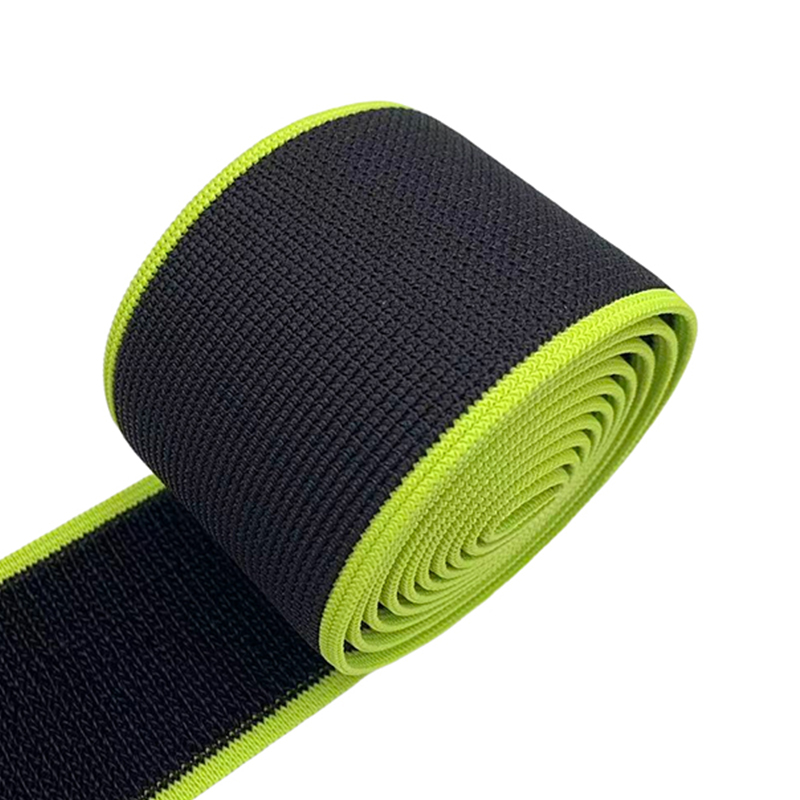
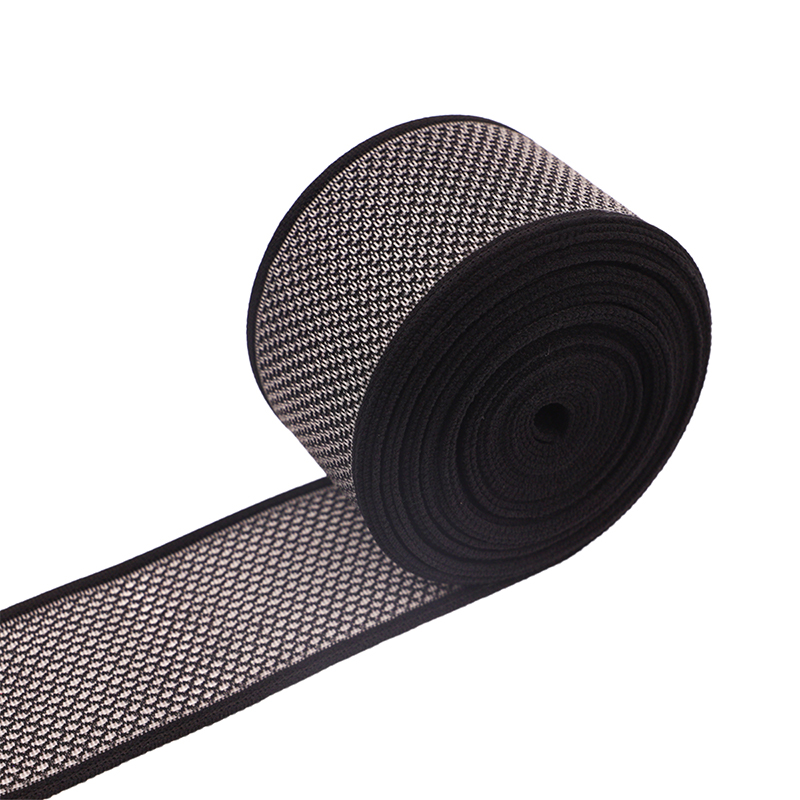
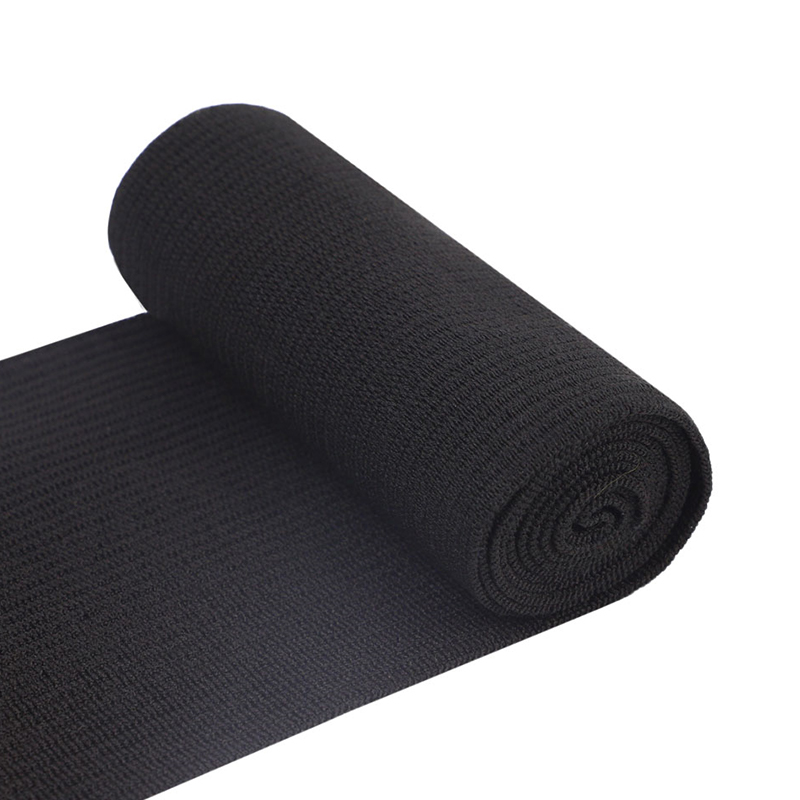
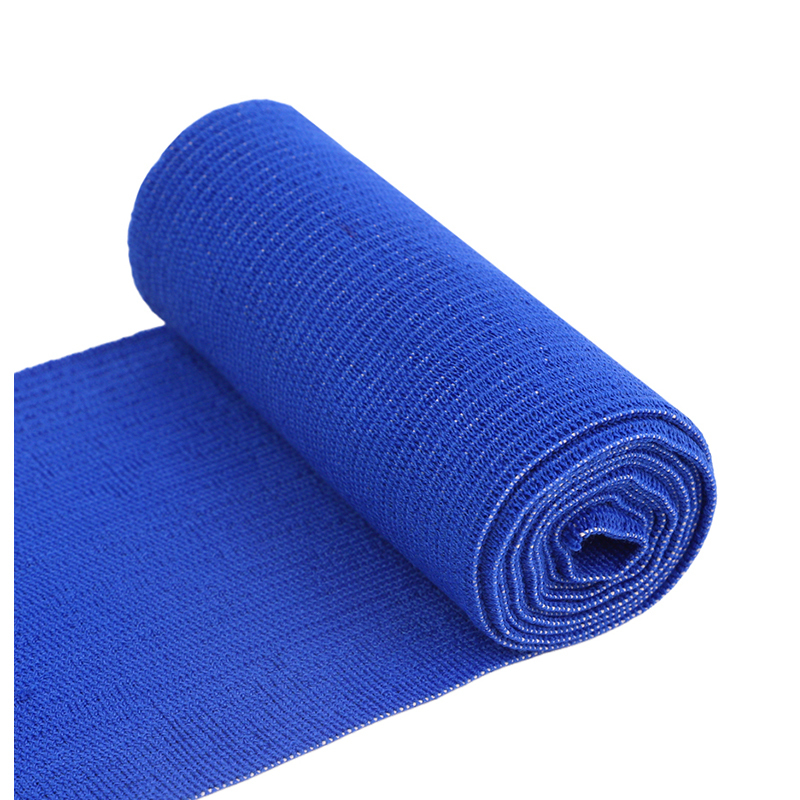
This product belongs to the narrow elastic band category, yet its 5cm width gives it enough surface area to function as a visible waistband, a supportive garment component, or a decorative elastic panel. Its woven jacquard structure creates a subtle textured appearance while also supporting strength and dimensional stability. Unlike ordinary elastic that may quickly curl, deform, or lose tension, this navy jacquard elastic is built for long-term use in garments and accessories that require consistent elasticity and a clean finished look.
For manufacturers, designers, wholesalers, and sewing project suppliers, the value of this elastic lies in its balance of appearance and performance. It is soft enough for comfortable contact with fabric and skin-adjacent areas, yet resilient enough to maintain its shape over time. The rich navy color is versatile, refined, and easy to coordinate with many fabrics, including denim, cotton, polyester blends, sportswear textiles, uniform materials, and fashion fabrics.
Jinhu Hengxiang Webbing Co., Ltd. supports this product with professional webbing manufacturing experience, advanced production equipment, strict quality control, and customization capability. Established in 2005 and located in Jiangsu Province, China, the company has developed expertise in elastic and non-elastic webbing for sports supports, orthopedic braces, apparel, protective equipment, and related applications. Its production capabilities include warping, knitting, weaving, testing, and packaging processes designed to help customers receive stable, consistent, and application-ready elastic products.
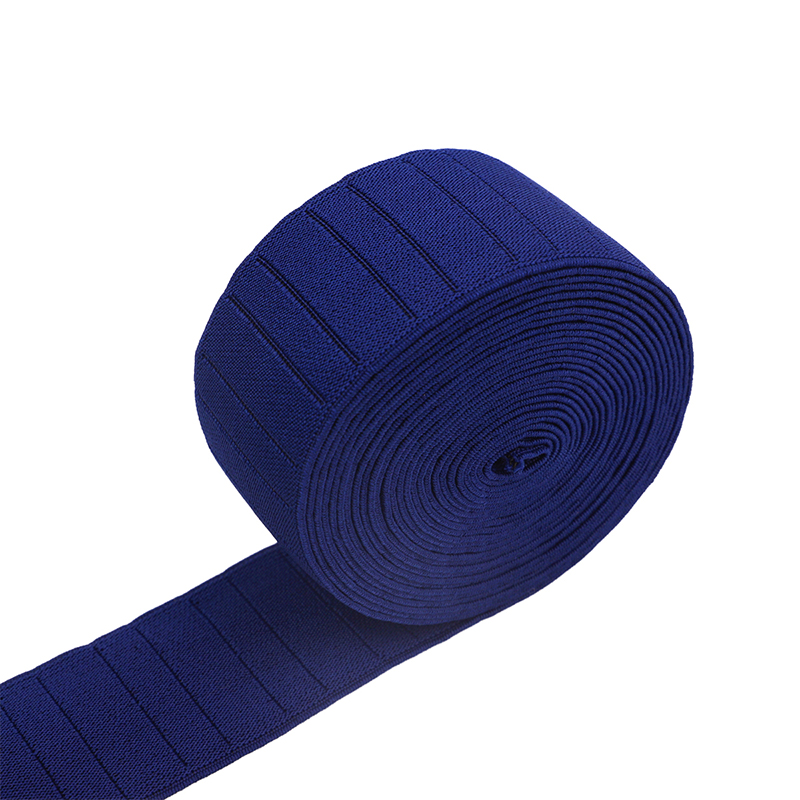
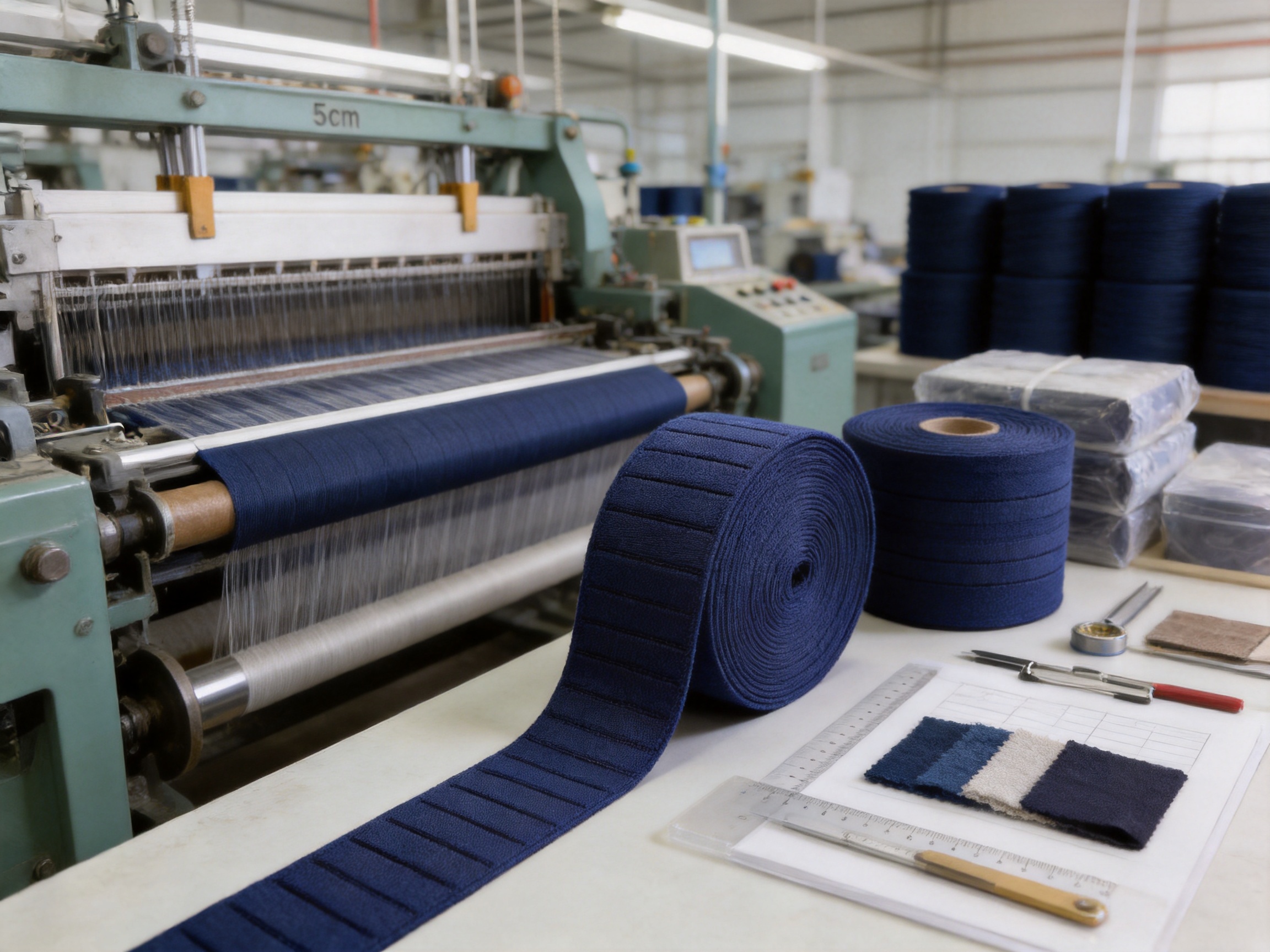
The 5cm navy jacquard elastic is a wide, narrow-category elastic band with a durable woven design and a subtle patterned surface. The term “jacquard” refers to a controlled textile structure that allows texture, pattern, or design to be formed within the material instead of simply printed on the surface. This gives the elastic a more refined and integrated appearance. The pattern is part of the webbing structure, helping the product retain its design character through use.
The 5cm width is especially practical. It is wide enough to provide comfortable pressure distribution when used as a waistband, yet not so wide that it becomes bulky or difficult to sew. For skirts, pants, dresses, sportswear, activewear, and handmade projects, this width offers a good balance between support, flexibility, and visual proportion. In fashion applications, it can be used as an exposed elastic waistband. In performance applications, it can be inserted into casings or stitched directly to fabric panels.
The navy color gives the product a classic and professional appearance. Navy is less harsh than black, more formal than many bright colors, and easier to match than unusual shades. It works well with neutral palettes, marine-inspired designs, athletic garments, schoolwear, workwear, casualwear, and contemporary fashion. When used as a visible design element, it creates a clean and understated look. When hidden inside a garment, it still provides a professional finish during assembly and inspection.
The product is described with the code 8100, which may be used for identification in production, cataloging, or customer ordering. For buyers managing multiple elastic styles, product identification is important because small differences in width, texture, stretch ratio, recovery, and color can affect finished product quality. A clearly defined product helps reduce confusion in purchasing and repeat orders.
Core Advantages Over Ordinary Elastic Bands
Many low-cost elastic bands appear acceptable when new but fail after repeated stretching, washing, sewing, or wearing. Common problems include weak recovery, surface fuzzing, edge curling, uneven width, inconsistent tension, color variation, and reduced comfort. The 5cm navy jacquard elastic is positioned as a higher-value solution because it emphasizes structural strength, elastic recovery, and visual quality at the same time.
One key advantage is the woven construction. Woven elastic is generally valued for its strength, firmness, and ability to maintain width under tension. Compared with basic knitted elastic, woven elastic can provide a more stable hand feel and better resistance to deformation. While knitted elastic can be excellent for soft, lightweight uses, woven jacquard elastic is particularly suitable when the finished product requires a stronger, more structured result.
Another advantage is recovery. Elastic recovery describes how well the band returns to its original shape after being stretched. Poor recovery leads to sagging waistbands, loose garment openings, and products that no longer fit properly. Strong recovery helps the elastic maintain tension and shape, which is essential for waistbands, activewear, and repeated-use garments. The 5cm navy jacquard elastic is designed to provide dependable stretch while returning smoothly after extension.
Its surface texture also gives it an advantage over plain elastic. A subtle jacquard pattern can make the elastic look more refined and intentional. For exposed waistband designs, this matters greatly. A plain low-grade elastic may make a garment appear unfinished, while a jacquard elastic can contribute to the style of the final product. It gives designers more freedom to use elastic not only as a hidden functional material but also as a visible trim.
Comfort is another important factor. A firm elastic that feels rough or overly rigid can reduce garment wearability. This product is described as soft yet resilient, meaning it is designed to offer support without unnecessary harshness. For waistbands and activewear, the user needs secure fit without excessive pressure. A balanced elastic band can help reduce discomfort caused by narrow pressure points or poor flexibility.
Durability is also a major competitive advantage. Elastic used in garments must withstand cutting, sewing, stretching, folding, packaging, storage, and repeated use. A durable woven jacquard elastic resists early breakdown better than weak or loosely constructed alternatives. This can reduce returns, improve customer satisfaction, and help brands maintain a reputation for reliable finished products.
Material Performance and Functional Characteristics
The performance of elastic webbing depends on several interacting factors: yarn quality, elastic fiber selection, weaving density, tension control, finishing treatment, and quality inspection. A well-produced elastic band must stretch smoothly, recover consistently, and remain uniform across production batches. The 5cm navy jacquard elastic is designed with these performance requirements in mind.
Stretch is the first visible function. Good stretch allows the elastic to adapt to movement, body shape, and garment construction. In waistbands, stretch helps the garment fit different body positions such as standing, sitting, bending, and walking. In sportswear, stretch contributes to freedom of movement. In DIY applications, stretch gives makers flexibility when creating custom-fit items.
Recovery is the second major function. Without recovery, stretch alone is not useful. A rubber band that stretches but does not return has little value in apparel. High recovery helps garments retain fit after repeated wear. It also helps the elastic resist permanent elongation during sewing and use. When designers choose elastic for a waistband or activewear panel, recovery is often more important than maximum stretch.
Shape retention is another practical feature. A 5cm elastic band must remain flat and stable to look clean when sewn into a garment. If the band twists, curls, or narrows excessively under tension, the finished product may feel uncomfortable or appear poorly made. A stable woven elastic supports neat stitching, smooth seams, and reliable assembly.
The jacquard surface adds visual quality without sacrificing practicality. Because the pattern is integrated into the structure, it can provide texture and style while remaining suitable for cutting and sewing. Designers can use it as a decorative waistband, a trim line, a belt-like accent, or a functional closure support depending on the product.
The navy shade contributes to versatility. In garment manufacturing, color compatibility affects inventory efficiency. A highly unusual color may only match a few designs, while navy can be used across multiple collections. It pairs well with white, grey, beige, black, denim blue, red, burgundy, olive, khaki, and many printed fabrics. This makes it suitable for both seasonal fashion and long-term staple products.
Applications in Fashion Waistbands
One of the strongest applications for 5cm navy jacquard elastic is fashionable waistbands. Waistbands must perform several roles at once: they secure the garment, shape the waist area, contribute to comfort, and often influence the overall style. A weak or unattractive waistband can reduce the perceived quality of an otherwise well-made garment.
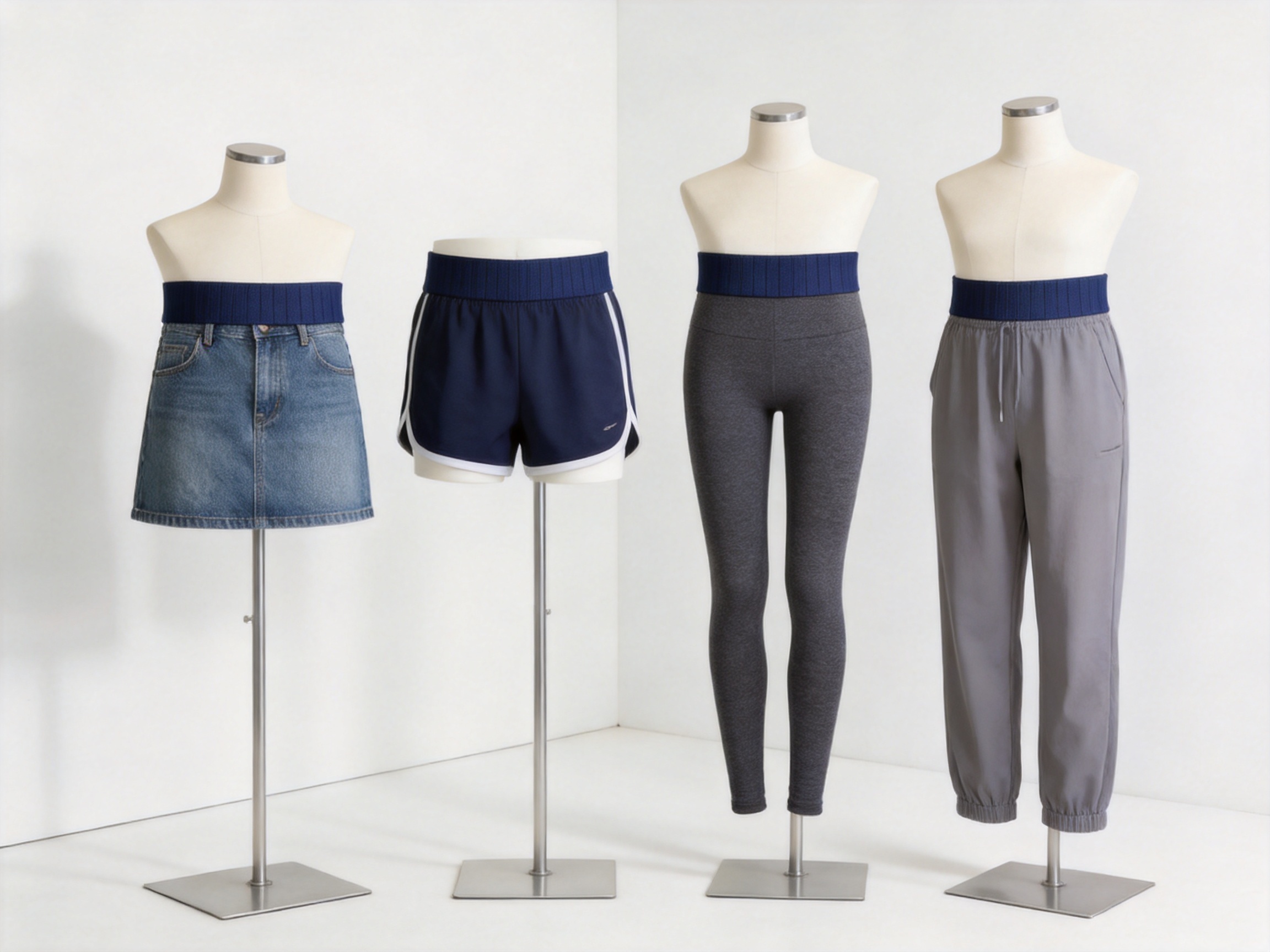
For skirts, this elastic can be used as an exposed waistband that adds a refined sporty or casual finish. The navy color can contrast with lighter fabrics or blend with darker textiles. The 5cm width provides enough height to create a visible waist definition without overwhelming the garment. Because of its resilient stretch, it helps the skirt sit securely while allowing easy movement.
For pants, the elastic can be inserted into a waistband casing or sewn directly as a visible band. In casual trousers, lounge pants, schoolwear-inspired designs, or utility garments, navy jacquard elastic offers both comfort and stability. It can help reduce the need for rigid waist construction while still providing a structured appearance.
For dresses, elastic waistbands are often used to create shaping, gather fabric, or define the silhouette. A jacquard elastic band can be used internally for function or externally for decorative effect. When combined with soft fabrics, it can produce a comfortable fitted waist. When combined with structured fabrics, it can create contrast and modern styling.
Compared with ordinary plain elastic, the jacquard design gives fashion designers more creative options. It can be used as a design element rather than hidden inside the garment. This is especially valuable for brands that want to make simple garments look more finished and distinctive without adding complicated trims or hardware.
Applications in Sportswear and Activewear
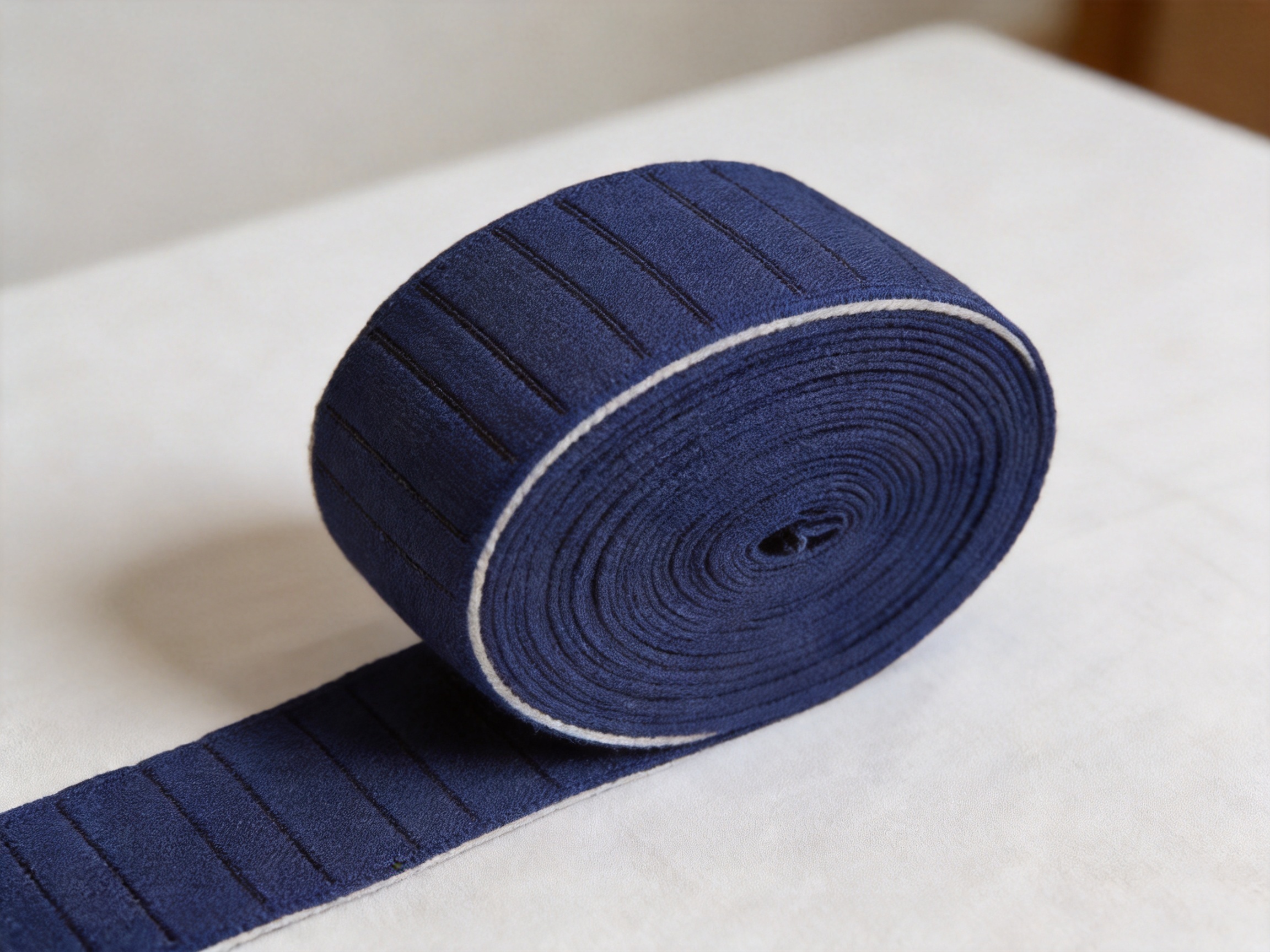
Sportswear and activewear place high demands on elastic materials. The wearer may stretch, run, bend, twist, and repeat movements for long periods. The elastic must hold the garment in place without causing discomfort. It must also recover after movement and remain stable after washing. The 5cm navy jacquard elastic is suitable for activewear designs that require secure, comfortable stretch.
In athletic shorts, leggings, training pants, and performance skirts, waistbands need balanced compression. Too little tension causes slipping, while too much pressure causes discomfort. The 5cm width helps distribute pressure over a broader area, which can improve comfort compared with narrower elastic bands. A stable woven structure also helps the waistband lie flat during activity.
For sports tops, support panels, and accessory straps, this elastic may be used where moderate support and flexibility are needed. While the exact application should always match technical garment requirements, the combination of strength and stretch makes this product useful for a wide range of sewn sports goods.
The navy color is also practical in activewear because it has a clean athletic appearance and hides minor marks better than very light colors. It can be paired with mesh, performance knits, fleece, stretch woven fabric, and technical textiles. The jacquard texture helps add depth to minimalist activewear designs.
Compared with generic elastic, a carefully manufactured jacquard elastic can improve brand perception. Customers often judge activewear by fit and durability. If a waistband rolls, stretches out, or becomes uncomfortable, the garment may be rejected even if the fabric itself is high quality. Choosing a better elastic component supports the overall value of the finished product.
Applications in DIY, Sewing, and Custom Projects
The 5cm navy jacquard elastic is also suitable for DIY and sewing projects. Home sewists, small studios, craft suppliers, and custom apparel makers need elastic that is easy to cut, sew, and integrate into different fabrics. A stable elastic band reduces frustration during construction and improves finished results.
For handmade skirts and pants, the elastic can simplify waistband construction. Instead of building a complex waistband with interfacing, zippers, or buttons, makers can use elastic for comfort and adjustability. The 5cm width provides a professional appearance and enough support for many garment styles.
For upcycling and garment repair, navy jacquard elastic can replace worn-out waistbands or add new design details. Repairing a loose waistband with higher-quality elastic can extend the life of a garment. Adding exposed elastic can also modernize older clothing.
For bags, organizers, covers, and accessories, the elastic can be used to hold items in place, create flexible closures, or add decorative stretch sections. Its woven structure supports practical use where repeated pulling may occur. Because it is visually refined, it can be used in visible positions without looking purely industrial.
DIY customers often appreciate materials that look good and perform reliably. Low-quality elastic can be difficult to sew because it narrows, curls, or stretches unevenly. A stable jacquard elastic helps create cleaner seams and more predictable sizing, making it useful for both beginners and experienced makers.
Technical Comparison Table
The following table summarizes the practical strengths of 5cm navy jacquard elastic compared with common low-grade elastic alternatives. Exact specifications can be customized according to customer requirements, but the comparison highlights the performance direction of the product.
| Feature | 5cm Navy Jacquard Elastic | Common Low-Grade Elastic | Benefit to Buyer |
|---|---|---|---|
| Width | 5cm, suitable for waistbands and visible trims | Often inconsistent or too narrow for support | Better pressure distribution and cleaner garment structure |
| Construction | Durable woven jacquard design | Basic plain structure with limited visual appeal | Improved strength, appearance, and perceived value |
| Recovery | Designed for strong stretch return | May become loose after repeated use | Longer-lasting fit and reduced garment failure |
| Surface Appearance | Subtle textured pattern in navy color | Plain, flat, or uneven surface | Suitable for exposed fashion applications |
| Comfort | Soft yet resilient hand feel | May feel harsh, thin, or unstable | Improved wearer comfort in waistbands and activewear |
| Sewing Performance | Stable, easy to cut and sew | May curl, fray, or stretch unevenly | More efficient garment production and better finished quality |
| Color Versatility | Classic navy for broad fabric matching | Limited or inconsistent color options | Useful for fashion, sportswear, uniforms, and crafts |
| Customization Support | Available through professional webbing manufacturing capability | Often limited to standard stock | Better fit for OEM and ODM product development |
Manufacturing Strength Behind the Product
A quality elastic band depends not only on design but also on manufacturing discipline. Jinhu Hengxiang Webbing Co., Ltd. was established in 2005 and has built more than 20 years of professional production experience in elastic and non-elastic webbing. This background is important for customers who need dependable supply, repeatable quality, and technical communication.
The company is located in Gongnong Village, Licheng Town, Jinhu County, Huai’an City, Jiangsu Province, China. Its manufacturing focus includes elastic webbing, non-elastic webbing, sports protection materials, medical protective equipment components, orthopedic brace webbing, and related textile bands. This experience gives the company a broad understanding of tension, comfort, strength, and durability requirements across different applications.
Advanced production equipment supports stable output. The company has introduced and updated warping machines, knitting machines, woven machines, and packaging machines. Each equipment category contributes to a different stage of production. Warping machines prepare yarns in controlled alignment. Weaving and knitting machines form the elastic or non-elastic webbing structure. Packaging machines help organize finished goods for delivery and inventory management.
For jacquard elastic, controlled weaving is especially important. Pattern accuracy, edge stability, width consistency, and elasticity must be maintained during production. If yarn tension varies, the final elastic may show defects such as uneven texture, unstable stretch, or inconsistent width. Professional manufacturing equipment and experienced operators help reduce these risks.
The company produces millions of meters of elastic and non-elastic webbing every month. This scale is valuable for both small and large buyers. Large-scale production helps support competitive pricing and stable delivery. At the same time, the company’s OEM and ODM service capability allows customers to request tailored elasticity, texture, width, color, and packaging according to project needs.
Quality Control from Raw Material to Packing
Strict quality control is one of the most important strengths behind a reliable elastic product. A finished band may look simple, but defects can occur at many stages: material sourcing, yarn preparation, weaving, finishing, cutting, inspection, and packing. Jinhu Hengxiang Webbing Co., Ltd. emphasizes quality control throughout material sourcing, processing, testing, and packing to help ensure stable product performance.
Material sourcing affects elasticity, durability, color, and hand feel. If raw materials are inconsistent, finished webbing cannot remain stable. Professional sourcing helps maintain the basic quality foundation before production begins. For elastic products, both the elastic component and the surrounding yarns must work together to provide strength and recovery.
During processing, production parameters must be monitored carefully. Webbing width, density, tension, pattern formation, and edge quality all influence the final product. A 5cm elastic band must remain consistent across the roll so that garment manufacturers can cut and sew it efficiently. If width changes from section to section, automated or manual sewing becomes more difficult.
Testing is essential for verifying performance. Elastic webbing may be checked for stretch, recovery, appearance, color, width, and general workmanship. While test methods can vary by customer requirement, the goal is always the same: to confirm that the product meets agreed standards before shipment.
Packing also matters. Elastic should be packed in a way that protects it from contamination, tangling, unnecessary deformation, and shipping damage. Proper packing supports warehouse handling and production efficiency for the buyer. A well-packed elastic roll or bundle is easier to inspect, store, and use.
The company has obtained Oeko-Tex Standard 100 and ISO 13485 certificates. Oeko-Tex Standard 100 is widely recognized in the textile industry for testing harmful substances in textile products. ISO 13485 relates to quality management systems for medical devices and associated production environments. These certifications reflect a structured approach to quality, safety awareness, and process management.
Customization for OEM and ODM Buyers
Many customers do not want a one-size-fits-all elastic. They need a specific width, color, texture, stretch ratio, recovery level, surface pattern, packaging method, or application performance. Jinhu Hengxiang Webbing Co., Ltd. welcomes OEM and ODM orders, making it possible for buyers to develop elastic webbing that matches their own products and markets.
Customization can begin with width. Although this product is 5cm, different garment lines may require narrower or wider elastic. Waistbands, straps, support panels, and trims each have different requirements. A professional manufacturer can help adjust specifications according to intended use.
Elasticity can also be customized. Some applications require firm support, while others need a softer and more flexible feel. Sportswear may require secure tension, while casual fashion may prioritize comfort. Orthopedic or protective equipment components may need more controlled stretch. By adjusting material and structure, the manufacturer can help align the elastic with the final product’s functional needs.
Texture and pattern are also important. Jacquard elastic can be designed to include subtle textures, geometric patterns, brand-inspired motifs, or decorative effects. For fashion brands, this can turn elastic into a visual identity element. For technical products, texture can help distinguish product lines or improve grip and handling.
Color customization supports collection development. Navy is versatile, but buyers may also require black, white, grey, beige, red, green, or custom-dyed shades. Consistent color matching is important when elastic is used visibly on garments. A professional supplier can support communication around color standards and production feasibility.
Packaging customization can help wholesalers and manufacturers manage distribution. Elastic can be prepared in rolls, bundles, or other formats according to customer needs. Clear labeling and consistent packaging reduce confusion in warehouses and production lines.
Why 5cm Width Is a Practical Choice
The 5cm width is one of the defining features of this navy jacquard elastic. In apparel and accessories, width strongly affects comfort, support, appearance, and sewing method. A narrow elastic may dig into the body or fail to provide enough stability. A very wide elastic may feel bulky or limit design flexibility. At 5cm, this product occupies a useful middle ground.
For waistbands, 5cm is wide enough to distribute pressure evenly. This can help improve comfort during movement and extended wear. It also gives the waistband a more substantial appearance, which is often preferred in modern casualwear and sportswear. A 5cm exposed waistband can look intentional and stylish rather than merely functional.
For activewear, the width provides a secure fit without excessive concentration of pressure. This is useful in leggings, training shorts, and sports skirts where the waistband must stay in place. The surface area also allows better stitching stability when attached to stretch fabrics.
For sewing projects, 5cm is easy to handle. It is visible enough to serve as a design component, but still manageable for standard sewing techniques. Makers can fold fabric over it, stitch it directly, or use it as a trim depending on the project. Its stability helps maintain a neat edge and consistent shape.
For accessories, 5cm elastic can be used in straps, holders, bands, and organizers where moderate width and strength are needed. The navy jacquard appearance makes it suitable for products that must look more refined than plain industrial elastic.
Color and texture influence how customers perceive a finished product. The navy jacquard elastic offers a design advantage because it combines a classic color with a textured woven surface. This makes it more attractive than plain elastic while remaining understated enough for many markets.
Navy is associated with reliability, professionalism, and versatility. It works well in both fashion and functional products. It can appear sporty, formal, nautical, academic, or casual depending on the surrounding fabric and garment design. This flexibility makes navy elastic useful for brands that produce multiple product categories.
The jacquard texture adds depth. Even a subtle pattern can make the elastic look more premium. When used as an exposed waistband, the texture catches light differently from a flat surface, creating a more finished appearance. It can also coordinate with patterned fabrics without overwhelming them.
Compared with printed elastic, woven jacquard texture has an integrated quality. Printed designs may wear or crack depending on process and use, while jacquard designs are formed through yarn arrangement and structure. This gives the product a more textile-rich character and can support longer-lasting visual appeal.
For designers, this means the elastic can become part of the garment’s identity. A simple skirt, pair of pants, or sportswear item can gain character through a high-quality elastic waistband. This is a cost-effective way to enhance product appearance without adding complex construction.
Production Efficiency for Garment Manufacturers
Garment manufacturers need materials that perform well not only after sale but also during production. Elastic that is difficult to sew, inconsistent in width, or unstable under machine tension can slow production and increase waste. The 5cm navy jacquard elastic supports efficient manufacturing because it is stable, cuttable, and suitable for repeated sewing operations.
Consistent width helps operators align seams and maintain uniform appearance across garments. When elastic varies in width, waistbands may look uneven, and sewing guides may become less effective. Stable webbing reduces these issues and supports cleaner production.
Good recovery helps during sewing because the elastic can be stretched to fit fabric gathers and then return to shape. Poor recovery can create loose sections or uneven gathers. A reliable elastic allows better control when attaching it to skirts, pants, dresses, and activewear.
Edge quality is also important. Elastic edges should remain neat enough for handling and sewing. Rough or unstable edges can fray, irritate, or create an unattractive finish. A professionally woven jacquard elastic is designed to provide a cleaner edge and better durability.
For manufacturers producing at scale, supplier reliability is as important as product performance. The company’s monthly output of millions of meters supports bulk purchasing and repeat orders. Its experience with export markets in North America, Eastern Europe, the Middle East, South Asia, and other regions also supports international customer expectations for communication, packing, and delivery.
Sustainability, Responsibility, and Long-Term Value
Modern buyers increasingly consider sustainability and responsible manufacturing when selecting suppliers. While elastic products must first meet performance requirements, long-lasting materials can also reduce waste by extending garment life. A waistband that maintains recovery and shape helps keep clothing usable for longer, reducing premature disposal.
Jinhu Hengxiang Webbing Co., Ltd. states a commitment to quality, innovation, and sustainability. This direction is important in the textile industry, where buyers want suppliers capable of continuous improvement. Strong quality systems, better production control, and responsible material selection can all contribute to more reliable and responsible manufacturing.
Durability is a practical sustainability advantage. If a low-grade elastic fails quickly, the entire garment may become unusable even when the main fabric remains intact. By choosing stronger elastic, manufacturers can improve the lifecycle of their products. This is especially relevant for waistbands and activewear, where elastic failure is one of the most common reasons for dissatisfaction.
Customization can also reduce waste. When buyers receive elastic that matches their exact width, elasticity, color, and packaging needs, they may reduce rework, excess trimming, and rejected materials. Better alignment between supplier and customer specifications supports more efficient production.
Long-term supplier partnerships also contribute to value. A reliable manufacturer can help customers refine specifications over time, solve technical issues, and maintain consistency across product seasons. This is more beneficial than repeatedly changing suppliers based only on short-term price differences.
How to Select the Right Elastic for Your Project
Choosing elastic requires more than selecting a color and width. Buyers should consider application, stretch requirement, recovery, comfort, visibility, sewing method, washing conditions, and target market. The 5cm navy jacquard elastic is a strong option when the project requires both durability and appearance.
First, identify whether the elastic will be visible or hidden. If it will be visible, surface appearance becomes highly important. The navy jacquard texture gives this product an advantage for exposed waistbands and trims. If it will be hidden, performance factors such as recovery and comfort may be more important than appearance, though a high-quality finish still supports professional manufacturing.
Second, consider the amount of support needed. Waistbands and activewear usually require elastic that can hold firmly without discomfort. A 5cm width helps distribute pressure, while woven construction supports stability. For lightweight garments, the designer should confirm that the elastic’s firmness matches the fabric weight.
Third, test sewing compatibility. Elastic behaves differently under different machines, stitch types, and fabric combinations. Manufacturers should evaluate sample pieces before bulk production. A suitable stitch should hold the elastic securely while allowing stretch. Common methods include zigzag stitching, coverstitching, overlocking, or specialized industrial elastic attachment methods.
Fourth, evaluate color coordination. Navy is versatile, but buyers should still compare it with actual fabric samples under production lighting. Color perception may vary depending on fabric texture, dye lot, and lighting conditions. For visible applications, proper matching improves finished product quality.
Fifth, consider order consistency. If the product will be used in repeated production, the buyer should work with a supplier capable of stable batches and clear communication. This is where professional manufacturing experience and quality control become especially valuable.
Storage and Handling Recommendations
Proper storage and handling help preserve elastic quality before production. Even high-quality elastic should be protected from unnecessary stress, moisture, contamination, and prolonged exposure to harsh conditions. Buyers and garment factories can improve results by managing elastic inventory carefully.
Elastic should be stored in a clean, dry area away from excessive heat and direct sunlight. High temperatures and ultraviolet exposure may affect elastic fibers over time. Keeping rolls or bundles covered helps protect them from dust and surface contamination.
Inventory should be organized by product code, width, color, batch, and purchase date. For this product, code 8100 may be used as part of internal identification. Clear labeling reduces the risk of mixing similar elastics during production. This is especially important in factories using multiple widths and colors.
Elastic should not be stretched unnecessarily during storage. Rolls should be kept in a relaxed condition. If elastic is stored under constant tension, performance may be affected. During cutting and sewing, operators should apply controlled stretch according to the garment specification rather than pulling randomly.
Before mass production, manufacturers should condition and inspect the elastic. Checking width, color, stretch, recovery, and surface quality before cutting can prevent larger production issues. If garments require washing tests, the elastic should be tested as part of the complete garment construction.
Business Benefits for Wholesalers and Brands
For wholesalers, the 5cm navy jacquard elastic is attractive because it can serve multiple customer segments. It can be sold to garment factories, sportswear producers, craft suppliers, fashion studios, repair shops, and accessory makers. Its combination of common usability and elevated appearance makes it easier to position as a quality elastic option.
For apparel brands, the product can improve both function and design. A better waistband can increase customer satisfaction, while a jacquard surface can create a premium visual impression. Small component upgrades often have a large effect on how customers experience a garment. Elastic is touched, stretched, and felt repeatedly, so its quality matters.
For private-label manufacturers, customization support is especially valuable. Brands can request adjusted colors, patterns, elasticity, or packaging to suit their market. This helps create differentiation in competitive categories such as activewear, casualwear, schoolwear, and handmade supplies.
For importers, working with an experienced manufacturer can reduce sourcing risk. The company’s export experience, production scale, quality certifications, and service focus support international purchasing requirements. Competitive pricing, timely delivery, and reliable quality are important advantages when managing global supply chains.
For product developers, the elastic offers a useful starting point for sampling. Its 5cm width, navy color, and jacquard design make it adaptable to many prototypes. Designers can evaluate it in waistbands, trims, straps, and support components before finalizing specifications.
Company Capability and Customer Service Strength
Jinhu Hengxiang Webbing Co., Ltd. emphasizes thoughtful customer service and full customer satisfaction. In technical textile sourcing, communication is a major part of success. Customers may need help confirming width, elasticity, texture, color, packaging, or application suitability. A supplier with experience can ask the right questions and guide development more efficiently.
The company’s specialization in elastic and non-elastic webbing gives it a focused advantage. Rather than treating elastic as a minor accessory, it works directly in webbing research, development, production, sale, and service. This focus supports deeper knowledge of material behavior and production control.
Its experience in sports supports and orthopedic braces is particularly relevant to performance elastic. These applications often require controlled tension, durability, and comfort. Knowledge gained from support and protective equipment can also benefit apparel and accessory elastic products.
The company’s advanced equipment allows it to produce a wide variety of webbing structures. Warping, knitting, weaving, and packaging capabilities create a complete production chain. This helps support both standard products and custom projects. Customers benefit from a supplier that can manage production details internally and maintain consistent standards.
Its certifications and export history help build buyer confidence. Oeko-Tex Standard 100 and ISO 13485 certifications show attention to quality systems and textile safety requirements. Products exported to multiple regions demonstrate the company’s ability to serve different market expectations.
It is mainly used for fashionable waistbands, sportswear, activewear, DIY sewing projects, garment trims, accessories, and custom elastic applications. Its 5cm width makes it especially suitable for waistbands that need comfort, stability, and a clean appearance.
Why choose jacquard elastic instead of plain elastic?
Jacquard elastic offers an integrated textured pattern that looks more refined than plain elastic. It can be used as a visible design feature while still providing stretch and recovery. This makes it useful for garments where the elastic contributes to both function and style.
Yes. Navy is a versatile color that coordinates with denim, white, grey, black, khaki, beige, red, olive, and many printed fabrics. It is suitable for casualwear, sportswear, uniforms, fashion garments, and accessories.
What advantage does the 5cm width provide?
The 5cm width provides better pressure distribution than many narrower elastics. It helps waistbands feel more comfortable and stable. It is also wide enough to be used as a visible design element without being excessively bulky.
Can this elastic be used in activewear?
Yes. It is suitable for activewear applications that require secure, comfortable stretch, such as waistbands for training pants, shorts, leggings, and sports skirts. Buyers should test samples with their specific fabrics and garment patterns before bulk production.
Is it easy to sew?
The elastic is designed to be easy to cut and sew for custom designs. Its stable woven structure supports cleaner handling during garment construction. The best stitch type depends on the fabric and final application.
Can the product be customized?
Yes. The manufacturer supports OEM and ODM orders, including customized elasticity, texture, color, width, and packaging. Customers can discuss specific project requirements for apparel, sports supports, medical protective equipment, or other webbing applications.
What quality certifications support the manufacturer?
The company has obtained Oeko-Tex Standard 100 and ISO 13485 certificates. These certifications reflect attention to textile safety and quality management systems.
How does this elastic compare with low-cost alternatives?
Compared with many low-cost elastics, this product offers stronger visual appeal, better structural stability, reliable stretch recovery, and a more refined finish. It is designed for buyers who value long-term performance rather than only the lowest initial price.
Who should consider buying this product?
Garment factories, sportswear brands, fashion designers, wholesalers, sewing suppliers, DIY makers, accessory producers, and OEM or ODM buyers can all consider this product when they need a durable 5cm navy elastic with a jacquard appearance.
Conclusion
The 5cm navy jacquard elastic is a practical and attractive elastic solution for garments, activewear, waistbands, accessories, and custom sewing projects. It combines durable woven construction, strong stretch, excellent recovery, a soft yet resilient feel, and a refined navy jacquard appearance. These qualities make it more valuable than ordinary elastic bands that may lack stability, comfort, or design appeal.
Its 5cm width gives it strong application flexibility. It can distribute pressure comfortably in waistbands, provide support in sportswear, serve as a visible fashion trim, and simplify DIY sewing projects. The navy color broadens its compatibility with many fabrics and design directions, while the jacquard texture enhances the finished product’s perceived quality.
Behind the product is the manufacturing strength of Jinhu Hengxiang Webbing Co., Ltd., a professional elastic and non-elastic webbing manufacturer established in 2005. With advanced warping, knitting, weaving, and packaging equipment, monthly production capacity reaching millions of meters, strict quality control, and support for OEM and ODM customization, the company offers customers both product performance and supply reliability.
For buyers seeking elastic webbing that is durable, stylish, comfortable, and customizable, this 5cm navy jacquard elastic provides a strong balance of function and design. It is well suited for modern apparel manufacturing, activewear development, fashion waistbands, craft supply, and specialized webbing projects where quality matters.
References
Textile Institute. Textile Terms and Definitions. The Textile Institute, latest available edition.
Horrocks, A. R., and Anand, S. C. Handbook of Technical Textiles. Woodhead Publishing.
Gong, R. H., and Wright, R. M. Fancy Yarns: Their Manufacture and Application. Woodhead Publishing.
Spencer, D. J. Knitting Technology: A Comprehensive Handbook and Practical Guide. Woodhead Publishing.
ISO 13485 Quality Management Systems for Medical Devices, International Organization for Standardization.
Oeko-Tex Standard 100 Testing and Certification Criteria, International Association for Research and Testing in the Field of Textile and Leather Ecology.