
 en
en
 English
 русский
 Français
 Español
 Português
 Tiếng Việt
Content
- 1 Understanding the Product Construction
- 2 Material Composition and Performance
- 3 Advantages for Abdominal Binder Applications
- 4 Comparison with Conventional Elastic Materials
- 5 Manufacturing Expertise and Production Capability
- 6 Customization for Different Medical Support Designs
- 7 Applications Beyond Abdominal Binders
- 8 Design Considerations for Finished Products
- 9 Quality, Certifications, and Responsible Supply
- 10 Why Choose an Experienced Elastic Webbing Supplier
- 11 Recommended Evaluation Process for Buyers
- 12 Safety and Appropriate Use
- 13 Q&A
- 13.1 What is three-panel elastic webbing with one-side loop?
- 13.2 What materials are used in the webbing?
- 13.3 Which widths are available?
- 13.4 How does the loop side improve an abdominal binder?
- 13.5 Can the material be used directly against the skin?
- 13.6 Is the webbing suitable after hernia surgery or cesarean section?
- 13.7 Can the webbing be customized?
- 13.8 What production equipment does the manufacturer use?
- 13.9 What certifications are associated with the manufacturer?
- 13.10 How should buyers test the material?
- 13.11 Can this product replace narrow elastic bands?
- 13.12 What should be included in a purchase specification?
- 14 Conclusion
- 15 References
- 16 Product: 3 Panels Elastic W 1 Side Loop
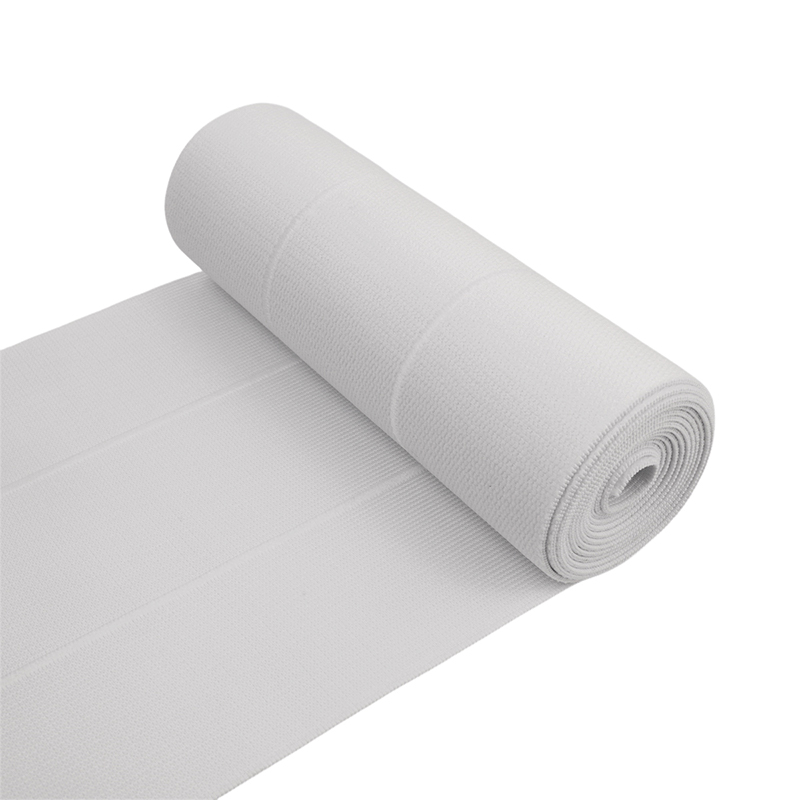
Abdominal support products must combine controlled compression, comfortable contact, secure adjustment, and dependable durability. A material that is too rigid can restrict movement and create pressure points, while a material that is too soft or unstable may fail to provide sufficient support. The three-panel elastic webbing with one-side loop is designed to address these requirements in a practical and adaptable construction for abdominal binders, postoperative supports, orthopedic braces, and related medical protective equipment.
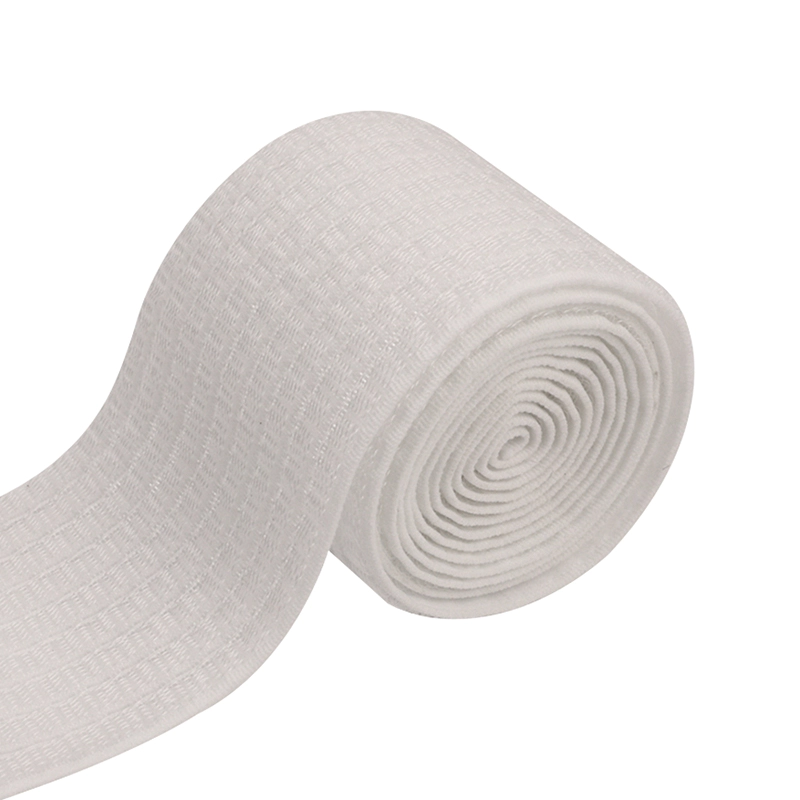
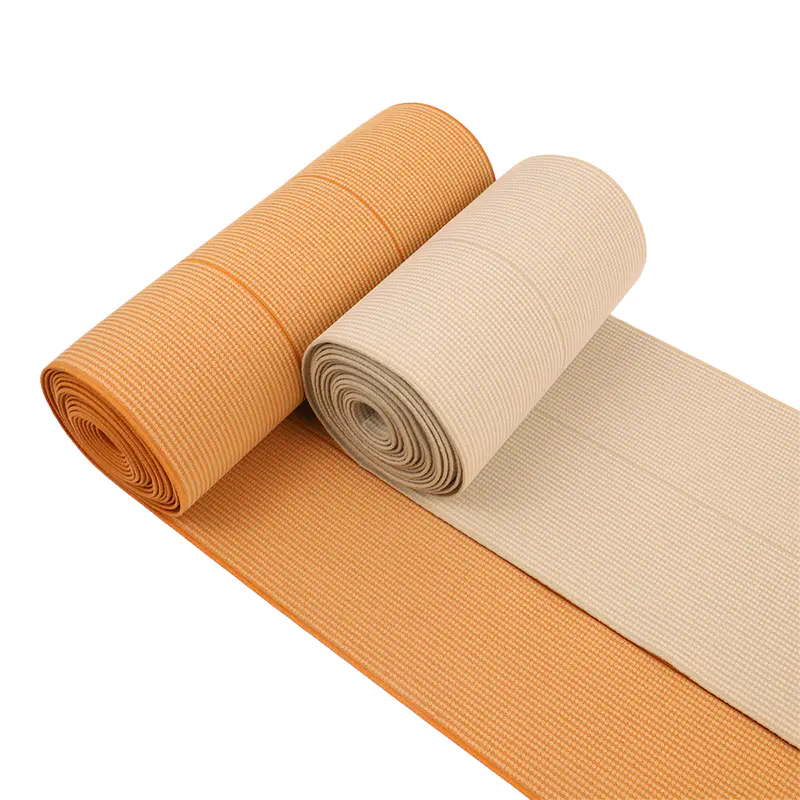
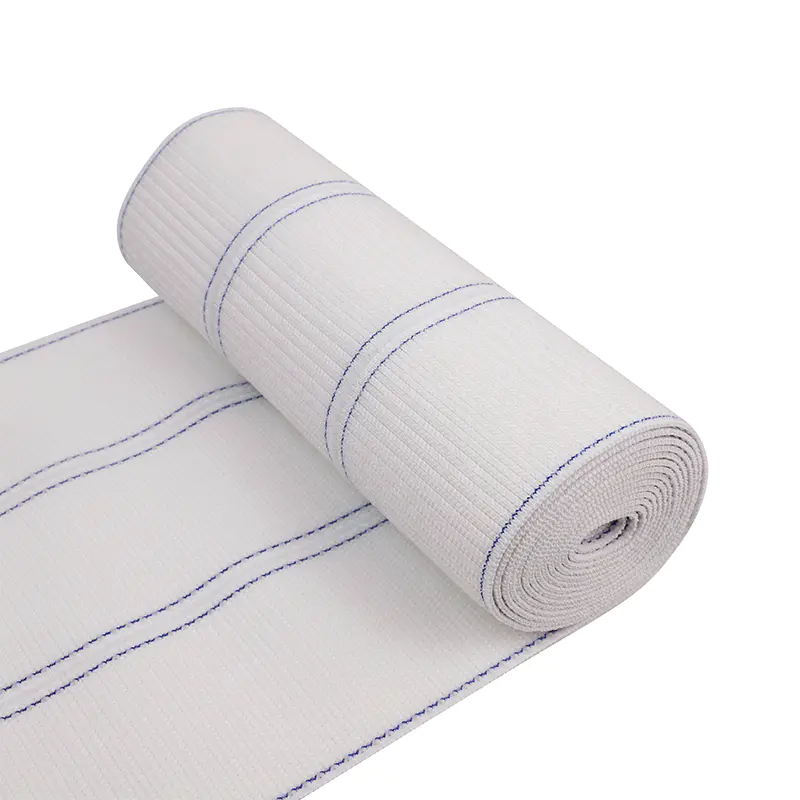
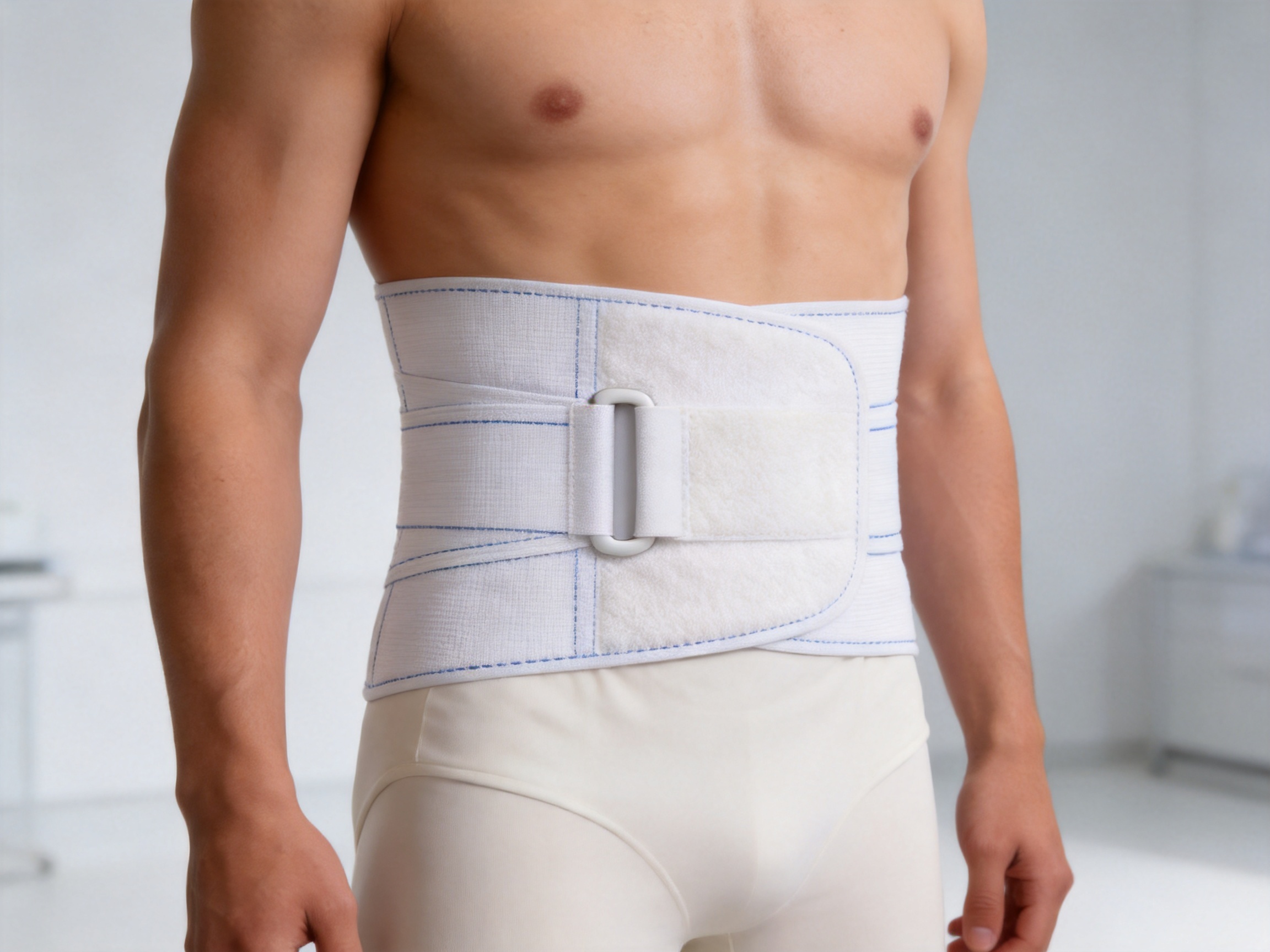
This latex-free elastic material uses a polyester, nylon, and spandex blend to create a flexible webbing structure with a balanced combination of stretch, recovery, breathability, and lightweight comfort. One side is flat and suitable for stable attachment or integration into a finished support, while the opposite side has a plush, soft-touch surface. The loop structure allows compatible hook fasteners to engage across the material, making it possible to adjust the abdominal binder over a wide range of body shapes and compression preferences.
Unlike a simple flat elastic strip, this three-panel design can provide a broader and more continuous support area. It can be used to develop abdominal binders that follow the contours of the torso without adding unnecessary bulk. The design is especially suitable for products intended to support recovery and mobility after hernia surgery, cesarean section, natural childbirth, abdominal injury, or other situations in which gentle external support may be beneficial.
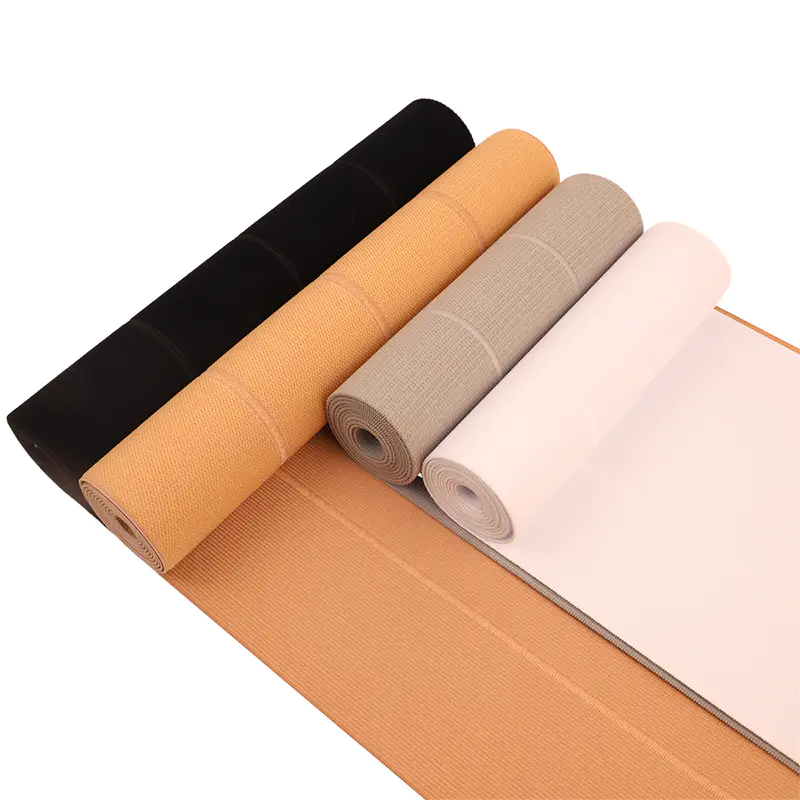
The material is supplied in widths of 6 inches, 9 inches, and 12 inches. These options allow manufacturers to select a suitable coverage area according to the required product structure, wearer profile, and intended level of support. The webbing can also be incorporated into customized designs with different lengths, colors, fastening layouts, and sewing configurations.
3 Panels Elastic W 1 Side Loop
Understanding the Product Construction
The three-panel elastic webbing with one-side loop is a specialized component rather than a complete finished abdominal binder. Its value comes from the way it combines elastic support with a fastening surface in a single engineered material. This reduces the need to assemble separate elastic panels and loop components, helping manufacturers create a cleaner and more integrated support product.
The three-panel construction is intended to provide broader coverage than a narrow elastic band. When used in an abdominal binder, the panels can distribute tension across a larger portion of the waist and abdomen. This may help reduce the concentration of force in one small area, which is important for comfort during extended wear. A broader contact area can also improve the stability of the binder as the wearer sits, stands, bends, or walks.
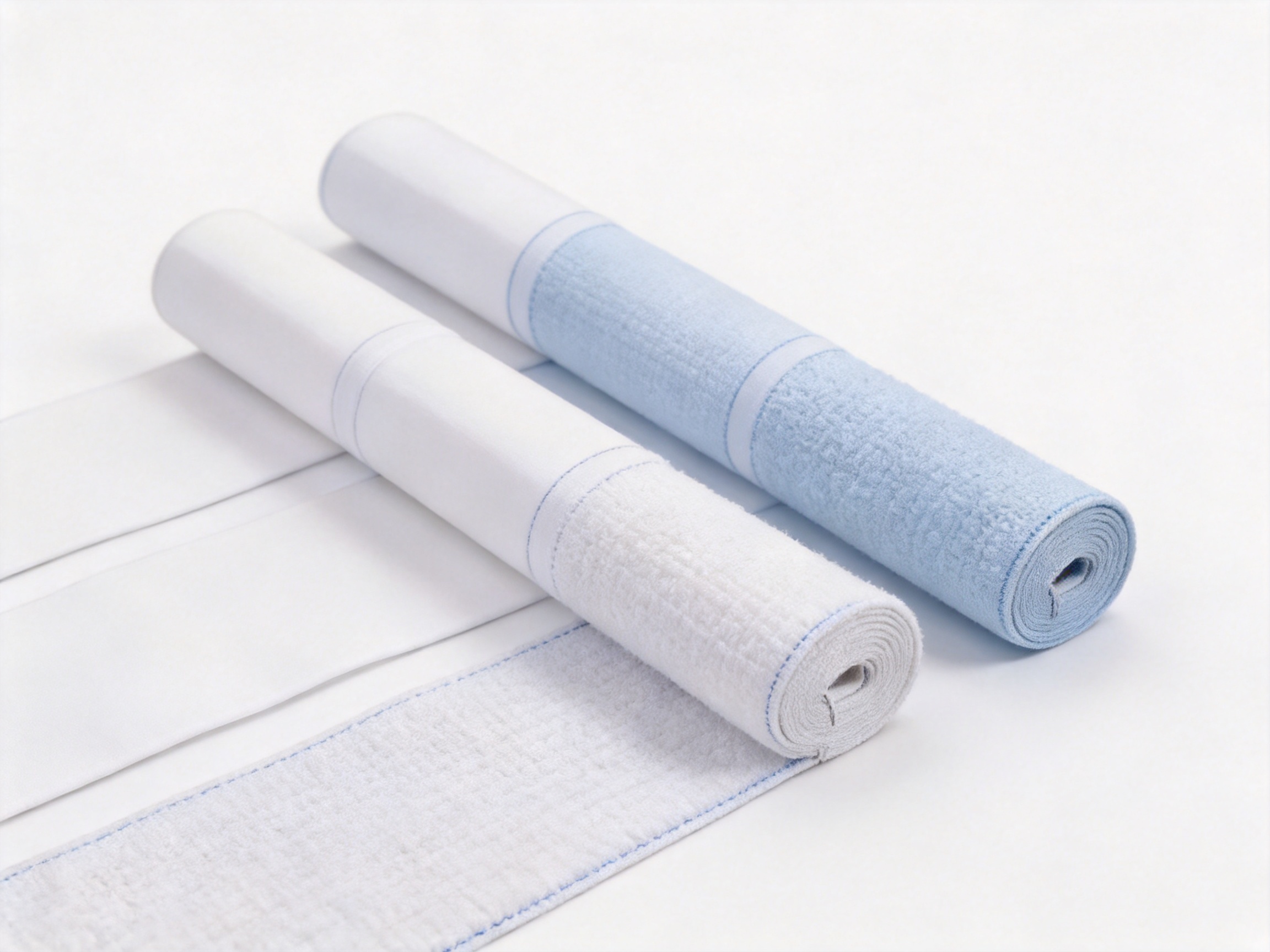
The material has two functional surfaces. The flat side offers a more even and stable face for sewing, lamination, or connection to other parts of a medical support. The opposite side uses a plush loop texture that feels softer against the body or accepts hook fastening, depending on the construction of the final product. This dual-sided design gives manufacturers flexibility when deciding which surface should face inward and which should serve as the fastening area.
The loop surface is particularly useful when the finished binder requires repeated opening and closing. A compatible hook panel can be positioned at different points on the loop area, allowing the user or healthcare professional to adjust the fit. This is an advantage over fixed-length elastic products, which may require several sizes and offer less flexibility when body dimensions change during recovery.
Because the material is latex-free, it can be considered for products intended for users who prefer or require latex-free components. Medical product manufacturers should still evaluate the complete finished product, including thread, hook material, labels, coatings, and other components, before making any medical or allergy-related claims.
Material Composition and Performance
The primary material specification is polyester, nylon, and spandex. Each fiber contributes different performance characteristics to the final elastic webbing.
Polyester is commonly selected for its dimensional stability, resistance to abrasion, color retention, and suitability for repeated processing. It can help the webbing maintain a consistent appearance and structure during manufacturing and everyday use.
Nylon contributes strength, flexibility, and a smooth textile feel. It is widely used in webbing and support products because it can withstand repeated bending and handling while maintaining a relatively low weight. Nylon fibers can also help create a comfortable surface when engineered into a soft knitted or woven structure.
Spandex provides the elastic response required for an abdominal support material. Its stretch allows the binder to conform to the body and accommodate movement, breathing, and moderate changes in abdominal circumference. The quality of the final product depends not only on the presence of spandex but also on the ratio of fibers, yarn selection, machine settings, tension control, and finishing processes.
The combination of these fibers is intended to deliver a balance rather than maximize only one property. Extremely high stretch may not always be desirable in an abdominal binder, because excessive elongation can reduce support and cause the product to roll or shift. Conversely, insufficient stretch can make the binder uncomfortable and difficult to fit. A well-engineered blend should provide controlled elasticity, suitable recovery, and a stable surface for fastening.
| Specification | Product Information | Practical Benefit |
| Material | Polyester, nylon, and spandex | Combines strength, flexibility, lightweight performance, and elastic recovery |
| Surface structure | One flat side and one plush loop side | Supports stable integration and adjustable hook fastening |
| Available widths | 6 inches, 9 inches, and 12 inches | Provides options for different coverage and binder constructions |
| Latex status | Latex-free elastic construction | Suitable for product designs that avoid natural rubber latex |
| Primary use | Abdominal binders and medical support products | Helps manufacturers develop adjustable torso support systems |
Advantages for Abdominal Binder Applications
Broad and Even Support
One of the main advantages of the three-panel design is its ability to cover a wider area than narrow elastic tape. A binder made with broad panels can distribute support across the abdomen rather than concentrating tension along a thin line. This may improve comfort and help the finished product remain stable during normal movement.
Broad coverage is especially relevant when the support is intended for the central torso. Abdominal binders are often worn during activities such as walking, sitting, standing, and light daily movement. A wider support panel can help prevent the binder from becoming excessively tight in one location while loose in another. The final result depends on the pattern, sewing method, elasticity, and adjustment system, but the material provides a useful foundation for balanced design.
Adjustable Hook-and-Loop Fastening
The loop side creates a large fastening area for compatible hooks. Instead of relying on a fixed closure position, a finished binder can be adjusted according to the wearer’s circumference and comfort preference. This can simplify inventory management because one product may accommodate a range of sizes, although manufacturers must establish the actual size range through testing.
Adjustable fastening may also be valuable during postoperative recovery. Body dimensions can change over time, and users may need different levels of compression as swelling decreases or mobility improves. A hook-and-loop system enables repeated adjustment without replacing the entire support. It also allows healthcare providers to apply the binder with a controlled fit.
Soft Contact and Wearability
The plush side is designed to offer a soft-touch surface. Comfort is a critical factor in medical support products because users may need to wear them for extended periods. A rough or abrasive surface can cause irritation, especially when placed over sensitive skin or clothing. The plush structure can help create a more pleasant contact surface when properly incorporated into the finished design.
Softness should be evaluated together with breathability, moisture management, seam placement, and overall pressure. No textile component can guarantee comfort for every user. However, the combination of lightweight fibers and a plush surface gives product designers a strong starting point for developing a more wearable abdominal binder.
Flexible Movement
Elasticity allows the material to move with the body instead of acting as a rigid panel. This is important because the abdomen changes shape during breathing, sitting, standing, and walking. A support that moves in a controlled way may feel less restrictive than a fully rigid construction.
The goal is not to eliminate movement but to provide supportive containment while allowing reasonable mobility. Designers can influence this balance through material width, panel arrangement, elastic tension, hook placement, and the amount of overlap at the closure.
Lightweight Construction
Medical supports must often be worn under or over clothing. Excessive weight and bulk can reduce user acceptance and make the product difficult to integrate into daily life. The polyester, nylon, and spandex construction is suitable for lightweight elastic applications, while the broad panel format provides coverage without requiring thick rigid components.
A lightweight webbing component can also reduce shipping volume and simplify cutting and sewing operations. These benefits may be valuable for manufacturers producing large quantities of abdominal binders or supplying multiple markets.
Comparison with Conventional Elastic Materials
Traditional narrow elastic bands are useful for edging, straps, garment components, and localized support. However, they may not be ideal when the finished product requires broad abdominal coverage. A narrow band can create a concentrated pressure line and may need to be sewn into several separate sections to achieve a wider support area.
The three-panel elastic webbing offers a more purpose-oriented structure for abdominal binder development. Its width options allow manufacturers to choose a panel size that better matches the product pattern. The integrated loop side also reduces the need to attach a separate loop fabric across the entire support area.
Compared with non-elastic webbing, this material offers greater flexibility and body conformity. Non-elastic webbing may provide strong anchoring or reinforcement, but it cannot accommodate movement in the same way. It may also require additional elastic sections to create a comfortable fit. The three-panel product integrates elasticity into the primary support material, which can simplify the overall design.
Compared with latex elastic, the latex-free construction may be preferred for product lines designed to avoid natural rubber latex. Latex-free materials can also support broader sourcing and labeling strategies. However, the final product must be evaluated as a complete assembly, and manufacturers should confirm all material declarations through appropriate documentation.
Compared with a separate elastic panel and loop fastening layer, the one-side loop construction can reduce the number of components. Fewer components may mean fewer sewing steps, fewer alignment issues, and a cleaner finished appearance. It may also help improve production consistency when the material is supplied in stable, repeatable rolls.
| Material Type | Typical Strength | Potential Limitation | Role of the Three-Panel Elastic Webbing |
| Narrow elastic band | Useful for straps and localized tension | Limited abdominal coverage | Provides broader support through wider panel options |
| Non-elastic webbing | High dimensional stability and anchoring | Less adaptable to body movement | Adds controlled stretch and recovery |
| Latex elastic | Strong elastic response | Not suitable for latex-free product programs | Offers a latex-free alternative based on synthetic fibers |
| Separate loop fabric and elastic panel | Flexible component selection | Requires more assembly and alignment | Combines elastic support and loop fastening in one material |
| Rigid abdominal panel | Strong structural support | May feel restrictive or bulky | Provides flexible support for movement-oriented designs |
Manufacturing Expertise and Production Capability
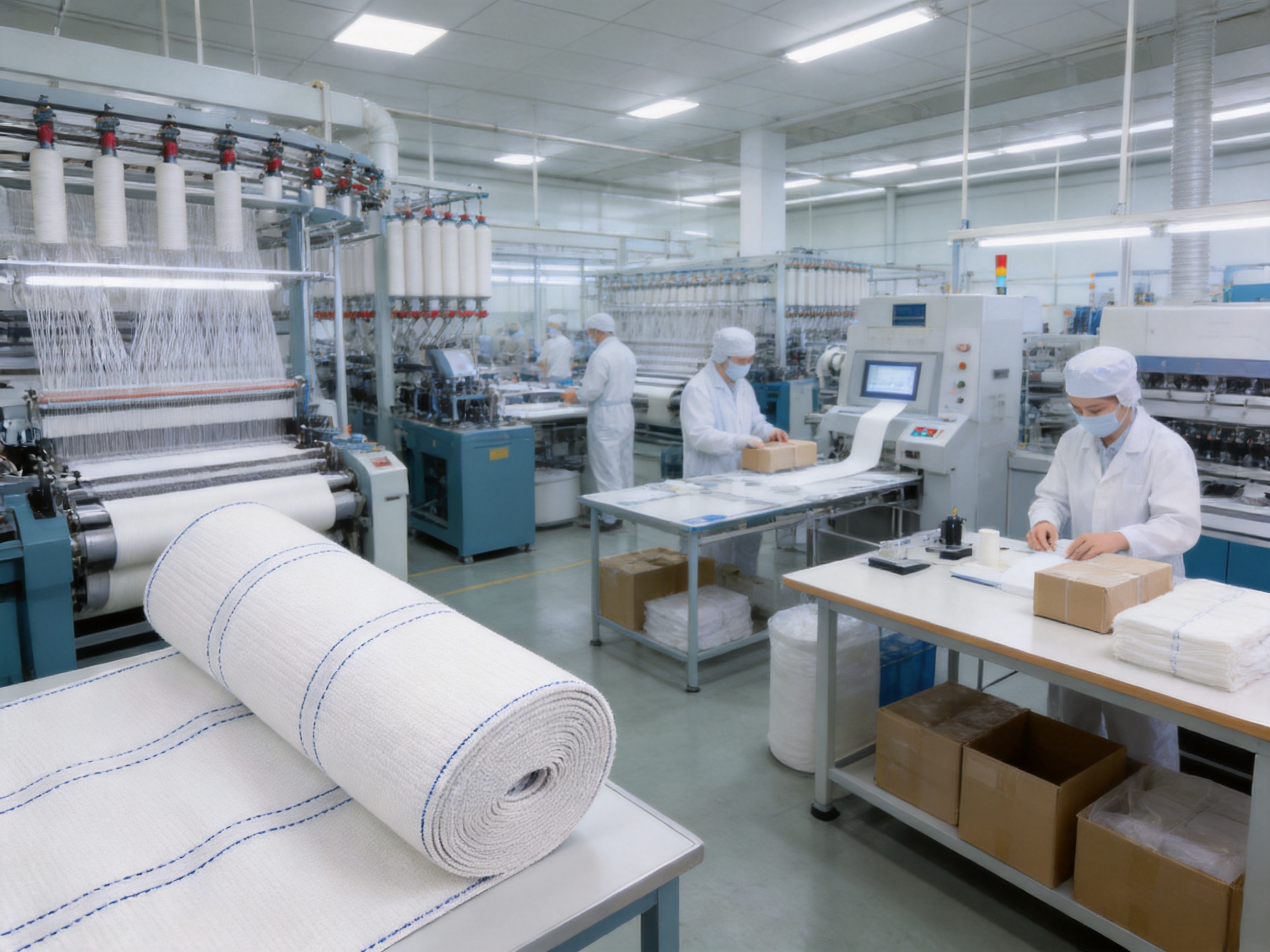
Jinhu Hengxiang Webbing Co., Ltd. was established in 2005 in Jinhu County, Huai’an City, Jiangsu Province, China. The company specializes in the research, development, production, sale, and service of elastic webbing and non-elastic webbing, with particular experience in sports supports, orthopedic braces, and medical protective equipment.
More than two decades of industry experience can support product development from material selection through final packing. For a specialized item such as one-side loop elastic webbing, consistent production requires knowledge of yarn behavior, machine settings, elastic tension, surface formation, width control, and roll handling. Experience in related support products can help connect the material specification with the practical requirements of finished medical and orthopedic goods.
The company has introduced and updated production equipment including warping machines, knitting machines, woven machines, and packaging machines. These equipment categories support different stages of webbing manufacturing.
Warping and Yarn Preparation
Warping is an important preparation stage for woven and related textile structures. Yarns must be arranged and delivered with controlled tension before entering the weaving or knitting process. Stable yarn preparation helps reduce irregularities in width, density, and surface appearance.
For elastic webbing, tension control is particularly important because elastic yarns respond differently from conventional textile yarns. Improper tension can affect stretch, recovery, edge stability, and final dimensions. A capable production system must account for these properties while preparing the yarns for the next stage.
Knitting and Woven Production
Knitting machines can create flexible textile structures with suitable softness and stretch. Woven machines can produce stable and durable constructions with controlled width and surface characteristics. Depending on the product design, the company can apply appropriate manufacturing methods to achieve the required balance of elasticity, support, texture, and dimensional stability.
The one-side loop surface requires careful control of yarn placement and surface formation. The loop must be sufficiently available for compatible hook engagement while remaining attached to the base structure during repeated use. At the same time, the flat side must maintain a stable appearance and suitable handling characteristics for integration into an abdominal binder.
Machine selection alone does not determine quality. Operators and technical staff must monitor yarn feeding, needle or loom settings, take-up speed, production tension, and environmental conditions. Continuous attention to these variables helps maintain consistency from roll to roll.
Finishing and Inspection
After the primary textile structure is produced, finishing and inspection help prepare the material for customer use. Depending on the order requirements, this may include width checking, roll winding, visual inspection, surface evaluation, elasticity testing, and packaging.
Inspection can identify issues such as broken yarns, inconsistent loops, edge distortion, stains, color variation, or irregular stretch. For medical support components, these checks are important because small material inconsistencies may affect sewing, fastening, or wearer comfort.
Quality control throughout material sourcing, processing, testing, and packing is part of the company’s stated manufacturing approach. A complete quality system should include documented specifications, inspection criteria, batch identification, production records, and procedures for handling nonconforming material.
Packaging and Delivery
Packaging protects the webbing from contamination, moisture, compression damage, and handling-related defects. Correct roll winding can also help customers feed the material into cutting and sewing operations. Clear identification of width, material, color, quantity, and production information supports warehouse organization and traceability.
The company produces millions of meters of elastic and non-elastic webbing every month. This production scale can support both regular supply programs and larger OEM or ODM orders. At the same time, medical product buyers should evaluate sample approval, production capacity, lead times, inspection documentation, and packaging requirements before placing a commercial order.
Customization for Different Medical Support Designs
Abdominal binder manufacturers rarely use one identical material specification for every product. The desired level of compression, body coverage, closure position, color, and sewing method can vary according to the target market and product design. Customization allows the webbing to be adapted to those requirements.
The available widths of 6 inches, 9 inches, and 12 inches provide a practical starting point. A 6-inch panel may be suitable for a narrower or more localized support design. A 9-inch panel can provide a moderate coverage area, while a 12-inch panel may be selected for broader abdominal coverage. The correct choice depends on the finished dimensions, intended user group, overlap, and required adjustment range.
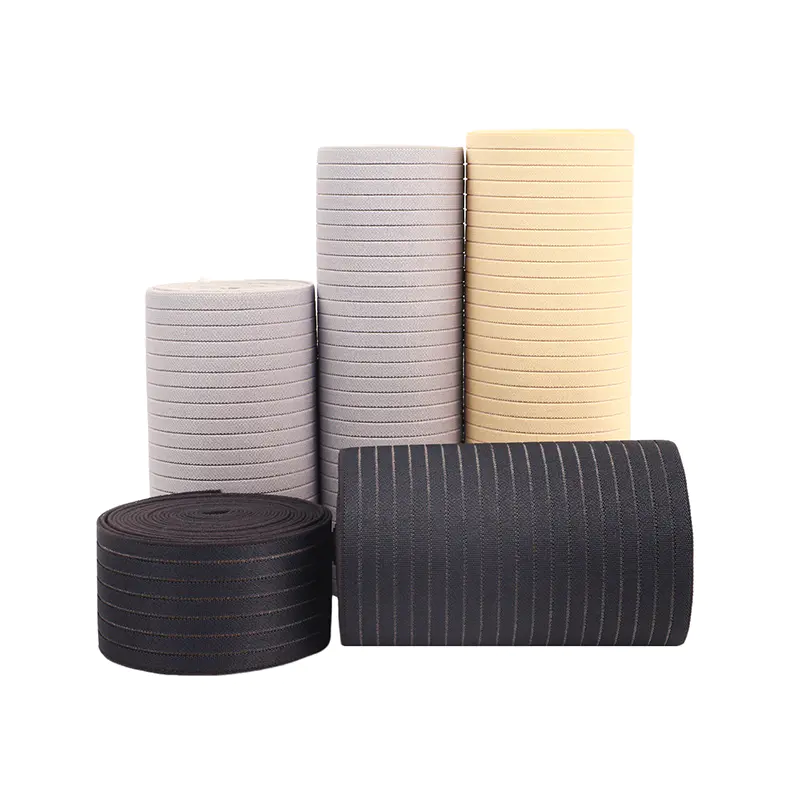
Manufacturers may also request custom lengths, colors, edge treatments, packaging formats, or surface specifications. When developing a new product, it is useful to define the complete technical requirement in advance. This should include the finished width, acceptable tolerance, stretch range, recovery expectation, loop engagement performance, color standard, roll length, and inspection method.
OEM and ODM cooperation can help customers move from a concept to a production-ready component. Under an OEM arrangement, the material can be produced according to a buyer’s established specifications. Under an ODM arrangement, the manufacturer may contribute technical knowledge to the development of the webbing or the finished support design.
Customization should be supported by sample evaluation rather than based only on written specifications. A sample roll or cut length allows the buyer to examine softness, elasticity, hook engagement, sewing behavior, and compatibility with other materials. It also provides an opportunity to test the finished abdominal binder on a representative form or through an appropriate user evaluation process.
Applications Beyond Abdominal Binders
Although the product is primarily suited to abdominal binder elastic, its construction may also be applicable to other support products that require broad, adjustable, and flexible fastening surfaces.
Orthopedic braces may use similar materials for torso, lumbar, pelvic, shoulder, or limb support structures. Sports protection products can benefit from adjustable hook-and-loop closure and controlled elasticity. Posture supports, rehabilitation wraps, and compression-oriented accessories may also use wide elastic components when the material specifications meet the requirements of the finished product.
The loop surface can be useful wherever the closure must be repositioned repeatedly. The elastic base can help a product conform to movement, while the broad width can reduce the need for multiple narrow straps. In some designs, the webbing may serve as a primary panel; in others, it may be used as a secondary adjustment section or reinforcement layer.
Application suitability should always be verified through product-specific testing. A material appropriate for an abdominal binder may require different performance characteristics for a high-load sports brace or a small limb support. Designers should consider force, friction, perspiration, laundering, repeated fastening, seam strength, and skin contact conditions for each application.
Design Considerations for Finished Products
Panel Placement
The position of the elastic panels influences the way pressure is distributed across the abdomen. A centered arrangement may provide balanced front support, while additional side overlap may improve stability. Designers should avoid placing seams or closure components directly over sensitive areas when possible.
Pattern development should account for the natural curvature of the torso. Flat materials may require shaped panels, strategic overlap, or elastic tension adjustments to reduce gaping and rolling. The finished binder should be assessed in multiple positions rather than only while standing.
Hook Placement
The hook component must be positioned so that it engages securely with the loop surface without creating an uncomfortable hard spot. The hook area should be large enough to distribute closure force, but not so large that it adds unnecessary stiffness. The direction of the closure can also affect how the binder is applied and adjusted.
Manufacturers should test repeated opening and closing because hook-and-loop performance can change with lint, fibers, washing, and wear. The loop surface should remain sufficiently functional throughout the expected service life of the finished product.
Seam Design
Seams should be strong enough to withstand repeated stretching but soft enough to avoid unnecessary irritation. Stitch density, thread selection, seam allowance, and edge finishing all influence performance. If the webbing is cut, the cut edges should be evaluated for fraying, curling, or loss of structural integrity.
Sample sewing trials can reveal whether the material feeds smoothly through production machines. They can also show whether the selected stitch pattern causes puckering or excessive restriction. These trials are particularly important when the webbing is used in multiple layers or connected to rigid inserts.
Breathability and Moisture
Abdominal binders may be worn for long periods, so air circulation and moisture comfort should be considered. The textile structure, lining material, garment pattern, and amount of body coverage all influence breathability. A lightweight elastic webbing can help reduce unnecessary bulk, but the complete product still needs to be assessed under realistic wearing conditions.
Care Instructions
Care requirements should be established through testing. Washing temperature, detergent type, drying method, and exposure to repeated moisture can affect elasticity, color, loop performance, and dimensional stability. The final care label should reflect the complete product rather than the webbing alone.
When a binder is intended for medical or postoperative use, clear instructions should explain how to position, adjust, clean, and store the product. Users should also be advised to follow guidance from qualified healthcare professionals when using a support after surgery or injury.
Quality, Certifications, and Responsible Supply
Jinhu Hengxiang Webbing Co., Ltd. states that it has obtained Oeko-Tex Standard 100 and ISO 13485 certifications. Oeko-Tex Standard 100 is associated with testing textile products for specified harmful substances under the applicable certification conditions. ISO 13485 is a quality management standard related to medical devices and associated organizations.
Certifications can provide useful evidence of structured management and product control, but buyers should confirm the current validity, scope, certificate holder, and exact products covered. Certification details should correspond to the material or production activity being purchased. Customers may also request relevant test reports, declarations, technical data sheets, and batch documentation.
A responsible sourcing program should evaluate more than unit price. Important factors include raw material consistency, production capacity, inspection procedures, traceability, delivery reliability, packaging quality, communication, and the ability to manage corrective actions. These considerations are particularly important when the webbing is incorporated into medical protective equipment.
The company’s stated quality approach covers material sourcing, processing, testing, and packing. This full-process perspective can help reduce variation and support more predictable customer production. It also gives buyers a clearer basis for supplier evaluation than a product sample alone.
Sustainability is another consideration in modern textile sourcing. Efficient production, reduced material waste, durable products, responsible packaging, and appropriate chemical management can contribute to a lower environmental impact. Buyers should discuss the available materials, production controls, packaging options, and documentation with the manufacturer when sustainability is part of the purchasing requirement.
Why Choose an Experienced Elastic Webbing Supplier
Choosing a supplier with experience in both elastic and non-elastic webbing can provide technical advantages during product development. Such a supplier is more likely to understand how different yarns, structures, widths, and finishing methods influence the behavior of a finished support product.
Experience in sports supports and orthopedic braces is also relevant because these products require repeated movement, secure adjustment, skin comfort, and controlled force. Lessons learned from adjacent applications can contribute to better material recommendations for abdominal binders.
A supplier with warping, knitting, weaving, and packaging capabilities can provide broader manufacturing coordination. This may reduce dependence on multiple subcontractors and simplify communication about technical changes. It can also make it easier to develop related products within the same supply chain.
Large-scale production capability can support stable supply for distributors, medical product manufacturers, and private-label brands. However, capacity should be considered together with quality assurance. A supplier must be able to maintain agreed specifications at commercial volume, not only produce an acceptable sample.
Hengxiang offers customized webbing with tailored elasticity, texture, and color, according to the supplied company information. This flexibility can help customers differentiate their products and align the material with a particular design or market requirement. Competitive pricing and timely delivery may further support long-term purchasing programs, provided that the technical and quality requirements are clearly documented.
Recommended Evaluation Process for Buyers
Before approving the material, buyers should begin by defining the intended application. The supplier should understand whether the webbing will be used as a primary abdominal panel, a side adjustment section, a reinforcement strip, or part of a larger orthopedic support.
The next step is to confirm the specifications. Buyers should review the selected width, fiber composition, color, surface orientation, roll length, tolerance, stretch behavior, and loop compatibility. If the finished product requires a specific closure system, the hook component should be tested with the loop surface supplied by the manufacturer.
Sample testing should include visual inspection, width measurement, stretch and recovery checks, hook engagement, sewing trials, and wear evaluation. Where appropriate, buyers may also assess laundering, perspiration exposure, abrasion, dimensional change, and repeated fastening.
A finished prototype should be evaluated on a representative body form or through an appropriate product testing program. The evaluation should include standing, sitting, bending, walking, and repeated adjustment. Particular attention should be given to rolling, gaping, pressure concentration, seam comfort, and closure security.
After sample approval, the buyer and supplier should establish a production control plan. This may include agreed reference samples, acceptable quality limits, inspection frequency, packing specifications, batch records, and procedures for handling deviations. Clear documentation helps protect both parties and supports consistent manufacturing over time.
Safety and Appropriate Use
An abdominal binder is a support product, not a substitute for medical diagnosis or treatment. The suitability of a particular binder depends on the user’s condition, surgical procedure, injury, skin sensitivity, and healthcare instructions. Product packaging should provide appropriate guidance and avoid unsupported medical promises.
The material itself should not be described as guaranteeing faster healing, preventing complications, or producing a specific clinical outcome. Instead, manufacturers can accurately explain that the binder is designed to provide adjustable external support and may help improve comfort or mobility when used appropriately.
The finished product should not be applied so tightly that it causes pain, numbness, breathing difficulty, skin discoloration, or other concerning symptoms. Users should follow professional advice, especially after surgery or childbirth. Any unusual discomfort or adverse reaction should be addressed promptly by a qualified healthcare provider.
Manufacturers should also consider labeling requirements in each target market. Claims, care instructions, material declarations, and medical device classifications can vary by jurisdiction. The elastic webbing supplier can provide material information, but the finished product manufacturer remains responsible for evaluating the complete product and meeting applicable regulatory obligations.
Q&A
What is three-panel elastic webbing with one-side loop?
It is a wide elastic textile material designed with a three-panel support structure, a flat surface on one side, and a plush loop surface on the other. The loop side can engage with compatible hook fasteners, making the material suitable for adjustable abdominal binders and related support products.
What materials are used in the webbing?
The specified composition is polyester, nylon, and spandex. Polyester and nylon contribute strength, flexibility, and textile durability, while spandex provides controlled stretch and recovery. The product is described as latex-free.
Which widths are available?
The listed widths are 6 inches, 9 inches, and 12 inches. The appropriate width depends on the desired abdominal coverage, finished product pattern, wearer profile, and closure arrangement.
How does the loop side improve an abdominal binder?
The loop side provides a broad fastening area for hook material. This allows the binder to be adjusted to different body circumferences and compression preferences. It can also reduce the need to sew a separate loop panel over the entire support area.
Can the material be used directly against the skin?
The plush side is designed to provide a soft-touch surface, but the suitability of direct skin contact depends on the complete product, user sensitivity, finishing materials, seams, and hygiene requirements. Finished-product testing is recommended before making direct-contact claims.
Is the webbing suitable after hernia surgery or cesarean section?
The material is intended for abdominal binders that may be used in postoperative and recovery-related products. However, the suitability of a finished binder depends on its design and the user’s medical condition. Users should follow instructions from qualified healthcare professionals.
Can the webbing be customized?
Customization may include elasticity, texture, color, width, length, and packaging, subject to technical evaluation and order requirements. OEM and ODM cooperation is available according to the supplied company information.
What production equipment does the manufacturer use?
The manufacturer has introduced and updated warping machines, knitting machines, woven machines, and packaging machines. These equipment categories support yarn preparation, textile formation, finishing, and commercial packing.
What certifications are associated with the manufacturer?
The supplied information states that the company has obtained Oeko-Tex Standard 100 and ISO 13485 certifications. Buyers should verify current certificates, scope, validity, and coverage for the specific material or production process being purchased.
How should buyers test the material?
Buyers should review the material specification, inspect samples, measure width, assess stretch and recovery, test hook engagement, conduct sewing trials, and evaluate the finished binder during realistic movement. Laundering, abrasion, moisture, and repeated fastening tests may also be appropriate.
Can this product replace narrow elastic bands?
It can be a more suitable choice when the design requires broad abdominal coverage and integrated loop fastening. Narrow elastic remains useful for straps, edging, and localized support. The correct material depends on the function of each part of the finished product.
What should be included in a purchase specification?
A purchase specification should identify fiber composition, width, tolerance, elasticity, recovery, surface orientation, loop performance, color, roll length, packaging, inspection requirements, and any applicable certification or test documentation.
Conclusion
Three-panel elastic webbing with one-side loop provides a practical material solution for manufacturers developing adjustable abdominal binders and related support products. Its polyester, nylon, and spandex construction combines lightweight flexibility with controlled elastic performance. The flat side supports integration into a finished product, while the plush loop side enables broad hook-and-loop adjustment and a softer textile feel.
The available 6-inch, 9-inch, and 12-inch widths allow designers to select a coverage level appropriate to different binder constructions. Compared with narrow elastic, non-elastic webbing, latex-based materials, or separately assembled panel-and-loop systems, this design can offer a more integrated approach to broad support, flexible movement, and adjustable fastening.
Its value is strengthened by the manufacturing capabilities of Jinhu Hengxiang Webbing Co., Ltd., including experience dating from 2005, production equipment for warping, knitting, weaving, and packaging, and a focus on elastic and non-elastic webbing for sports, orthopedic, and medical applications. The company’s stated Oeko-Tex Standard 100 and ISO 13485 certifications, customization services, OEM and ODM support, and large-scale production capacity may make it a suitable sourcing partner for qualified buyers.
As with any medical support component, the final performance depends on the complete product design. Material selection, pattern development, sewing, closure placement, testing, labeling, and user instructions must work together. When properly specified and evaluated, this elastic webbing can help manufacturers produce abdominal binders that are supportive, adjustable, comfortable, and suitable for efficient commercial production.
References
1. Product specification supplied for three-panel elastic webbing with one-side loop, including material composition, surface structure, available widths, and intended applications.
2. Company information supplied for Jinhu Hengxiang Webbing Co., Ltd., including manufacturing history, production equipment, quality control approach, certifications, customization services, and export markets.
3. ISO 13485, Medical Devices—Quality Management Systems—Requirements for Regulatory Purposes.
4. Oeko-Tex Standard 100, Textile Product Safety and Harmful Substance Testing Framework.
5. General textile engineering principles relating to polyester, nylon, spandex, knitted structures, woven webbing, elastic recovery, and hook-and-loop fastening performance.
6. General product development practices for abdominal binders, orthopedic braces, sports supports, textile medical accessories, sewing construction, and finished-product evaluation.