
 en
en
 English
 русский
 Français
 Español
 Português
 Tiếng Việt
Content
- 1 Product Overview
- 2 Main Functional Advantages
- 3 Comparison with Common Alternative Fasteners
- 4 Applications in Medical and Orthopedic Products
- 5 Applications in Sportswear and Fitness Products
- 6 Applications in Garments and DIY Projects
- 7 Manufacturing Expertise and Production Capabilities
- 8 Customization Services
- 9 Quality Certifications and Responsible Manufacturing
- 10 Installation and Sewing Recommendations
- 11 Care, Storage, and Service Life
- 12 Why Work with an Experienced Webbing Manufacturer?
- 13 Purchasing Guidance for Wholesale Buyers
- 14 Product Selection Checklist
- 15 Frequently Asked Questions
- 15.1 What is the 7cm Black Velcro Elastic Panel?
- 15.2 Why is the panel 7cm wide?
- 15.3 Can the panel be used directly on medical products?
- 15.4 Is the elastic panel suitable for sports braces?
- 15.5 Can the product be customized?
- 15.6 What color is available for this product?
- 15.7 How should the panel be attached?
- 15.8 Can the panel be opened and closed repeatedly?
- 15.9 What certifications does the manufacturer have?
- 15.10 Where is the manufacturer located?
- 15.11 How can buyers request more information?
- 16 Conclusion
- 17 References
- 18 Product: 7cm Black Velcro Elastic Panels
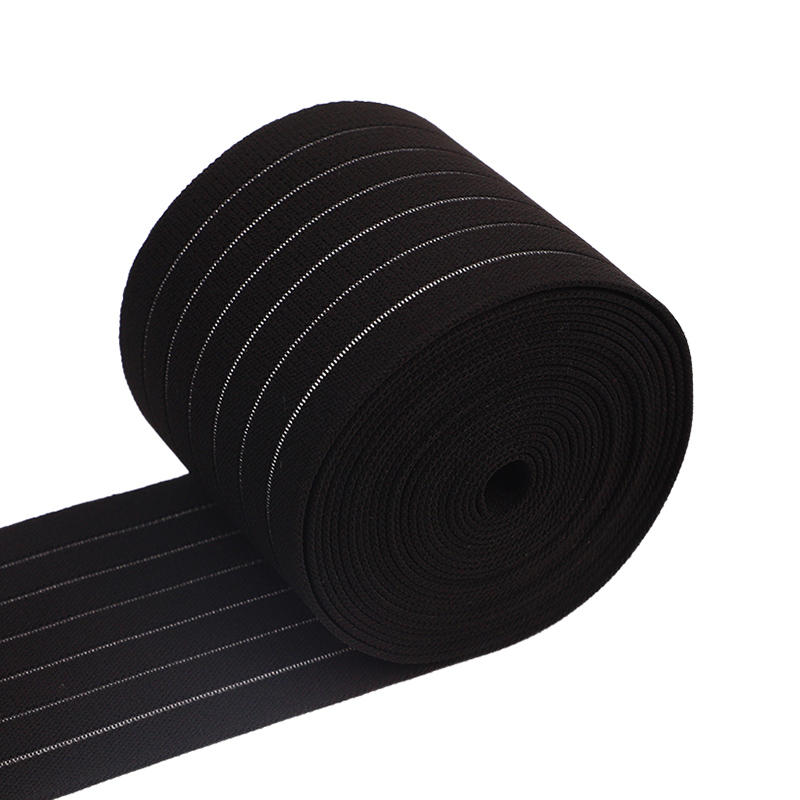
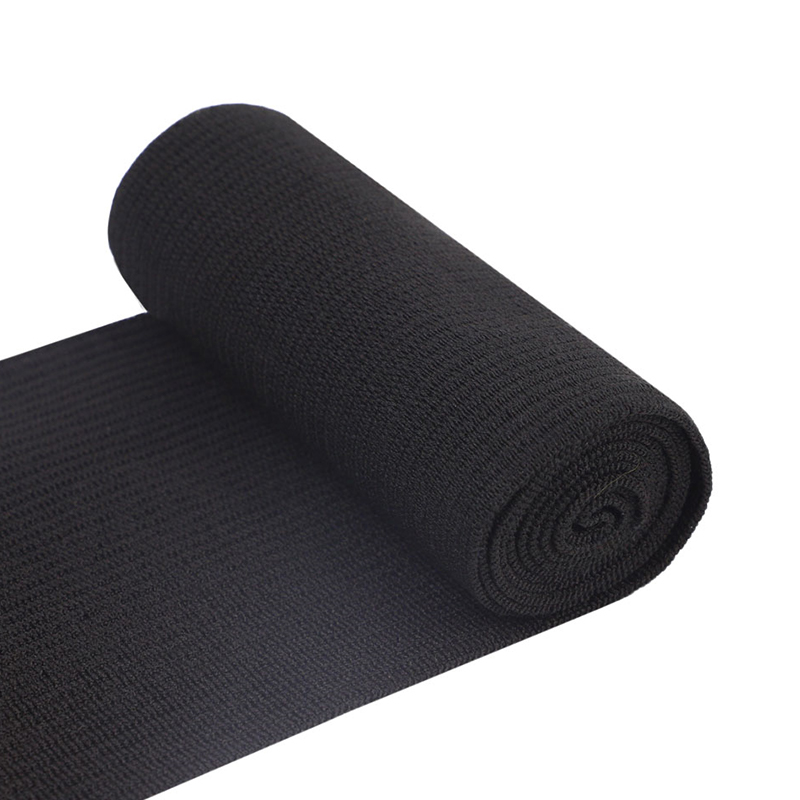
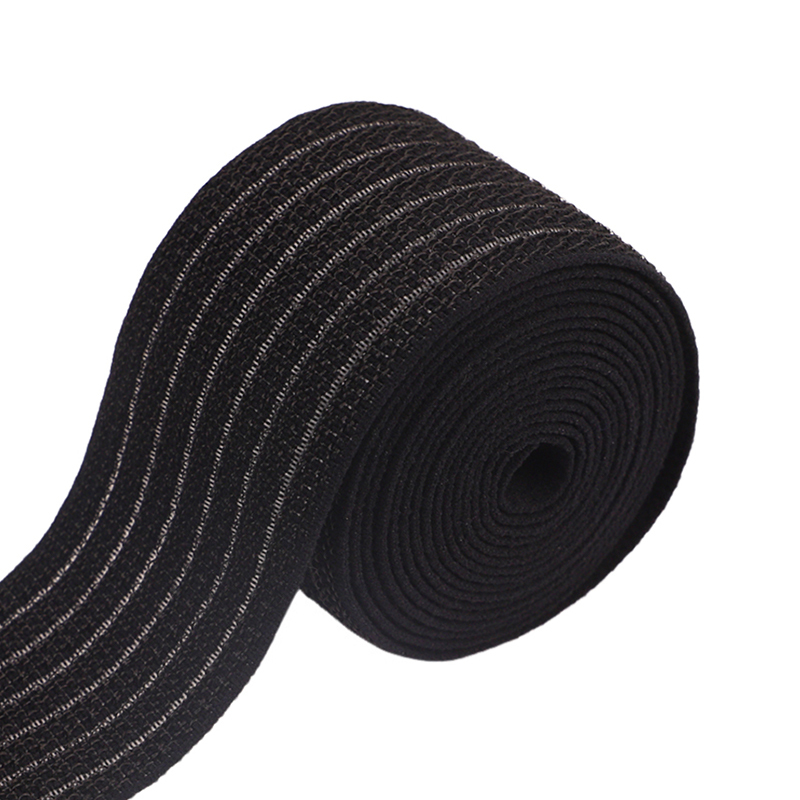
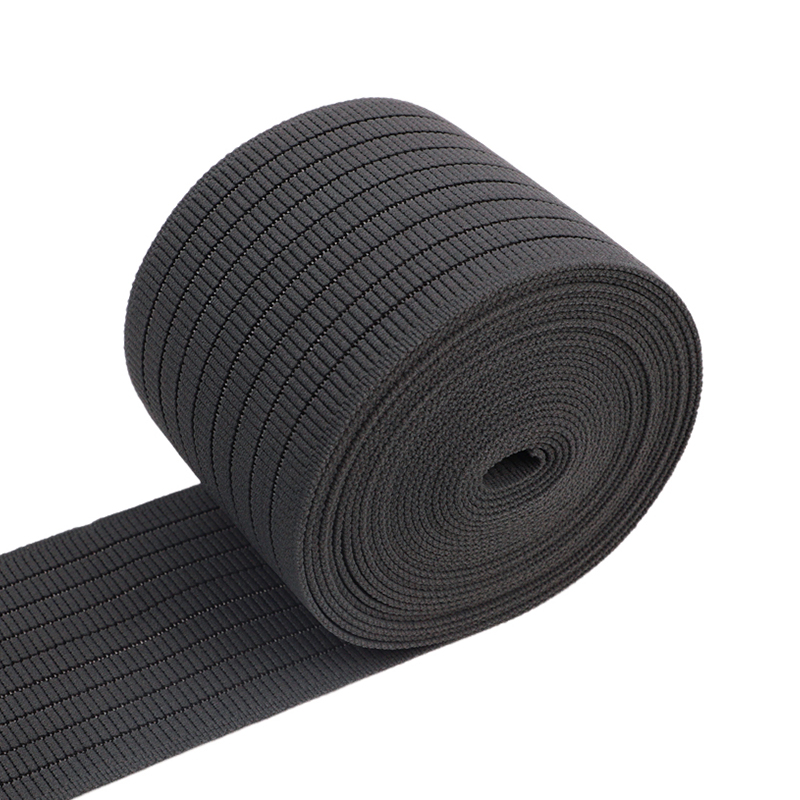
Modern support products and performance garments must balance stability, flexibility, comfort, and ease of adjustment. A fastening component that is too rigid can restrict movement, while one that is too soft may fail to provide dependable support. The 7cm Black Velcro Elastic Panels are designed to address these practical requirements through a combination of elastic recovery and hook-and-loop fastening. This construction provides users with a flexible panel that can stretch with movement while also allowing the fit to be tightened, loosened, removed, and repositioned whenever necessary.
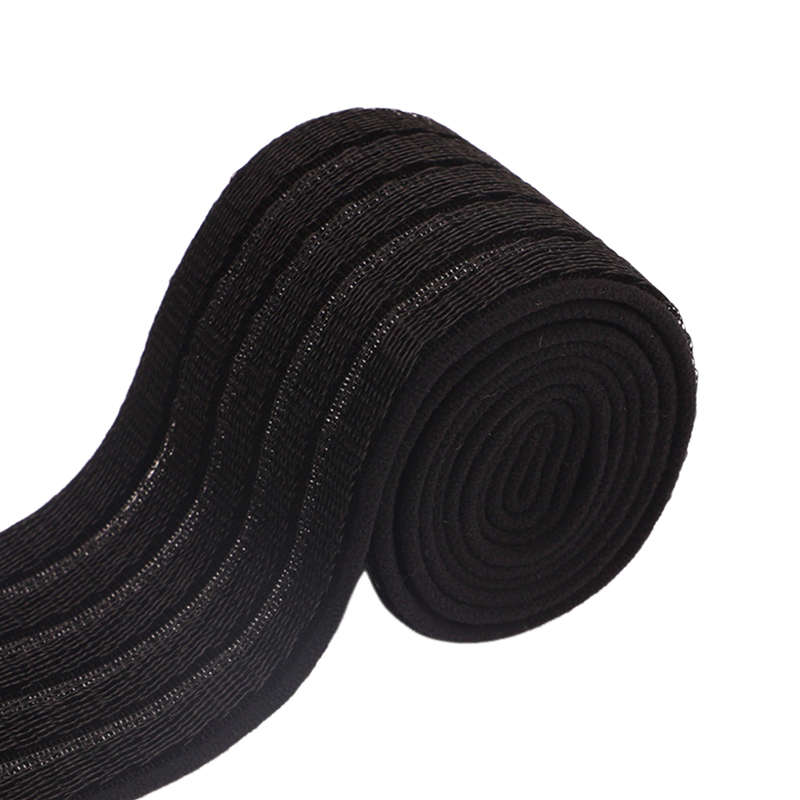
With a practical 7cm width, the panel provides a broad contact area for distributing tension across a garment or support. Its black color creates a clean, professional appearance and coordinates easily with sportswear, medical supports, maternity products, fitness accessories, orthopedic braces, and many textile designs. The product is identified as model 8079 and belongs to the Elastic Hook and Loop Strap category.
Unlike ordinary non-adjustable elastic tape, this product combines a resilient textile base with a hook-and-loop closure system. Unlike a rigid strap, it is intended to move with the body and conform to curved surfaces. This makes it suitable for products that must be adjusted repeatedly during use, including abdominal binders, orthopedic supports, rehabilitation equipment, sports protection products, maternity belts, compression garments, and custom textile projects.
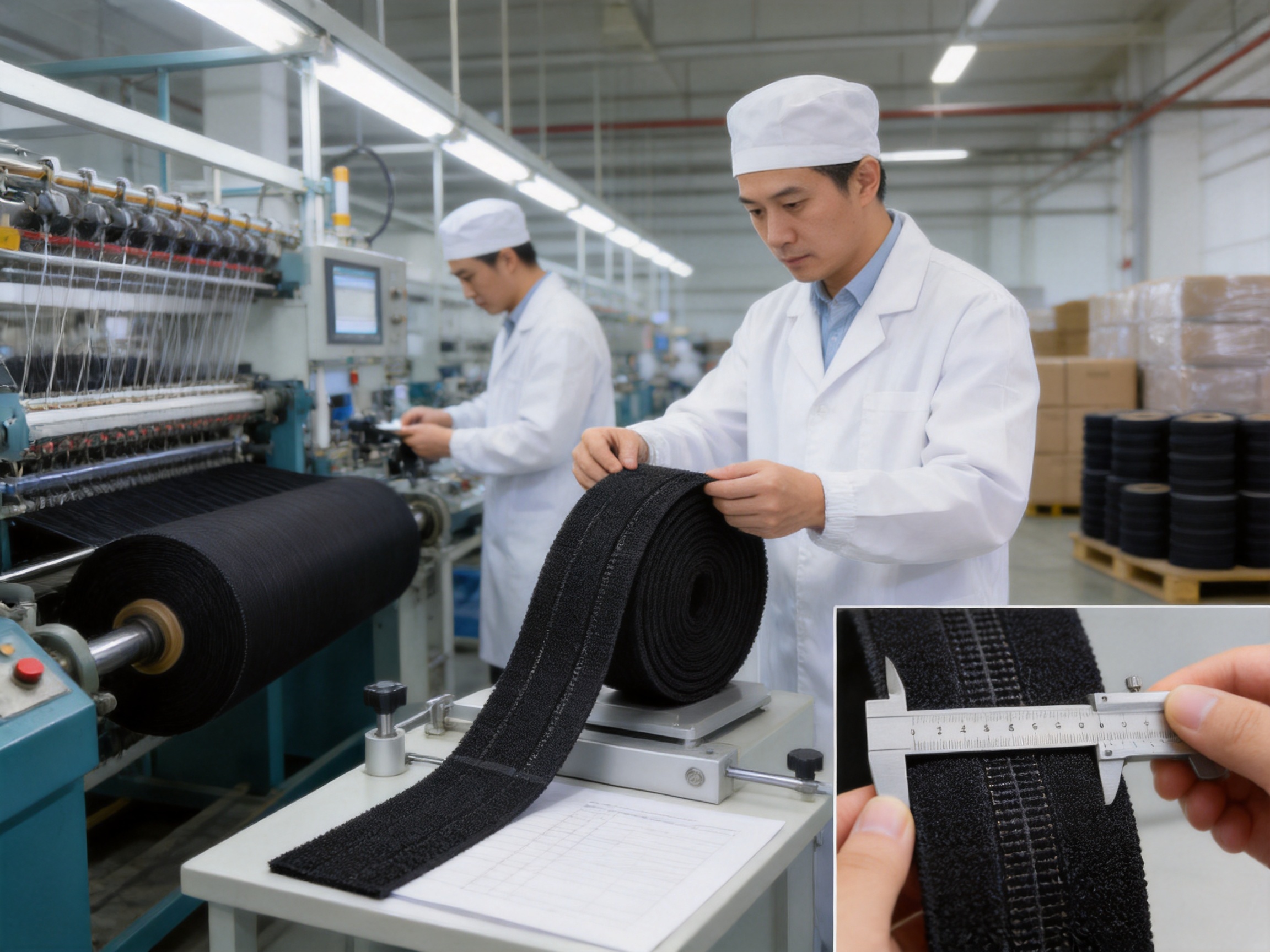
Jinhu Hengxiang Webbing Co., Ltd. manufactures this type of elastic webbing with an emphasis on controlled production, dependable material selection, and customization. The company has developed extensive experience in elastic and non-elastic webbing since its establishment in 2005. Its manufacturing capabilities include warping, knitting, weaving, testing, processing, and packaging, enabling the company to manage many important production steps in-house.
Product Overview
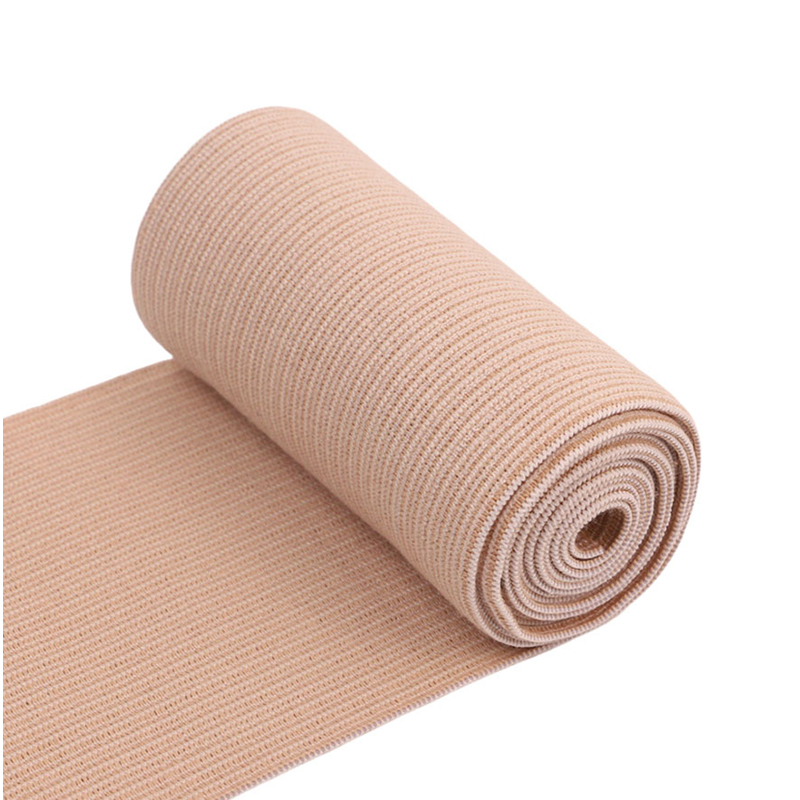
The 7cm Black Velcro Elastic Panels are wide elastic fastening components intended for applications in which a secure but adjustable connection is required. The panel contains an elastic structure that offers controlled stretch and flexibility, together with hook-and-loop fastening surfaces that support repeated adjustment. The user can attach the closure at a preferred position and modify the tension according to body shape, garment design, activity level, or support requirements.
The 7cm width is a key functional feature. A narrow strap concentrates pressure in a limited area, whereas a wider panel can distribute pulling force across a larger section of fabric or the body. This broad design is useful in abdominal binders, maternity support garments, sports braces, waist supports, and medical textile products where comfort and pressure distribution are important considerations.
The product is supplied in classic black. Black is widely selected for industrial and garment manufacturing because it hides ordinary surface marks, coordinates with many fabric colors, and provides a neutral appearance. It can be incorporated into dark products without creating a visual contrast, or used as a deliberate accent on lighter materials.
The elastic panel is suitable for integration into finished products or for use as a replacement component. Manufacturers may sew it onto woven fabric, knitted fabric, laminated textiles, foam-backed materials, mesh, or other compatible substrates. It can also be used in product development, sample making, repair work, and do-it-yourself sewing projects.
Main Functional Advantages
Adjustable and Secure Fastening
The hook-and-loop closure allows the user to create a customized fit. The fastening can be opened and closed repeatedly, which is valuable when a product is shared among users, worn over different layers, or adjusted during recovery and physical activity. The closure also makes it possible to compensate for minor changes in body measurement, garment tension, or support requirements.
When properly positioned, the hook-and-loop system provides a firm hold. The elastic section helps maintain contact as the user moves, while the fastening surface keeps the panel in place. This combination is more adaptable than a fixed-length elastic strip and easier to use than a complicated buckle or lacing system.
For medical and sports products, adjustment can be particularly important. A wearer may need a lighter fit during rest and a firmer fit during movement. A clinician, trainer, caregiver, or end user can modify the tension without replacing the component. This supports more efficient product operation and can reduce the need for multiple sizes in some product designs.
Comfortable Elastic Flexibility
The elastic foundation is designed to flex as the wearer bends, walks, stretches, or changes position. This flexibility helps prevent the component from feeling excessively rigid. In garments worn around the abdomen, waist, shoulder, knee, or other moving areas, the ability to accommodate ordinary movement can improve the overall wearing experience.
Elasticity is also valuable during product assembly. A manufacturer can position the panel on a garment while accounting for the required amount of stretch. When the finished product is used, the elastic can help maintain a closer fit without forcing the garment to remain at one fixed dimension.
Comfort depends on the complete product design, including fabric selection, seam construction, edge finishing, pressure level, and correct adjustment. Nevertheless, a soft and flexible elastic fastening component can contribute significantly to a more wearable result than a rigid, rough, or poorly controlled strap.
Broad Pressure Distribution
The 7cm width creates a broader support surface than narrow elastic bands. This can help distribute tension over a larger area and reduce the possibility that all fastening force will be concentrated along a thin line. For abdominal binders, maternity belts, and large orthopedic supports, this broad format is especially practical.
A wide panel can also improve visual integration with large garments. Instead of using multiple narrow straps, a designer may use a single wide component to simplify construction and create a cleaner appearance. The final design must still account for seam strength, fabric compatibility, and the direction of applied tension.
Durability for Repeated Use
Hook-and-loop components are often opened and closed many times during the life of a product. The elastic base must therefore be able to withstand repeated flexing, pulling, and recovery. The 7cm Black Velcro Elastic Panels are made for applications requiring dependable performance over continued use, provided that they are correctly installed and maintained.
Durability is affected by several factors, including yarn quality, elastic material, weaving or knitting control, hook-and-loop engagement, sewing method, laundering conditions, and the amount of tension applied. A quality-oriented manufacturing process addresses these variables before the product reaches the customer.
Compared with low-quality fastening tape, a well-produced elastic panel can offer more consistent width, cleaner edges, stable stretch, and more reliable attachment. These qualities are important to manufacturers that need repeatable performance across multiple production batches.
Simple Operation
The fastening process is straightforward. The user positions the panel, presses the hook and loop surfaces together, and adjusts the overlap until the desired tension is achieved. To remove or reposition it, the user separates the surfaces and repeats the process. This simplicity is useful in medical products, where a wearer or caregiver may need to make adjustments quickly.
Simple operation can also reduce training requirements for end users. Compared with buckle systems, complex lacing, or multi-step closures, hook-and-loop fastening is familiar to many consumers. It is suitable for products that must be put on and removed regularly, such as rehabilitation supports, sports braces, and post-surgical garments.
7cm Black Velcro Elastic Panels
Comparison with Common Alternative Fasteners
Product designers can choose among many fastening methods, including plain elastic, non-elastic webbing, buckles, snaps, zippers, lacing, and hook-and-loop tape. Each option has a suitable application. The 7cm Black Velcro Elastic Panels are advantageous when a design requires a combination of stretch, broad coverage, repeated adjustment, and a relatively simple construction.
| Fastening Option | Adjustment | Flexibility | Typical Strength | Common Limitation |
|---|---|---|---|---|
| Plain elastic band | Limited after installation | High | Useful for continuous tension | Cannot be opened and repositioned easily |
| Non-elastic webbing | Possible with buckles or sliders | Low to moderate | High dimensional stability | May feel rigid or require additional hardware |
| Buckle strap | Good | Low to moderate | High when correctly assembled | Can add bulk and require two-handed operation |
| Zipper | Fixed closure positions | Limited | Good for aligned panels | Less suitable for variable tension or curved adjustment |
| Lacing system | Very good | Moderate | Good when correctly tightened | Slower to operate and more complex to manufacture |
| 7cm elastic hook-and-loop panel | Very good | High | Suitable for adjustable support products | Requires correct overlap and care to protect fastening surfaces |
Plain elastic is useful when a garment needs permanent stretch but not active adjustment. However, once sewn into a fixed position, it cannot provide the same level of user control. Non-elastic webbing offers dimensional stability, but it may not follow body movement as naturally as an elastic panel. Buckles can deliver strong tension, yet they may increase bulk and complicate the appearance of a soft garment.
Zippers are effective for aligned openings but are not normally intended for continuous tension adjustment. Lacing systems provide a wide adjustment range, but they require more components and may take longer to operate. Hook-and-loop fastening provides a practical compromise: it is adjustable, reusable, familiar, and relatively easy to integrate into textile products.
The 7cm format also offers an advantage over very narrow hook-and-loop straps when a product needs broader contact. A wide panel can support a more stable closure area and may reduce the need for several parallel fastening strips. Designers should select the most suitable structure according to the application, but the combination of elasticity and wide hook-and-loop coverage makes this product highly adaptable.
Applications in Medical and Orthopedic Products
Abdominal Binders
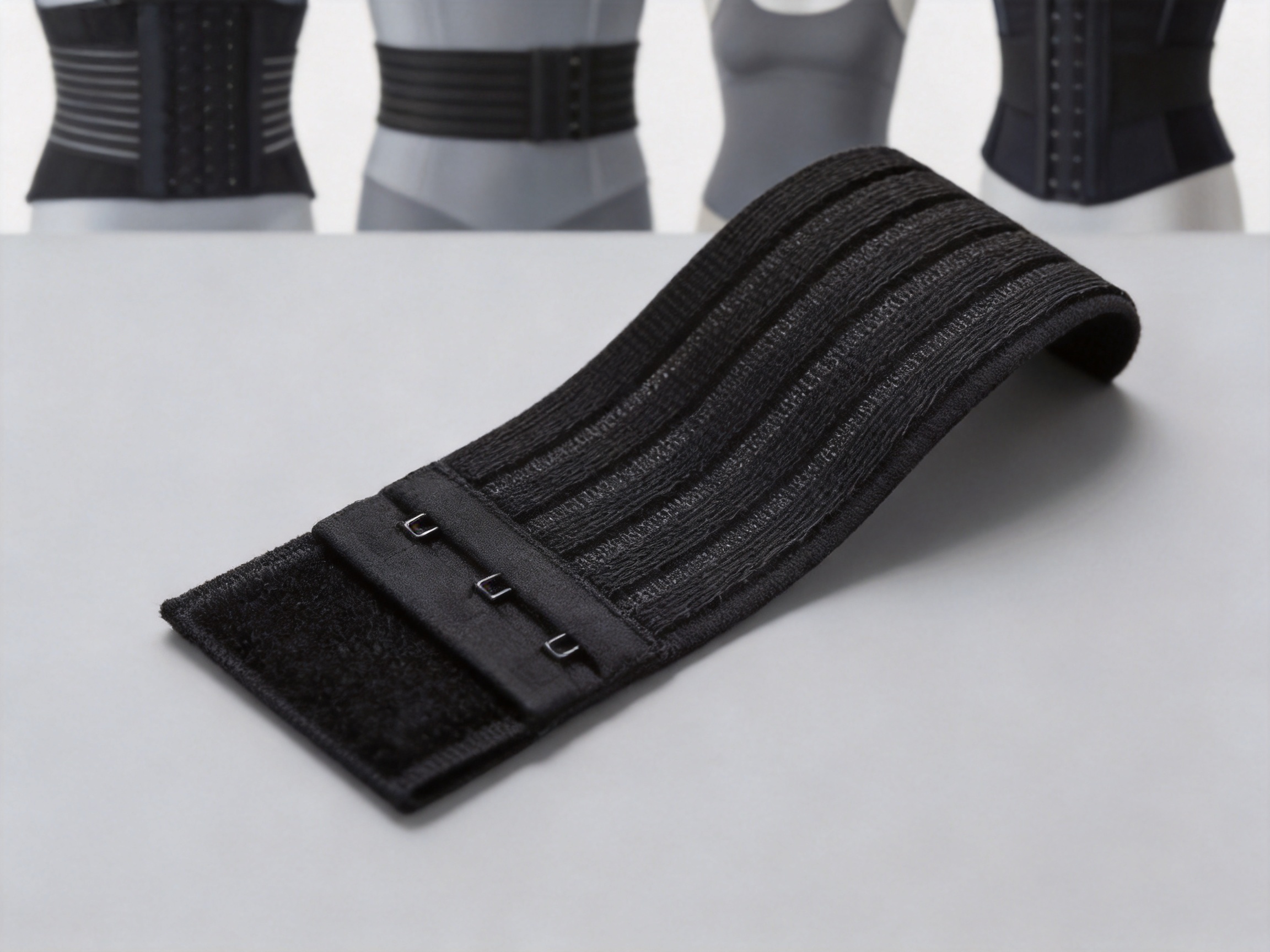
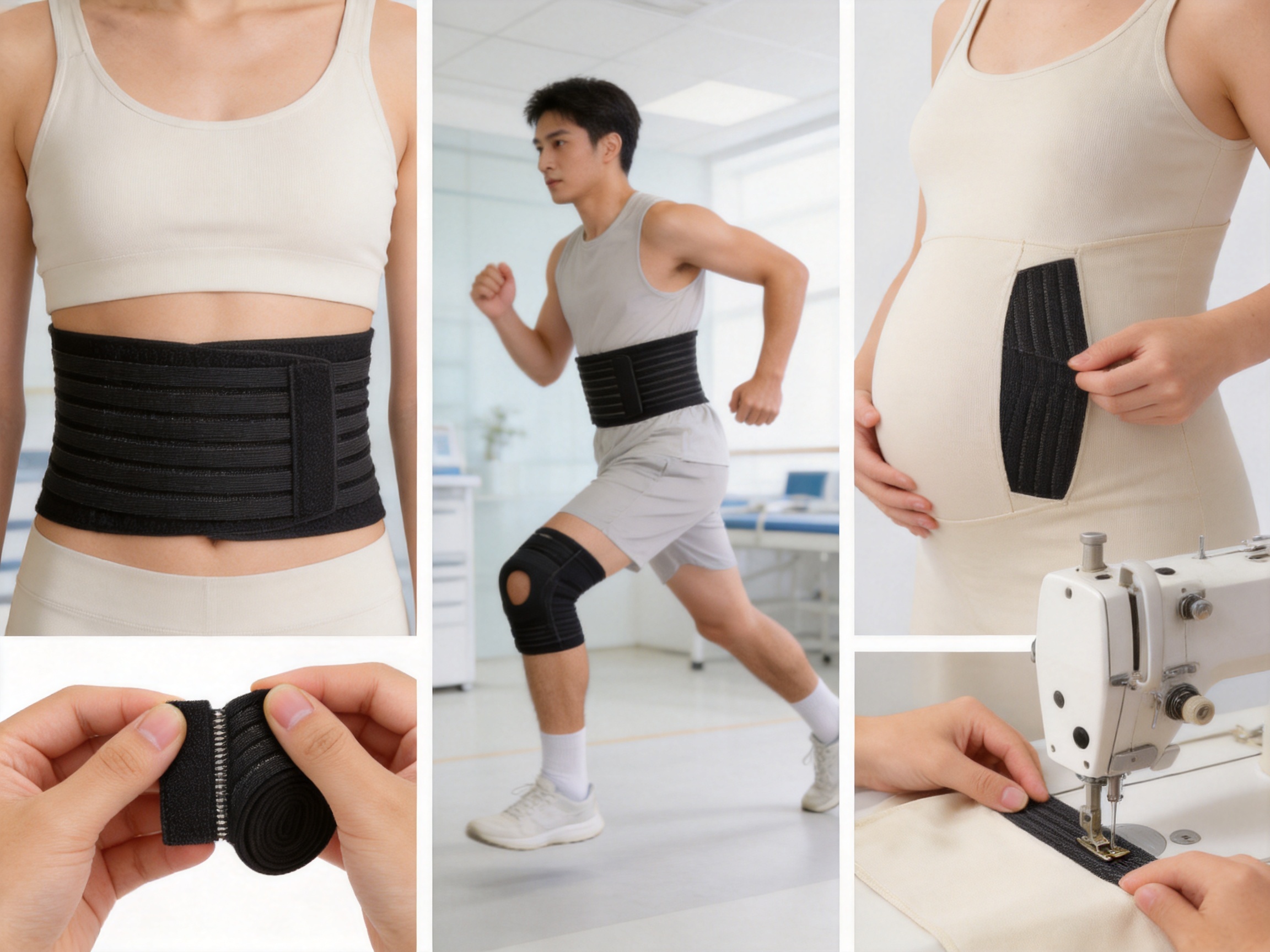
Abdominal binders require controlled compression, comfortable movement, and convenient adjustment. The wide elastic panel can be sewn into an abdominal support to help maintain a secure fit around the torso. Its adjustable closure allows the wearer or healthcare provider to modify the tension according to comfort and product requirements.
For abdominal support products, construction quality is essential. The panel should be attached using a seam structure capable of handling repeated opening, closing, and pulling. The surrounding fabric should be selected to complement the elastic component, and the edges should be finished to limit irritation. The final pressure level depends on the entire binder design rather than on the fastening panel alone.
Orthopedic Braces
Orthopedic braces often require straps that stabilize a joint or body region while allowing an appropriate range of motion. The elastic panel can be used in knee supports, elbow supports, wrist braces, ankle supports, shoulder products, and lumbar braces. It may serve as a primary closure or as a secondary adjustment section.
In these applications, the panel can help a brace conform to the body during movement. The hook-and-loop section allows the user to achieve a secure fit without tying knots or manipulating small hardware. A black finish is commonly suitable for sports braces and clinical products because it presents a clean and understated appearance.
Post-Surgical and Rehabilitation Garments
Rehabilitation garments may need to accommodate changes in swelling, dressing thickness, or user mobility. An adjustable elastic closure can simplify these changes. Caregivers may also find hook-and-loop fastening easier to operate for users with limited hand strength or restricted movement.
Manufacturers should ensure that the finished product meets applicable medical-device requirements for its intended market. The webbing component is one part of the overall product, and safety, hygiene, labeling, testing, and clinical suitability must be evaluated according to the final application.
Maternity Supports
Maternity belts and pregnancy support products must accommodate changing body dimensions. A fixed-size closure may become unsuitable as the abdomen changes, whereas an adjustable panel can provide useful flexibility throughout different stages of use. The elastic section helps the support move with the wearer, while the hook-and-loop fastening allows gradual modification.
Comfort is particularly important in maternity products. Designers should combine the panel with soft lining fabrics, smooth seams, and appropriate tension control. The 7cm width can provide useful support without requiring a collection of narrow straps, although the final product width and construction should be chosen according to the intended user and application.
Applications in Sportswear and Fitness Products
Sportswear places high demands on textile components. Products may be stretched, folded, exposed to perspiration, and subjected to rapid movement. Adjustable elastic fastening is useful in sports supports because it can help maintain a close fit without creating an overly rigid structure.
The panel can be incorporated into knee wraps, elbow supports, wrist guards, ankle braces, lumbar supports, shoulder stabilizers, and protective belts. It may also be used in fitness bands, rehabilitation exercise equipment, resistance accessories, and protective garments. The designer can specify the position and length of the panel according to the required movement pattern.
For active products, correct fastening engagement is essential. The hook and loop surfaces should be pressed together across sufficient overlap, and the elastic should not be stretched beyond the recommended design range. If the product is subjected to excessive force, the hook-and-loop connection, stitching, or supporting fabric may become the limiting factor.
The black color is well suited to athletic products, which often use black, gray, navy, or other dark technical fabrics. It can also be combined with bright color panels for a contrasting visual effect. Because the panel is both functional and visible, its appearance can contribute to the perceived quality of the finished sports product.
Applications in Garments and DIY Projects
Apparel Construction
Garment manufacturers can use the elastic panel in adjustable waist sections, outerwear closures, adaptive clothing, costume design, protective workwear, and specialty apparel. It is particularly useful where a garment must fit different body shapes or be adjusted over layers of clothing.
Adaptive clothing is one example. Users who have limited mobility may benefit from closures that can be operated without pulling a small zipper or fastening several buttons. A wide hook-and-loop panel can create a large adjustment area and may be easier for caregivers to manage.
In workwear, the panel may be used in removable supports, protective belts, tool-carrying accessories, and adjustable cuffs. In costume and stage garments, it can provide quick changes and hidden adjustment while maintaining a clean outer appearance.
Textile Accessories
The product can also be used in bags, covers, textile organizers, straps, equipment cases, and protective sleeves. Its elastic structure makes it suitable for accessories that need some flexibility, while the hook-and-loop closure provides convenient opening and closing.
DIY users may use the panel for home sewing, garment repair, custom braces, replacement straps, craft projects, and prototypes. Before cutting or sewing, the user should evaluate the required panel length, closure direction, stretch direction, seam allowance, and expected load. A sample test is recommended when the component will be used in a high-tension application.
Product Development and Prototyping
Design teams can use the panel during early product development to test different support structures and closure positions. Because it is easy to adjust, prototypes can be evaluated on different body shapes and with different tension levels. This can accelerate the transition from concept to production.
During sampling, manufacturers should record important parameters such as panel width, elastic extension, recovery, hook-and-loop overlap, stitch density, and attachment strength. These records help establish repeatable production specifications and reduce variation between samples and bulk orders.
Manufacturing Expertise and Production Capabilities
Jinhu Hengxiang Webbing Co., Ltd. was established in 2005 in Jinhu County, Huai’an City, Jiangsu Province, China. The company specializes in the research, development, production, sale, and service of elastic webbing and non-elastic webbing. Its products are particularly suited to sports supports, orthopedic braces, medical protective equipment, and other applications requiring reliable textile performance.
The company has invested in and updated advanced production equipment, including warping machines, knitting machines, woven machines, and packaging machines. These capabilities support the production of different webbing structures and help the company respond to varied customer requirements. The availability of multiple production processes is especially valuable when a customer needs a specific combination of width, stretch, texture, color, and fastening construction.
Material Preparation and Warping
Warping is an important preparation stage for woven and related textile structures. During this process, yarns are arranged and prepared for controlled insertion into the production machine. Accurate warping helps maintain yarn alignment, tension consistency, and production stability.
For elastic webbing, material preparation must consider both elastic yarns and non-elastic yarns. The interaction between these yarn groups influences stretch, recovery, surface appearance, and dimensional behavior. Consistent preparation supports uniform production and helps reduce defects such as uneven width, loose edges, or irregular tension.
Knitting and Weaving
Knitting and weaving offer different structural possibilities. Knitted elastic products can provide a soft hand feel and flexible stretch, while woven structures can offer strong dimensional control and a defined surface. The appropriate process depends on the product specification and intended use.
Modern knitting and weaving machines help control yarn placement, density, width, and pattern formation. Operators and technical staff monitor machine settings throughout production to keep the webbing within required tolerances. This attention is important for a product such as a 7cm panel, because width consistency influences sewing, garment appearance, and load distribution.
When hook-and-loop elements are combined with elastic textile structures, process coordination becomes particularly important. The elastic section must remain functional, and the fastening surfaces must be positioned accurately. Poor alignment can reduce usable overlap or make the finished product difficult to adjust.
Finishing and Processing
After the primary textile structure is produced, additional processing may be required to achieve the intended appearance and performance. Depending on the specification, this may include cutting, edge treatment, joining, surface preparation, inspection, and preparation for customer assembly.
Processing must preserve the elasticity of the base material and avoid unnecessary damage to the hook-and-loop surfaces. Clean cutting and stable edges are important for efficient sewing. In large-scale production, accurate processing also helps reduce material waste and supports consistent finished dimensions.
Inspection and Quality Control
Quality control should begin with material sourcing and continue through production, testing, and packing. Important inspection points may include width, color, surface appearance, stretch behavior, recovery, fastening engagement, edge condition, and attachment performance.
Testing methods should be selected according to the intended application. A sports support may require repeated extension and recovery testing, while a medical product may require additional evaluations associated with hygiene, biocompatibility, or regulated use. The finished product manufacturer remains responsible for validating the complete product, but a reliable webbing supplier can provide a stable foundation.
Jinhu Hengxiang Webbing Co., Ltd. states that it maintains strict quality control across material sourcing, processing, testing, and packing. This systematic approach is important for customers who require consistent bulk production rather than one-time sampling. Reliable quality also helps reduce assembly problems, returns, and production interruptions.
Packaging and Delivery Preparation
Packaging protects the panels during storage and transportation. Properly packed webbing should be protected from avoidable contamination, crushing, tangling, excessive moisture, and other conditions that could affect its appearance or performance. Clear identification of product specifications and batch information can also help customers manage inventory.
With packaging machinery and established production systems, the company is able to support substantial monthly output. Its reported production capacity reaches millions of meters of elastic and non-elastic webbing each month. This capacity can be valuable for customers planning regular orders or large-scale product launches.
Customization Services
Different applications require different levels of elasticity, texture, width, color, and fastening arrangement. Jinhu Hengxiang Webbing Co., Ltd. provides OEM and ODM services, allowing customers to request webbing tailored to their product design. Customization may include changes to elastic behavior, textile hand feel, surface structure, color, length, and packaging format.
For a product based on the 7cm Black Velcro Elastic Panels, a customer may need a particular stretch range, a specific hook-and-loop configuration, a different black shade, or a modified panel length. The customer may also require the elastic section to be integrated with another woven or knitted component. Detailed technical communication is essential before production begins.
Key Specification Considerations
When requesting a customized version, buyers should provide as much information as possible. Useful details include the finished width, required length, elastic extension, recovery expectations, hook-and-loop overlap, hook or loop orientation, attachment method, color requirement, end use, washing conditions, and estimated order quantity.
Buyers should also explain whether the product will be used directly against skin, over clothing, inside a brace, or as part of an industrial textile assembly. This information helps the manufacturer recommend an appropriate construction and identify relevant testing requirements.
Samples are helpful for confirming texture, stretch, color, closure performance, and sewing behavior. Once a sample is approved, the agreed specification should be documented and used as the reference for bulk production. This process improves consistency and provides a clear basis for quality evaluation.
Quality Certifications and Responsible Manufacturing
Jinhu Hengxiang Webbing Co., Ltd. has obtained Oeko-Tex Standard 100 and ISO 13485 certificates. Oeko-Tex Standard 100 is associated with testing textile products for harmful substances according to defined requirements. ISO 13485 is a quality management standard specific to organizations involved in medical devices and related products.
Certifications do not eliminate the need for application-specific testing, but they demonstrate an organized approach to quality and product responsibility. Customers should review the scope and validity of relevant certificates and confirm that the supplied product is appropriate for the intended market and final application.
Responsible manufacturing also includes efficient material use, process control, waste reduction, safe working practices, and reliable delivery planning. Stable production can reduce rejected material and minimize the resources required for rework. For customers developing long-term product lines, these factors can support both commercial and sustainability objectives.
Installation and Sewing Recommendations
The performance of an elastic hook-and-loop panel depends heavily on how it is attached. The supporting fabric should be strong enough to carry the applied tension, and the stitching should be selected according to the expected load. A simple decorative seam may not be sufficient for a medical support or sports brace that experiences repeated pulling.
Manufacturers commonly evaluate several attachment methods during product development. These may include box stitches, reinforced bar tacks, multiple parallel rows, or perimeter stitching. The correct method depends on the panel structure, the supporting fabric, the direction of force, and the product’s cleaning and use conditions.
Seam allowance should be sufficient to prevent edge pull-out. The elastic should not be accidentally stitched in a way that prevents its intended stretch. When the panel includes separate hook and loop surfaces, each part should be positioned so that the user can achieve adequate overlap across the full adjustment range.
Before bulk production, sewing trials should be completed using the actual fabric, thread, needle, stitch density, and machine settings. Testing should include repeated opening and closing, stretching, laundering where applicable, and simulated use. These trials can identify problems before they affect a large production run.
Care, Storage, and Service Life
Correct care helps preserve the performance of elastic hook-and-loop products. The appropriate cleaning method depends on the final garment and the materials used in the complete assembly. Customers should follow the care instructions established for their finished product and should not assume that every washing or drying method is suitable.
To reduce lint accumulation, the hook-and-loop surfaces should be closed before washing or storage whenever practical. Loose threads, fabric fibers, and debris can become attached to the fastening surface and reduce engagement. Users should inspect the component periodically and remove contamination according to the product’s care instructions.
During storage, the panels should be kept in a clean, dry environment away from excessive heat, direct sunlight, chemicals, and sharp objects. Rolls or cut pieces should not be compressed unnecessarily for extended periods. Proper inventory rotation can help ensure that older material is used in a timely manner.
Service life varies according to frequency of use, load, laundering, body contact, environmental conditions, and closure cycles. A component used in a light-duty garment may perform differently from one used in a high-tension orthopedic brace. Final product testing is therefore recommended before commercial release.
Why Work with an Experienced Webbing Manufacturer?
Webbing performance depends on more than the visible appearance of the finished strip. Yarn selection, machine settings, elastic ratio, tension control, finishing, inspection, and packaging all influence the final result. An experienced manufacturer can help coordinate these factors and identify potential production problems at an early stage.
Jinhu Hengxiang Webbing Co., Ltd. has more than 20 years of professional production experience based on its establishment in 2005. The company focuses on elastic and non-elastic webbing and serves applications related to sports protection, medical protective equipment, and orthopedic support. This specialization gives customers access to technical knowledge relevant to adjustable support products.
The company’s product range includes abdominal binder elastic, woven wide elastic, wide knitted elastic, narrow elastic band, woven elastic panels, elastic hook-and-loop straps, and medical elastic bandages. This broader product capability can help customers source related components from one supplier and compare different structures during development.
Its export experience includes North America, Eastern Europe, the Middle East, South Asia, and other regions. International customers may benefit from established communication, production planning, documentation, and packaging procedures. OEM and ODM support also allows the company to work with private-label brands, medical product manufacturers, sports equipment companies, garment factories, and distributors.
Purchasing Guidance for Wholesale Buyers
Wholesale buyers should begin by identifying the final product and its performance requirements. A panel intended for a light garment will not necessarily require the same construction as one intended for a medical brace. The expected tension, number of adjustment cycles, cleaning method, contact with skin, and environmental conditions should be considered before requesting a quotation.
Buyers should request product samples and evaluate them under realistic conditions. Important checks may include the actual width, appearance, stretch, recovery, fastening strength, ease of opening, ease of adjustment, and sewing compatibility. If the product will be laminated or sewn to a particular fabric, testing should be completed with that fabric rather than with a generic sample.
Order planning should include the required color, cut length, roll format, packaging, minimum order quantity, lead time, inspection standard, and shipping requirements. Customers should also confirm whether the product requires special documentation for a medical, protective, or regulated application.
Clear communication reduces the risk of receiving a component that is technically attractive but unsuitable for the finished product. A detailed specification sheet and approved sample provide a strong foundation for repeat orders.
Product Selection Checklist
| Evaluation Area | Questions for the Buyer | Reason for Evaluation |
|---|---|---|
| Width | Is the 7cm width suitable for the support area and garment pattern? | Width affects pressure distribution, appearance, and sewing space. |
| Elasticity | How much stretch and recovery are required? | Elastic behavior affects comfort, fit, and support performance. |
| Fastening | How often will the hook-and-loop closure be opened and closed? | Repeated adjustment requires durable engagement and correct overlap. |
| Attachment | Will the panel be sewn, laminated, or integrated into another structure? | The attachment method affects strength and durability. |
| Color | Does classic black match the finished product? | Color influences product appearance and design consistency. |
| End use | Will the item be medical, sports-related, industrial, or general apparel? | End use determines testing, documentation, and material requirements. |
| Care | Will the finished product be washed, sterilized, or exposed to chemicals? | Cleaning and environmental conditions can affect service life. |
| Quantity | What is the projected sample and bulk order volume? | Quantity supports production scheduling and cost planning. |
Frequently Asked Questions
What is the 7cm Black Velcro Elastic Panel?
It is a wide elastic fastening component with a hook-and-loop closure system. The product combines flexible elastic performance with repeated adjustability and is identified as model 8079. It is designed for medical supports, sportswear, maternity products, fitness accessories, garments, and DIY textile projects.
Why is the panel 7cm wide?
A 7cm width provides a broad contact area that can distribute fastening tension across more fabric or body surface than a narrow strap. This makes it suitable for larger support products such as abdominal binders, lumbar braces, maternity belts, and sports protection garments.
Can the panel be used directly on medical products?
It can be incorporated into medical and orthopedic products, but the complete finished product must be evaluated according to its intended use and applicable regulations. The webbing component is only one part of a medical support, and manufacturers must validate the entire design, including fabric, stitching, hygiene, labeling, and performance.
Is the elastic panel suitable for sports braces?
Yes. Its combination of elasticity and hook-and-loop adjustment is suitable for many sports supports and protective braces. Designers should select the appropriate attachment method and test the finished brace under realistic movement, tension, laundering, and repeated closure conditions.
Can the product be customized?
Jinhu Hengxiang Webbing Co., Ltd. provides OEM and ODM services. Customers may discuss requirements such as elasticity, texture, color, length, fastening arrangement, packaging, and other technical details. Samples and an approved specification are recommended before bulk production.
What color is available for this product?
The product described here is classic black. Black is easy to coordinate with many fabrics and is commonly used in sports, medical, industrial, and fashion-related products. Other colors may be discussed for customized orders.
How should the panel be attached?
The panel should be attached using stitching or another method suitable for the expected load. Reinforced seams may be appropriate for high-tension applications. The supporting fabric, seam allowance, thread, stitch density, and fastening overlap should all be evaluated through sample testing.
Can the panel be opened and closed repeatedly?
Yes. Repeated adjustment is one of the main advantages of hook-and-loop fastening. The service life depends on the number of cycles, applied load, contamination, laundering, and the quality of engagement. Closing the fastening surfaces during washing and storage can help protect them from lint and debris.
What certifications does the manufacturer have?
Jinhu Hengxiang Webbing Co., Ltd. has obtained Oeko-Tex Standard 100 and ISO 13485 certificates. Customers should confirm the current certificate scope and determine whether additional testing or documentation is required for their specific market and final product.
Where is the manufacturer located?
The company is located in Gongnong Village, Licheng Town, Jinhu County, Huai’an City, Jiangsu Province, China. It serves domestic and international customers and exports products to several regions, including North America, Eastern Europe, the Middle East, and South Asia.
How can buyers request more information?
Buyers can contact Jinhu Hengxiang Webbing Co., Ltd. by telephone at 0086-15895705812 or by email at john@mixshowint.com. When making an inquiry, buyers should provide the intended application, required width, elasticity, color, quantity, fastening arrangement, and any testing or packaging requirements.
Conclusion
The 7cm Black Velcro Elastic Panels provide a practical solution for products that need broad coverage, controlled elasticity, secure fastening, and repeated adjustment. Their flexible structure can support comfortable movement, while the hook-and-loop closure allows the wearer or caregiver to modify the fit quickly. The classic black color integrates easily with many product designs, and the 7cm width is suitable for a wide variety of medical, sports, maternity, fitness, garment, and DIY applications.
Compared with plain elastic, the panel offers greater adjustability. Compared with rigid webbing or buckle systems, it can provide more flexibility and simpler operation. Compared with narrow straps, its wider profile can help distribute tension across a broader area. These advantages make it a versatile component for support products and adjustable textile assemblies.
Its value also depends on manufacturing consistency. Jinhu Hengxiang Webbing Co., Ltd. combines long-term webbing experience with warping, knitting, weaving, processing, testing, and packaging capabilities. The company supports customized OEM and ODM production and maintains quality systems associated with Oeko-Tex Standard 100 and ISO 13485 certification. With attention to materials, production control, inspection, and customer requirements, the manufacturer is positioned to supply elastic and non-elastic webbing for demanding applications.
For the best result, buyers should define the intended use, conduct sample testing, confirm the required elastic behavior, select an appropriate attachment method, and establish clear specifications before bulk production. When these steps are followed, the 7cm Black Velcro Elastic Panels can contribute to secure, comfortable, adjustable, and durable finished products.
References
1. Product information supplied for the 7cm Black Velcro Elastic Panels, model 8079.
2. Company information supplied by Jinhu Hengxiang Webbing Co., Ltd., including manufacturing capabilities, product categories, customization services, and export markets.
3. Oeko-Tex Association. Standard 100 framework for the assessment of harmful substances in textile products.
4. International Organization for Standardization. ISO 13485 quality management systems for medical devices and related regulatory purposes.
5. General textile engineering principles relating to elastic webbing, woven structures, knitted structures, hook-and-loop fastening, seam reinforcement, and product testing.